
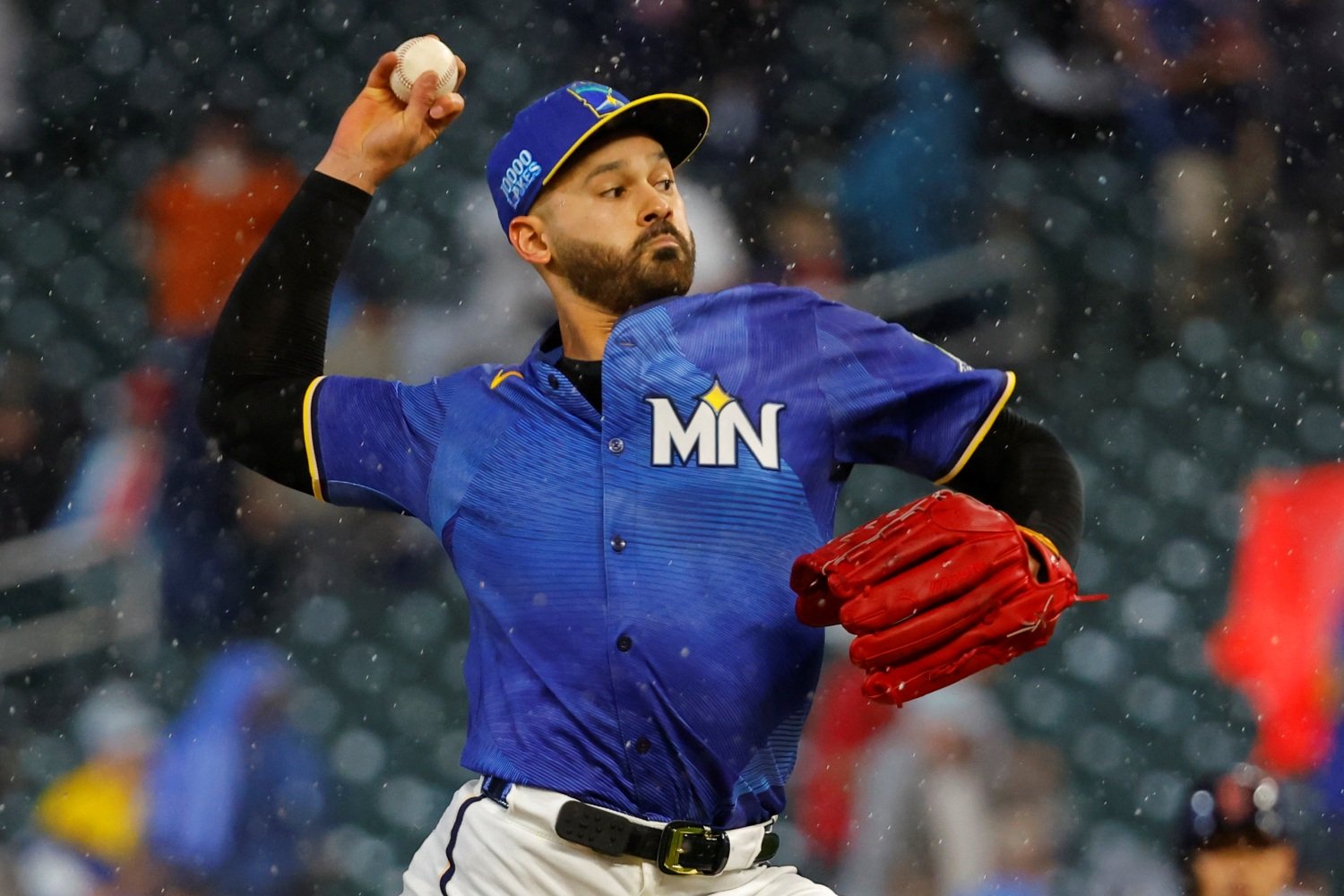
Under the Pohlads’ penurious ownership, the Minnesota Twins have frequently made decisions on the business side that are pennywise but pound-foolish. In recent months, this has extended to the on-field product. The latest example of this is the chain of events that led to staff ace Pablo López injuring himself in a game that didn’t matter.
In his June 3 start, López tore his teres major while pitching in a minor-league ballpark with a mound that’s (shall we say) suboptimal. He didn’t return until September 5. That’s 13 and a half weeks on the shelf. By the time he was ready to pitch in live games, the season had unofficially been over for six weeks. Many reasonable organizations would look at the factors at play and shut their most expensive player, their ace, and their leader down for the season. Giving him a full offseason to prepare would have been the prudent move.
The Twins, however, brought him back, risks be damned. To be fair, López wanted to do that, too. Still, there it was: in López’s third start back from the IL, he took a comebacker off his shin, then sprinted and dove to gobble up the deflected ball to flip it to first for the out.
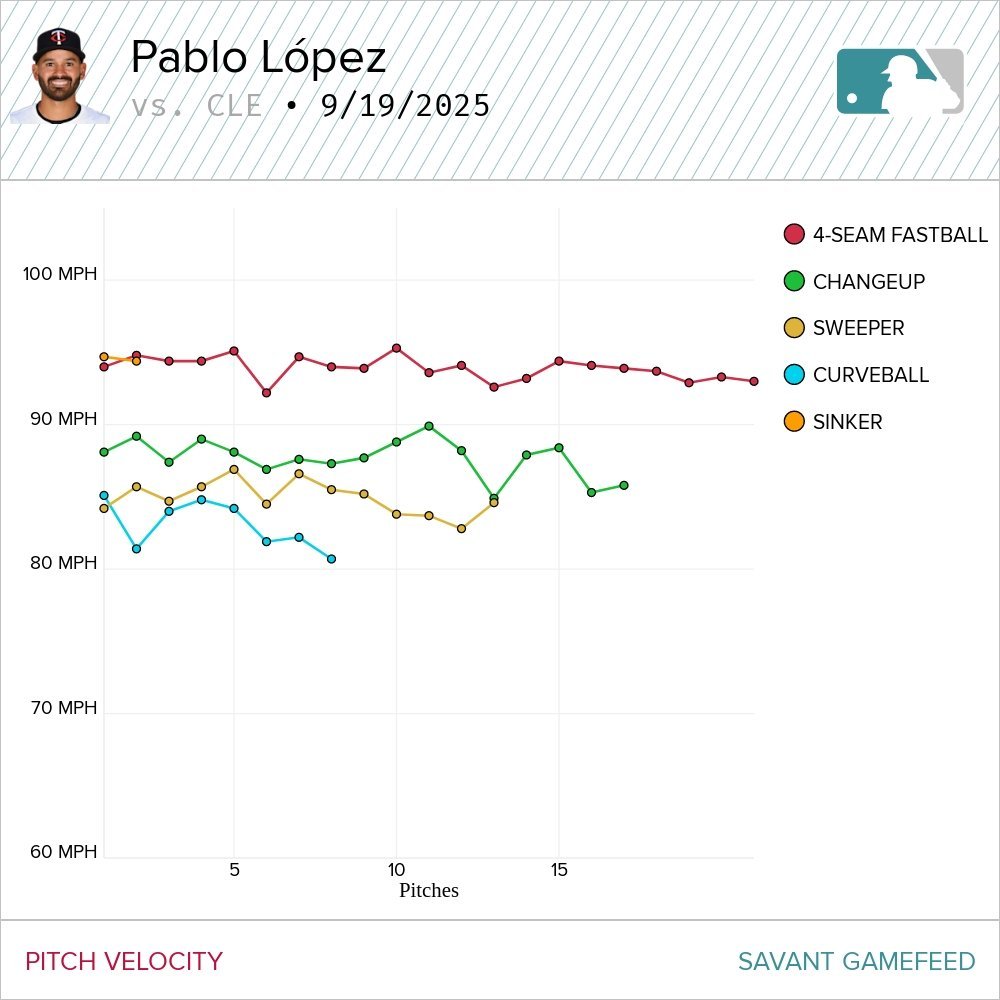
He stayed in for six more batters, but his velocity trended down across the board. He only threw two more fastballs the rest of the night.
After the game, he talked about mentally comparing how his arm feels now to how it felt when he blew it out in 2013. This is potentially devastating, and necessitates the question: why was he brought back this season?
After all, these games don’t matter. The season is lost. What is to be gained by López accumulating 15-20 more innings in September? What advantage is there to not giving those innings to someone who could be on the bubble—in danger of being left off the 40-man roster this offseason? Someone like, say, Christian MacLeod could have filled that gap. Sure, Mick Abel has been shelled so far, but so what? Why not give him five more starts down the stretch? Again, it doesn’t really matter who pitches those frames. Abel came back to replace López, anyway, so clearly, that was at least an option.
Again, this didn’t need to be sold to López. In fact, they’d have had to do a bit of selling to talk him out of taking the mound, once he was healthy. He wanted to take the mound, to go into the offseason on a good note and to be there for his teammates. Still, it’s hard not to think that the team accommodated his wishes in part with an eye toward boosting his trade value this winter.
If not for being injured at the time, he might well have been traded at the deadline, as the front office tore the team down to the studs. Since the fire sale, rumors and expectations have persisted that he will be dealt in the offseason, as the Pohlads further constrict the front office’s ability to field a competitive major-league roster. Clubs who may be interested in acquiring him probably wanted to see him down the stretch. Thus, a bet was made—and, as happens so often with the Twins, the dice came up snake eyes.
Now, imaging came back clean between doubleheader games on Saturday. Despite that, López’s season is over. He didn’t necessarily show off that he’s fully back, and he ended the season injured, anyway. So, what was accomplished? And how much worse could this have been?
This worst-case scenario would have had serious implications for the Twins. It would, for starters, have significantly limited Derek Falvey and Jeremy Zoll’s ability to build a roster that‘s even somewhat complete in 2026. Additionally, it would have prevented the front office from trading López during the offseason, something that otherwise seems likely. Finally, it would have removed one of the final remaining veteran presences from the clubhouse, which would undoubtedly have had a knock-on effect in a season where the roster is set to get younger and less experienced. These are all bad things. And, none of those things even factor in the human element of a guy who struggled for months to return from injury hitting the shelf once again, to begin his rehab journey anew.
Look, this is an uncharitable assessment. López all but insisted on returning this season. It could be that he wanted to prove to himself that he is back. Maybe he wanted to set an example for the younger players on the roster. López, like Byron Buxton, is a player others should emulate, look up to, and learn from. Hopefully, he’s one fans appreciate—for his preparation, his dedication to his craft, and his ability to give his all in a meaningless game in a lost season. Like Buxton, López is a player the Twins (the corporation) don’t deserve at this point. Hopefully, the front office learned a valuable lesson with this near miss.