
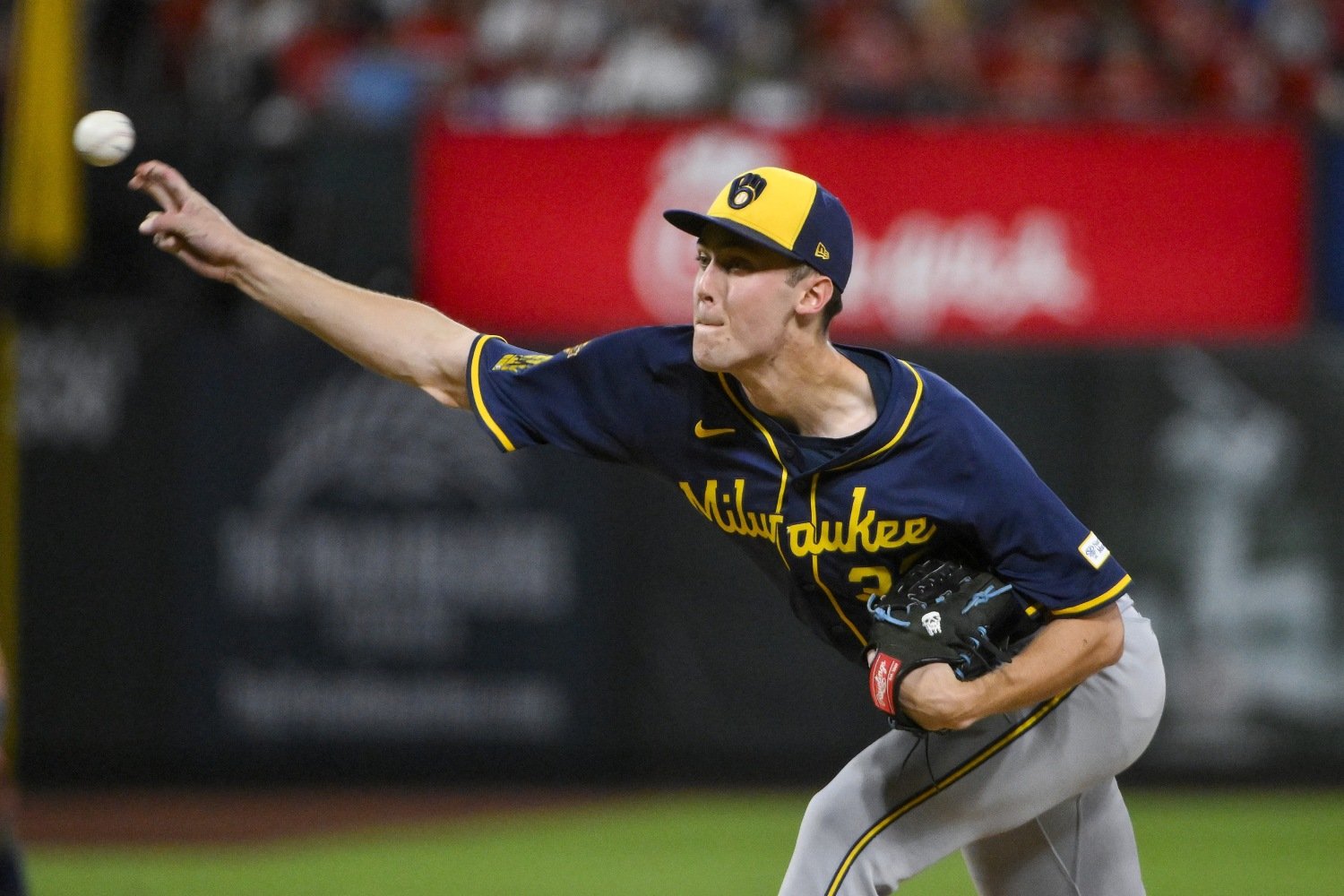
Jacob Misiorowski’s rookie campaign has been a tale of two seasons. The flame-throwing right-hander took baseball by storm during his first seven starts, but he has pitched to a 6.23 ERA in his last seven, while averaging just over four innings per outing. In St. Louis, Pat Murphy poured cold water on Misiorowski starting postseason games, and he was available out of the bullpen in San Diego.
The 23-year-old won’t be a reliable playoff piece in any role, until he corrects the issues that have plagued his second half—but fortunately, those are not as serious as his results might look. Nor are they unusual for a young pitcher. While not in his dominant form from June and July, he has since been much closer to it than his ERA suggests.
Split
ERA
FIP
SIERA
DRA
K%
BB%
Zone%
Strike%
First 7 GS
2.70
3.15
3.04
3.37
36.4%
10.9%
57.2%
67.8%
Last 7 GS
6.23
4.10
3.95
3.89
28.2%
10.7%
56.3%
64.7%
Misiorowski hasn’t been hit all that hard during this stretch, and process-based metrics say he has still pitched like an above-average starter. His strikeout rate is down, but it’s still just under 30%. It might be easy to point to worse control as the problem, but his walk and zone rates are nearly identical to the first half of his season.
Those percentages do not capture sequencing, though. Misiorowski is still throwing enough strikes, but not at the right times. Through his first seven outings, he threw 25% of his total pitches while behind in the count, and 20% of plate appearances against him ended in such counts. In his last seven, those percentages have risen to 31% and 34%, respectively.
One of the takeaways from Misiorowski’s first several outings was how well he controlled the game, but it has since looked as though the game is too often controlling him. It’s given opposing hitters—who were already likely to adopt a patient approach, given his occasional wildness—more room to wait him out, working their way into favorable counts before taking better swings when he comes back into the zone.
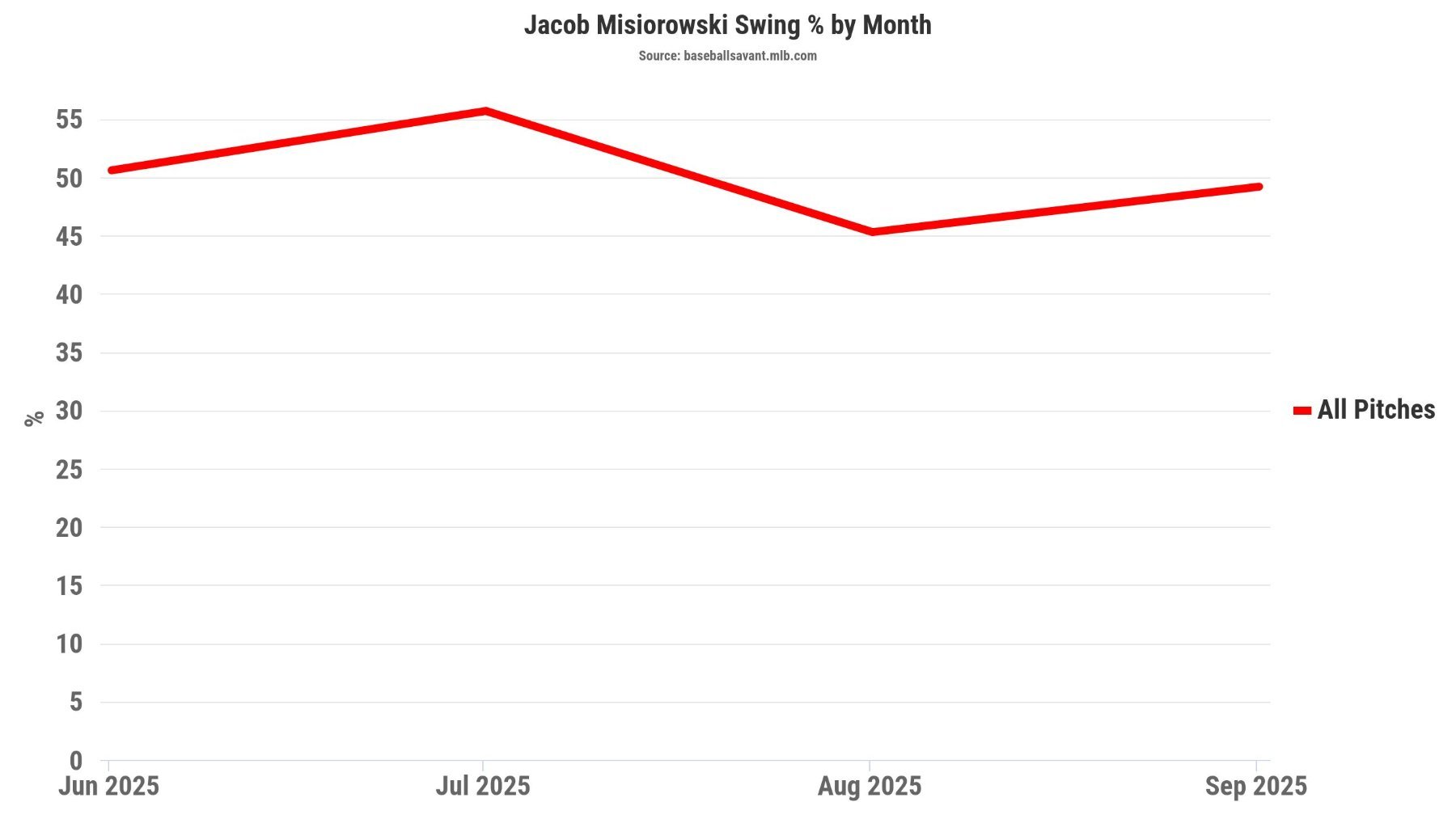
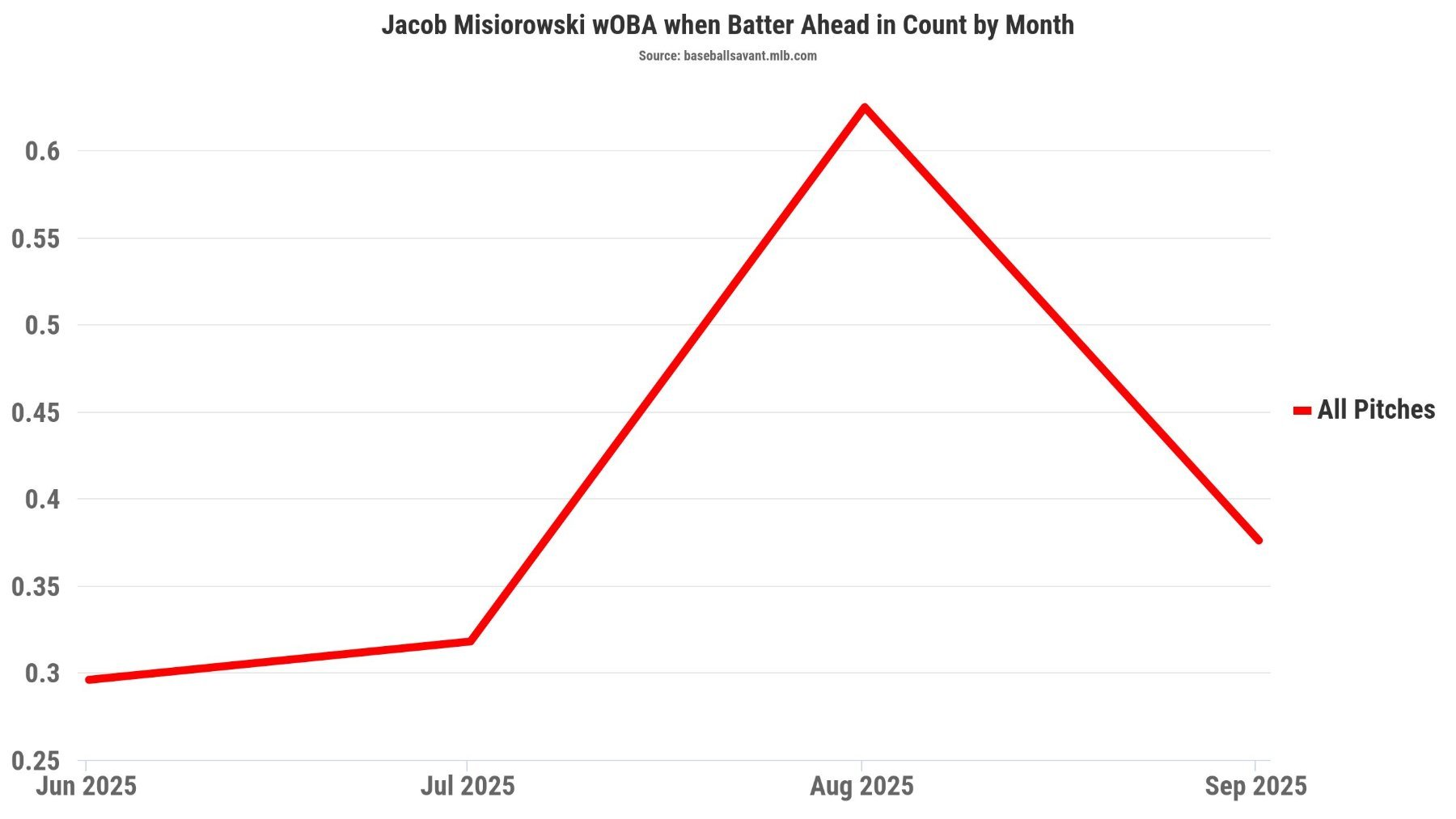
Misiorowski’s results have remained strong when he works ahead, even during this rough patch. When he falls behind, though, hitters have taken much greater advantage.
Simplifying things could restore him to a more effective state. Murphy opined in St. Louis that Misiorowski ought to refocus on his triple-digit fastball over his cutter-like slider, which has remained his go-to secondary pitch despite yielding a .387 wOBA and -2 run value and getting hit especially hard the last two months. A relief role would allow him to let that heater work in the zone for an inning or two, without worrying about pacing himself or sequencing pitches to disrupt hitters’ timing across multiple trips through the order.
Whether he appears in that capacity next week is unclear. Misiorowski pitched as a reliever in Triple-A down the stretch a year ago, but has worked exclusively as a starter this year, with the Brewers seemingly intent on keeping him on a consistent schedule to ease the transition to the big leagues. Throwing him into the bullpen to sink or swim in a playoff series would be a substantial disruption to that routine.
Perhaps the club will omit Misiorowski from its NLDS roster and work with him on that transition behind the scenes for future rounds. Whatever his role ultimately becomes, he remains capable of recording big outs in key situations this year. Misiorowski is closer to his best self than he looks, and everything can fall back into place—if he gets back on the attack with his best stuff.