
Good afternoon everyone, it’s time to dive back into the mailbag and answer some of your questions. Remember to send in your questions for our weekly call by e-mail to pinstripealleyblog [at] gmail [dot] com.
ChrisH89 asks: This video got me thinking about the future of the catching position and where the value lies 5 years from now and how that changes what the Yankees have been doing so well recently. We know ABS goes into play next year at least for challenges but one would have to assume eventually it’s a full system for every call, and if this video is correct the future of pitch calling may be entirely done from the dugout and I honestly don’t see why it wouldn’t eventually happen league wide for almost every pitch as well.
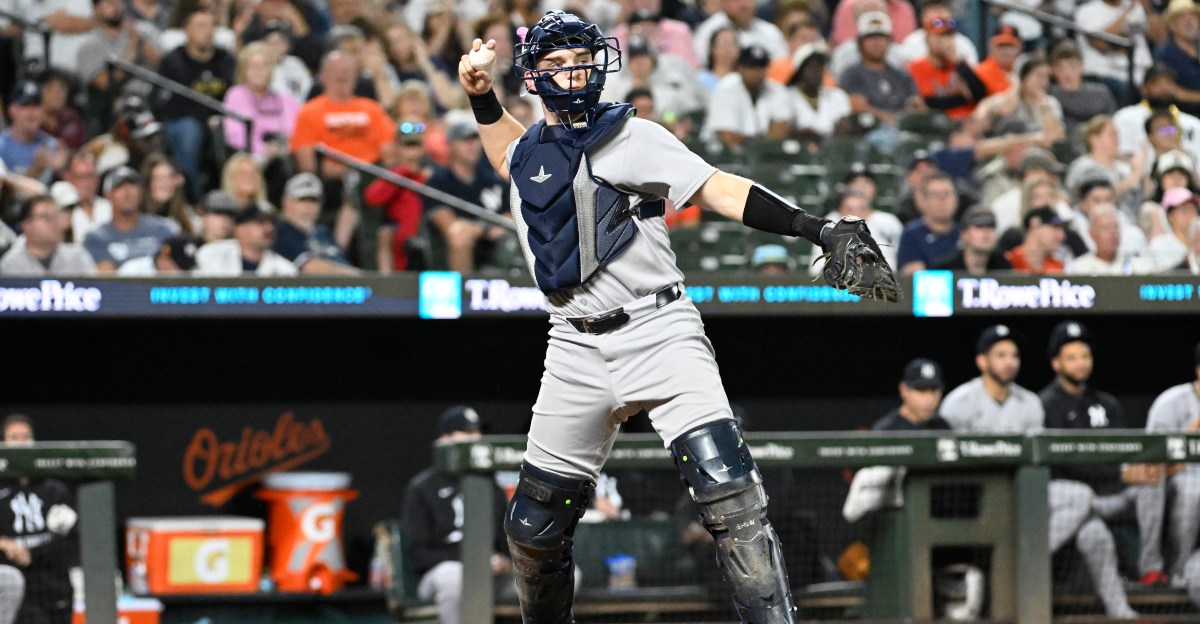
That’s a very long way to get to my question but that said does that make the future of the position all about offense? Are we looking at a future where the Ben Rice’s of the world are the normal and the Austin Wells are sort of out of a job?
The ABS system coming in next year will bring with it some changes to the game, but it can open the door to plenty more in the coming years depending on the pace that Rob Manfred and MLB want to go. The player base may be more divided over turning the game over fully to robots, but the CBA as it stands will allow the league to push through any change they want (although that could be part of a lengthy battle on its own once it runs out after 2026). Personally, I’m still a skeptic that ABS will be calling all balls and strikes because that could run the owners afoul of the umpire’s union as well as the player’s, but regardless of how integral it becomes it’s going to be here and present.
The development that the Marlins are running with their pitch calling is an interesting one, however. It fundamentally introduces a play caller much like the NFL has with their coordinators, relaying to the players on the field what the next pitch should be using the massive amount of data that teams have at their fingertips nowadays. This is data that the pitcher and catcher are likely already familiar with, but allows for a neutral party to optimize the call rather than forcing the players executing the pitch to also game plan around what the sequence needs to be. There are improvements to be made, but there’s massive potential to shift the focus of the position between this and ABS. Does it mean that receiving skills completely go by the wayside? It becomes somewhat less important, but the position will remain one of, if not the hardest to field still with managing an ever-prevalent running game and preventing balls from bouncing away with regularity, not to mention the feel that catchers form with their pitchers — because despite all the data in the world, human emotion isn’t just a part of the game but an incalculable one. Every pitch isn’t going to be static in how it performs day-to-day, and the catcher is going to be the one with the best feel for adapting to what their pitcher is giving them.
jws85 asks: Assuming Grisham is allowed to walk, would the left field experiment with the Martian be trashed and moved to center field?
Grisham alone exiting in free agency wouldn’t be enough, as the team could re-sign Cody Bellinger and keep him in center field. Long term the Martian may grow into the role as the rest of the outfield ages around him, but right now he’s fighting for playing time period, let alone at the most important part of the outfield. Barring a trade that shakes up the roster (or the Yankees choosing to move Domínguez to get better elsewhere), the former top prospect is likely getting his development in the majors in left field.
Michael L. asks: Hey guys — looking to you to do some stats and probability for me. It’s September 20th, both Judge and Stanton homered tonight. Stanton is at 450 and is on a tear since returning from the IL… Judge is now at 49 on the season, with 364 for his career. Barring an unthinkable collapse or unanticipated career ending injury, both seem likely to hit the storied 500 career mark. What is the likelihood that Judge beats Stanton to 500, and what are the chances they hit 500 in the same season?
Judge has added a couple more since this question was asked, but the intent is the same here: who can reach the coveted 500 milestone first, a slugger close to the finish line whose body is breaking down, or a superstar in his prime that’s further down the line. The race is closer than you might imagine, but it should favor Stanton getting there first — the Yankee DH still managed to hit out 24 and 27 bombs in his 2023 and ‘24 campaigns despite struggling for long stretches and missing time, and his resurgence this year made a significant difference in shortening the timeline.
This year will be the first time Stanton doesn’t make it to 100 games played in a full season since 2019, but if he gets close enough to that playing time for the next two seasons he could conceivably make it averaging what he accomplished in those down years. Even if he falls short and only makes it to about 40 homers over the next two years, he’ll be right within striking distance to make it early in 2028 assuming the Yankees pick up his option year or negotiate a new contract. Judge, meanwhile, will likely need Stanton to require that third year in order to compete — even in the midst of Judge’s incredible peak hitting 50 or more homers in three of the last four years, that pace would put him 25-30 homers short entering 2028. Injuries, of course, could complicate the timeline, and they’re more likely to affect Stanton than Judge at this point. We can almost assume that the slugger will be on the IL for portions of any season at this point, but this year showed us that Stanton can still go on a run even after spending an extended time on the shelf. If I had to guess though, I’d say that if both reach that plateau they’ll do so in the same season.