
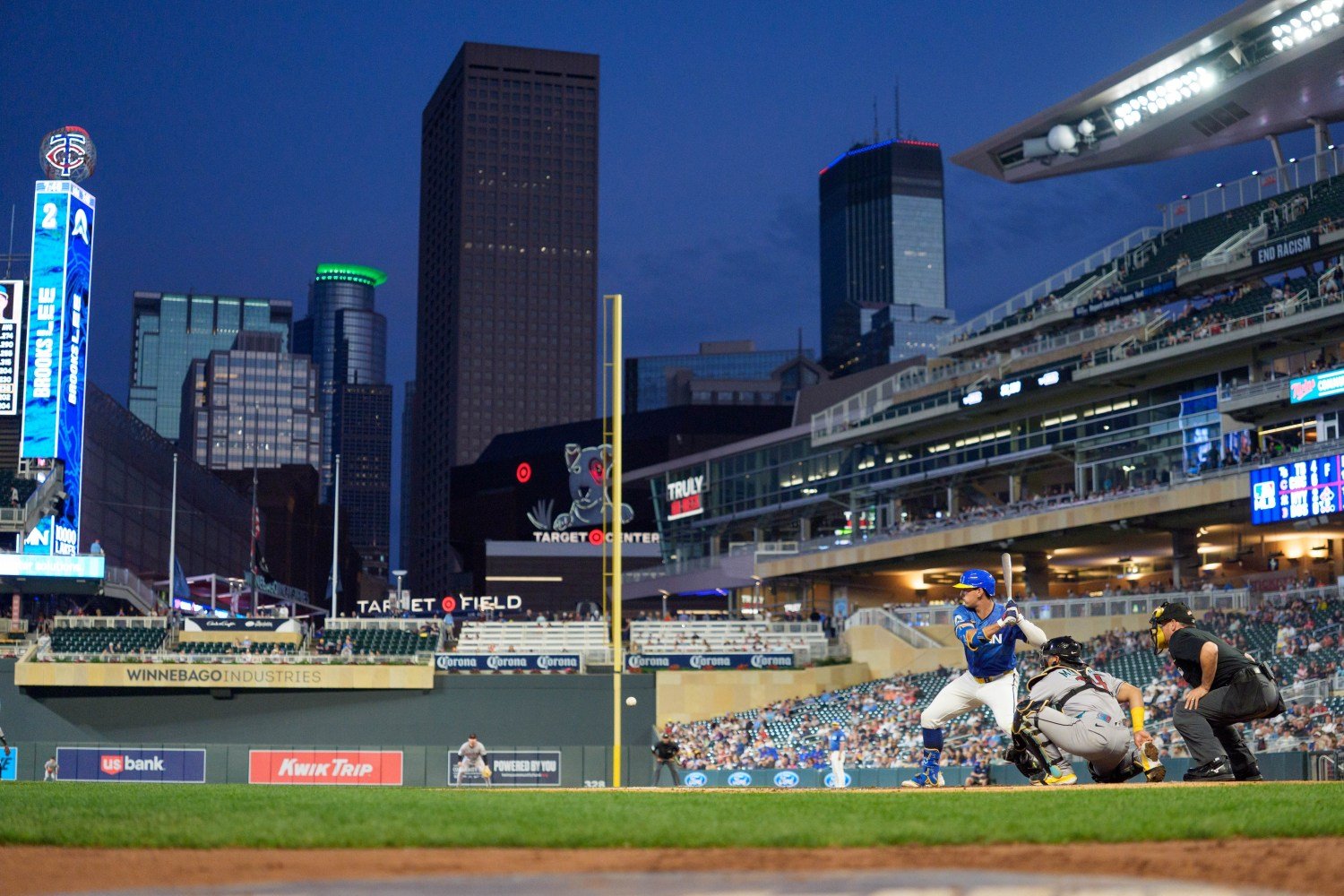
The Minnesota Twins made headlines Monday, by announcing they were parting ways with manager Rocco Baldelli following another playoff miss, a fourth in the last five years. Baldelli was hardly the primary issue over this stretch, but the organization had already exhausted its other scapegoats.
Last offseason, the Twins cleaned house on the hitting side, firing coaches across the board. David Popkins was quickly hired for the same job with the Toronto Blue Jays and helped that club win a competitive AL East division this season. On the front office side, the Twins moved on from general manager Thad Levine, allowing them to promote others from within the organization. That left Baldelli as the next logical choice. Still, his dismissal might have been written weeks earlier, when the Pohlad family unexpectedly pulled the club off the market and recommitted themselves as majority owners.
A Different Timeline With a Sale
Had the Twins’ ownership sale gone through as planned initially, it would have made sense to keep Baldelli in place at least through the 2026 season. His contract extension had already been picked up. A carryover manager would have given a new ownership group time to learn the inner workings of the organization while providing stability in the dugout.
It also would have been pragmatic. Minnesota’s current roster construction doesn’t point to a likely playoff run in 2026, unless something drastic changes. There’s talk that the team could potentially trade Pablo López and/or Joe Ryan, making it even more difficult to compete in the AL Central. If the club underperformed again, new owners could have cut ties with Baldelli at that point and made their own hire without rushing into a decision.
Instead, the Pohlads’ renewed presence changed the calculation. Once they reaffirmed their control, the clock sped up. Patience became less of a virtue and more of a liability, especially after back-to-back disappointing campaigns in 2024 and 2025.
Appeasing the Fan Base
For years, a portion of the Twins’ fan base has loudly called for a change in the manager’s seat. Social media and comment sections have long been filled with critiques of Baldelli’s bullpen usage, lineup construction, and reliance on organizational philosophies. By moving on from him now, the Twins can appease that vocal group and give the appearance of a fresh start.
A new manager may provide a short-term spark, if only by virtue of being different. There’s always excitement around a new face in the dugout, and that novelty can buy both the team and front office a bit of goodwill. Still, the grass isn’t always greener on the other side. The Twins’ underlying roster issues remain, and no managerial change can magically transform the talent level of the current core. If the same problems surface in 2026, fan frustrations will quickly shift from the manager’s office back to the front office and ownership.
Falvey’s Last Card to Play
With the sale off the table, Derek Falvey’s position as president of baseball operations seems secure for now, but the pressure has never been greater. Ownership has little appetite to hit reset at the top of the front office, after already committing to him as their lead decision-maker. That left one final ace card to play: firing the manager. Baldelli’s dismissal was as much about optics as performance.
The reality is that Falvey is now running out of levers to pull. His influence spans both baseball and business operations, meaning that dwindling attendance and sagging revenue will be directly tied to him moving forward. Baldelli’s exit removes the last convenient shield, leaving Falvey as the ultimate target if things don’t turn around soon.
What It Means for the Future
The Pohlad pivot ended Baldelli’s tenure and reshaped the Twins’ trajectory. By choosing to hold onto the club, ownership signaled that short-term results now matter more than ever. A manager once seen as a stabilizer through transition became expendable. This is especially telling for an ownership group that has been loyal to managers through some rough seasons. Falvey, meanwhile, has bought himself time, but only in the short term.
For fans, this all sets the stage for a pivotal 2026 season. The Twins will either prove they can retool and compete under current leadership, or the Pohlad family may be forced into the most difficult decision of all by moving on from the architect of the “Falvey era.”
Either way, Baldelli’s firing serves as the clearest reminder yet: when ownership changes direction, the fallout is felt from the top of the dugout all the way down to the turnstiles.
Do you believe the Pohlads’ decision to keep the team led to Baldelli’s firing?