Maybe the Red Sox will make a run this postseason and maybe they won’t. But after the Red Sox and Yankees opened their playoff series last night with a scintillating Game 1, the first question for Bostonians is obvious:
See what you’ve been missing over the last three or four years?
Look, there’s no way to know whether or not the Red Sox will make a run. Most people aren’t expecting a World Series. But wherever this ends, let there be no doubt that the experience of participating in this postseason is 100% worth it – and on so many levels. Many of the players are getting to experience it for the first time. And at a minimum, the Red Sox are building at least some equity again with a fan base that has rightfully grown distrustful over a period or 4-6 years, during which the Red Sox generally put an inferior product on the field.
The environment last night? Now that was a gripping, captivating product – and something unseen and unfelt in Boston for quite some time.
In the end, the Red Sox claimed a 3-1 victory over the Yankees to win Game 1 of their American League Wildcard series and move within a victory of the AL Division Series against the idle Toronto Blue Jays. Game 2 will be played tonight, with Red Sox starter Brayan Bello facing formidable Yankees lefty Carlos Rodon. Game 3, if necessary, will be played tomorrow night. In the event you forgot, life in the baseball world at this time of year is truly a day-to-day existence.
A few notable takeaways from last night’s Game 1:
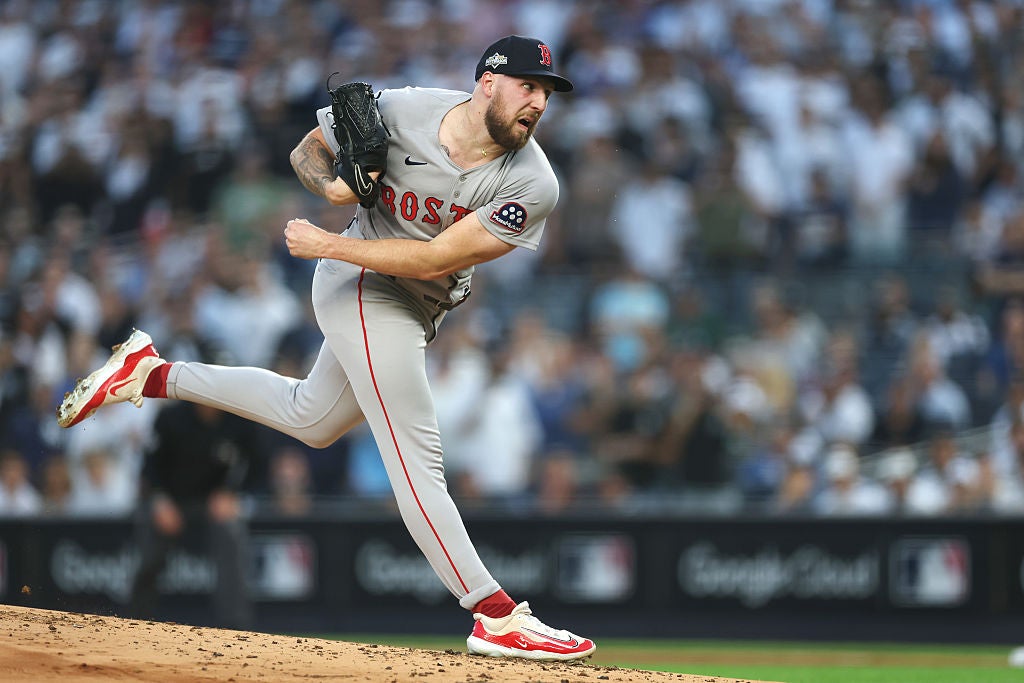
Garrett Crochet was more than ready for the moment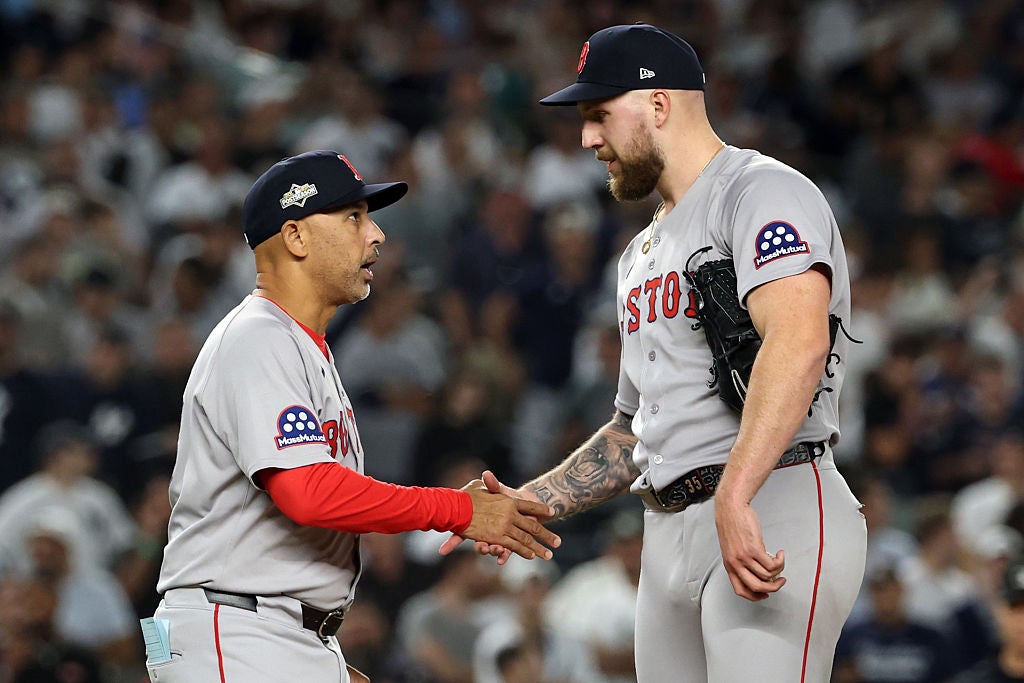
Honestly, he didn’t start great. To start the game, Crochet gave up a pair of singles on something other than his fastball. He finished the night basically throwing 75% fastballs, sinkers and cutters – his three hardest pitches. October baseball is often about power pitching and Crochet lived up to the moment. Having an ace in June 1 is one thing. October is something altogether different.
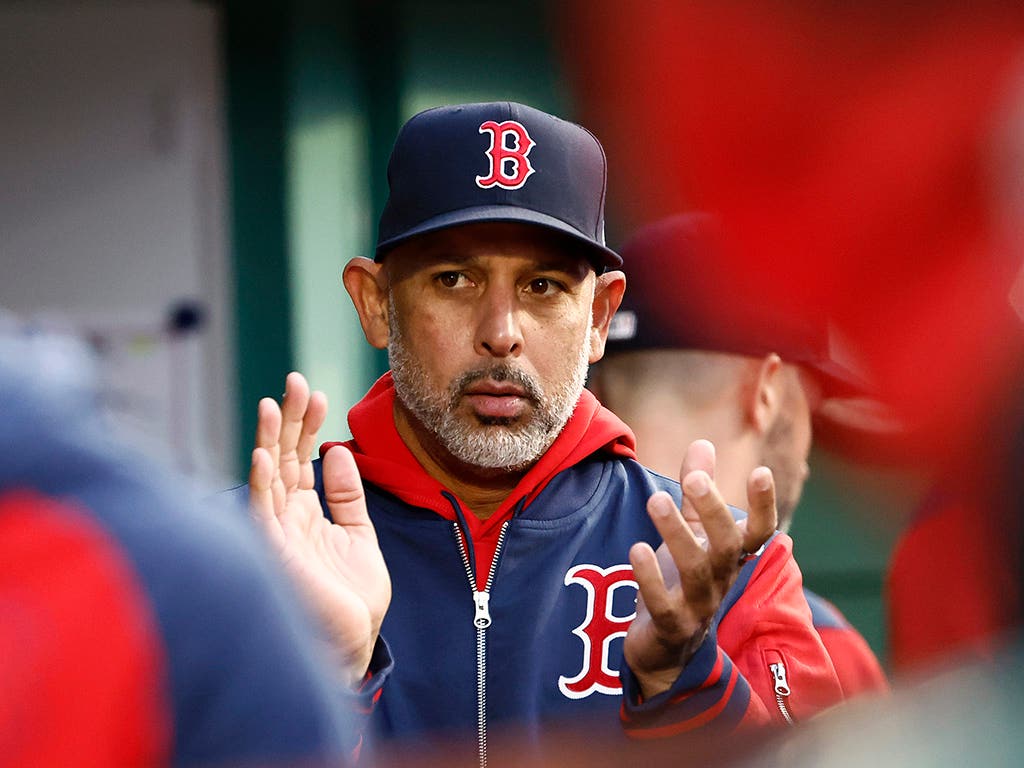
After the game, this exchange between the media and Red Sox manager Alex Cora stood out:
Q: Alex, when you guys acquired Crochet, you knew he was good. Did you ever in your wildest imagination think he would be this good?
Alex Cora: In my wildest imagination, yes, I did.
Crochet finished with 11 strikeouts, zero walks, and threw 78 of his career-high 117 pitches for strikes. In between hits by Anthony Volpe (home run, single), Crochet retired 17 straight, eight by strikeout. Given how good Yankees lefty Max Fried was, Crochet really didn’t have any margin for error.
So, going forward, can the Red Sox rely on Crochet in October? Based on first glance, it sure looks like it.
Right now, nobody in a Red Sox uniform is hotter than Alex Cora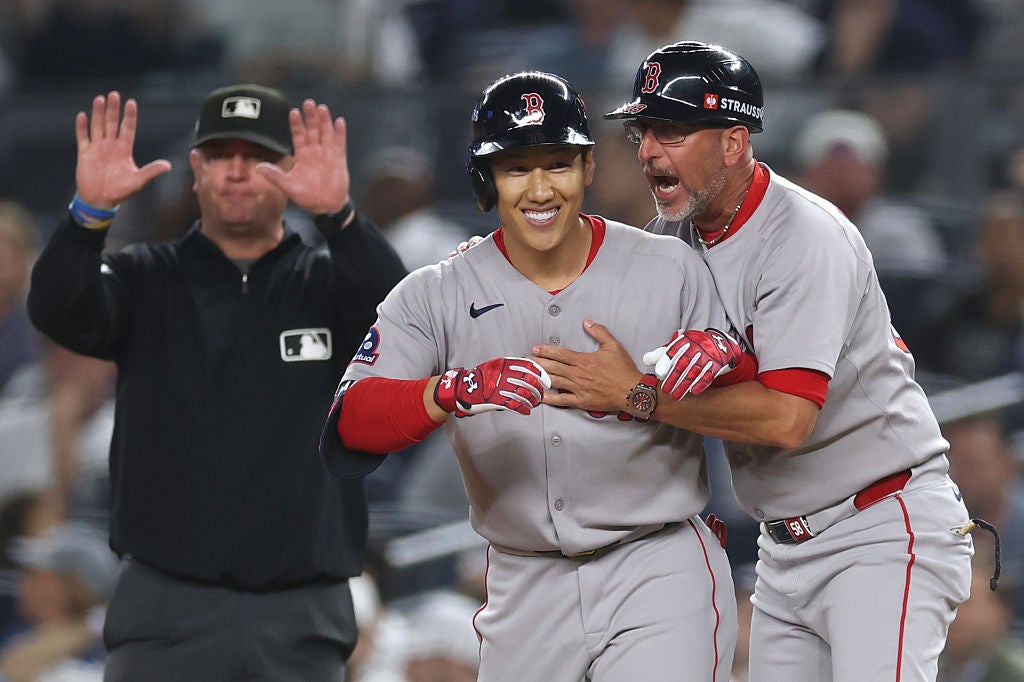
In case you missed it, Cora pulled all the right levers in Friday’s playoff-clinching win over the Detroit Tigers at Fenway Park. Last night, against the left-handed Fried, he opened the game with a lineup devoid of left-handed hitters Masataka Yoshida, Wilyer Abreu and Nathaniel Lowe. In their place, Nick Sogard and Nate Eaton went a combined 3-for-7 and Sogard, in particular, was a critical contributor to the Red Sox’ two-run rally that gave Boston the lead in the seventh with a big, hustle double. Pinch-hitting, Yoshida then laced a two-run single on the only pitch he saw in the entire game.
Does that mean Cora knew all that would happen? Of course not. But he used all three of his lefties off the bench against right-handed pitchers in the seventh and eighth innings. Before anyone suggests that was brilliant, Yankees manager Aaron Boone basically planned for the same thing but didn’t get the same results.
Now, it is important to highlight one huge difference: Cora made a very risky decision to bypass Garrett Whitlock and go directly from Crochet to lefty closer Aroldis Chapman in this game. As a result, the left-handed hitters in the Yankees lineup never got to face a single right-handed pitcher. (Jazz Chisholm was the only Yankees pinch-hitter.) By the end of the night, all the left-handed hitters on the Yankees went a combined 1-for-12 with six strikeouts vs. Crochet and Chapman, against whom lefties went a combined 32-for-199 (a .160 average) with 69 strikeouts during the regular season.
The Yankees, by contrast, used four right-handers. (New York has only one left-handed reliever.) Those four righties allowed all three Boston runs on four hits and three walks.
Chapman was shaky – until the very end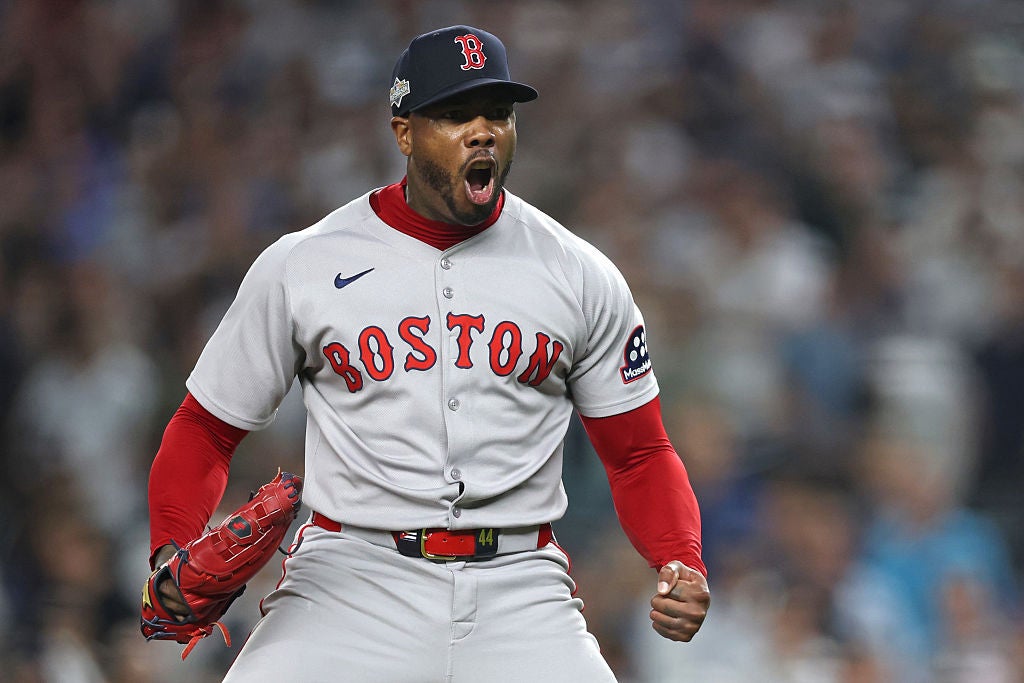
Aroldis Chapman was a godsend for the Red Sox during the regular season, but the Chapman of late has been more vulnerable. In his final seven regular season outings, he allowed six hits and a walk in 6 1/3 innings. Does that mean he was awful? No. But he was so brilliant a large chunk of the season that the Chapman of the last few weeks has looked beatable. His velocity also has decreased a couple of ticks.
Last night – after Cora uncharacteristically brought Chapman in for a four-out save that left the reliever in the dugout for quite a bit – Chapman began the ninth by allowing three straight singles. He then retired the next three batters – two by strikeout – to preserve the victory. Of Chapman’s 11 pitches that clocked at least 100 mph, 10 of them came after the bases were loaded.
The point? When things got desperate, he had more in the tank. But his delivery currently doesn’t look quite as fluid as it did for much of the regular season. Chapman remains very difficult to hit, he merited some skepticism coming into the postseason and last night didn’t make that any better.
More Red Sox