
Here’s a look back at what happened in the Chicago area on Oct. 3, according to the Tribune’s archives.
Is an important event missing from this date? Email us.
Weather records (from the National Weather Service, Chicago)
High temperature: 91 degrees (1954)
Low temperature: 29 degrees (1981)
Precipitation: 3.95 inches (1954)
Snowfall: None
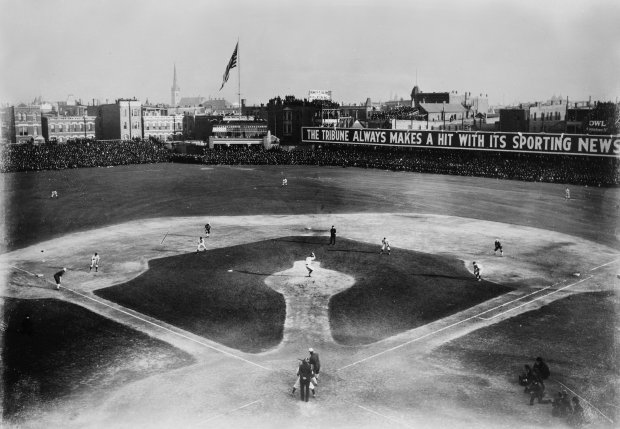 Cubs pitcher Jack Pfiester winds up in the sixth inning of the third game against the White Sox during the 1906 World Series at the West Side Grounds. The Sox won 3-0. (Chicago History Museum)
1915: In the team’s last game at West Side Grounds, the Chicago Cubs defeated the St. Louis Cardinals. The Cubs captured back-to-back baseball crowns in 1907 and 1908 at the field between Polk, Wood, and Taylor streets and Wolcott (then Lincoln) Avenue, and hosted World Series games four times in five years.
Today, the site at 912 S. Wood St. is part of the University of Illinois Chicago College of Medicine.
Vintage Chicago Tribune: Soldier Field’s century of concerts, car races, circuses and contests
1930: Soldier Field hosted its first night football game. Oregon defeated Drake, 14-7.
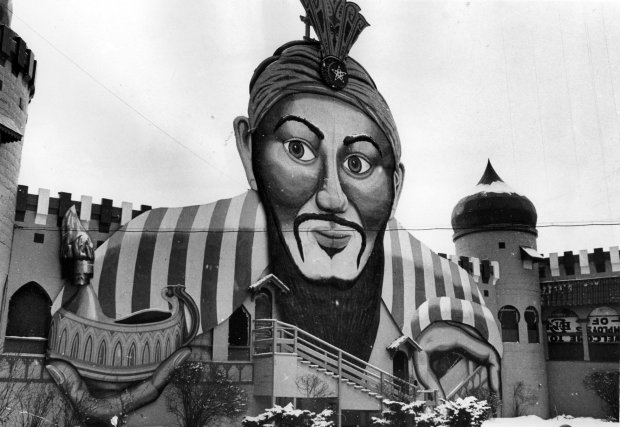 Aladdin’s Castle at Riverview Park in January 1968, the year it closed down. (Quentin C. Dodt/Chicago Tribune)
1967: Riverview Park closed.
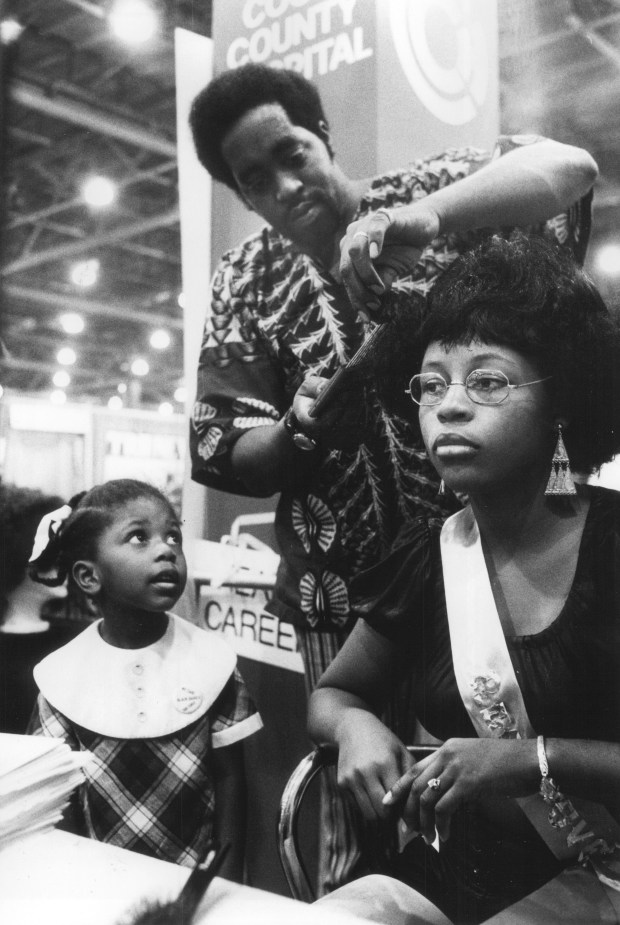 Jeanine Arnold, 4, watches Maurice Johnson set the hair of Janice Anderson at the Black Expo on Oct. 2, 1971. (Don Casper/Chicago Tribune)
1969: The first Black Expo, sponsored by Operation Breadbasket of the Southern Christian Leadership Conference, opened at the International Amphitheatre. Those appearing included poet Gwendolyn Brooks; musical artists Marvin Gaye, Mahalia Jackson, the Staple Singers, B.B. King and Aretha Franklin. The convention was held annually until 1976. It was revived in the 1990s.
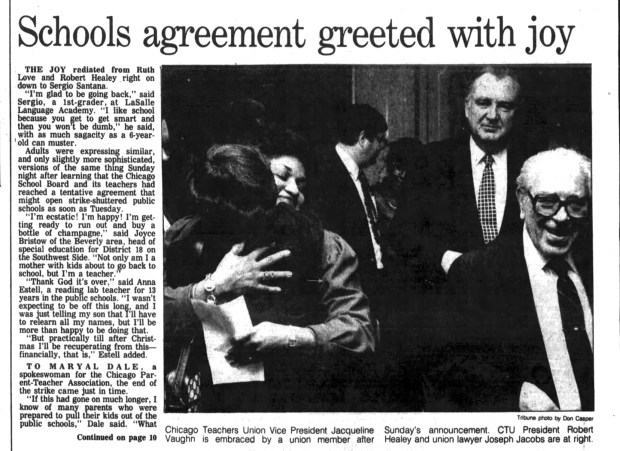 A settlement in the 15-day strike between Chicago Teachers Union and Chicago Public Schools was reached Oct. 23, 1983. (Chicago Tribune)
1983: The second-longest teacher strike in Chicago Public Schools began and lasted for 15 days. More than 420,000 public school students were shut out of classrooms. Chicago Teachers Union chief Robert Healey accused CPS Superintendent Ruth Love of “bamboozling” the board to prolong the strike and discredit the unions.
102 days on strike: Take a look back at Chicago’s 11 teacher strikes since 1969
In a tentative agreement reached Oct. 23, 1983, the school board offered a 5% raise for teachers, which was privately what union members said they would accept throughout the strike. About one-fourth of the teachers, however, would receive their pay over 12 months instead of during the 9 1/2-month school year to make it easier for the Chicago Board of Education to come up with the cash. The total cost of the proposed settlement was $81 million.
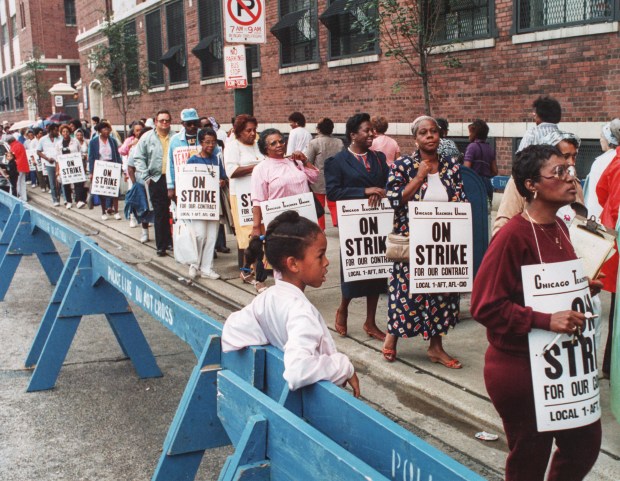 Third-grader Latoya Shaw, 8, watches as her mother, a teacher aide, walks a picket line at the Chicago Board of Education office on Sept. 8, 1987. It was the first day of a strike that would last a record 19 days. (Carl Hugare/Chicago Tribune)
1987: CPS’ longest strike in history — extending almost a month and canceling 19 days of schools — was resolved. Teachers got a 4% salary increase the first year and another 4% raise next year (if money was found to finance the second wage boost). Class size was to be reduced by two students in kindergarten through third grade in 36 overcrowded schools and 100 underachieving schools. The $43.8 million package would be financed by cutting 1,800 positions, the Tribune reported. Mayor Harold Washington promised the strike — which provoked outrage from parents and students across the city — would bring sweeping reform of Chicago public schools.
1992: Barack and Michelle Obama were married at Trinity United Church of Christ in Chicago. Their wedding reception was at the South Shore Cultural Center.
 Nancy Faust, organist for the White Sox, opens a Chicago Symphony Orchestra concert with “Take Me Out to the Ball Game” on Oct. 21, 2005, ahead of the World Series against the Houston Astros. (Tom Van Dyke/Chicago Tribune)
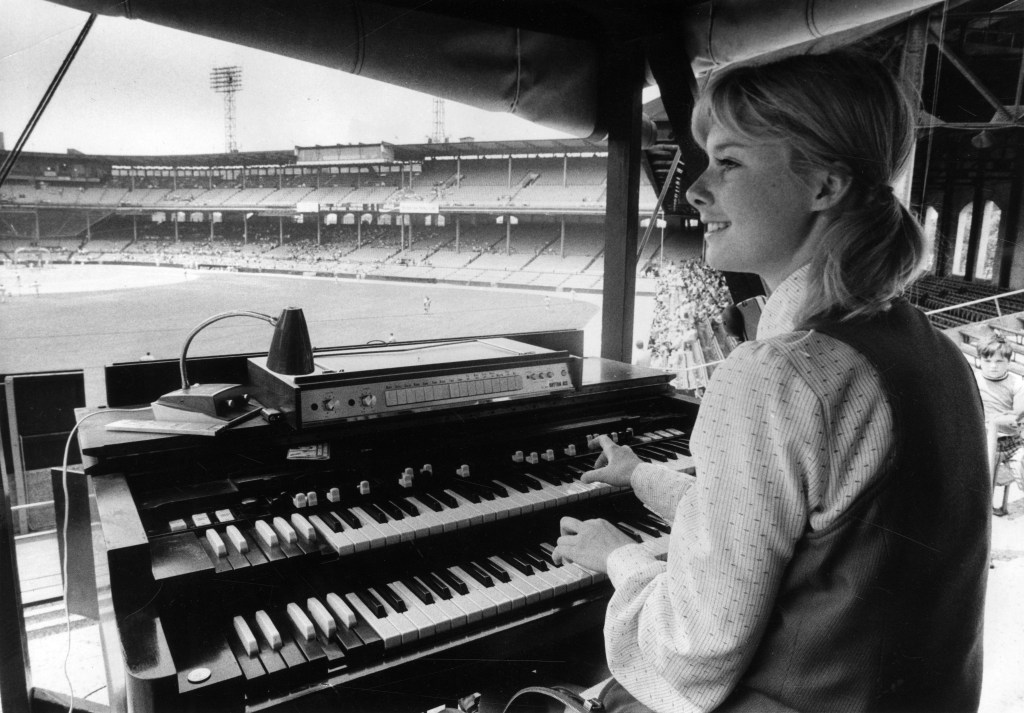
2010: After 41 seasons and more than 3,000 games — which she called “a grand party” — Chicago White Sox organist Nancy Faust played her last home game at U.S. Cellular Field (now Rate Field).
Ever chant “Na Na Hey Hey Goodbye” when the opposing team pulls its pitcher? That’s because Faust played it first. She accompanied Harry Caray’s rendition of “Take Me Out to the Ball Game” and picked a special tune for Hall of Famer Dick Allen when he came up to bat: “Jesus Christ Superstar Overture.”
Faust returned to the ballpark during the Sox’s 125th season in 2025, for a handful of appearances.
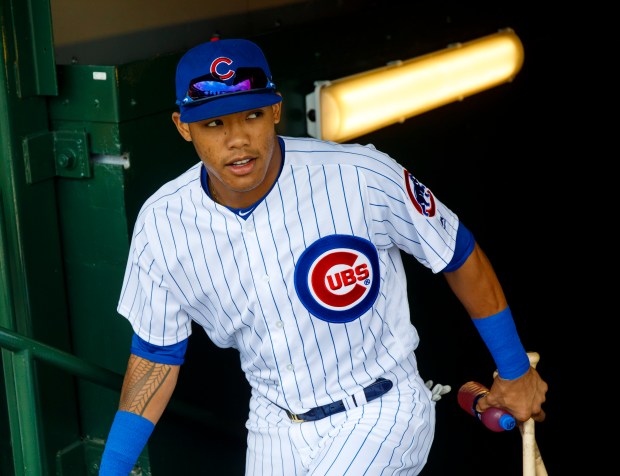 Chicago Cubs shortstop Addison Russell in the dugout on July 1, 2018, at Wrigley Field. (Brian Cassella/Chicago Tribune)
2018: The day after the Cubs lost to the Colorado Rockies in the National League wild-card game, Cubs shortstop Addison Russell accepted a 40-game suspension without pay for violating Major League Baseball’s domestic-abuse policy. Russell originally was eligible to rejoin the Cubs on May 3, but the team optioned him to Triple-A Iowa.
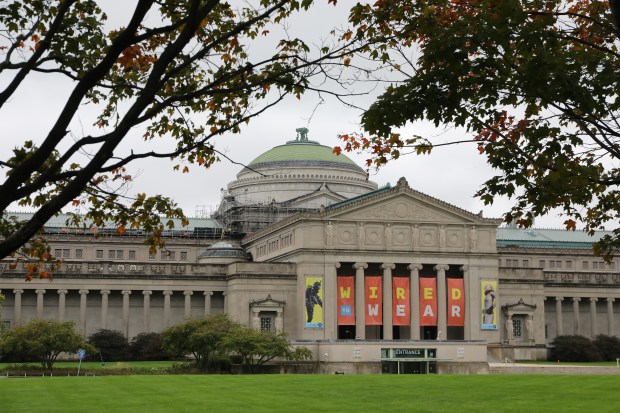 The Museum of Science and Industry in Chicago on Oct. 3, 2019. (Antonio Perez/Chicago Tribune)
2019: The Museum of Science and Industry announced plans to rename itself after Chicago billionaire Ken Griffin pledged to donate $125 million, the largest donation in the institution’s history.
Want more vintage Chicago?
Subscribe to the free Vintage Chicago Tribune newsletter, join our Chicagoland history Facebook group, stay current with Today in Chicago History and follow us on Instagram for more from Chicago’s past.
Have an idea for Vintage Chicago Tribune? Share it with Kori Rumore and Marianne Mather at krumore@chicagotribune.com and mmather@chicagotribune.com