
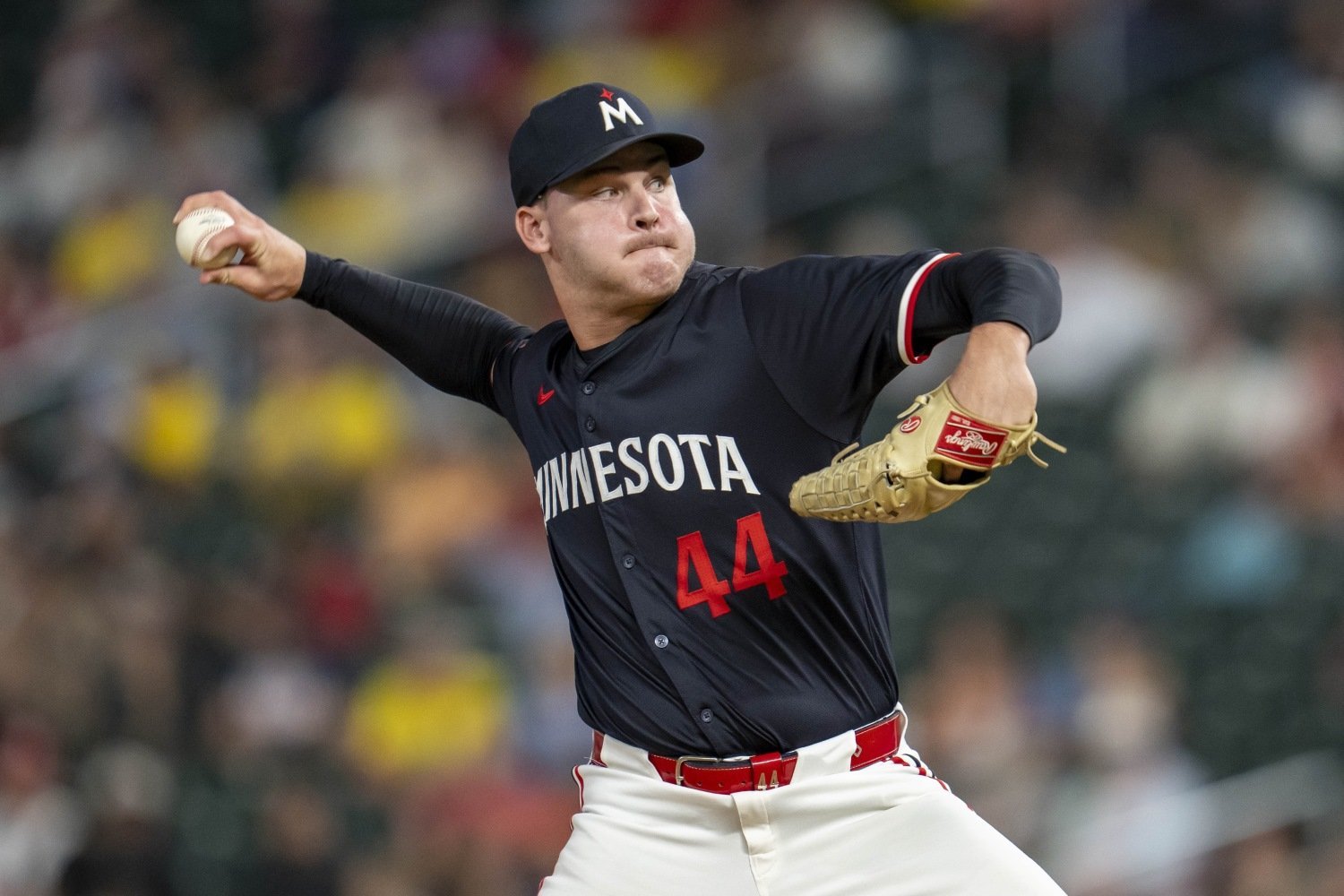
Modern bullpens have evolved to the point where using one player in a traditional closer role is seen as antiquated. The Twins were projected to have one of baseball’s best bullpens entering the season because of the variety of high-leverage arms available to manager Rocco Baldelli. After some early-season hiccups, the bullpen is starting to meet preseason expectations, often tailoring matchups based on opposing lineups, and illustrating the shift away from a one-size-fits-all closer model. Here’s how it all fits together.
Jhoan Durán: Still the Team’s Primary Closer
Durán has been one of baseball’s elite relievers again this season, posting a sparkling 0.84 ERA through his first 22 appearances in 2025. He has already collected eight saves and struck out 25 batters, demonstrating dominance and durability from the Twins’ bullpen. Durán’s performance isn’t a fluke, as he owns a 1.03 WHIP and has been nearly unhittable in ninth-inning situations, allowing just two earned runs all season.
Far from being a “closer by committee” situation because of Durán’s struggles, the decision to use Sands as the team’s closer has been entirely situational. Both instances occurred only after Durán logged high-leverage work the night before. It would be great if he were available every night, but that isn’t realistic for any closer in the modern game.
The Recent Winning Streak and Tight Games
The Twins have ridden an impressive winning streak, stringing together 12 consecutive victories to surge into playoff contention. During that run, Minnesota played in an unusually high number of close games where high-leverage arms were necessary. In fact, 11 of the team’s 14 games in May have been decided by three runs or less. These types of games are taxing for their late-inning arms and necessitating creative usage patterns.
On Friday, May 17, the Twins held a 3–0 lead over Milwaukee, with Durán unavailable after throwing 27 pitches the previous day. Minnesota turned to Brock Stewart for the seventh, Griffin Jax for the eighth, and ultimately Cole Sands for the save chance in the ninth. Sands recorded his second save of the season in perfect fashion, fanning two in a 1-2-3 frame. This usage pattern underscores how modern bullpens often deploy “bulk” and “bridge” arms before handing the ball to the freshest high-leverage reliever.
Sands isn’t the only non-Durán arm getting closing opportunities. Left-hander Danny Coulombe has quietly emerged as another key late-inning option, having already secured multiple save chances this season. Coulombe signed to a one-year, $3 million deal in February to take over the left-handed relief role vacated by Caleb Thielbar. In 19 appearances, Coulombe has not allowed an earned run and has a career-best 31.7 K% and 3.3 BB%. Like Sands, the Twins aren’t afraid to use him to close games, especially if the opposition has strong left-handed hitters scheduled in the ninth.
The Evolution of Closer Roles in Today’s Game
What we’re seeing in Minnesota is hardly unique. Across MLB, teams are moving away from a rigid “one-and-done” closer role and toward more dynamic allocations of high-leverage innings. This approach maximizes matchups, accounts for reliever workload, and acknowledges that leverage overshadows inning designation.
In the Twins’ case, having multiple arms capable of handling ninth-inning pressure (Durán, Coulombe, Sands, Jax) gives Baldelli the flexibility to manage back‐to‐back strings and matchups without overtaxing any single reliever.
What’s Next for Sands?
Sands ended the month of April with his bullpen role up in the air. From April 10-25, he made seven appearances (6 IP) and allowed five earned runs on six hits. Opponents had a .788 OPS against him, and he had more walks (4 BB) than strikeouts (3 K) during this stretch.
May has been much kinder to Sands. He has yet to allow a run this month in 7 ⅓ innings with six strikeouts and one walk. Relievers work in small sample sizes, making their numbers look poor early in the season. The Twins trusted that his underlying stuff and ability to generate swings-and-miss make him one of the team’s best bullpen arms.
His two save outings came in identical contexts when Durán was unavailable after working the night before. It’s unlikely the Twins envision a wholesale closer swap anytime soon. Instead, Sands has carved out a “premium bridge” niche: when the game is on the line, and Durán needs rest, he steps in. If Sands continues to execute by maintaining his strikeout rate and limiting walks, he could earn more opportunities and potentially enter consideration as a ninth-inning option.
Minnesota’s bullpen has become a collaborative unit where roles are defined by leverage, health, and matchup, not convention. Sands’ future may involve more save chances, but always within a broader strategy that prioritizes winning today’s game and keeping key arms fresh for tomorrow.
Overall, the Twins remain firmly in the Durán‐as‐closer camp, but they’ve shown a willingness to spread high-leverage work to Sands and Coulombe. As the season unfolds, expect more of the same thoughtful deployment, an approach that reflects the cutting edge of bullpen management in 2025.
How can the Twins best use their bullpen in the late innings? Are there ways Baldelli can alter his bullpen usage? Leave a comment and start the discussion.