
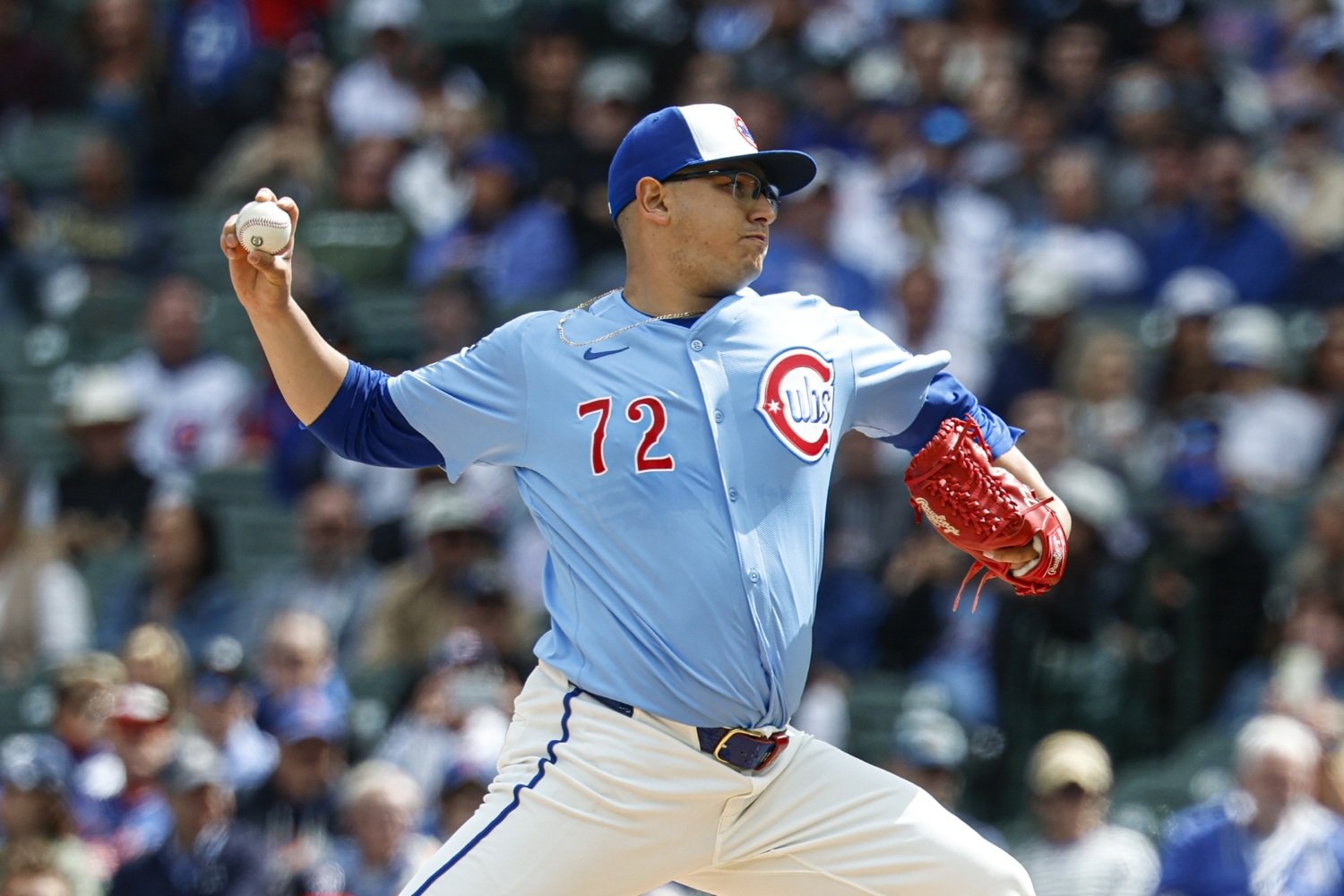
On the brink of elimination, it feels trivial at best to dissect the starting pitching choices Craig Counsell and his staff could have made. But, if this is coming to you postmortem, and you’re looking to start your long offseason with more mental duress, take time here to consider the options on the bump that maybe, just maybe, could have led to more favorable outcomes for the Chicago Cubs.
Now, before you take this into account, along with all the rest of the nightmare fuel this NLDS has provided, consider this: Yes, the Brewers are a better team, but with a healthy Cade Horton and Justin Steele, it wouldn’t have mattered. The players play, and they’re playing their way out of postseason contention, and right on up to a microphone for various “Year In Review” podcasts. Who could have saved us from this painful fate? Will it be better 365 days from now?
The phrase “all hands on deck” is thrown around in playoff baseball so much you can barely remember who was the last to say it. But despite its overuse, the Chicago Cubs’ gut-wreching defeats in Games 1 and 2 of their NLDS series with Milwaukee introduce the question: Are all of the right hands on deck? Or could they have perhaps benefited from Javier Assad being one of the crew?
One in a long line of Cubs who spent large chunks of the 2025 campaign hampered by injuries, Assad, the 28-year-old righty, returned for some spot starts late in the regular season. He’s got a loaded arsenal of diverse pitches he likes to work up in the zone with; no Brewers got a look at him during the regular season; and, best of all, he was fully rested. But, alas, one big thing he is not: an available player on the North Siders’ current playoff roster. The disastrous fashion in which things played out has led to more second-guessing than overly nervous patrons playing bar trivia.
Among those who did land a place on this roster: Michael Soroka, Jed Hoyer’s ill-fated attempt at a trade deadline starting pitcher, who (since his return from injury) has contributed serviceable but brief work out out of the bullpen. No one knows what could have been from Soroka had he not immediately succumbed to injury over the summer. That’s the strange thing, the closed storyline branches of what could have been rarely reveal themselves when reality takes over. Whether it was Matthew Boyd getting lit up on three straight doubles to open the game, Nico Hoerner‘s horrific groundball gaffe at second, or a night full of near-escapes turned three-run Brewers homers, we don’t get to see the alternate versions of what the games would have otherwise looked like if those events hadn’t occurred.
One undeniable fact is that while the Brewers are no fluke of a team, their run-scoring is infectious. Once one gets going, the hits tend to come in waves. Back in August, when the Chicago Cubs took 3-of-5 from the Brewers, they were able to rattle off three wins in a row—including a doubleheader sweep—largely because they shut their lineup down. Outside of the first game of that contest, the Brewers did nothing to overwhelm the Cubs from an offensive perspective. Boyd surrendered game-altering hits that hung up in the zone, and it appeared as if Brewers hitters were waiting on them. Imanaga, whom Milwaukee did see three times this year, ran out of ways to fool them.
Assad’s most-used pitch, the sinker, produced a sparse few extra-base hits. Over 66 plate appearances in 2025, Assad, when deploying his sinker, gave up one double and one triple. “Stuff” like that may have produced far different outcomes than what we witnessed this past Saturday, and perhaps either:
Assad cruises through more stingy innings; or
Soroka doesn’t enter the game with the most hopeless situation imaginable.
Soroka, in his limited work with the club, hasn’t had the chance to pitch in very high-leverage situations. In getting completely battered by the Crew’s eager lineup, Boyd did not afford his teammate a high-leverage situation, it wasn’t even low-leverage, it was a lost cause. Soroka’s fastball, kept low, causes bats to go much colder than the ones he puts up. His more streamlined array of pitches relies on close to equal parts of ground balls and strikeouts. The kind of rhythm the Brewers had gotten into when Soroka entered the game allowed neither. Assad’s capacity for limiting hard contact (and forcing early, weaker batted balls) would also have been a welcome change of pace from what Imanaga and Daniel Palencia managed Monday night.
Every pitch matters in the playoffs, in a way that makes the drama every bit as palpable as any other playoff tournament across professional sports. Assad has a unique profile, leaning less on things that modern statistical models reward and understand than do the other players (Soroka, Ben Brown, even Aaron Civale) who got spots on this round’s pitching staff instead of him. The Cubs trusted others more than him, but by now, they might be ruing that choice.