
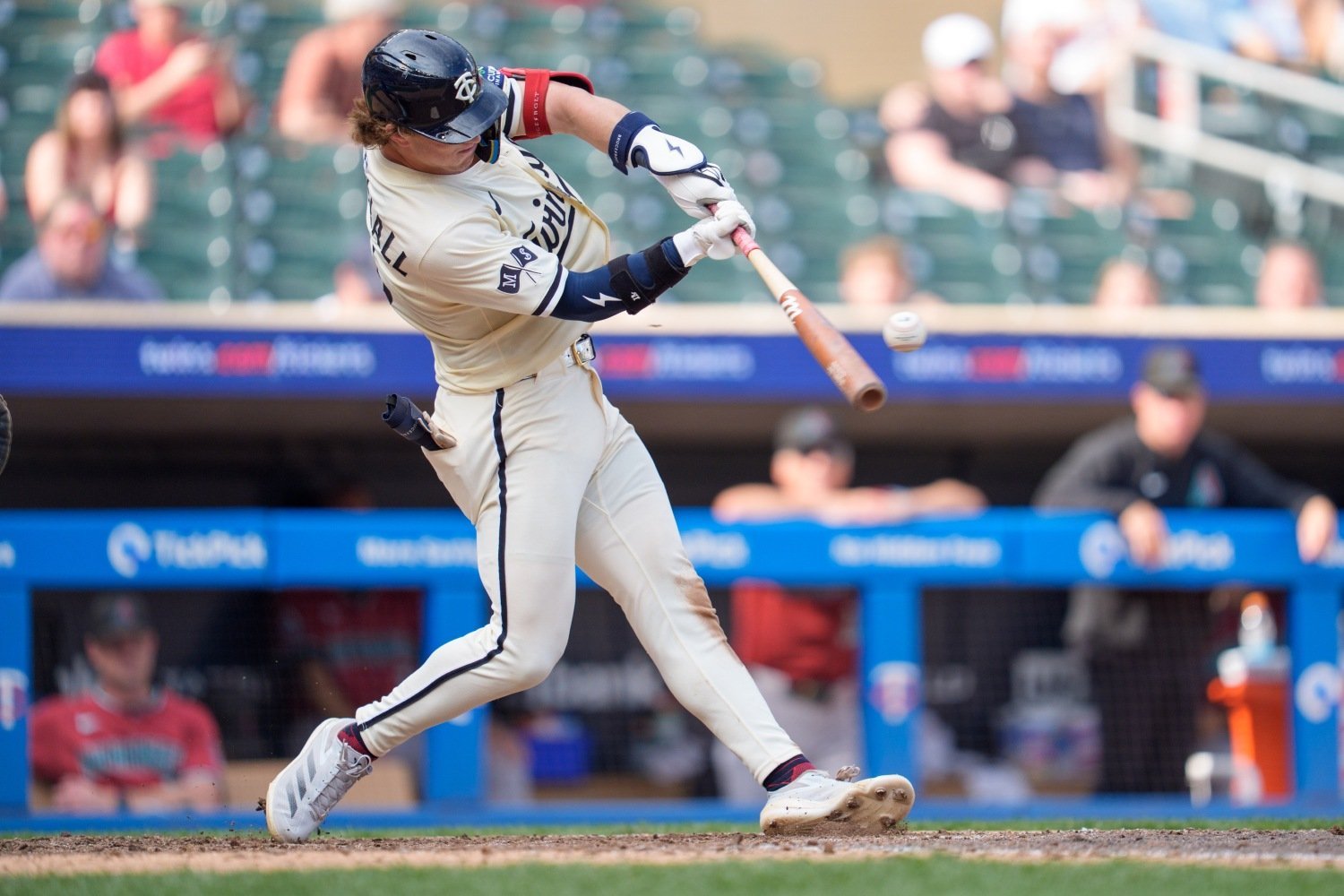
The Minnesota Twins entered this season with dreams of young stars leading the next competitive core. Some of those dreams became reality, as second baseman Luke Keaschall emerged as one of the most exciting rookies in baseball. In 49 games, he hit .302/.382/.445 (good for a 128 OPS+) and 14 stolen bases. His aggressive play, quick bat, and sparkplug energy became a rare bright spot in a long and disappointing year.
But as Twins fans have learned over the past decade, “exciting” and “durable” don’t always go hand in hand—perhaps, alas, an unfortunate turn of phrase. Keaschall’s latest setback, a thumb surgery scheduled for this winter after injuring himself sliding into second base, feels like déjà vu. Minnesota’s history of promising prospects being derailed by injuries has become one of the defining storylines of the organization’s modern era.
To fully understand why Keaschall’s health concerns feel so familiar, it’s worth revisiting the trail of talented, injury-prone stars who came before him.
Byron Buxton: The Five-Tool Superstar
Buxton was supposed to be the next face of the franchise, a five-tool phenom who could do it all. When healthy, he has lived up to that billing, including the 2025 campaign, where Twins Daily named him MVP. The problem, of course, has been staying on the field. From wrist and knee issues to hip, shoulder, and concussion problems, Buxton’s injury history reads like a medical file instead of a résumé. He’s played over 100 games for the second consecutive season, and it feels like a victory, but the inconsistency has limited his ability to anchor the Twins’ lineup fully.
Royce Lewis: Star Potential
If anyone embodies resilience, it’s Royce Lewis. The former No. 1 overall pick has torn his ACL twice, missed full seasons of development, and struggled to establish himself as one of the team’s top hitters. In 2025, he played 106 games and posted a career-low 83 OPS+. His 2023 postseason heroics gave fans a glimpse of his superstar potential. Still, even this season, injuries crept back in; hamstring tightness and other lower-body issues kept him from staying in the lineup consistently. When he’s healthy, Lewis has shown flashes of his full potential. But that phrase—when he’s healthy—has haunted him since draft day.
Alex Kirilloff: Pushed to Retirement
Kirilloff’s swing had always been his calling card, and it’s why the Twins drafted him with a first-round pick. His wrists and spine, unfortunately, have been his undoing. After multiple surgeries and recurring pain, Kirilloff was forced to retire last winter. For many years, evaluators believed his bat would be penciled into the middle of the Twins’ lineup, but now he is selling real estate in Florida instead of impacting the roster.
Austin Martin: Derailed by Delays
Martin’s development path was already winding when he arrived from Toronto in the José Berríos trade, but a series of soft-tissue injuries only made things worse. He’s shown flashes of the on-base skills that made him a top draft pick. He ended the year on a high note, hitting .282/.374/.365 with a 106 OPS+ and 11 steals. The Twins hope he can carve out a role in 2026, but it’s been a long, uneven climb.
The Next Wave: Walker Jenkins and Emmanuel Rodriguez
Even the next generation hasn’t been immune. Walker Jenkins, the team’s prized 2023 first-round pick, has dealt with multiple injuries in his first two professional seasons. Still, the Twins were aggressive with him and pushed him to Triple-A before he turned 21. Emmanuel Rodriguez, one of the system’s most dynamic outfielders, has also battled lower-body issues that kept him off the field for long stretches in the minors. Both have superstar ceilings, but the first step is staying on the diamond.
Keaschall: The Spark Plug
That brings us back to Keaschall. His rookie season was everything fans hoped for: energy, athleticism, a contact-first approach, and sneaky power. He looked like the kind of player who could shift a clubhouse’s culture, a relentless competitor who played the game at full speed.
However, that full-speed mentality comes at a cost. After Tommy John surgery last year, Keaschall broke his forearm early this season, only to return and reestablish himself before his latest thumb injury. Three significant injuries in less than two years would be a concern for any player, let alone one whose game depends so heavily on aggression and athleticism.
The Twins love Keaschall’s makeup, and believe his style will help define their next winning team. Still, there’s a quiet anxiety around whether his body can keep up with the way he plays. Fans have seen this movie before, and they know how quickly a promise can turn to frustration when health becomes the storyline.
A Hopeful but Cautious Future
Keaschall could absolutely be part of the Twins’ long-term core. His instincts, leadership, and contact ability make him an ideal fit for a lineup looking to rediscover its identity. But Minnesota’s front office and training staff have to find a way to rewrite the script to keep this next generation of stars on the field, instead of in the training room.
The Twins are starting to shift their reputation to drafting and developing athletic, high-upside talent. To make the most of that philosophy, they’ll need one thing above all else: durability. Keaschall might be the next great Twin—or the next great “what if.”
Are you worried about injuries impacting the next generation of Twins’ top prospects? Leave a comment and start the discussion.