
Bill Shanks
| Special to the Savannah Morning News

Savannah Christian’s Blaise Thomas on the win over SCD
Savannah Christian’s Blaise Thomas on the win over SCD
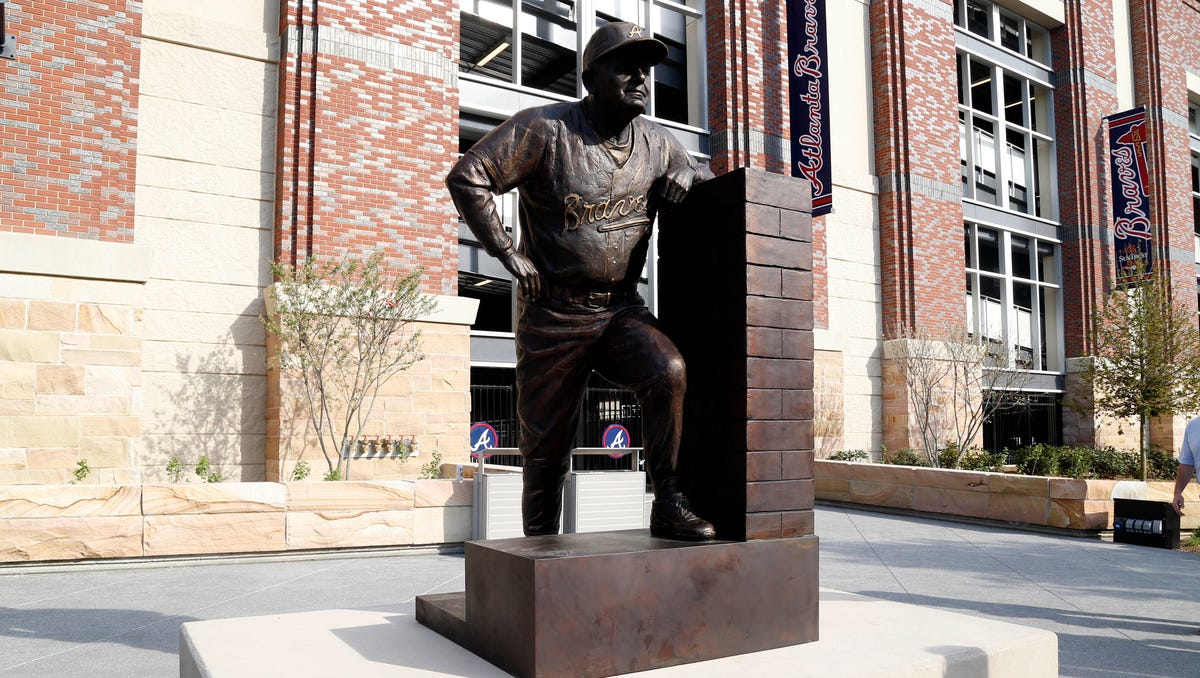
Last Wednesday’s press conference announcing the transition of Brian Snitker from Atlanta Braves manager to an advisor was as much a funeral as anything else. It was the end of an era, the passing of a torch, and the death of the revered “Braves Way.”
Every team likely claims to have a way, or a standard. The St. Louis Cardinals have long proclaimed their way is better than others, while the New York Yankees will stand upon their 27 World Series trophies and say theirs is the best.
But for us, in these parts, the “Braves Way” is part of our sports vernacular.
Sure, you have to have success to have a way. That wasn’t the case for most of the first 25 years of Atlanta Braves baseball. From 1966 through 1990, it was mostly a nightmare. The Braves hadonly seven winning seasons in the first quarter-century, and the losing was usually bad losing ― with 10 seasons defined by 90 or more losses.
They were our Braves, and win or lose, with empty stadiums and pitiful teams, we loved them. But they just weren’t very good.
That all changed 40 years ago this month. The Braves had just had a miserable season, much like this past season. The 1985 Braves were supposed to be good, much like this past season, but things fell apart. Sound familiar?
A year earlier, Atlanta’s front office had run off manager Joe Torre, who would go on to do bigger things down the road in New York. After winning the 1982 National League West, the Braves went backwards, and team owner Ted Turner, who was busy with other, more important business ventures, was tired of messing things up. Turner decided to turn things over to people he trusted to fix his baseball team.
Of course, Turner was a smart businessman. He purchased the Braves a decade earlier to be programming on his cable channel. If the team was bad, the ratings would suffer and then the revenue would be lower. So, if the Braves got fixed, maybe, just maybe, the ratings, and consequently the revenue would improve, as well.
Turner brought in a man he had fired four years earlier ― Bobby Cox. But since Cox had managed the Toronto Blue Jays to the American League East title, Turner had to wait until the Blue Jays finished the playoffs. In the meantime, to make sure he didn’t miss out on a good manager, Turner hired recently fired Pittsburgh manager Chuck Tanner to manage the Braves.
But Turner really wanted Cox. Heck, when Turner fired Cox as manager in 1981, he was asked who was on the list to replace him. Turner said, “It would be Bobby Cox if I hadn’t just fired him.”
Since he couldn’t have Cox as manager this time around, Turner asked Cox to be in charge, to be his general manager. Cox called on Paul Snyder, Atlanta’s scouting director, to help him rebuild the farm system and make the Braves a consistent winner. At the same time, Turner summoned Stan Kasten, then the general manager of his successful Atlanta Hawks franchise, to help.
Cox’s hiring turned out to be the most consequential decision in the 60 years of Atlanta Braves baseball. Cox and Snyder made a change. Instead of focusing on hitters to hit home runs in “The Launching Pad” of Atlanta-Fulton County Stadium, they would develop pitchers. Kasten hired scouts and made development a priority, and the three set a standard in the late 1980s.
Now, it didn’t seem like it was working, at least on the field. The results suffered. Tanner was fired in 1988, and two years later, Kasten convinced Cox to do what he had really wanted to do in the first place ― manage. In the background, the prospects drafted, signed and traded for got better.
Then, 35 years ago this month, another monumental decision was made by Kasten. He needed a GM to replace Cox, who was not going to do both jobs. Kasten asked Royals GM John Schuerholz to leave his cushy job in Kansas City and head south. Schuerholz, then 50 years old, needed a challenge, and he knew he had one in the perennial losers in Atlanta.
The rest, as they say, is history.
We all know what happened after that. As Snyder told me 20 years ago, “We had good players, but Mr. Schuerholz taught us how to win.”
And boy, did they ever. A team that had won only two division titles in the first 25 years in Atlanta won 14 straight division titles from 1991 through 2005, a stretch that included five NL pennants and a World Series title in 1995.
That process, and the subsequent winning, developed a standard that is still in place today. But it was about the people; the way they treated players, and the way they treated each other. It was often labeled as buttoned-up, or ultra-professional, but it was simply the way the Braves carried themselves, the way they acted. It wasn’t perfect, but it became a way the franchise was viewed.
The cast of characters included great names like Tom Glavine, John Smoltz, Ron Gant, Mark Lemke, Jeff Blauser, and David Justice. Then Terry Pendleton and Sid Bream became household names, followed by additions like Greg Maddux and then kids like Chipper Jones, Ryan Klesko and Javy Lopez, who would keep the tradition going.
But the orchestra leaders were Cox, Snyder, Kasten, and Schuerholz. They set the tone. They developed the standard. Everyone in the family learned from them. Into the new century, Dayton Moore and Roy Clark became integral pieces of the puzzle. And working his way up the minor league ladder, Brian Snitker was soaking all of it in. As Snitker has said so many times, including last week when he was taking the uniform off for the final time, “I learned from Hall of Famers.”
Of course, there’s a Hall of Famer named Henry Aaron who had a big impact on Snitker’s life. Aaron was the one who made the soon-to-be-released player a coach back in 1980. There were others, people like Bobby Dews, and scouts who worked for Snyder who identified great talent and got them to Atlanta. Snitker continued that legacy until the day he ended his on-field career, in the uniform he respected and loved so much.
But now, that chain has been snapped. Snitker will still be around, but it won’t be the same. Newer, younger executives in charge have run off stalwarts who were part of that way in favor of their own men. Dews, Aaron, Snyder and Clark have all passed away. Kasten is running some blue team in Los Angeles. Moore went on to lead the Royals to a championship a decade ago. Schuerholz just turned 85, while Cox, God willing, will hit that same age next May.
Last Wednesday, after the press conference announcing the change with Snitker, a former Braves scout texted me, “The Braves Way died today.” Then, ironically, two others wrote the same thing. They could feel it. It was palatable. It’s simply going to be different. The people responsible for the way this franchise has been have slowly drifted away and been replaced.
We’ve experienced a tremendous run of Braves baseball that will never be duplicated. Hopefully, somehow, the spirit of this way will endure regardless of who is in charge or who owns the team. Hopefully, they’ll remember what that tomahawk stands for, and the men who defined what it meant along the way.
All things must end, but for it to be rounded off 40 years to the month after it started is bizarre. Cox’s hiring as general manager four decades ago changed everything for this franchise, and we have to hope Snitker’s removal won’t change things for the worse.
Listen to The Bill Shanks Show weekdays at 3:00 pm ET on 104.3 FM in Savannah and online at TheSuperStations.com. Email Bill at TheBillShanksShow@yahoo.com.