
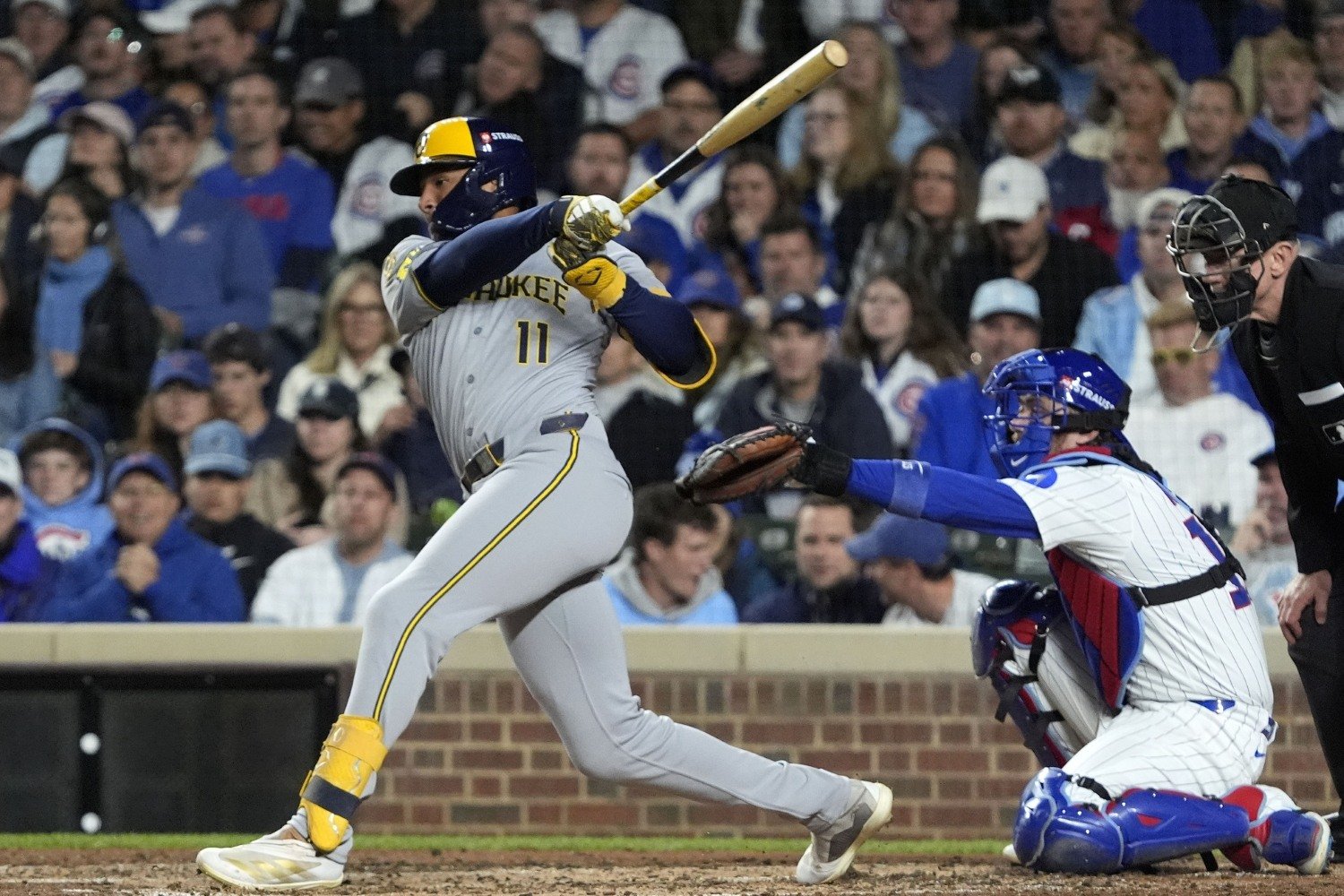
This year’s NLDS between the Milwaukee Brewers and Chicago Cubs always felt destined for five games. The teams were evenly matched all season. with Chicago leading early in the NL Central before Milwaukee surged to a third straight division crown. Yet after the Brewers grabbed a 2–0 series lead, the Cubs countered with two wins at Wrigley Field, forcing a decisive Game 5 at American Family Field. As the tension builds, here are five key questions for Milwaukee.
1) Who can quiet the Cubs’ first-inning fireworks?
Chicago has scored in the first inning of every game, including three straight with at least three runs. The Brewers overcame early blows at home, but couldn’t recover on the road. Stopping that pattern is crucial.
Given the left-handed power at the top of the Cubs’ order, a lefty opener makes sense. Jared Koenig appears the most logical option: his stuff has played well against Chicago, holding their projected top five to a .222 average with five strikeouts and no homers. On the other hand, they’ve seen him a lot; his pocket in the lineup (and, thus, the game) might need to come later. Jose Quintana, who threw three scoreless innings on 49 pitches in Game 3, is another option, though his finesse approach can be risky. Aaron Ashby’s command and exposure in the series make him less ideal this time around, just as Koenig’s does.
Among right-handers, Jacob Misiorowski’s electric arm comes with control concerns, Quinn Priester might be too shellshocked to start again after his Game 3 blowup, and Chad Patrick’s past struggles against the top of Chicago’s order (.272 average, three extra-base hits) raise questions.
2) Will the Brewers return to a proven lineup?
Milwaukee’s offense exploded for nine and seven runs in Games 1 and 2, respectively, when Jackson Chourio led off and Christian Yelich hit cleanup. In Chicago, with righty Jameson Taillon starting Game 3 and a lefty who everyone thought would be lifted quickly in Matthew Boyd for Game 4, manager Pat Murphy moved Yelich to the leadoff spot. Alas, the team scored just three total runs. The change also failed in the final week of the regular season, when Milwaukee averaged only 2.4 runs per game with Yelich atop the order.
During the season, the Brewers averaged 4.98 runs (third in MLB) with Yelich in the middle of the lineup. Logic suggests returning him there. The complication there is also part of the reason why Murphy test-drove this switch in the first place: slumps from Sal Frelick (.214, .536 OPS) and Brice Turang (.125, .364 OPS), who typically set the table near the top. Still, maximizing at-bats for the team’s productive hitters (Chourio, William Contreras, Yelich, and Andrew Vaughn) remains the best bet.
3) Can a struggling hitter come through?
Milwaukee’s offense has relied heavily on its top four bats, but postseason success often hinges on an unexpected hero. Frelick, Turang, Caleb Durbin (.143, .393 OPS), Joey Ortiz (.200, .533 OPS), and Blake Perkins (1-for-last-8, 4 K) have all struggled. Jake Bauers’s bat could be valuable, as demonstrated by his Game 3 contributions—though defensive trade-offs limit his starts. A clutch at-bat from a bench player (perhaps Andruw Monasterio or Isaac Collins?) might swing the series.
4) Can Pat Murphy regain his touch?
Murphy’s decisions at Wrigley raised eyebrows. Starting Brandon Lockridge, who hadn’t appeared since August, was puzzling. Sticking with Frelick against a tough lefty in a key Game 3 spot (rather than using Vaughn, who had an .859 OPS vs. lefties) was another miss. In Game 4, with two on and no outs in the fifth, Murphy opted for Ortiz to bunt instead of pinch-hitting with Monasterio, who posted an .837 OPS against southpaws. Each move cost Milwaukee chances to shift momentum.
Still, Murphy has shown strong tactical instincts. His bullpen management in Game 2 was masterful, and his early-series lineups clicked. Game 5 will demand that same decisiveness.
5) Will the crowd give Milwaukee a true home-field edge?
The Brewers’ crowd was loud and dominant in Games 1 and 2, easily drowning out Chicago fans. But after two Cubs wins, there’s concern that Milwaukee’s anxiety and ticket resales could invite a stronger visiting presence. That would be a major disappointment. Murphy has noted how much his young team feeds off the home crowd’s energy, and the difference in atmosphere between Milwaukee and Chicago was noticeable.
With everything on the line, Game 5 will test the Brewers’ adjustments, resilience, and composure. The talent is there, but to advance, Milwaukee must rediscover what worked early in the series: smart managing, timely hitting, and a fired-up home crowd.