
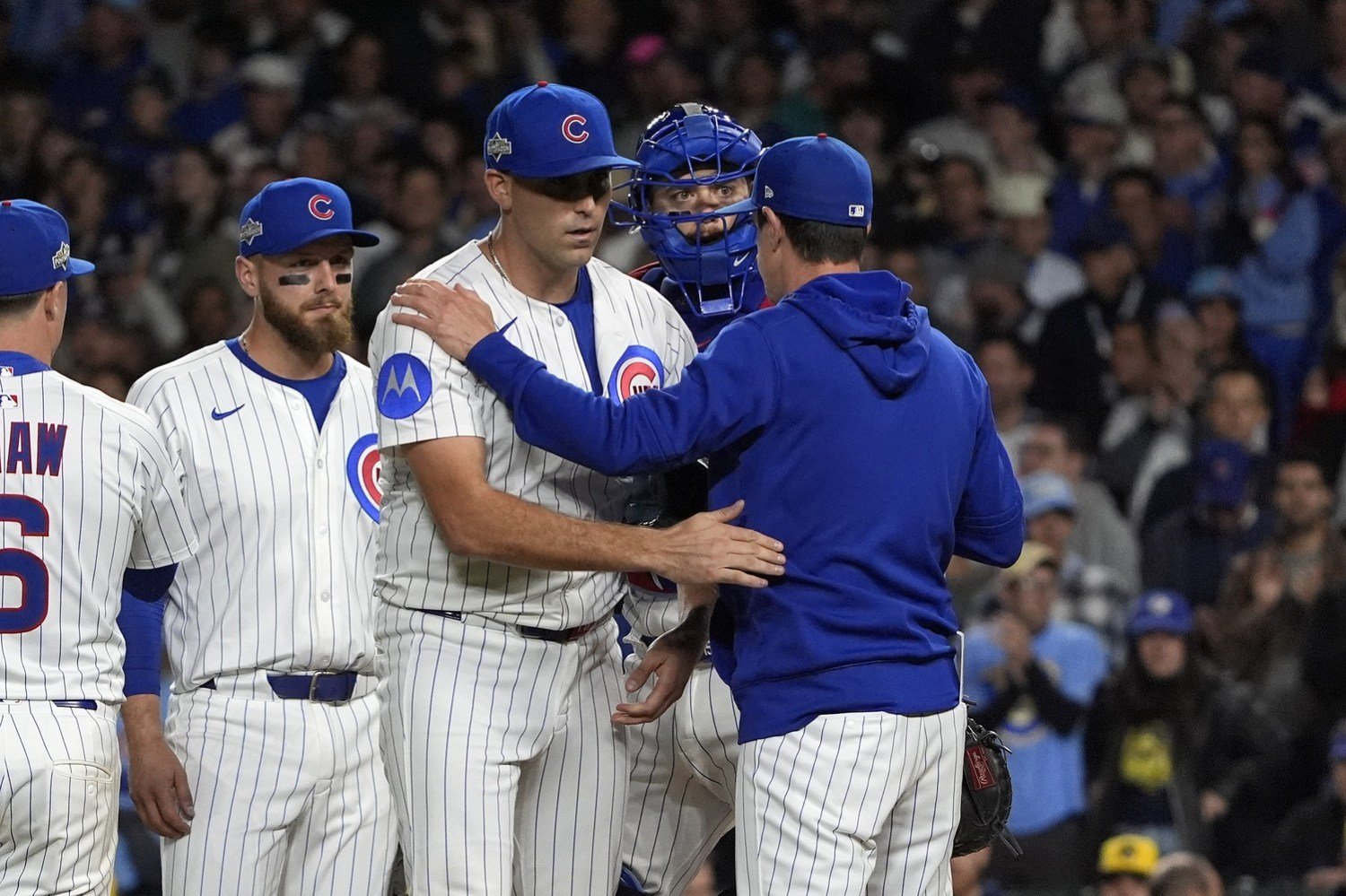
Ahead of Thursday night’s Game 4, it wasn’t unreasonable to think that Matthew Boyd should have made his last start in the Chicago Cubs’ NLDS matchup against the Milwaukee Brewers. Not only was it an opponent he’d struggled with in the regular season, but he found himself absolutely punked by the division rivals in Game 1: two outs, six runs.
In the regular season, Boyd drew two starts against Milwaukee. He threw 10 1/3 innings across those two outings, allowing nine earned runs on 12 hits. Those regular-season struggles were compounded in Game 1. He threw 30 pitches and served up a 90.2-MPH exit velocity on the high volume of contact he allowed in a brief stay on the bump.
Such context made it difficult to trust Boyd for another start in this particular series (assuming things went that far). Thursday, however, represented a stark contrast, and instead left us with the iteration of Boyd we’d seen for the bulk of 2025.
In the Cubs’ 6-0 Game 4 win at a raucous Wrigley Field, Boyd hung around for 4 2/3 innings; allowed just a pair of hits; walked three; and held the Brewers scoreless, before the bullpen took it the rest of the way. It reignited not only hope of a series victory, but faith in Boyd specifically. And it wasn’t complicated, coming down to usage and command.
The following is the breakdown of Boyd’s start in Game 1:

Boyd isn’t a pitcher who’s going to generate a huge number of whiffs, so that the swing-and-miss column reads as underwhelming is deceiving. He induced whiffs on only 23.4% of opponents’ swings throughout the 2025 regular season. Instead, Boyd’s strength is in command and, subsequently, managing contact quality. He was well above average in both average opponent exit velocity and opponent hard-hit rate. Not so in Game 1, though. Each pitch he threw, with the exception of the sinker, was touched for an average exit velocity at least 4 MPH higher than what he turned in during the regular season.
The changeup was also a source of woe in the small sample, as its absence of whiff and poor results defied what that pitch had been for him all season. So while punked is not a technical term, it does speak to what the Brewers were able to do in taking advantage of lackluster command and getting a reliable pitch to handle against him.
Those issues were completely dialed in by his next start, however. The breakdown looked like this:

The first thing you’ll notice is that the average exit velocity fell by 10 miles per hour. The second thing you may notice is that Boyd, pitching in a much more expanded sample than Game 1, put his changeup firmly in the back seat in favor of the curveball. It was something that visibly caught Milwaukee off-guard, as he only got four swings against it but earned called or swinging strikes on 40% of the hooks he threw. He had that pitch locked in, and it created an issue for a Milwaukee lineup that didn’t have any the first time they saw him.
What makes the Boyd turnaround so enjoyable between starts isn’t solely the outcome. It’s that the underlying factor contributing to it falls squarely on the craft. Command can be honed in with an evaluation of mechanics or simply clearing out a poor start ahead of the next one. But the foresight to change the usage just enough to make it play in your favor against an opponent who has had your number throughout the season speaks to a nuance that makes this game so fascinating. In each of those two regular season starts, it was the changeup serving as Boyd’s most-used secondary offering (thrown 26 percent of the time on July 28 and 20 percent of the time on August 19). The Brewers had no reason to expect the hook would be there in lieu of it, and were unable to adjust.
It ultimately may not mean anything, in the final result of this series. Maybe it will. But it certainly dispels a certain level of concern about Boyd’s ability to pitch at this point in the year, given the volume he’s thrown in comparison to the last handful of seasons. It was an impressive performance under pressure, from a veteran the team needs for the balance of this season and in 2026. In that sense, its meaning and value are impossible to erase.