
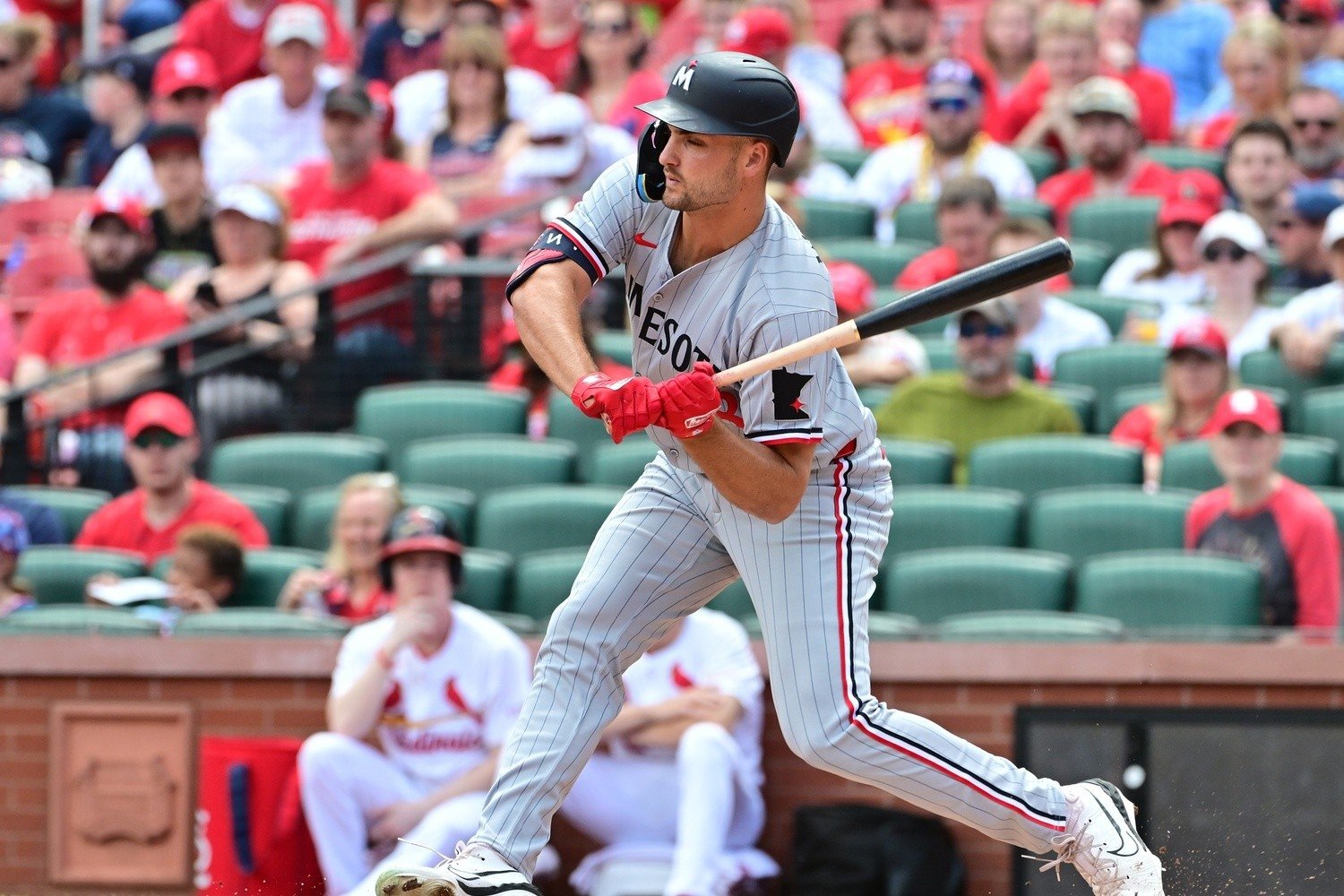
I know, I know: you hate strikeouts. When they come in bunches, they can be frustrating. Swords? Forget about it. Ugly. A strikeout looking with a runner on? Brutal.
What if all the strikeouts aren’t the problem, though? Through five games, the 2025 Twins have taken a measured, old-school approach, emphasizing putting the ball in play. The result? Eight runs scored across their first four games, and just one rally to salvage the game in the latest one.
Even after Tuesday’s miniature slump-buster, the Twins have the fourth-lowest batting average in the majors, at .174. Their slugging is also fourth-worst, at .267. Even more predictive metrics like hard-hit rate, launch angle, and barrels are all middle of the pack. This is despite being the beneficiaries of the fourth-highest meatball rate in baseball. With the current Twins approach, they might as well just swing away and take the K, ‘cuz this is no way to live.
Before you tell me “hold on, the Twins have just faced some great pitchers. It’ll be ok,” let’s be real: They have faced a diminished Sonny Gray; the solid but unspectacular duo of Erick Fedde and Andre Pallante; and the husk of Martín Pérez. When they got a look at a rookie who has proved nothing, it was they (rather than he) who looked outmatched.
So what’s behind this frigid start at the plate? A main culprit is that the Twins have hit the ball on the ground nearly 48% of the time, and topped over 35% of the balls they make contact with. In fact, they have the lowest launch angle sweet spot rate in baseball, 10 percentage points worse than the average team. When they’re not over the ball, they’re under it; no team has hit fewer line drives this year.
They also aren’t walking even a little bit (aside from Matt Wallner, who seems to be picking up right where he left off in 2024). In fact, before Tuesday’s game, the Twins had just 10 2-0 counts to start a plate appearance, by far the lowest in baseball. Making up for lost time, they reached five 2-0 counts Tuesday and drew six walks—and they still have the fewest hitter-friendly counts in baseball so far.
I want to reiterate: that’s no way to live. All of this has led to a .520 team OPS. For perspective, last year, the league hit a collective .222/.280/.337 from the ninth spot in the order. The worst hitter in your average lineup last season was about 100 points ahead of the Twins in OPS.
Common baseball wisdom suggests that hitters typically see one pitch per plate appearance they can crush. Their job is to make sure the at-bat is still alive when they get it, and to take advantage when they do. What we have seen throughout the first handful of games is not dissimilar from what we saw in the collapse down the stretch last season: a lot of mediocre swings at non-competitive pitches. This has led to a lot of weak choppers and lazy pop-ups that are gobbled up for outs. But why is this happening?
A fair amount of this can be attributed to a combination of aggression on non-competitive pitches, passivity on good pitches, and perhaps even a hint of desperation to avoid strikeouts. Let’s look at this theory through two separate plate appearance case studies. Neither of these instances were moments in which the game was on the line, per se, but each could have led to runs with a different approach and outcome. For both of these examples, there have been several others I also could have chosen. So, there’s a theme, for sure.
Aggression on Non-Competitive Pitches
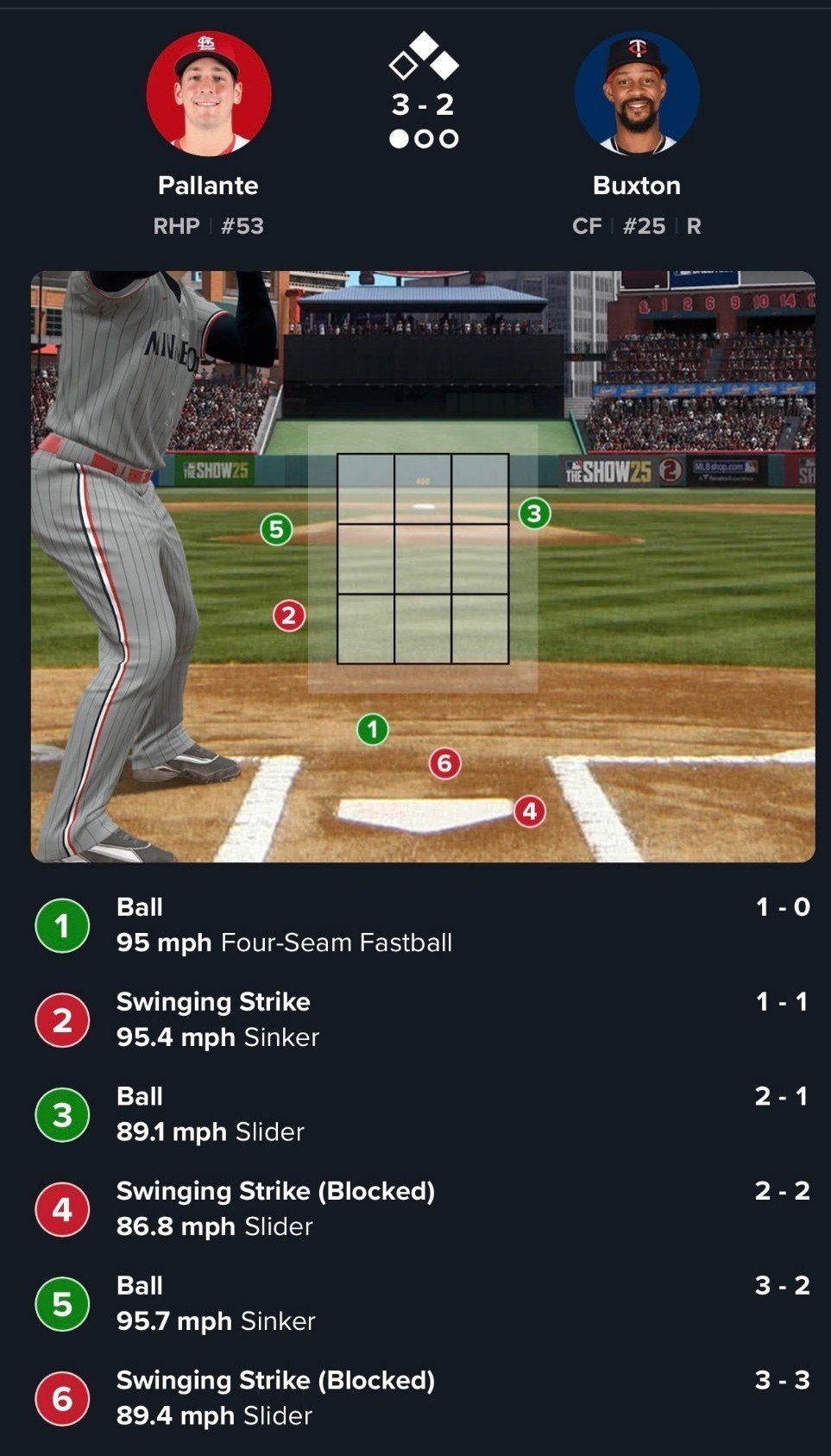
In Sunday’s finale against the Cardinals, Byron Buxton was up with two on and one out, facing Pallante. He struck out on six pitches. The kicker? Not one was in the zone. To be fair, Buxton is a free-swinger and strikeouts are a big part of his game. However, this is extreme even for him. Is it a case of trying to do too much, to jumpstart the sluggish offense? We saw that down the stretch last year, and it seems to be continuing.
Passivity on Good Pitches
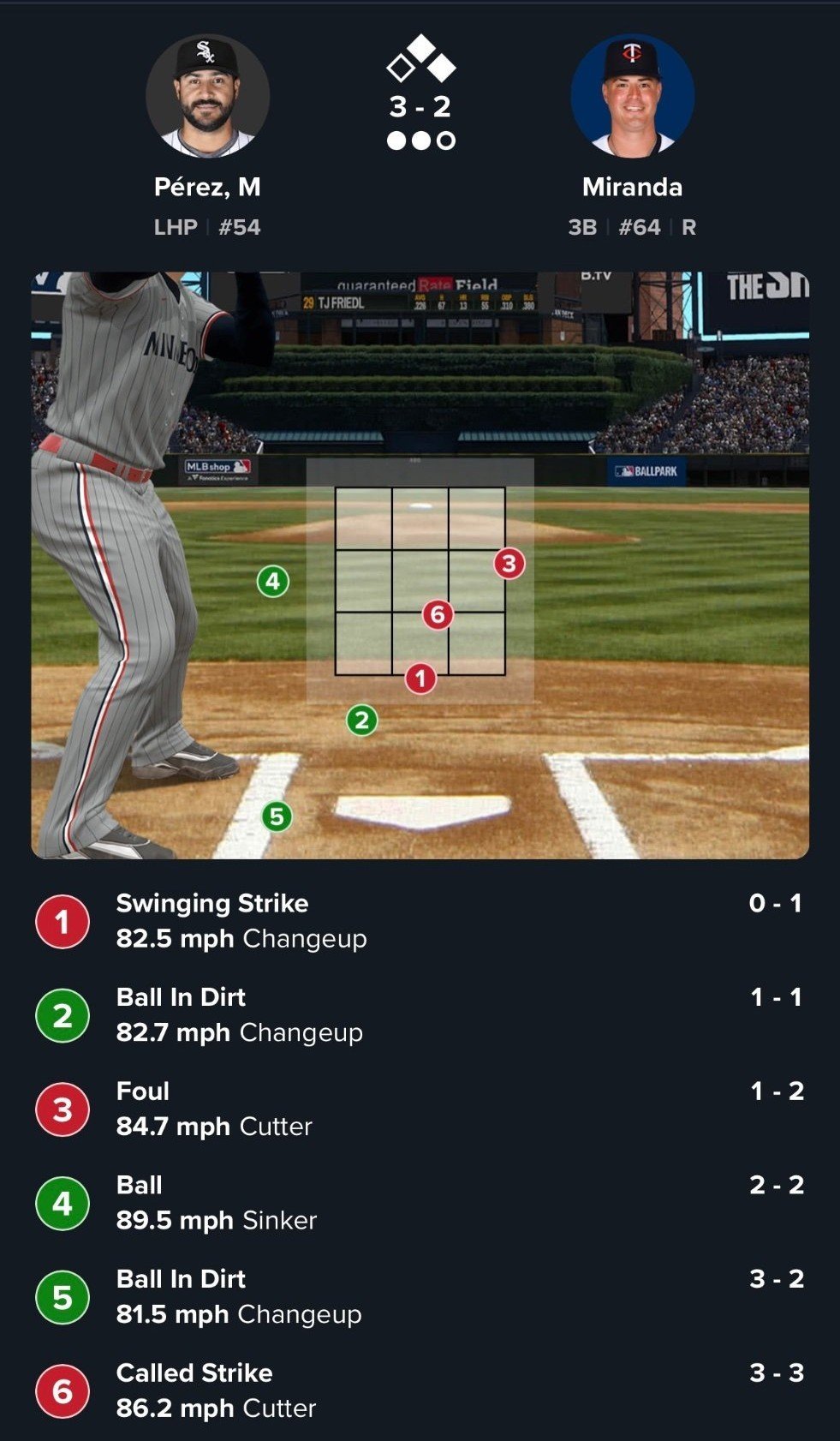
Here, in Monday’s game against the White Sox, José Miranda came to the plate in the top of the fourth inning. Facing Martín Pérez, there were two outs and runners on first and second. Now, the game was well out of hand, with the Twins down 9-0. But, there was an opportunity to put a run on the board. In his first pitch, he guessed fastball middle-middle, the bottom dropped out, and he had a swinging strike. With the third pitch, Miranda fouled off a pitch that he didn’t need to swing at, as it was in no way crushable and could have missed the zone entirely. Then, in the sixth pitch of the at-bat, Miranda watched a cutter that was over the heart of the plate go by without a swing. That was his pitch, and he could have pulled it hard.
Carlos Correa’s Timing
Ok. This one deserves a category of its own.
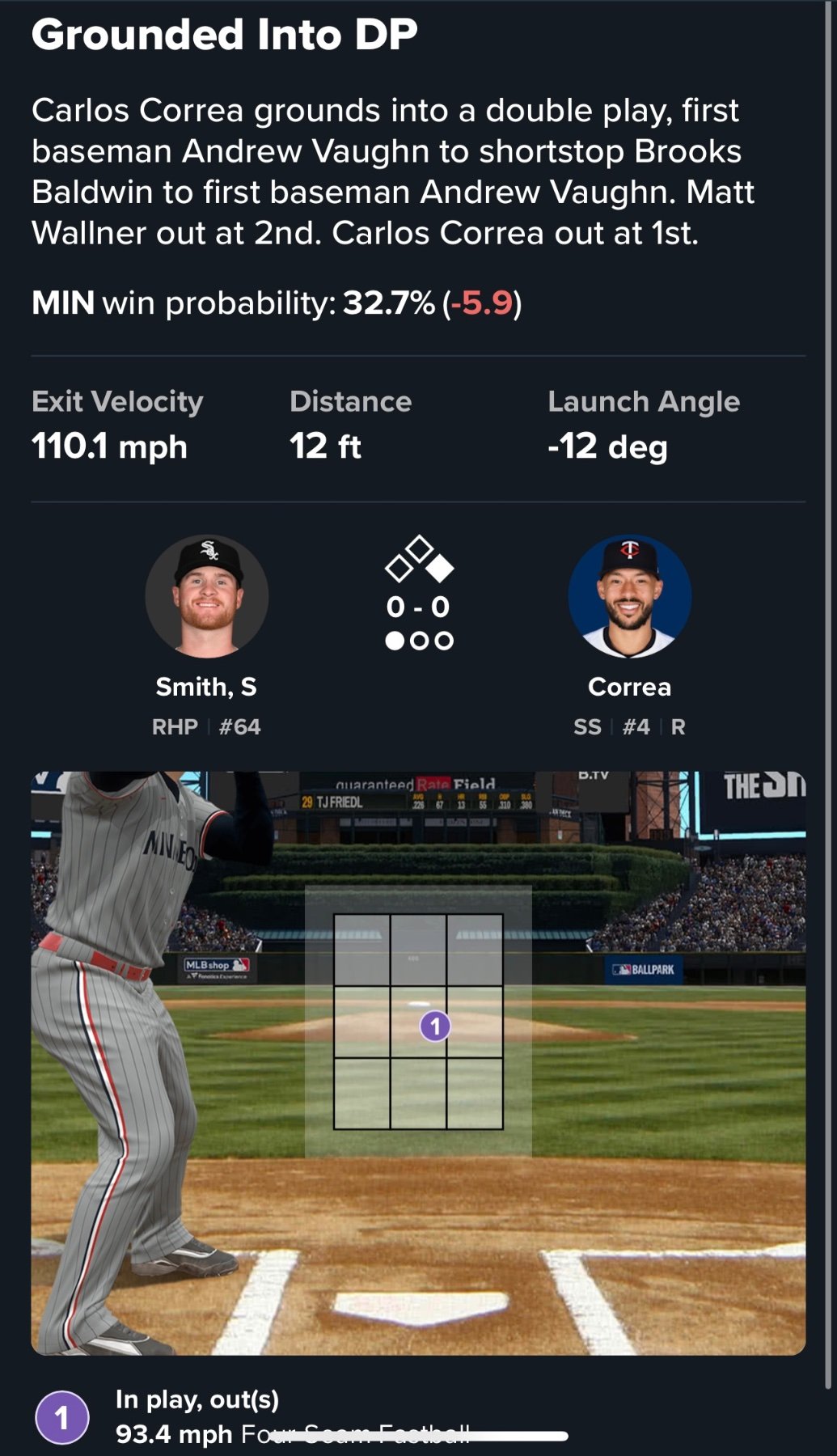
We know Carlos Correa is typically a slow starter. We know he had a rough spring at the plate. But did you know that Correa has averaged just 2.56 pitches per plate appearance? And did you know that the MLB average plate appearance length so far this season is 3.92 pitches? Well, Correa has jumped on the first pitch quite frequently so far, and as often as not, the approach hasn’t worked, even a little bit. For example, in Tuesday’s game facing White Sox Rule 5 pickup Shane Smith, Correa swung at the first pitch. He hit it hard, he hit it into the ground, he hit it 12 feet. Inning-ending double play.
Overall, Tuesday’s game showed a better approach. The hitters were a little more patient, but not passive. They waited for their pitches. Correa had two different lengthy at-bats. And the Twins put up eight runs, en route to their first victory of 2025. Will this showing reverse their early-season trend, or is this an outlier? One thing should be clear, based on roughly the past 40 games the Twins have played: New pitching coach Matt Borgschulte has his work cut out for him.