
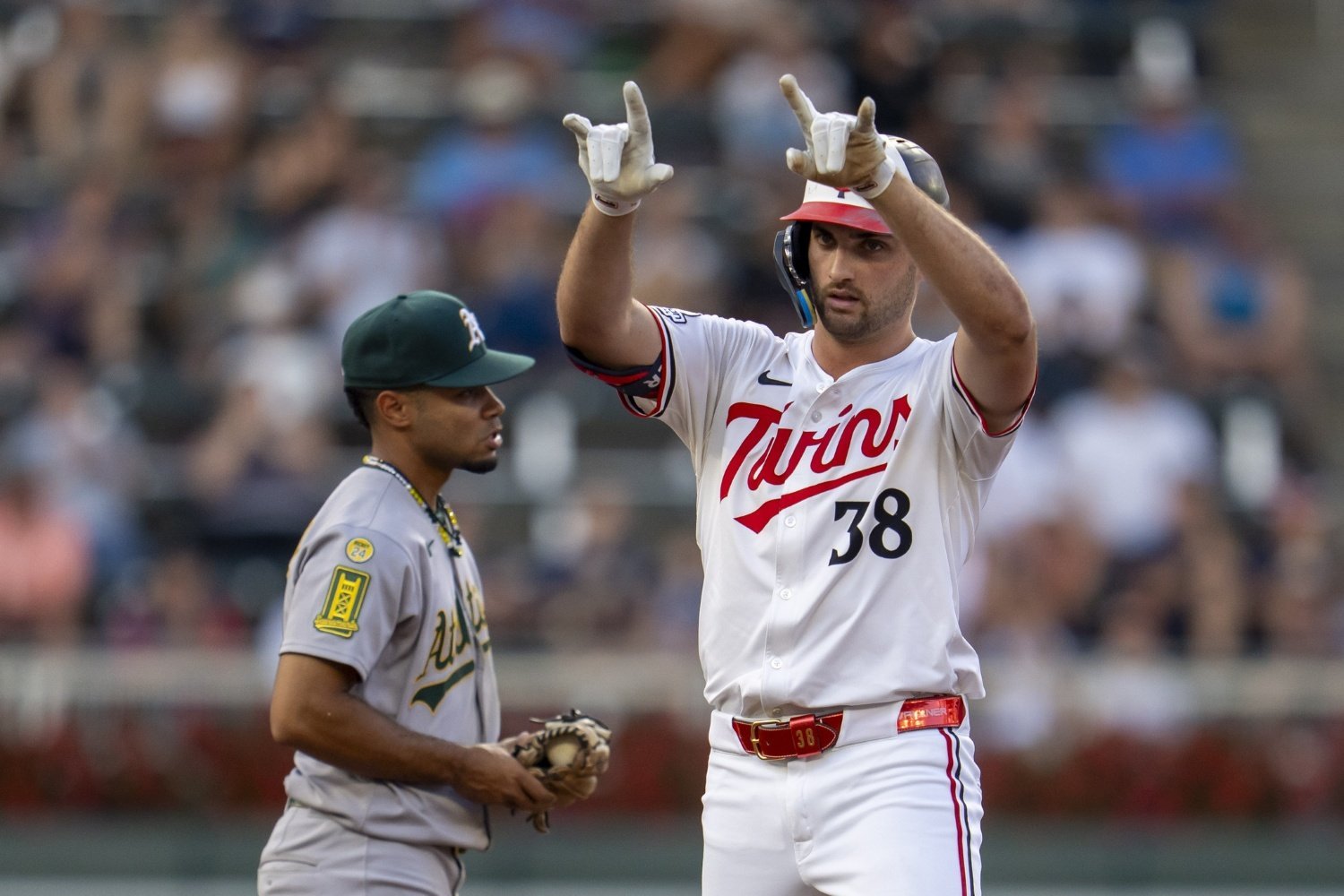
The Minnesota Twins enter the 2025-26 offseason facing a familiar question. Once again, the team lacks a clear answer at first base, one of the most critical positions in the lineup. The organization has tried multiple approaches in recent years, mixing veteran free agents with internal options, but none have provided a long-term solution. As the front office looks to retool the roster while keeping payroll manageable, finding a productive and affordable first baseman will be one of the club’s biggest challenges.
Minnesota’s path forward may depend on creativity. With several roster holes to fill and limited financial flexibility, the Twins are unlikely to chase a top-tier free agent. Instead, the solution might come from within, possibly by reimagining how the team uses some of its existing players. The front office has not been afraid to take unconventional approaches before, and this offseason could be another test of their resourcefulness.
Recent Free Agent Attempts at First Base
Over the past two seasons, the Twins have turned to veteran free agents to fill their first base void. In 2024, the club signed Carlos Santana to a one-year, $6-million deal, and the move paid off in a big way. Santana provided steady production at the plate (109 OPS+), while capturing a Gold Glove, giving Minnesota a reliable veteran presence both on and off the field.
This past offseason, the front office had less financial room to work with and opted for a low-cost addition in Ty France. The team signed him to a $1-million, non-guaranteed contract, but his stay in Minnesota was short-lived. France and Louis Varland were traded to the Toronto Blue Jays at the July trade deadline, leaving the Twins (once again) without a clear solution at first base. The veteran stopgap approach has produced mixed results; France posted an 87 OPS+. With payroll limitations expected to continue, the club may need to explore other options.
Reviewing the Internal Options
After France’s departure, the Twins turned to Kody Clemens and Edouard Julien to cover first base. Clemens displayed some power by hitting 19 home runs, but with a 94 OPS+, he fell short of being an impact hitter. For a club attempting to contend, that level of production does not cut it at a power spot like first base.
Julien’s 2025 season was even more uneven. He spent most of the year at Triple A and posted a 76 OPS+ in his limited big-league time. His bat did not meet expectations, and his defense remains a liability, especially at first base. It is becoming increasingly clear that neither Clemens nor Julien projects as a viable everyday option. Clemens could stick around as a bench player, but Julien’s future in the organization looks uncertain.
Getting Creative at First Base
If the Twins are serious about keeping costs down, they will need to think creatively about who handles first base next season. One option could be shifting Matt Wallner to the position. Wallner’s bat has proven capable of impacting games, but his outfield defense has been below average. A move to first base might help maximize his offensive value, while minimizing his defensive shortcomings. Even in a down year, Wallner remained one of Minnesota’s more productive hitters, and finding a way to keep his bat in the lineup makes sense.
Another possibility is Trevor Larnach, though his future with the club is less certain. With an estimated arbitration salary of $4.7 million for 2026, Larnach may be a non-tender candidate, given the team’s payroll constraints and their younger, cheaper corner outfield options. Wallner’s path to first base looks clearer, and if the Twins are willing to experiment, he could emerge as their next productive power hitter at the position.
First base has been a revolving door for the Twins in recent years, but that does not mean a solution is out of reach. Whether it comes from a position change or another low-cost acquisition, the front office must find stability at a spot that has long lacked consistency. Wallner’s potential move to first could bring both offensive firepower and roster flexibility, helping the club stretch its limited budget while maintaining competitiveness. For a team built on resourcefulness, finding a way to make first base work in 2026 could be one of the defining storylines of the offseason.
Is Wallner the team’s best option at first base? Leave a comment and start the discussion.