
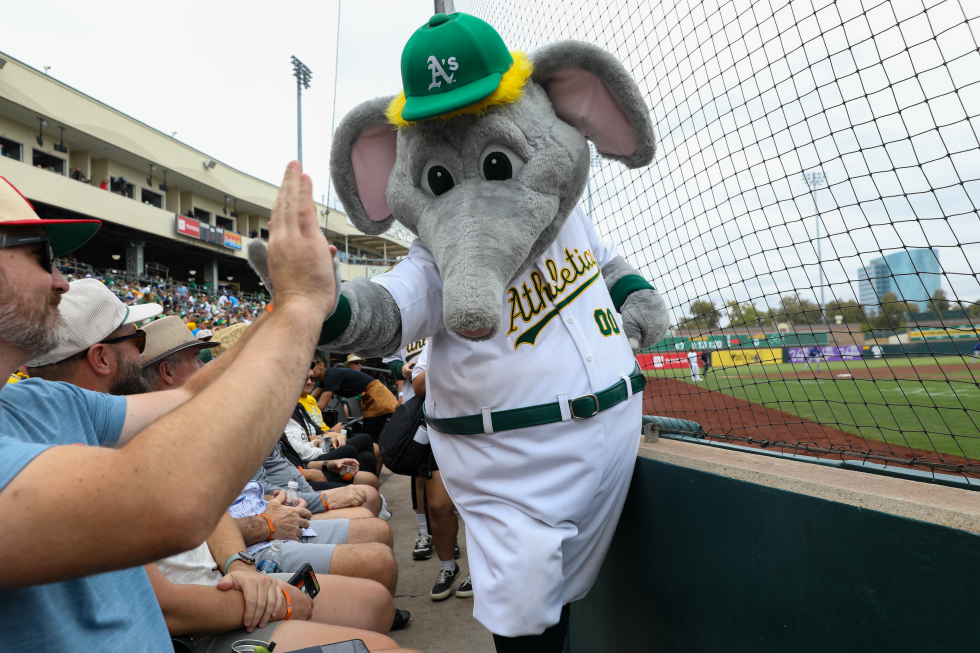
It took only one Major League Baseball game, the sold-out opener
at West Sacramento’s Sutter Health Park on March 31, for fans to
experience first-hand the old adage that you never know what you
might see at any given MLB game.
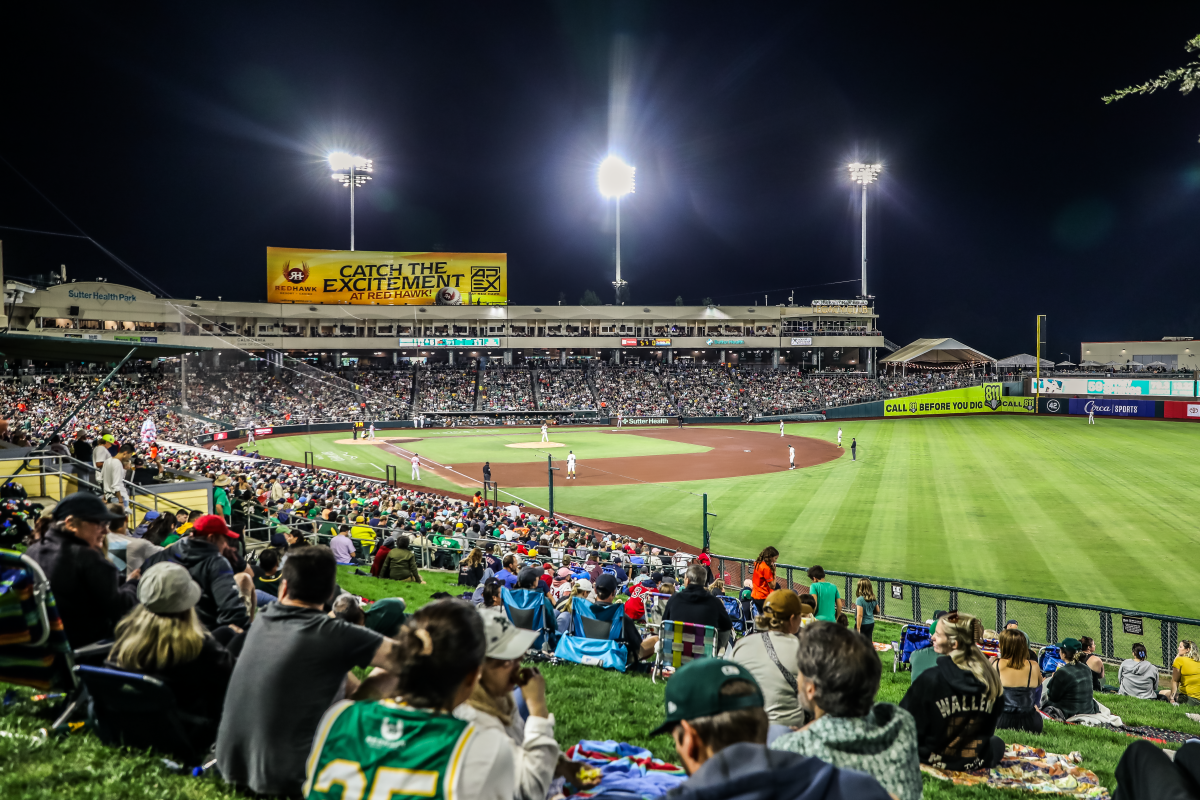
A perfect night for baseball at Sutter Health Park, Sept. 9,
against the Boston Red Sox.
With Chicago soundly beating the A’s in the eventual 15-3 win,
Cubs catcher Carson Kelly came to bat in the top of the eighth
inning needing a triple — a tough get for a catcher at any time —
to complete the Cubs’ first cycle (single, double,
triple, home run) since 1993. Kelly then banged a
fastball off the centerfield fence that ricocheted back towards
the infield enabling him to chug into third, getting him the rare
feat (only 350 cycles have been recorded in MLB history).
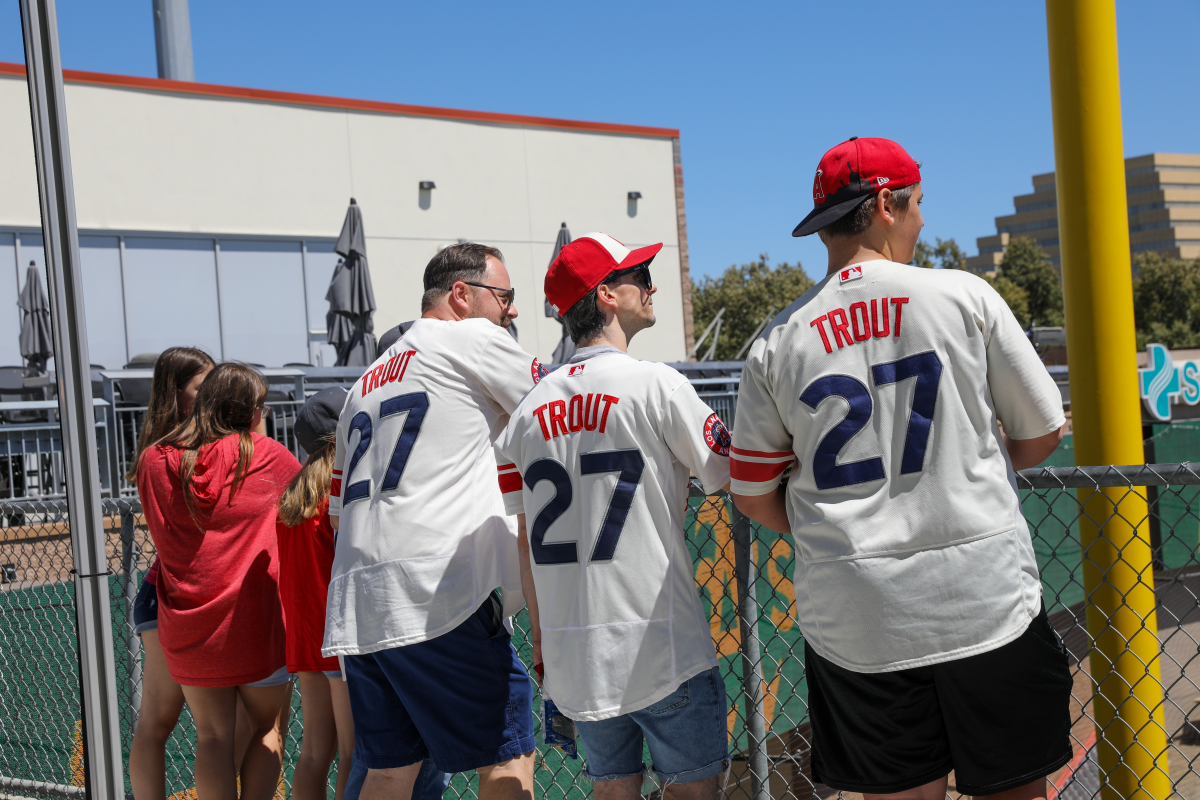
Fans of Mike Trout get ready as the Trout-led Los Angeles Angels
prepare to take on the A’s at Sutter Health Park on Aug. 17.
With the historic first season
of MLB in the Capital Region in the books, that rarity was just
one memory during a season full of them after A’s owner John
Fisher and local officials announced on April 4, 2024 that the
franchise was relocating to West Sacramento for at least the next
three years, sharing its park with the Triple-A Pacific Coast
League River Cats, while the MLB team prepared for its planned
move to Las Vegas in 2028.
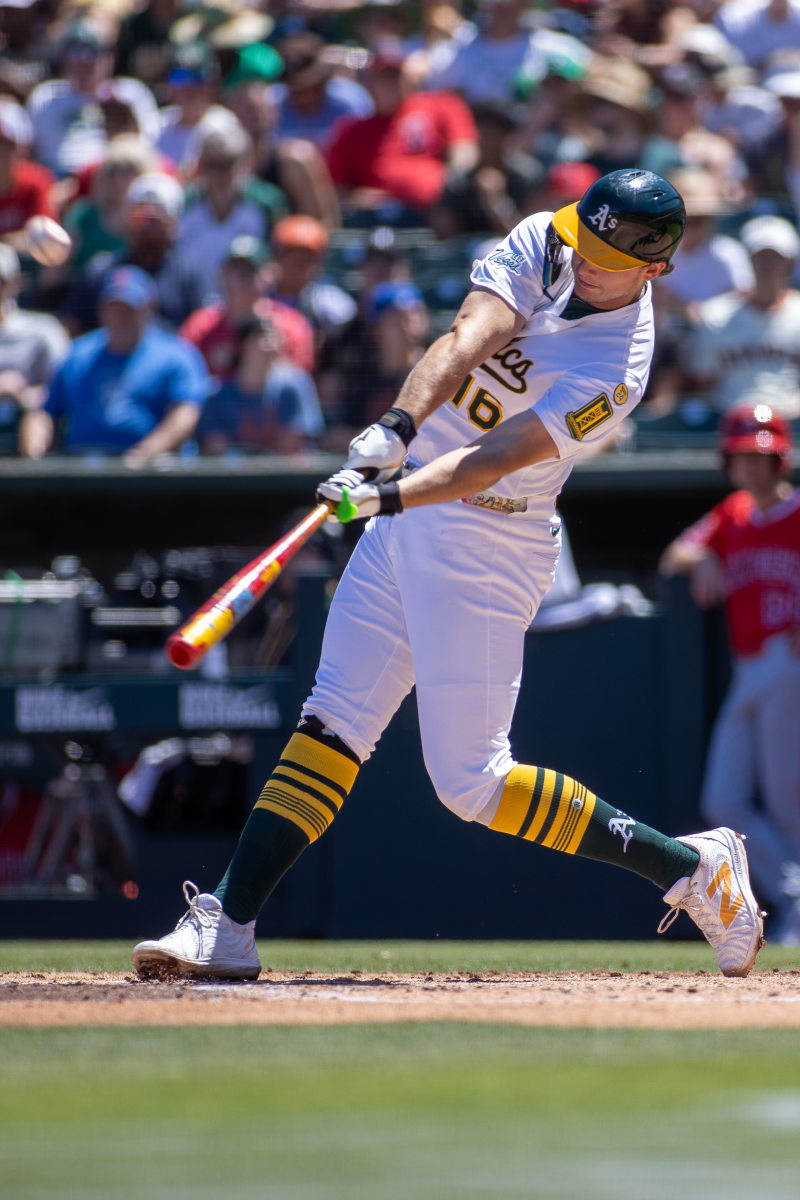
A’s rookie Nick Kurtz launches a home run Aug. 17 against the
Angels, one of the 36 he hit in 2025.
The
A’s last game on Sept. 28 against the Kansas City Royals capped a
controversial 18 months for the franchise that included a
bittersweet goodbye to 57 years at the Oakland Coliseum in
September 2024.
Through all the challenges
faced in the unprecedented 2025 season, there were 151 games
played at an upgraded Sutter Health Park (including the
Giants-River Cats exhibition March 23), 81 by the A’s, and 69 by
the River Cats. Both the A’s and River Cats struggled through
their season without making the playoffs, while a total of almost
1.1 million fans bought tickets.
“We’ve shown Sacramento the
best baseball in the world, and that’s something cool to think
about,” says Chip Maxson, President/COO of the River Cats, who is
tasked with essentially overseeing all operations at Sutter
Health Park and was recently named Minor League Baseball
Executive of the Year.
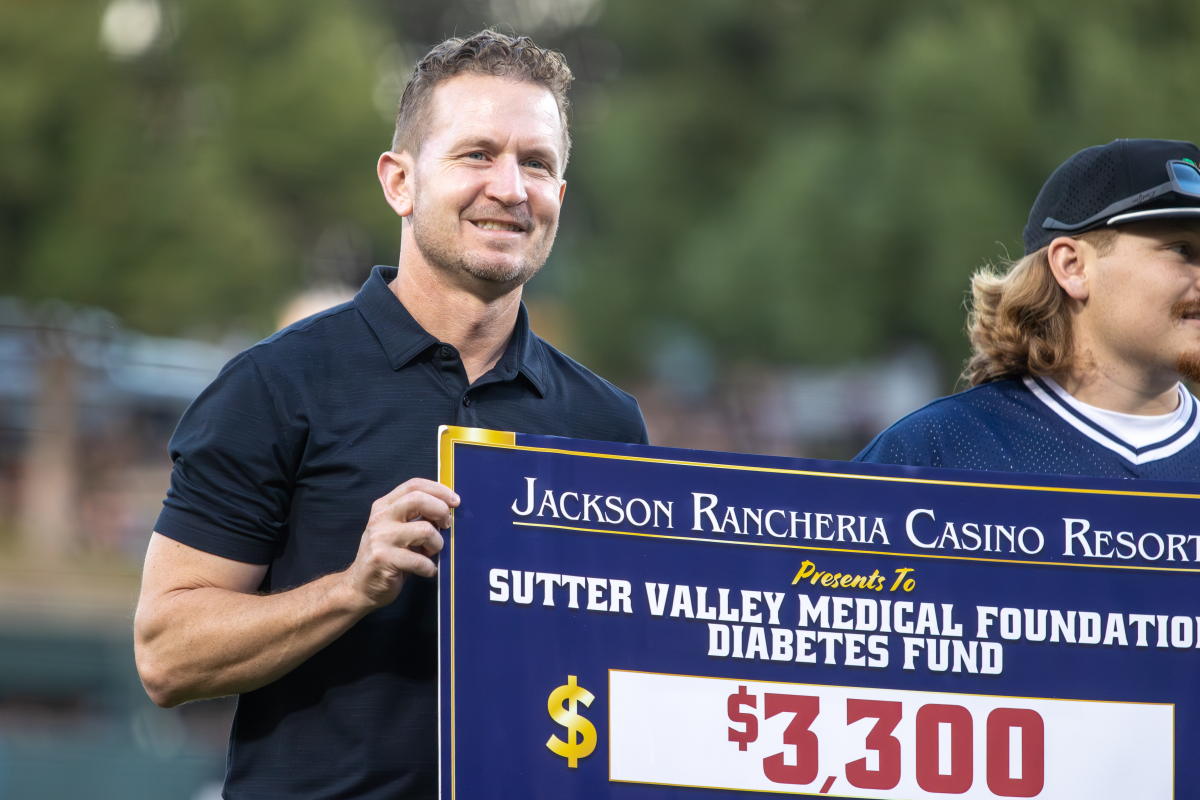
“We’ve shown Sacramento the best baseball in the world, and
that’s something cool to think about,” says Chip Maxson,
President/COO of the River Cats, who is tasked with essentially
overseeing all operations at Sutter Health Park.
Based on the close to 15 A’s and River Cats games in 2025 this
writer/photographer covered with a media credential, and another
half-dozen with ticket in hand, here are a few observations and
photo memories:
A’s attendance, high ticket prices and lack of
‘Sacramento spirit’
Before the season began, fans, team officials and local
businesses all wondered how the A’s — and the minor league River
Cats, who have called West Sacramento home since 2000 — would
draw at the intimate 14,000-seat minor league Sutter Health
Park. Sacramento Kings’
owner Vivek Ranadivé, who also owns the River Cats and Sutter
Health Park, famously said at the news conference announcing the
A’s move that they would feature “the most sought-after ticket in
America,” sparking expectations that ended up not being met this
year.
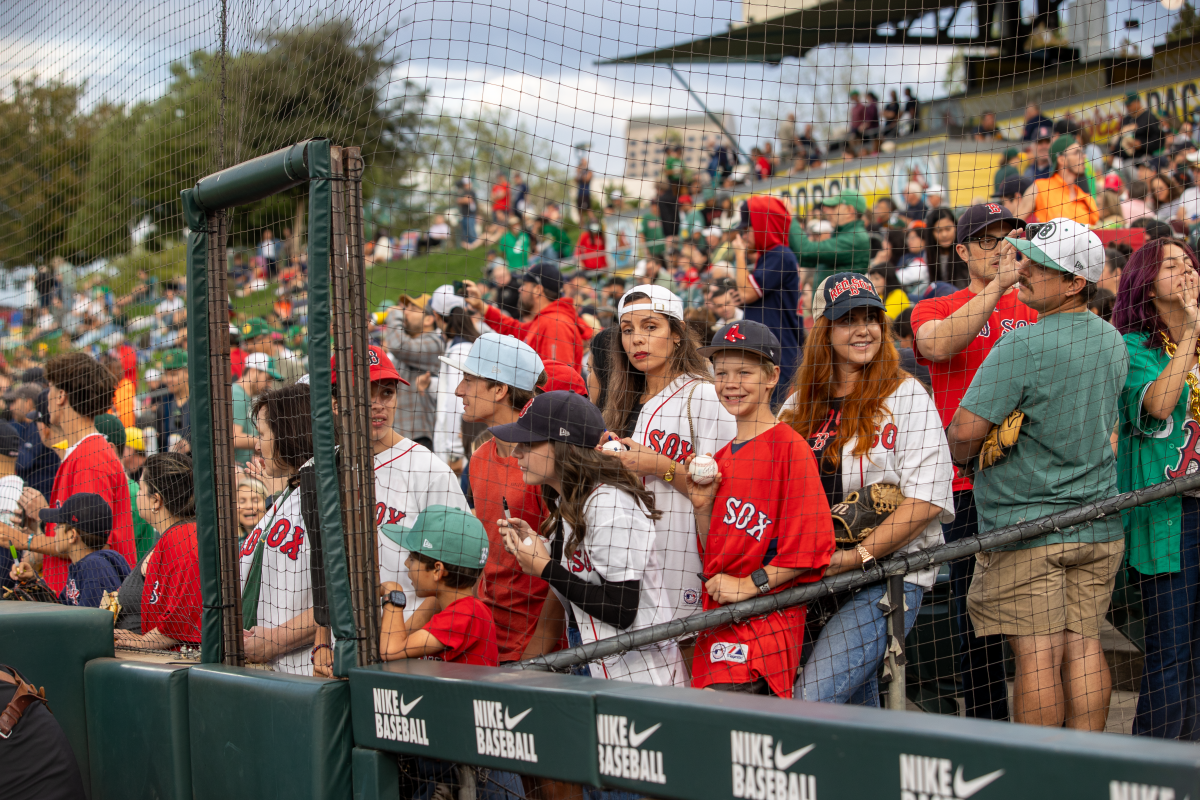
Boston Red Sox fans line up near the Sox’s dugout at Sutter
Health Park on Sept. 9.
The upgraded ballpark debuted during a sold-out River Cats-Giants
exhibition on March 23, followed by a boisterous opening day
packed house a week later. There were sellouts for the three-game
sets with the New York Yankees (May 9-11) and the San Francisco
Giants (July 4-6). Otherwise, attendance was noticeably
underwhelming the rest of the year. The A’s featured a core of
young, exciting players, but finished last among the 30 MLB teams
in attendance, with an average of 9,487 tickets sold per game (in
its final season at the Oakland Coliseum, the A’s were last with
an average of 11,386).
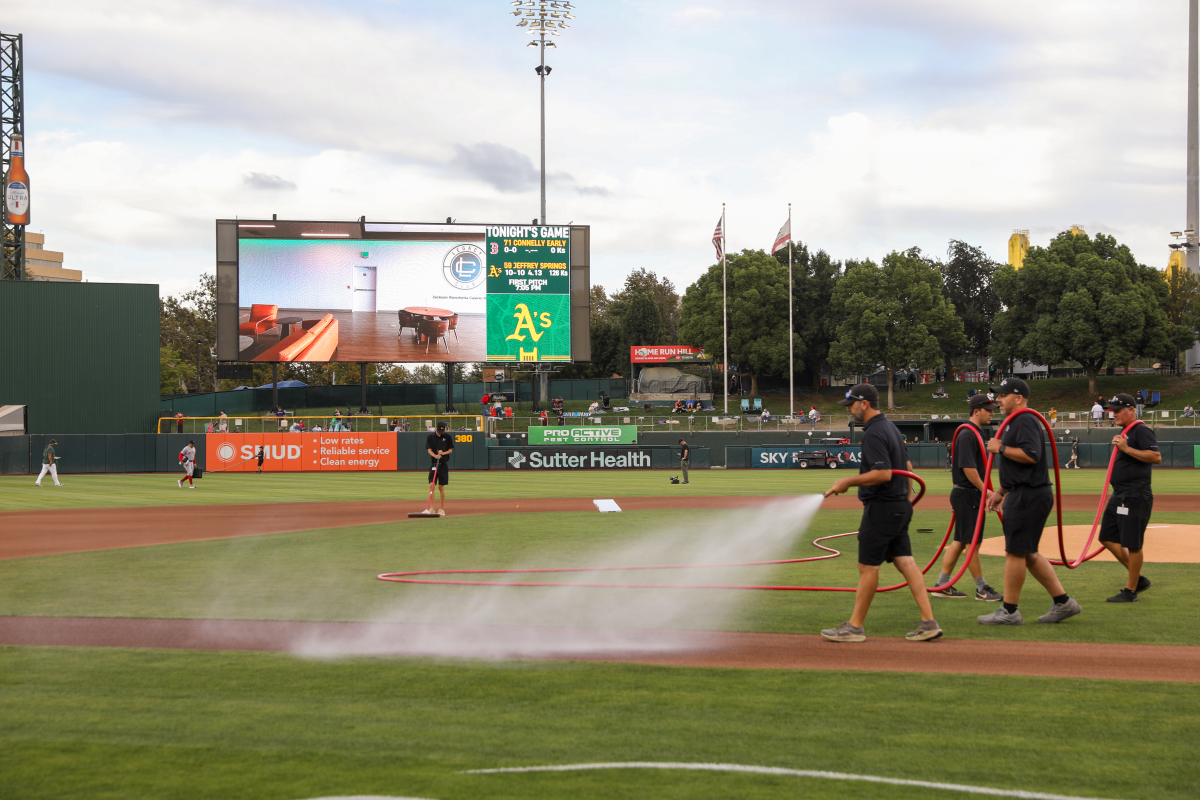
The double duty Sutter Health Park grounds crew, which is
essentially the same group working both A’s and River Cats games,
are at work before the Sept. 9 game.
Before the season began, the A’s sold out their pre-season
allotment of season tickets (estimated to be around 6,000).
Demand seemed high, and a
survey by Gametime listed Sacramento’s median ticket price at
$181, the highest in baseball. Once the season started,
however, fans, to the consternation of many season-ticket
holders, quickly realized they could get most seats in the
stadium through ticket sites like StubHub or SeatGeek in the
$25-$30 range except on special giveaway nights.
Early on, the A’s were criticized for not officially referring to
the team as the Sacramento A’s and not featuring “Sacramento” on
team uniforms, other than a patch sporting the Tower Bridge, in
addition to other slights like not allowing comments on their
social media pages. In the meantime, the A’s aggressively
promoted its impending move to Las Vegas and
broke ground on the new stadium.
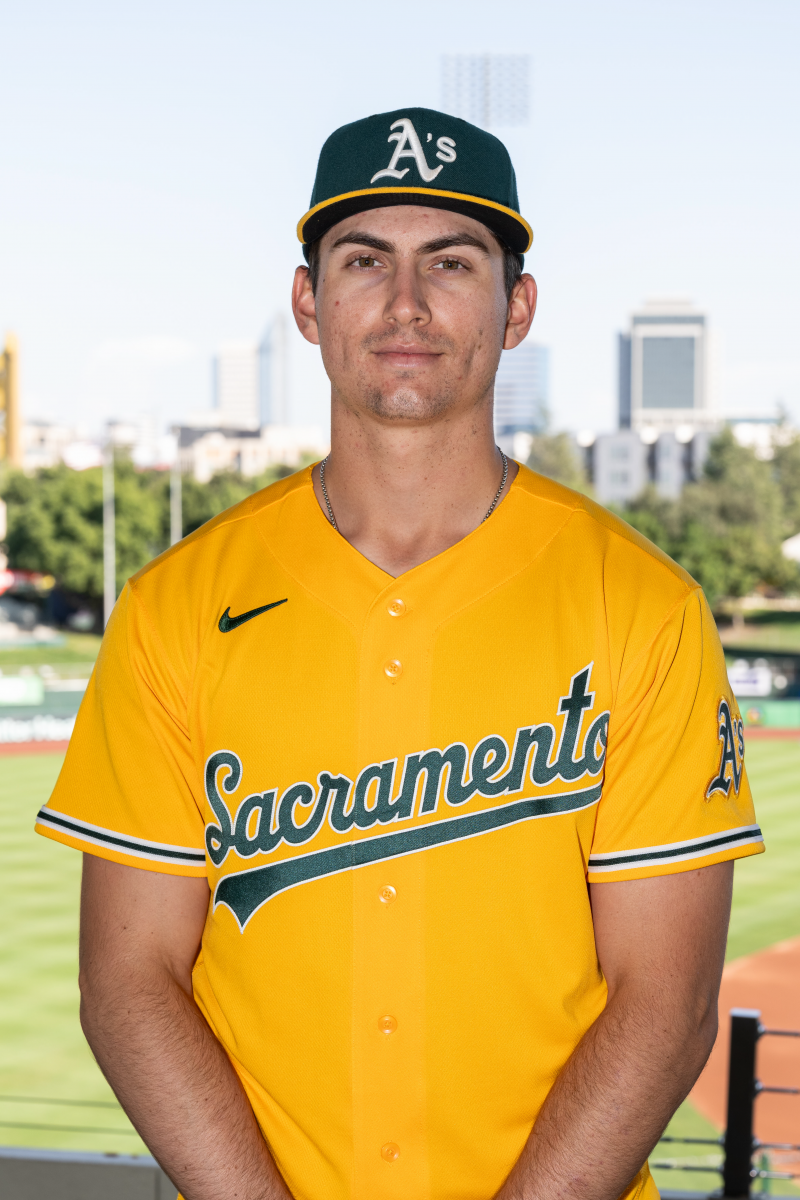
The A’s’ Tyler Soderstrom models the green and gold A’s shirt
with Sacramento lettering the team will be wearing periodically
throughout the 2026 season at Sutter Health Park. (Photo courtesy
of the A’s)
Some of those slights lessened later in
the season, when items began showing up in the team’s merchandise
store bearing “Sacramento.” One giveaway included a gold and
green crewneck sweatshirt with “Sacramento” emblazoned across the
front, that was distributed for the team’s final night home game
on Sept. 27. The next day, the A’s announced players will wear
home gold alternate jerseys with “Sacramento” across the front,
that would be sold and worn at various games throughout the 2026
season by the A’s.
“I think they waited way too long to welcome themselves to
Sacramento,” says season ticket holder Tom Sievwright of
Roseville during the season finale on Sept. 28. He and his wife
Karen attended 80 of the 81 home games, he says, and wondered if
attendance might improve in 2026 if the A’s contend for a playoff
spot. “We’ve enjoyed the whole season — we’re baseball fanatics —
but they could have embraced the city a little sooner.”
Related: Excitement
in Sacramento as the A’s Take the Field at Sutter Health
Park
Sacramento’s Ana Sandoval, a lifelong A’s fan who had season
tickets to the River Cats until they became the Giants’ affiliate
in 2015, still attends River Cats games, but echoes the sentiment
of many A’s fans who are bitter about the team leaving Oakland
and says she won’t pay to watch them play until its owner sells
the team.
“I will continue to sit on my couch and watch them — and you can
ask my husband — I sit on my couch and I chant, ‘Let’s go
Oakland,’ because that’s what I know, and that’s what it should
be,” she says.
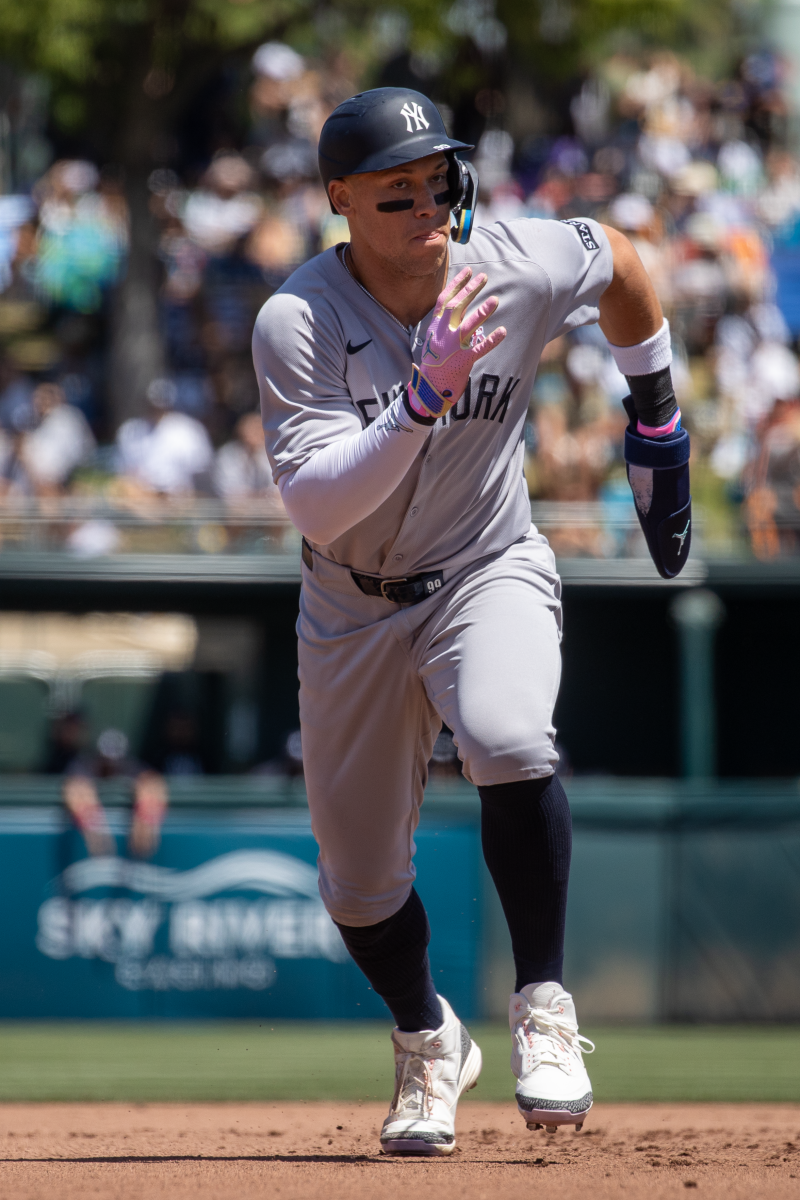
Two-time American League Most Valuable Player Aaron Judge, a
Sacramento native who grew up in Linden, heads to third at Sutter
Health Park during the A’s game against the New York Yankees May
11.
While final numbers measuring the A’s
financial impacts on local businesses around Sutter Health Park
weren’t available at press time, fans descended on the Capital
Region from every part of the country, with out-of-town fans
often outnumbering A’s faithful. Reviews on web sites such as
Facebook’s Stadium Chaser put
Sacramento on the MLB map as a destination for those trying to
attend as many MLB parks as possible, with celebrities including
musician Jack White attending a game before his late May Station
24 shows.
“We had a great time,” says Detroit Tigers fan Scott McKenzie,
who along with his wife Joann traveled from their home in Las
Vegas to attend all three games for a late August Tigers’ series,
staying at Hilton’s The Exchange hotel at 10th and J streets. It
was McKenzie and his wife’s first trip to Sacramento, and they
walked to the games and also throughout downtown Sacramento,
visiting sites like Old Sacramento and the Stanford Mansion.
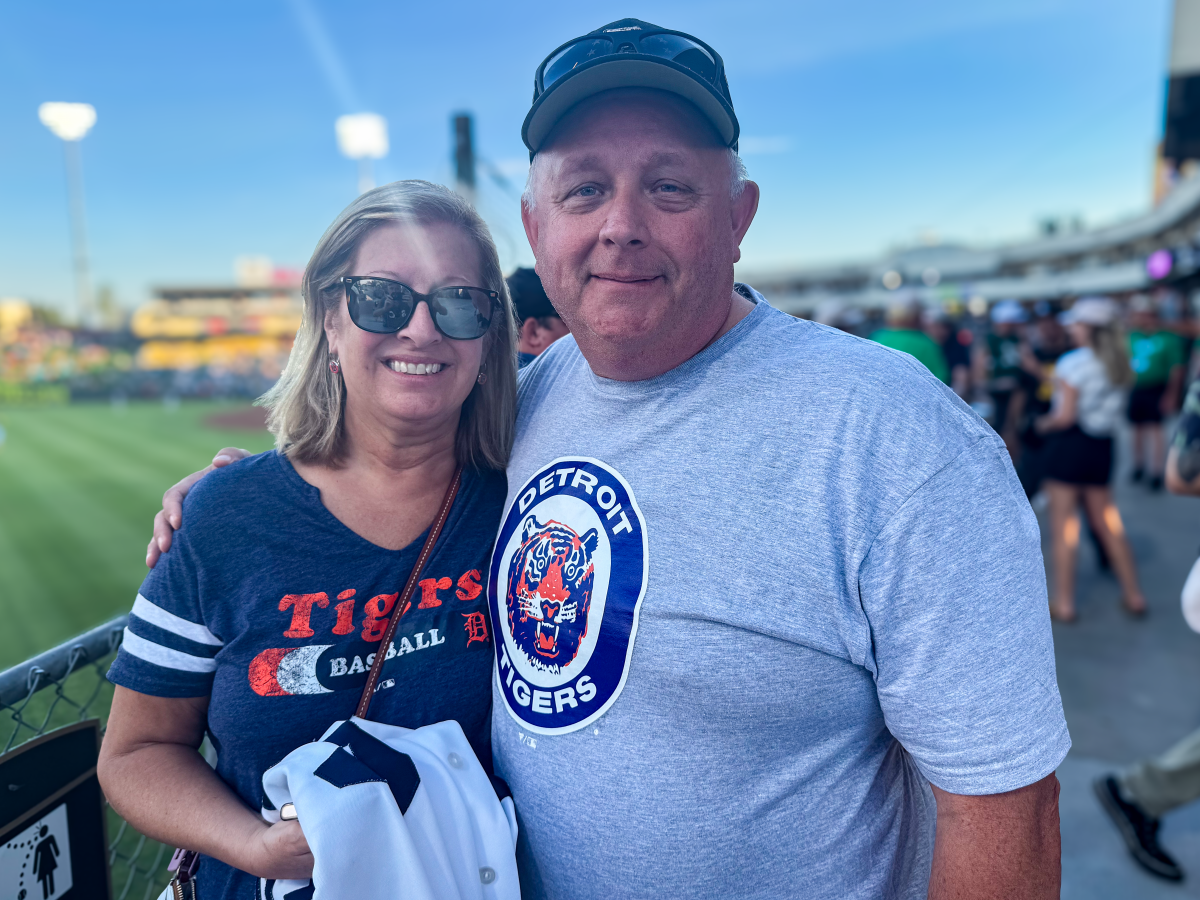
Detroit Tigers fan Scott McKenzie, who along with his wife Joann
traveled from their home in Las Vegas to attend all three games
for the late August Tigers series.
“I think the ballpark was fantastic,” McKenzie says. “The food,
the beverages, the hospitality — all fantastic.”
River Cats attendance also declined
The River Cats, the current Giants Triple-A affiliate and the A’s
affiliate from 2000-2014, have faced declining attendance — as
have most minor league baseball teams — for several years. A
2018 Comstock’s
story noted that year was the first time the team drew
less than an average of 8,000 fans per regular season game — this
after it led all of minor league baseball in total attendance in
2015 with an average of more than 9,000 fans per game.
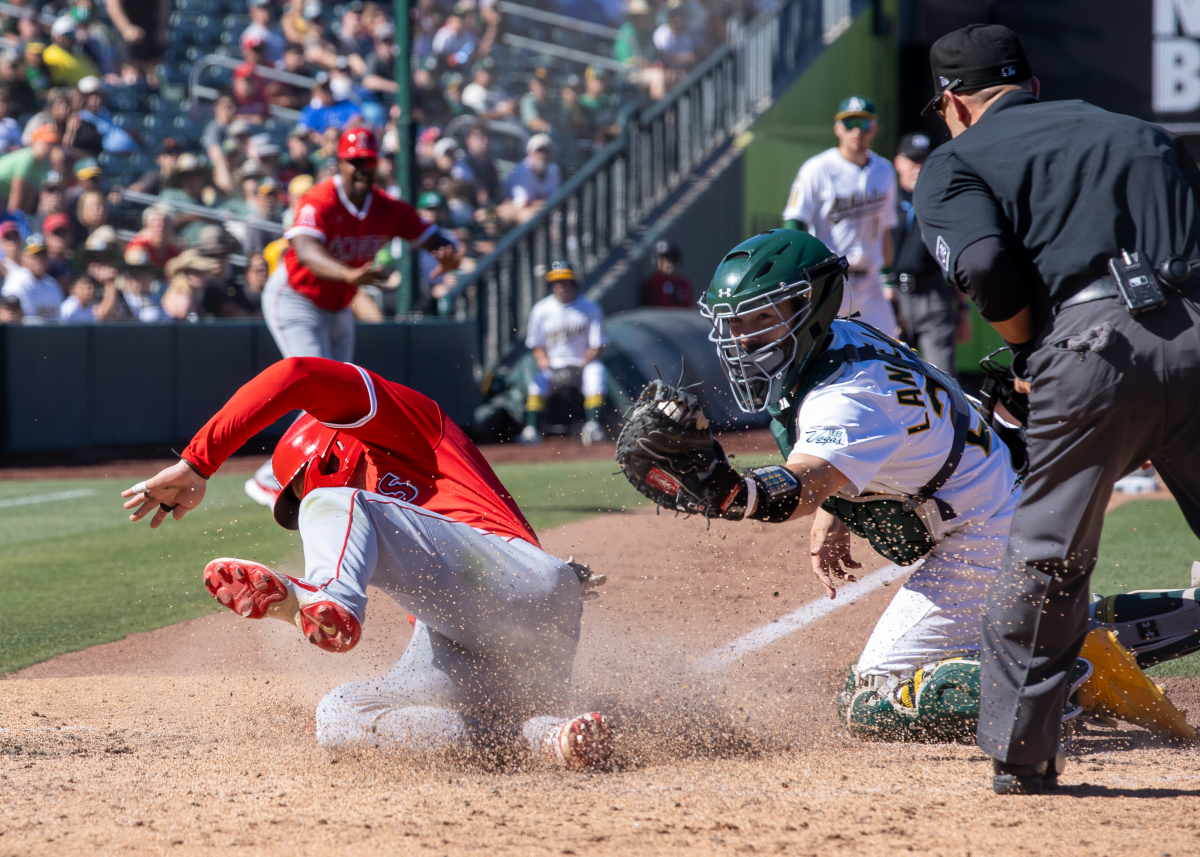
The Los Angeles Angels’ Taylor Ward scores on an infield ground
ball during the 10th inning of the Angels 11-5 win at Sutter
Health Park on Aug. 17.
After a slight uptick in 2019 when the River Cats won the
Triple-A Championship for the third time, the COVID pandemic
canceled the season in 2020, and it partially reopened in 2021.
But attendance continued downward after the first full post-COVID
season in 2022. Last year, as Sutter Health Park started
preparing for the A’s arrival, the team sold a per-game average
of 5,400 tickets.
In 2025, in 69 home games (six scheduled home games were played
in Tacoma in June while the field was being refurbished), the
Cats sold an average of 4,094 tickets, a 22 percent drop.
“It’s been a little different than last year,” Vince Marfe, a
River Cats Dugout Club ticket holder for three years, says during
the team’s final home game on Sept. 21. “It’s been pretty, pretty
thin. But there’s been good crowds this week.”
Weather wasn’t the factor many feared
When the A’s announced they would be sharing Sutter Health Park
with the River Cats beginning with the 2025 season, concerns
about Sacramento’s heat arose, focusing on how a planned new
artificial playing surface would affect players. Those concerns
weren’t helped when the 2024 summer was the hottest on record and
Sacramento withered under 45 days over 100 degrees (an average
year has around 24 days), and fears of a scorching Sacramento
summer greeting the A’s when they got here only increased.
To help lessen the heat impacts, the artificial turf plan was
scrapped early on in favor of a state-of-the-art natural surface,
and the A’s home schedule included 59 night games, the
franchise’s second-highest number in history and fourth-highest
in the MLB.
As it turned out, the 2025 summer in Sacramento was milder than
normal, with just 11 days clocking in over 100 degrees.
“We definitely got a break,” a host services employee says during
the final A’s game.
A’s season disappointing, but an exciting run
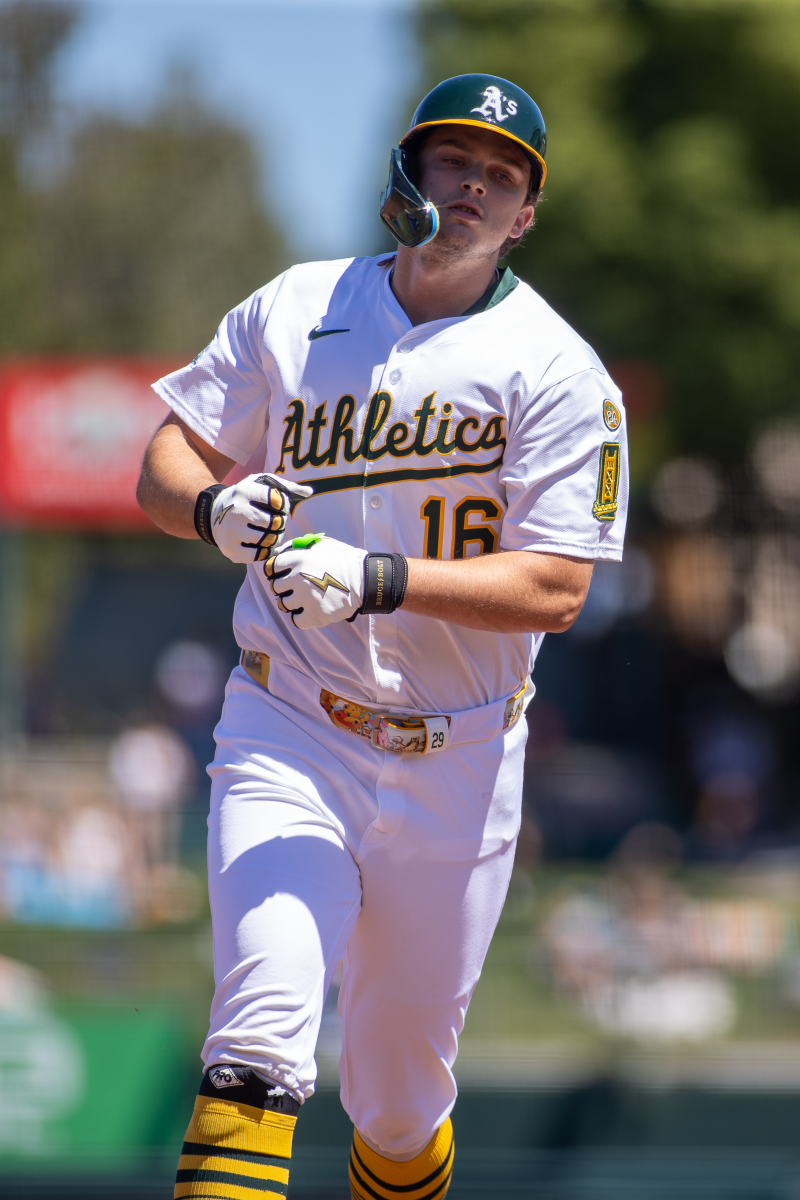
Kurtz, the A’s rookie 6-foot-5, 240-pound lefthanded hitting
first baseman who embraced the nickname “The Big Amish,” given to
him by his A’s teammates because of Kurtz’s hometown of
Lancaster, Pa., which has a large Amish population. Kurtz
highlighted each home with a “butter churning” celebration seen
here while circling the bases.
There’s no doubt the A’s put a young and
extremely entertaining product on the field in 2025, highlighted
by nine walk-off wins (tied for fourth in the league), the
emergence of Rookie of the Year candidates Nick Kurtz (the likely
winner) and Jacob Wilson, as well as emerging stars such as
outfielders Denzel Clarke, Lawrence Butler and Tyler Soderstrom,
and pitcher Luis Morales.
The young players were backed up by outstanding years from
catcher Shea Langeliers (31 home runs) and All-Star Brent Rooker
(30 home runs). In addition, the A’s acquired the MLB’s No. 3
overall prospect, 18-year-old shortstop Leo DeVries, when they
traded popular closer Mason Miller to the San Diego Padres in
late July.
The A’s started the season in Seattle with a 2-2 series split,
but then opened the MLB era in Sacramento by getting swept
decisively by the playoff-bound Cubs. The team showed promise
after the rough start to finish 16-15 in March/April, but then —
even after highly touted prospect Kurtz made his debut on April
23 — they tumbled to a historically bad 1-20 run from May 14 to
June 4, which effectively knocked them out of playoff contention.
The A’s eventually posted winning records in July, August and
September to finish in fourth place in the five-team AL West with
a 76-86 record, an improvement of seven wins over 2024. The A’s
were 36-45 at home, and were better on the road at 40-41.
Related: It’s Happening: The
A’s Are in Sacramento
A recap of the A’s season has to lead with the exploits of Kurtz,
the A’s 6-foot-5, 240-pound lefthanded hitting first baseman who
embraced the nickname “The Big Amish,” given to him by his A’s
teammates because of Kurtz’s hometown of Lancaster, Pa., which
has a large Amish population. Kurtz, who isn’t Amish, highlighted
each of the 36 home runs he hit (in just 117 games) with a
“butter churning” celebration while circling the bases.
Kurtz became the first rookie in MLB history on July 25 to hit
four home runs in a game, capping an eye-popping 6-for-6, 8 RBI
performance in the 15-3 win in Houston.
“It’s great to have that type of player in your locker room that
can impact the game with one swing,” A’s Manager Mark Kotsay told
reporters after the final game. “And not only do we just have
one, I mean, in my mind, we’ve got a collection of them, and that
says a lot about the future ahead of us.”
Speaking of home runs, Sutter Health Park, with its warm
temperatures, along with the lack of a second grandstand deck to
block those Delta breezes, was expected to be hitter friendly and
it was. Fans saw
230 home runs hit in West Sacramento during the season
(San Francisco’s Oracle Park had 148), second only to Dodger
Stadium’s 254.
What’s next for 2026?
While the River Cats’ Maxson says fans shouldn’t expect many
aesthetic changes to Sutter Health Park, he’s looking at changes
to managing employees who work for both the River Cats or A’s to
better adjust to the challenges of juggling staff between the two
teams and the differing expectations for a minor league team
compared to the MLB.
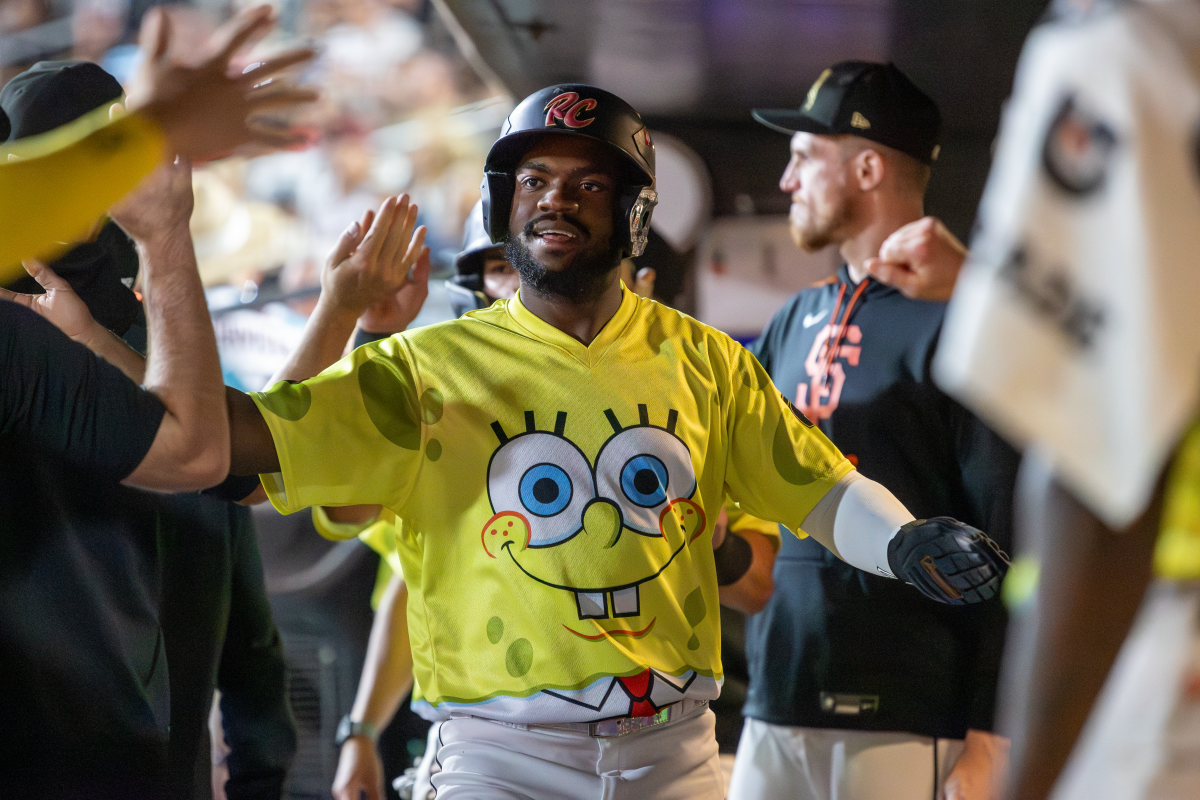
River Cats shortstop Oslevis Basabe, wearing a special
SpongeBob-themed jersey for Nickelodeon Night, receives
congratulations from his teammates after scoring during a Sept.
20 game at Sutter Health Park.
“I think number one we’ll try and give people a few more days
off,” Maxson says. “But we’ve learned a lot. I think we’ve really
gotten into a rhythm this second half of the season, working with
the A’s, understanding their expectations with Major League
Baseball, and then also working with the River Cats and the
Giants to make sure we’re taking care of their needs as well.”
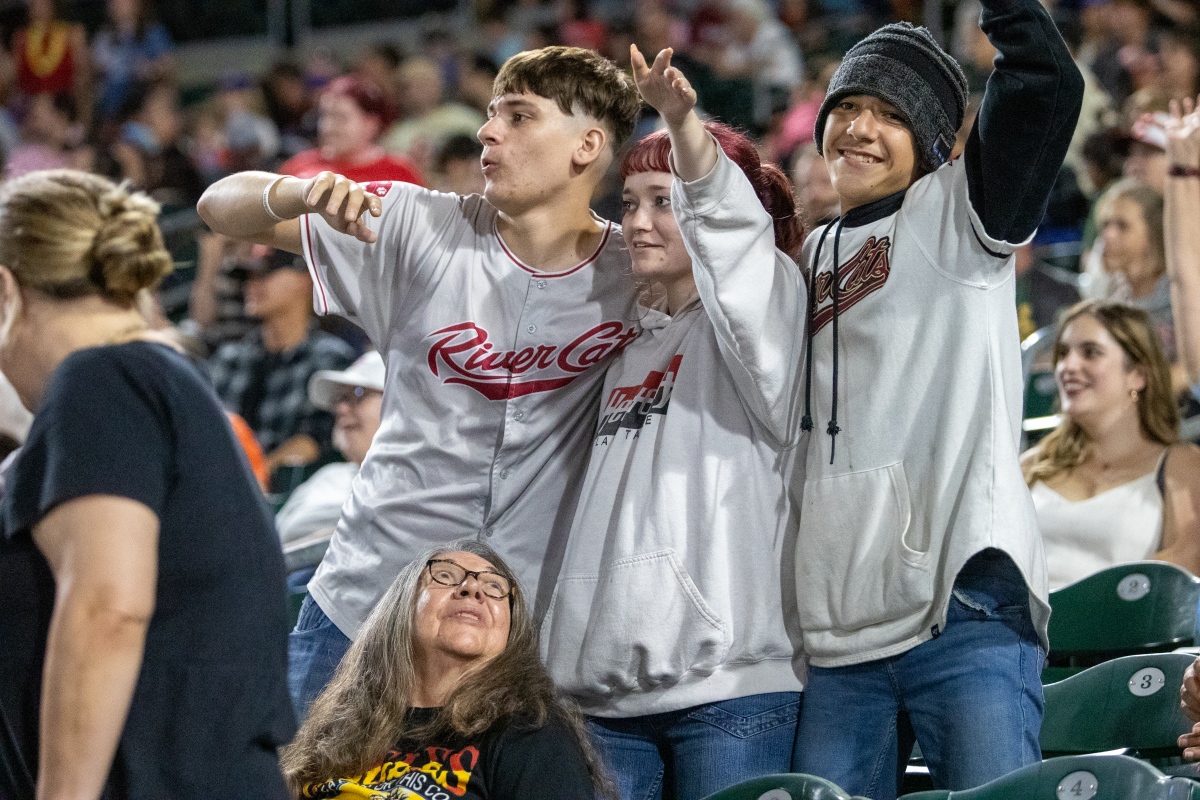
River Cats fans enjoy the final night game of the season at
Sutter Health Park on Sept. 20.
One change that shouldn’t be difficult to make is adjusting to
MLB’s announcement they’ll be utilizing the Automated Ball-Strike
(ABS) Challenge System full-time during 2026. Sacramento was one of the minor league
cities that has been experimenting with the ABS for
several years.
In addition, it was announced that if the A’s make the playoffs
in 2026, all home post-season games would be played in West
Sacramento. The A’s will also play six games from June 8-14 at
the Las Vegas home of its Triple-A team the Aviators, against the
Milwaukee Brewers and Colorado Rockies.
With the 2026 schedule out, the Giants (May 15-17) and New
Yankees (May 29-31) will make return trips, and the A’s will also
host the Shohei Ohtani-led Los Angeles Dodgers June 29-July 1.
“There’s been nothing like this in the modern era, and so no one
was sure what to really expect,” Maxson says. “We knew it was a
great opportunity for us to showcase the Sacramento region. We
knew there’d be a lot of eyeballs on what happens here. From that
standpoint, I think we’ve done an incredible job.”
–
Subscribe to the
Comstock’s newsletter today.