
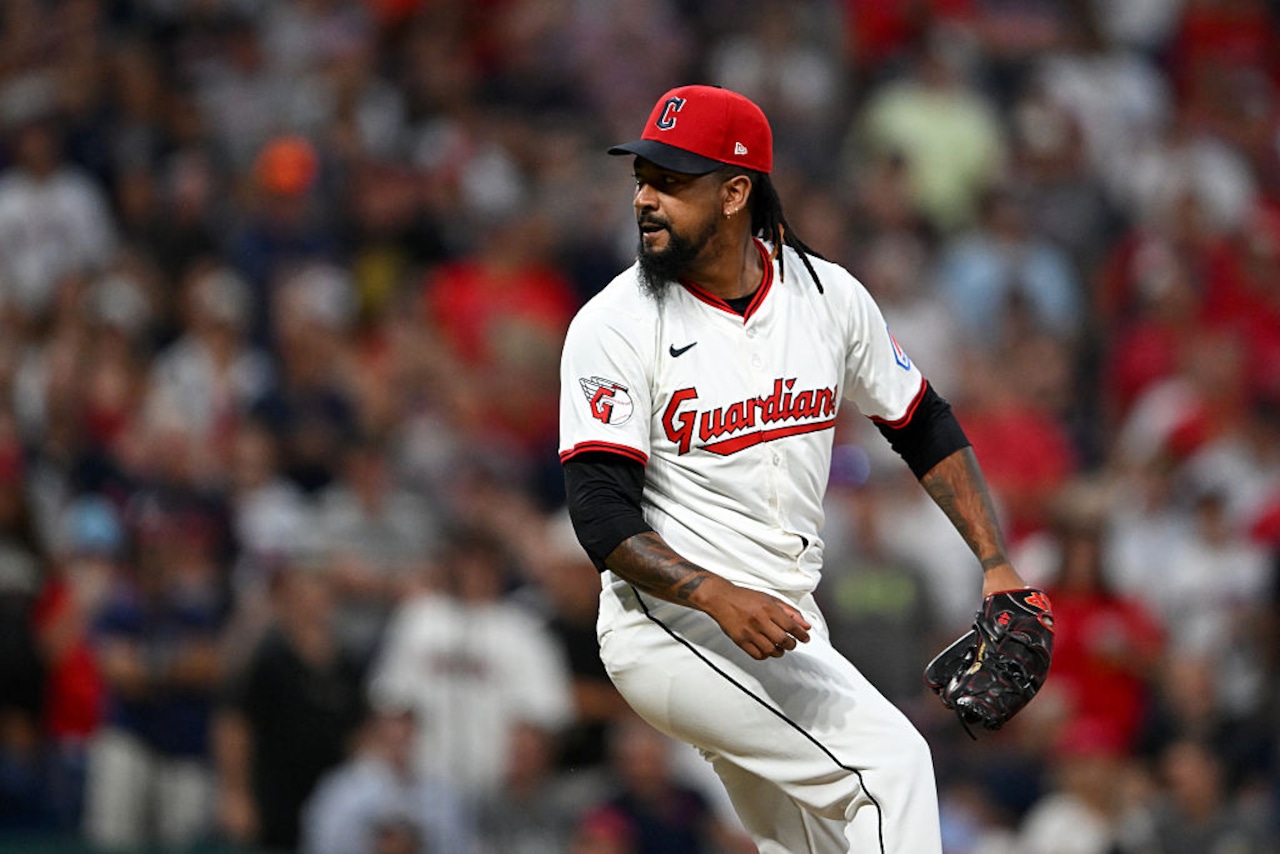
CLEVELAND, Ohio — In a revealing development that signals the far-reaching consequences of MLB’s ongoing gambling investigation, Emmanuel Clase and Luis Ortiz have been rejected by Dominican Winter League officials despite being fully prepared to suit up for Estrellas Orientales, the team located in Ortiz’s hometown of San Pedro de Macoris.
This unexpected rejection has sent shockwaves through baseball circles and offers a sobering glimpse into what might be coming for the two Cleveland pitchers.
“The league, it turns out, came out and denied them their applications to play, basically rejecting them from being added to their team’s roster despite them having worked out and been ready to go,” explained Joe Noga, cleveland.com Guardians beat reporter on the latest Cleveland Baseball Talk Podcast.
While the decision officially came from Dominican baseball authorities, the timing raises questions about Major League Baseball’s influence behind the scenes. The close relationship between MLB and winter leagues can’t be ignored, particularly with the recent agreement between the MLB Players Association and winter leagues in the locations such as the Dominican Republic and Puerto Rico.
“I’m sure there was some influence that the Dominican powers that be didn’t want to ruffle too many feathers by letting these guys play,” noted Paul Hoynes, longtime cleveland.com Guardians beat reporter. From everything I’ve heard, this was a decision that the Dominican hierarchy made itself.”
The implications stretch far beyond just missing winter ball games. As Hoynes bluntly observed: “Eventually you run out of places to play. Gambling is the big no-no. Depending on how deep you are into it, you’re looking at a Pete Rose type penalty.”
The ongoing investigation has created a state of limbo for the Guardians front office, hampering their ability to plan for the future and make crucial roster decisions. The uncertainty surrounding Clase’s contract situation — he has one year remaining on a multi-year deal through 2026 plus two club options worth $10 million each — presents significant financial and strategic complications.
“The Guardians’ front office is being hamstrung in their ability to do what makes them one of the best front offices in the baseball, just through this uncertainty,” Noga explained.
This decision by the Dominican Winter League could be seen as a harbinger of MLB’s eventual ruling. While no official determination has been made, the rejection by their own country’s league suggests the severity of the allegations.
The investigation has been notably secretive, with minimal information available. An online post from a Dominican journalist Monday suggested the evidence against Clase was so damning that “he’ll never pitch in the big leagues again.” This was denied by MLB, which maintains the investigation is ongoing.
One thing is clear: the longer the investigation drags on, the more complicated it becomes for everyone involved, especially the Guardians, who need to make critical decisions about their bullpen construction starting rotation and closer role going forward.
Want to hear the full discussion about the Clase and Ortiz situation, including insights about what this means for Cleveland’s future bullpen plans? Listen to the complete Cleveland Baseball Talk Podcast episode for expert analysis from Joe Noga and Paul Hoynes on this developing story.
Podcast transcript
Joe Noga: Welcome back to the Cleveland Baseball Talk Podcast. I’m Joe Noga, joined by Paul Hoynes. Hoynsie, we finally have a little bit of news on the Emmanuel Clase and Luis Ortiz investigation. Not really news about the investigation, more about the consequences of the investigation I guess for Ortiz and Class A who had been working out with their winter ball club in the Dominican expecting to be able to play with the Dominican League getting underway here within the next day or so. The league, it turns out came out and denied them their applications to play in the league basically rejected them from being allowed to be added to their team’s roster despite them having worked out and been ready to go. So this is just another indication that maybe Major League Baseball’s influence here is showing up in terms of while that investigation is still going on and their, their futures in Major League Baseball are still unclear, they’re not going to be allowed to play or participate in the Dominican Winter League. What else did you learn about that? You know, Ortiz and, and Class A’s applications for the Dominican Winter League being denied?
Paul Hoynes: Joe I think this was a, you know, a decision, at least according to sources that was made strictly by the Dominican hierarchy in their, in their baseball league and based on going back to July when when Ortiz and Emmanuel Class A were placed on non disciplinary paid leave by MLB and an agreement with, by MLB and the Players association, there was no restrictions on them playing winter ball. We had reported on that earlier that they were allowed to play winter ball. It was, we saw the videos on X of them working out with Orientals down there while guardians were going down the stretch and playing in the postseason. I’m sure it aggravated some people especially with in the guardians front office there was no, nothing to stop them from playing. But you know, kind of when Estrellas put their roster in for approval last night or Monday, I should say it was denied by the Dominican Baseball League. I’m sure, you know, you know, as, as closely as, as the Dominican and MLB leagues work, you know, as they’re kind of, you know, they’ve been walking through this game hand in hand for years. I’m sure there was some influence that the Dominican, you know, powers that be didn’t want to ruffle at too many feathers by letting these guys play. But for, you know, from everything I’ve heard, Joe, this was, this was a decision that the, the Dominican, you know, hierarchy made and had no influence on it.
Joe Noga: Yeah, it’s sort of like when an NCAA school puts itself on probation or gives itself penalties to, to avoid having Harsher penalties come down for Major League Baseball. Maybe if they let these guys participate or if, if the decision for Major League Baseball comes down, it’s not in alignment with what the, the Dominican League had, had decided. You mentioned the, the two leagues working together. The Major League Baseball Players association just this past week reached an agreement with, you know, its winter leagues in, in the Dominican, in Puerto Rico to, to allow their, the players to participate in, in, in winter league ball. I, you know, I wonder if that had something to do with it or if conversations were had at that time regarding this situation for the guardians. But you know, you and I were talking and it makes sense that the Dominican Winter League would want its players who have made it to the majors and in Major League Baseball, it would want them to come back and play in this in their winter league. They would, they want their, their stars to, to be part of their winter league. I think it’s for fan interest, for ticket sales, for all that kind of stuff. But in this instance, you know, these guys right now with their futures being up in the air and everything being unclear because of the gambling investigation, there’s, there’s really sort of a gray area and you don’t really want to have them participate if, if it’s going to make problems for your relationship with Major League Baseball later on down the line.
Paul Hoynes: No doubt about it, Joe. It’s just like one hand washes the other hand and all these, all the Dominican players are drafted by their winter ball teams. All these guys are already assigned to teams. It’s not like, you know, the, I, I’m the six or six or eight or 10 Dominican teams, you know, just, you know, draft players. Well, they do draft players, but you know, they’re all kind of locked into where teams even, you know, from a really young age, like you said, the cities that have these teams want those players to come back after they played in the big leagues. And the big leagues can tell them no, we don’t want them to play. They had a hard season. They played a lot of, you know, they’ve got a lot of at bats, they pitched a lot of innings. We don’t want to be really, really careful with them. And so, you know, you don’t want to, you don’t want to upset the apple cart, so to speak. So I think the relationship has to stay strong between the, the Dominican and the big leagues. And again, I’m not saying that had any influence on this decision. In the long rule and the, in the big picture sort of outlook, it makes sense.
Joe Noga: So We’ve seen examples, countless examples of, you know, young players, guys like Brian Roccio who went and played in the Venezuelan Winter League a couple seasons ago, got some extra at bats, got some confidence and came back and, you know, had a nice stretch run in 2024 and said, you know, his experience in playoff situations with the Venezuelan League and going to the Caribbean World Series, you know, helped him get himself. Read it. The, the birth of playoff Rocco in that way, something that we’ve talked about on the podcast before. You know, playing in winter ball seasons in Puerto Rico, in Venezuela, in the Dominican help younger players who need to get more at bats or even veteran players sometimes who, you know, we saw Jose Ramirez play a couple of games down there for his hometown team in the last couple of years. That’s not as common or as usual that a veteran guy would do so, but it also opens up managerial opportunities. Guys like Albert Pujols, who’s a finalist now for apparently for the, the Los Angeles Angels managerial job. He got some experience managing in the winter ball leagues. Uh, we’re going to talk here in a little bit about Sandy Alomar Senior. He was a well known manager in the Puerto Rican summer ball league. It, you know, there’s, there’s a value in having a relationship with these leagues and it’s clear that, you know, they want to still stay in line with what Major League Baseball is doing and not sort of, like you said, upsetting the apple cart when it comes to how Major League Baseball disciplines its players, even if they are Dominican Nationals and you know, guys who, you know, this also brings into question for me what, what the status of these two players would be heading into World Baseball Classic or what their eligibility would be for something like that. I’m hoping that this situation for Class A and Ortiz is, you know, is resolved well before the World Baseball Classic. But the way things are, you’re going and the way we’re getting information about this, it seems like a pretty slow go.
Paul Hoynes: Yeah, really, Joe. I mean, the information has not been, there hasn’t been a whole lot of information and a lot of it that comes out is, you know, suspect. But as far as right now, here’s what we know. I mean, the investigation is ongoing. There was a tweet from Hector Gomez, a journalist from the Dominican Republic, yesterday that, you know, suggesting that the evidence was so strong against Emmanuel Class A that he’ll never pitch in the big leagues again. MLB has denied that. They said they’re not. The, the, the investigation is still ongoing. The more this slingers, the more reports like that we’re going to get. I know the, the Guardians are anxious to get this over with one, one way or the other. You know, they just want a decision so they can move on with their roster with setting their 26 man roster, the 40 man roster. What do they do with these guys? Do they take them off the books sale salary wise? Ortiz is off the books but a Class A, you know, is he still has a. The last year of a multi year deal in 2026 and, and two club options at 10 million each. They’ve got a, you know, they’ve, that, that has to be worked out as well. So there’s a lot of questions and the sooner we get the answers, Joe, the better off everybody will be. Except perhaps Ortiz in Class A. Yeah.
Joe Noga: I can’t imagine things are going to end well for those two. However, you bring up an interesting point about setting your roster and cons, constructing your roster, making plans for the future, looking at, looking at a guy like a Cade Smith and saying okay, well if, if Class A is, is not going to be an option down the line, which you know a lot of us have, have held that opinion for a while now, you know, what are we going to do about Cade Smith and his future and you know, sort of to, to give him the sort of reassurance of being the closer and, and that you know, do you look at extending him going into his final year of pre arbitration? There’s a lot to consider and a lot to, to sort of think about but I feel like the Guardian’s front office is being hamstrung, is being held up in their ability to sort of do what makes them one of the best front offices in the baseball. Just through this uncertainty, I’ve got to imagine maybe behind the scenes and off the record they might be getting some information from Major League Baseball to sort of help them make of plans, but I don’t know that’s a certainty and they’re not, you know, Chris Antonetti, Mike Turnoff aren’t going to give us any indication that that’s the case, you know, until we know for sure what the, the decision from Major League Baseball is. So again it’s a, it’s a mess. And, and this latest development of Class A and, and Ortiz not being allowed to play winter ball this season, certainly an indication of you know, what might be coming down the line for them. You just wonder if they’re, they’re ever going to be able to play professional baseball anywhere if they can’t play in their own hometown or if they can’t, play in their own home country and what their options are.
Paul Hoynes: It’s a great point. Eventually you run out of places to play and, you know, gambling is, that’s the big. No, no. I mean, you can do a lot of things in baseball and be welcomed back after a year or suspension or, you know, a length, a lengthy suspension. Gambling is, is not one of them. I mean, depending on how deep you are into it, I mean, you’re looking at, you’re looking at a Pete Rose type penalty. And I would think, you know, no league wants that reputation. You go to Japan, whether you go to Mexico, wherever there’s a professional league, Korea, that is, that is going to be frowned upon.
Joe Noga: I’ve got to imagine that they will explore all those options or their, their agents would explore all those options. But I can’t imagine a lot of teams are, A lot of leagues are, you know, beating a path to their doorstep at this point. You know, maybe somewhere down the line that could be the case. All right, so to completely go in a different direction. You know, we talked about winter ball and we’ve talked about the benefits and the, the positives of winter ball playing for players, also for, for managers, the guys, the coaches and, and guys. I, I didn’t. Terry Francona do some work in, in managing in the, in the winter ball leagues when he was, you know, before he was a manager in Major League Baseball.
Paul Hoynes: You know, he played in winter ball, but I don’t know if he managed. Joe, I know he played winter ball, but I’m can’t, I can’t remember if he managed winter ball.
Joe Noga: Yeah, I seem to remember there was a, a time when, you know, he was, he had stories about Puerto Rico and going down there and playing. So. And, you know, one of the big names in terms of a guy who had managed and coached in Puerto Rican winter ball was Sandy Alomar Senior. We got word earlier this week that Sandy Alomar Sr. Passed away in Puerto Rico and, you know, just a legend there in terms of, not, not just in terms of as a player, 15 years in the, the big leagues, but, you know, as a sort of the patriarch of the Alomar family. And that produced two absolute legends in Cleveland In Sandy Alomar Jr. And Roberto Alomar, who’s in the hall of Fame. So the, the passing of Roberto Alomar. I’m sorry, Sandy Alomar Senior. Just a sad time for Sandy and everybody associated with the Guardians who knew the guy as basically the patriarch of these two outstanding Cleveland baseball players.
Paul Hoynes: Yeah, Joe. Just really a sad day for the Alomar family. Our thoughts and prayers are with them right now. Andy Sr. Was 81. You know, just. I remember when the Indians made a, you know, a spring training trip to Puerto Rico. You know, this was years ago. We went over. We went visited the Alomar’s home. You know, Sandy took us around. They. They owned like, like three or four houses on the block, Joe. And.
Joe Noga: And they.
Paul Hoynes: He and Sandy took us around. It was really cool.
Joe Noga: We.
Paul Hoynes: We went into I think Salinas was that or is that right?
Joe Noga: Yeah, it was Salinas. Yeah.
Paul Hoynes: Yeah, that you know that we drove into the town and there was pictures of Sandy, Sandy Senior, Sandy junior and Roberto on the. On painted on the walls of the city as. As you’re driving into the towns. It was. It was really cool. I remember talk Robbie about his dad and when his dad was playing winter ball in Puerto Rico, you know, Robbie had hide in the back seat of his car. So. And you know, he, as he went to Pratt, you know, as he went to the games and went to his practice and when, when, when he to the stadium, Roberto jump out of the back seat and his father get mad at him. He goes, what are you doing here? And then he. But then he had. Then the only reason Robbie did it was so he could take ground balls with the other. With the. The. He hadn’t. He didn’t. He skipped his homework and went to the ballpark to play baseball in winter ball. And you know, this is when he was like 10, 12 years old. And I guess his father didn’t get too mad at him because he turned into a great player. But just stories like that, it was really was like a baseball dynasty in that family.
Joe Noga: And Sandy Alomar Sr. Was a coach in the Padres organization when both of his. His kids came up and basically made their major league debuts in the. In the early 90s there in the late 80s, early 90s with the Padres race. So, you know, it had to be a, a tremendous feeling. I think I’ve got an old baseball card that’s got the three of them in their. Their Padres like spring training uniforms and standing there and it was the like the first time I had been introduced to the idea that wow, this. This guy who played in the big leagues had two sons sort of like the, the Ripkens did same sort of feeling. But Sandy Alomar Senior, no no slouch in terms of, you know, the, the kind of player that he was. He was. He was really more along the lines of a Robbie Alomar type player than he was a Sandy Alomar type player. Though he was the, the speedy leadoff infielder, you know, the nifty footwork. And you know, just reading and seeing video of him, you know, sort of reminded me more of Roberto Alomar in the way he played the game. You know, he bounced around six to, you know, six, seven different teams in his, in his career. Really the, the longest tenure was with the, the Angels, but he made the, made the all star game in 1970 and was a guy who could hit a little bit, could steal bases and run the bases real well. Just a tremendous player. And you could see all the, the best attributes of him as a player sort of passed down to Robbie and Sandy.
Paul Hoynes: Yeah, just really a nice family. I think Joe, I think they, they may have coached Sandy and, and his dad may have coached on the, when the, when Sandy was just breaking in, he was like a bullpen catcher, bullpen coach. And I think Sandy Sr. Was, was maybe the third base coach. I’m not, I can’t, I’m not sure on that.
Joe Noga: He did coach third base because in scrolling through looking for photos, there was some sort of skirmish, some sort of a fight on the field against, I think it was the Royals. And he’s in a caption, you know, either avoiding or instigating. I can’t, can’t really tell from the photo, but there was a photo of Sandy Alomar Senior in that, in that skirmish between the Mets and the Royals. You know, just looking back at that. Yeah, the two of them were on the staff together there in New York, but that was at least 15 years ago.
Paul Hoynes: That was a long time ago. Yeah.
Joe Noga: So, you know, and Sandy’s obviously been in a coaching capacity with the Guardians for several years since then. You know, it’s, it’ll be interesting to see how this affects or if it does affect Sandy in, you know, in the seasons to come and, you know, just where he’s at. You know, we’re hoping we got the indication from Stephen Vogt that he expects all of his coaches to be back, but you know, we haven’t heard specifically about guys like Sandy Alomar, guys like Carl Willis who have been longtime coaching staff members and, you know, we’re hoping we get to see them continue with the Guardians next season.
Paul Hoynes: Yeah, definitely. I mean, Sandy’s been there, you know, I think longer than anybody. Manny Acta, when Manny became manager, I believe in what, 2010, maybe. I’m not sure. I Can’t remember the exact year, but he, he, he negotiated with Sandy. He got Sandy to come over here and you know, come back to the Guardians or the Indians at that time and join his staff. That was, that was a good move by, by Maniac, because I don’t think there’s any coach or former player that’s more this, more fan favorite than Sandy. No such deep roots here. I mean, just, you know, really kind of a beloved figure in Cleveland.
Joe Noga: You’re talking about a guy who, who never really should have to pay for a meal anywhere he goes in Cleveland. I mean he’s a legend like you said. Just because he’s the common string, he’s the common thread through all of those. He goes back to the, the, the late 80s teams that lost so many games and then the consistent presence through those 90s teams that were, you know, the, the champions and, and, and went to the World Series twice. And you know, no one’s ever going to forget the 1997 All Star Game and the season that he had that year, the hit streak. And you know, it’s a tough time for him and his family. But you know, hopefully Sandy is, is back next season and interacting with him at the ballpark and on the field and we’ll look forward to it then. Speaking of on the field, the America, the Major League Baseball playoffs, the league Championship Series underway in full swing last night the, the Mariners kind of blew out the Blue Jays to take a 2 nothing lead in that series. The National League Series got underway. Much more exciting game, a much closer game there as the Dodgers escaped Game 1 after a dominant pitching performance by Blake Snell. They, they close out the brewers in game one. But I want to talk about the, the weird, the, the weird and wacky play that happened with the bases loaded. I think might have been what in the fourth inning. It was a double play that Max Muncie hit into for the, the Dodgers. They had the bases loaded and Muncie drives a ball to, to center field. You know, hits off the wall and looks like it’s going to be caught. But it wasn’t the runner TE Oscar Hernandez didn’t go and they were able to throw him out and get the Force out at home plate and then get the, the Force out at third base. It was a, a double play and Hoynsie, it goes down in the books as a grounded into double play on a bases loaded fly ball to center field. Have you ever seen anything like that?
Paul Hoynes: That was crazy, Joe. I, I was so confused. I thought it was a Triple play. But, you know, Sal Frelick was the. The center fielder for Milwaukee, you know, made a great attempt at the ball, at Muncie’s long drive. It hit in his glove, then out of his glove, bounced off the fence, and then he caught it. So, you know, I think that that kind of confused some people. Is the ball still in play? Is it an out? And then, you know, so the third base coach, the Dodger third base coach is yelling at Hernandez to go, go, go, and he kind of, you know, stopped and then gets thrown out at the. On a. On a great throw to the plate, he gets forced out. And then the guy on second base, Will Smith, he got hung up between second and third, and he was forced out at. At third. So the brewers, brewers, you know, they dodged a big. Some big, big trouble there. And, you know, the only problem was they didn’t win the game. They lost 2 to 1. Now, if they won that game, that’s. That goes down forever as one of those crazy plays. It’s still. It was still. I mean, it looked like a fire drill out there. I don’t know what was going on.
Joe Noga: Yeah. Just looking at the replay, the. The ball hits off of the heel of Freelick’s glove and just misses going over the wall. It would have been. It would have gone over the wall for a grand slam, but it was about 3 inches too short of bouncing over the wall. And you’re right, he did catch it out of the air after it hit the wall, but once it hits the wall, it’s a live ball. It’s. It’s. It’s a. You know, it’s not. It can’t be caught for an out. And he fired it into Joey Ortiz. The. The. The. The. The Brewers, Ortiz through home and. And got Hernandez, you know, on the force out. And then, you know, the. The catcher Contreras just basically runs down to. To third base for the. The force at. At. On the. The runner from second base. 8 6, 2, if you’re scoring it at home. And. And it’s a. It’s. It goes down as a grounded into double play, which is the craziest part of that whole situation. How do you. How do you call that grounding into double play? Yeah, is a 402 foot. I think that the Statcast in. In the. In all the time that they’ve been measuring, you know, you know, hits on Statcast, it goes down as a. The longest grounded into double play or the longest ball hit in a. In a grounded in double play in. In stat cast history like 402ft. So just, if you watch enough baseball, you’ll see something’s going you’ve never seen before, something crazy like that. And that certainly, you know, added to sort of the mystique of last night’s game. A 2 to 1 victory for the Dodgers. And I believe it was Blake Trienen striking out, might have been Ortiz with the, with the bases loaded at in the ninth inning to sort of secure the win. You know, you’re talking about game one of the nlcs and the Dodgers coming out stealing one on the road. Now, once they get back home, they all they’ve got to do is win three at home.
Paul Hoynes: Yeah, Joe, and our buddy Josh Naylor helped Seattle, you know, really run away from the Blue Jays 10 to 3. But Naylor goes 3 for 4, hits a home run, scores a run. I think he stole a base, too. Yeah, he stole another base. So, I mean, and the. Seattle’s up to nothing, Joe. I was going to be really, really close. I don’t know if the Blue Jays having a little letdown after beating the Yankees. Seattle’s come in there and knock them, knocked them around and they’re going back to Seattle now.
Joe Noga: Yeah. And like you said, Naylor, it might have been a day or two delayed, but finally picked up on that dad strength that, you know, you have a, have a kid and we see it all the time, they come out and they, they hit a couple of home runs and they channel that dad energy, I guess. New dad energy out there for Josh Naylor. But yeah, the, the pitching, Trey Savage, who, you know, was brilliant, it was so good against the Yankees in the Division Series, he gives up five earned runs and four innings, and, and Logan Gilbert only allows three runs, two earned in three innings. So the starters, like we’ve seen, as has been the, the history recently, starters aren’t getting very deep into some of these playoff games. A lot of the bullpen usage is way up. But that was a trend that we’ve seen for basically the past decade now, ever since Terry Frank Koner revolutionized the playoff bullpen usage idea back in 2016. And, you know, it’s holding true still as these starters are going short.
Paul Hoynes: Yeah, Joe, I mean, and Naylor, you know, back in his home country of Canada, you knew he’d have to do something and, you know, big in, in Toronto at, at Rogers center, and he certainly came through last night. So I don’t know. I’m. Is that a sweep in the making, Joe? I. Toronto’s gotta be. They’ve gotta come back and make a series of it.
Joe Noga: I would think, yeah, I probably picked them to win one game out in, in Seattle, but I would be shocked if this, if the series heads back to Toronto after, you know, after being up too low like that. All right, Hoynsie, that’s going to wrap up today’s edition of the Cleveland Baseball Talk podcast. We’ll check back in with you again tomorrow.
Paul Hoynes: All right, Joe.
If you purchase a product or register for an account through a link on our site, we may receive compensation. By using this site, you consent to our User Agreement and agree that your clicks, interactions, and personal information may be collected, recorded, and/or stored by us and social media and other third-party partners in accordance with our Privacy Policy.