
Comparing the Twins team that won a playoff series in 2023 to the last one that did, 21 years earlier in 2002, exposes a sharp contrast.
That 2002 group of players had come up together, honing their fundamentals and mastering the elements of “small ball” under Tom Kelly‘s tutelage to earn a distinct reputation, which only intensified when Ron Gardenhire took over. Those Twins gained advantages on the margins, played superior defense, and ran the bases aggressively. (Maybe over-aggressively, with the worst success rate in baseball.)
Back then, and in the decade or so that followed, “The Twins Way” was a grounding set of principles. Now it’s little more than a street sign outside of Target Field.
The 2023 Twins were a hodgepodge of outside additions and graduated prospects from different waves, led by an expensive free-agent mercenary in Carlos Correa. Under Rocco Baldelli, this team aimed to win with strikeouts on the mound and home runs at the plate; defense and baserunning were far from specializations. Rocco’s boys weren’t laying down a lot of sac bunts.
Another stark difference between these two division-winning clubs: payroll. In 2002, they ranked 26th out of 30 teams at $41 million. No one on that mean was making any serious money. In 2023 the Twins set a franchise record with a $153 million payroll, ranking 17th in the majors.
Reading between the lines, and in some cases just taking their words at face value, it becomes clear that Twins leadership is longing for a return to the good old days of “The Twins Way” — or at least an evolution of it — on multiple levels.
Getting Back to Fundamentals
At the end of the season, Derek Falvey cast his vision for the next iteration of the Minnesota Twins: “We’re going to be a really good base running team, we’re going to be on the details, we’re going to be leaning into the fundamentals,” he said. “It would be surprising if any manager candidate said that they didn’t care about those things.”
With all the nostalgia for a different era packed in those words, you might wonder if the Twins thought about dialing up Gardenhire and inquiring about reunion. Or if not Gardy, maybe his favorite student. Sure enough, the Twins have reportedly interviewed Nick Punto for the managerial vacancy, alongside a few other candidates.
For those who are too young to remember his heyday, Punto featured (arguably too prominently) on the late Metrodome teams, serving as the embodiment of grit and hustle. He was a switch-hitting utilityman who happily handled fast-changing assignments, put the ball in play but hit for zero power, and routinely slid headfirst into first base. MLB’s Cut4 once honored him with the “Unnecessary Hustle Award.” White Sox manager Ozzie Guillen coined the term “piranha” to describe his ilk.
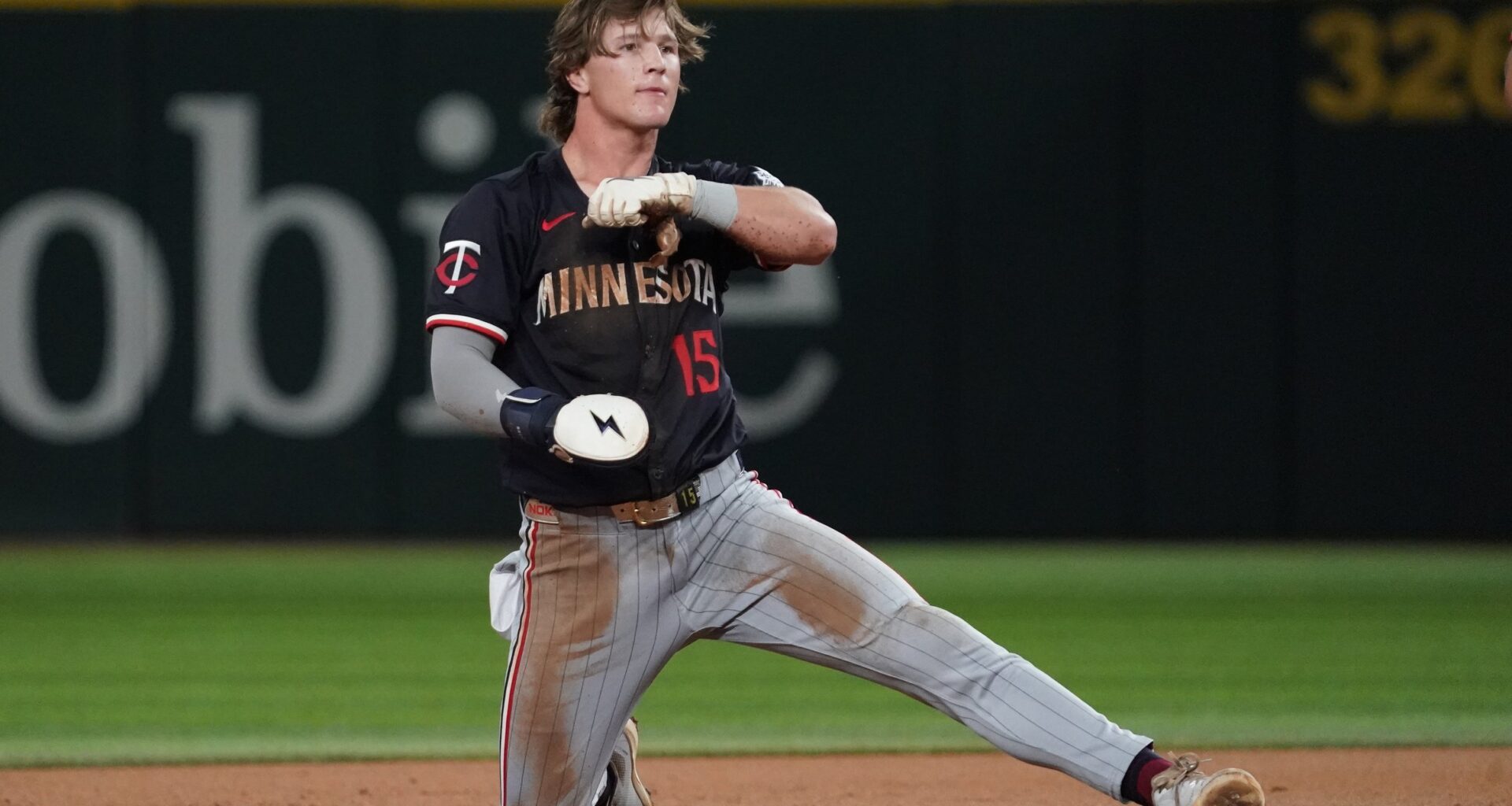
Under Falvey’s leadership, the Twins have gravitated very far from that profile in terms of their identity. But as you look ahead to 2026, you can already see some piranha-esque players written into the plans: Luke Keaschall, Alan Roden and Austin Martin to name a few. You wonder if Minnesota’s ultimate managerial choice or offseason player pickups will continue to trend in this direction.
I kind of think so. Because here’s the thing: these scrappy hustle type players tend to command a lot less money than the established big sluggers.
A New Norm for Twins Spending?
Whether or not you choose to believe them, the Pohlads have been clear and unflinching in their assertion that their financial state of affairs had become entirely unsustainable. Meeting the demands of a payroll in the $140 million range with reduced revenue streams was pushing them deep into debt, which they brought in minority investors to alleviate. Despite the appearance from the outside that the Twin Cities market should be able to support roughly middle-of-the-pack spending, the Pohlads insist that is not the case.
Comments about “right-sizing” the payroll, and Tom Pohlad telling the Star Tribune recently that his family has “repeatedly chosen to invest beyond what the Twins’ revenues can support in an effort to field a competitive team,” all point to one thing: a new norm for Twins payroll, or more accurately, a return to the old norm.
No, I don’t expect the Twins to go back to a $40 million payroll. But in 2002, when the overall benchmark was much lower, that figure represented 60% of the MLB average. Today the same percentage would equate to about a $100 million payroll — a renewed baseline I suspect they’ll fall short of in an all-out rebuild year in 2026.
In fairness, it’s definitely possible to win under such constraints, with the right baseball leadership. The Twins in 2002 were proof enough. The Rays have been doing it for many years. More relevantly: the Cleveland Guardians had a $100 million payroll this year and rallied to reach the postseason while the Twins floundered and underperformed. Cleveland has been a model of low-budget success, fueled by player development and savvy acquisitions. They aren’t high-priced or high-powered, but they win on aggressiveness, cohesion and fundamentals.
Despite coming from that organization, Falvey has led Minnesota far astray from such characteristics. Everything I’m seeing now leads me to believe he’s now looking to lead them back. For better or worse.