
2025 stats: 135 G, 452 PA, .222 / .277 / .325, 6 HR, 55 RBI, 73 OPS+ (70 wRC+), .265 wOBA, 1.1 bWAR, 31 FRV (best in baseball)
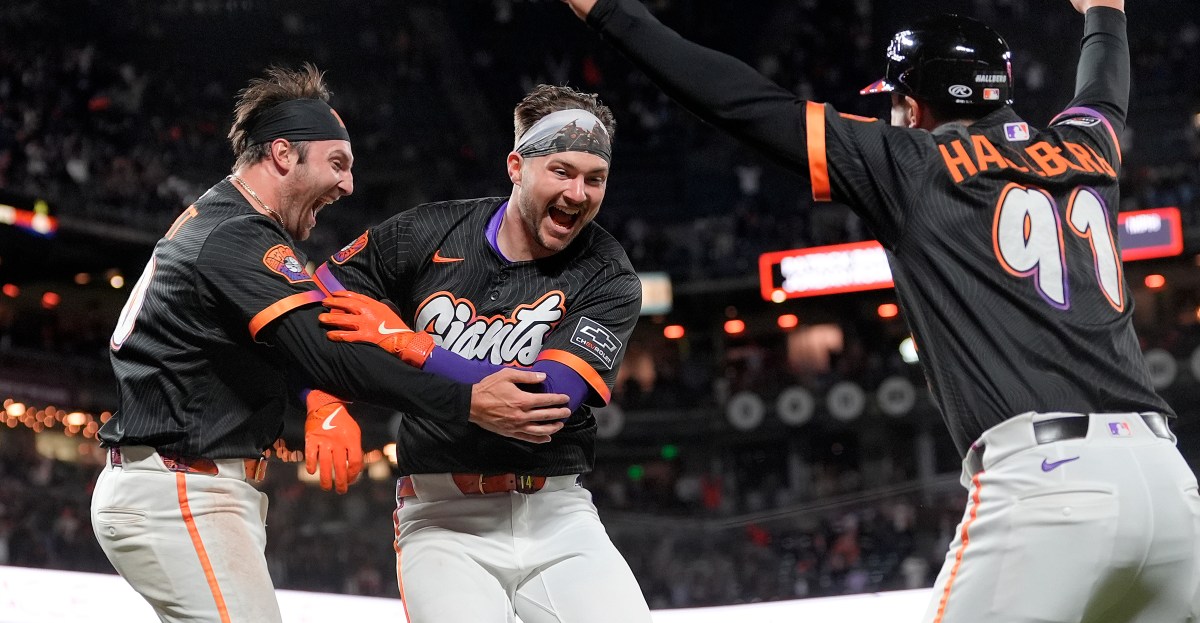
Looking back at the 2025 San Francisco Giants season, the apex may have come in a July 8 game against the Philadelphia Phillies. Trailing by two runs in the bottom of the 9th, Patrick Bailey drilled a ball off the wall in right-center field that bounced away from the Phillies outfielders and resulted in an improbable walk-off three-run homer — only the third time in major league baseball history that a catcher had done that.
After that epic win, the Giants dropped the next game 13-0. They went 1-3 into the All-Star break, 2-10 out of the break, and sold off players at the trade deadline. Bailey actually hit better in the second half of the season, once he rested up from his sprint around the bases, but the season was effectively lost in the aftermath of the most exciting win of the year.
The quality of Patrick Bailey’s 2025 season comes down to how much you believe in defensive metrics about pitch framing. Based on Fielding Run Value, Bailey’s framing was the most valuable defensive player in all of baseball, worth 25 runs above average and helping him to a league-leading total of 31 — 8 runs more than his closest competitor. Based on his hitting, Bailey was one of the worst regulars in baseball.
By offensive standards, Bailey had his worst season as a professional, with his highest strikeout rate (29.4%), his lowest home run rate (1.3%), his lowest rate of contact (73.8%), his highest rate of swinging at pitches outside the strike zone (31%), and his lowest rate of line drives (18.2%). Basically, Bailey swung and missed more than ever before, judged strikes worse than ever before, and when he did connect, he didn’t hit the ball hard.
Bailey’s season stats were dragged down by a truly miserable March and April, when he slashed a pitcher-esque .160/ .207 /.235, striking out in 36% of his plate appearances. He didn’t hit his first home run until May 21, his 44th game of the season. Bailey was like Katy Perry’s recent career — very few hits, and only occasionally blasting off into the sky. Historically, he’s been solid at the plate early, then tailed off.
That could have been a result of an offseason adjustment to a more open batting stance. By September and October, Bailey was excellent at the plate, slashing .288/ .321/ .493 and hitting four home runs. Maybe there’s a trend, or maybe small sample sizes for a player who has 2.5 seasons of experience just aren’t very predictive.
At the same time, Bailey was easily the best defensive catcher in baseball, essentially because of how many strikes he’s stealing with his artful framing. He was no slouch at other aspects of catching, throwing out 27 of 88 potential base stealers. That’s 30.7% when the league average is 23.2%, and got him five fielding runs for his arm, third among all catchers. He should earn his second Gold Glove for his efforts.
But can the Giants continue with such a giant black hole in their lineup? They haven’t been doing Bailey any favors with their inability to get him a decent backup catcher. Bailey started a career-high 114 games and played in 132 — and that’s in a season where he spent 10 days on the injured list in June. His durability is impressive for a catcher, but maybe if the team’s Sam Huff experiment had gone better, or if Andrew Knizner could have provided more offense.
Bailey was again worse from the right side of the plate, with his positive platoon split against left-handers from his rookie season looking more like an aberration, though he wasn’t quite as hapless as in 2024, when he slashed .180/ .237/ .213 against southpaws. Yes, his slugging was actually lower than his on-base percentage, something only possible when you get three extra-base hits in 97 plate appearances. The Giants backstop wasn’t that much better against right-handed pitchers, but it’s almost reminiscent of a J.T. Snow situation where a player should simply abandon switch-hitting.
Still, he’s shown flashes at the plate, and flashes for the dramatic as well. Arguably, Bailey was responsible for the Giants’ second-best win of the year as well, when he hit a walk-off grand slam to down the dastardly Los Angeles Dodgers.
Bailey does need to improve his hitting, in part because his pitch framing wizardry might not be as valuable after baseball introduces the Automated Ball-Strike (ABS) Challenge System next season, where teams can challenge two ball/strike calls per game. Of course, Bailey is so good at pitch framing, he may figure out a way to dupe the robots as well, which should lead to a new baseball award: The Gold Power Glove.