
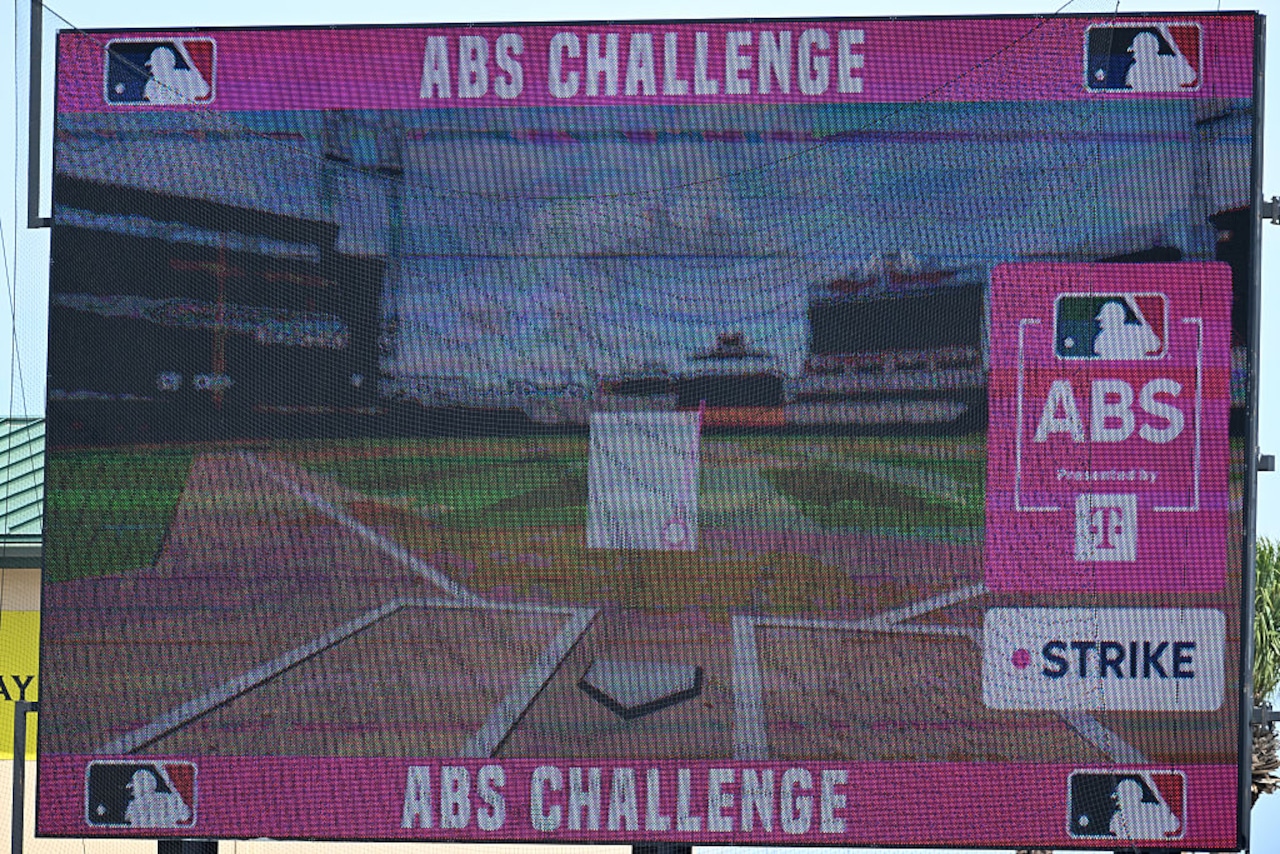
CLEVELAND, Ohio — Austin Hedges has built his major league career on stealing strikes and framing pitches. Now, with Major League Baseball adopting the Automated Ball-Strike (ABS) challenge system for 2026, the veteran catcher is diving headfirst into mastering this new frontier — and he believes it could be the difference between winning and losing.
“Basically, Hedges told us that he wants to make Cleveland the best at challenging pitches, at knowing when to challenge, knowing what the limitations of the system are,” Joe Noga revealed on the Cleveland Baseball Talk Podcast. “In his mind, the teams who are in the top five in the league in terms of winning and coming out ahead and getting positive results out of their challenges, he thinks that that’s going to translate to a higher percentage of victories.”
After signing a reported $4 million deal to return to the Guardians, Hedges has made the ABS system his number one priority for the offseason. It’s a surprising pivot for a catcher who initially seemed hesitant about the technology.
“When we talked to him toward the end of the season… he was a little skeptical,” Paul Hoynes recalled. “He didn’t rip the system, but he was a little leery of it. You could tell that he didn’t know how this was going to affect his livelihood. And now he’s jumping into this feet first.”
Hedges, who recently closed on a home in the Dallas area, plans to stay around Cleveland during parts of the offseason, working closely with hitting coach Grant Fink to develop protocols and strategies. With access to the newly renovated facilities, he aims to create training programs not just for himself, but for the entire pitching staff and lineup.
The challenge system comes with complex strategic elements that teams must navigate. When is the right time to challenge? Should you save challenges for high-leverage situations? How will emotional players handle the system? These are all questions Cleveland must address.
“Do you want to be the pitcher out there challenging every umpire’s decision on a regular basis? Even if you get them right, it’s still a human game,” Noga pointed out. “And the umpires might not take too kindly to being challenged by certain pitchers more than once. There’s… an emotional aspect to this.”
The system has already revealed some pitfalls in Triple-A testing. Pitchers have lost borderline calls they might have gotten in the past, and hitters can sometimes use challenges tactically rather than just for accuracy.
“Even if they lock a hitter up with a borderline pitch in a big situation or strike a guy out, well, now that guy can challenge the call,” Hoynes explained. “One pitcher told me this guy was just upset at himself for punching out, and now he’s got that opportunity to go back and rewrite the, the rhythm of the game.”
For the Guardians, players like Steven Kwan might get special treatment when it comes to challenges. “Manager Stephen Vogt said when we asked him about it, he said Kwan was going to have carte blanche when it comes to using the ABS system,” Hoynes noted.
As baseball enters this new technological era, Hedges and the Guardians are determined to turn potential disruption into competitive advantage. The race to master robot umps is officially on.
Podcast transcript
Joe Noga: Welcome back to the Cleveland Baseball Talk Podcast. I’m Joe Noga, joined by Paul Hoynes. Hoynsie, the Dodgers moved closer, one step closer to the World series, taking a 3 nothing lead in there and National League Championship Series matchup against the Brewers. They win, you know, a nice, nice win for them. Roki Sasaki picking up the save at the, at the end of the game three to one last night, just, you know, what’d you see in that game? As you know, they’re, they’re winning. Despite Shohei Ohtani struggling at the top of the line lineup.
Paul Hoynes: Joe, it’s pitching, pitching and pitching with the Dodgers. They have outscored the Brewers 10 to 3 in taking a 313 nothing lead in the NLCS. Snell was great in the opener. Yamamoto through a complete game in the second game. And Glasnow allowed one run in five and two third innings last night. Just dominant pitching. And the brewers have no chance. They’ve scored three runs, Joe. And that, that they had the best record in the leagues, regular season record. They have the, the Dodgers seem to just, they kind of coast through September. They had some injuries, but they always had the knowledge that they were going to be in the postseason. All these guys get healthy all of a sudden and bang, they’re ready for the postseason. It’s like they’ve got three or four lineups, different rotations that they can throw at a team. And really, if you, if you’re playing the Dodgers now, you’re in trouble.
Joe Noga: And that confidence there and the, and that championship level confidence is also kind of showing through because last night Jacob Mizrowski was, he was excellent through five innings. He was really strong. And yet the, the Dodgers still find a way.
Paul Hoynes: Yeah, Miz is just, I love watching that guy pitch, don’t you, Joe? He’s all arms and legs. He’s throwing like a thousand miles an hour. He’s jumping. He looks like a bean pole on the mound. But the Dodgers, all they, with that kind of pitching, all they need is a couple runs and they finally got to them that one inning. They didn’t hit a ball hard, I don’t think. And you know, they, they scratch out a couple runs and it’s game over.
Joe Noga: Yeah, nine strikeouts for Mizrowski in five innings. But Tyler Glasnow, like you said, really matched him with eight punch outs of his own five and two thirds and you know, couple of ex guardians players or guys that at least were in the system at one time. I go back to Anthony Banda, the left hander who’s out there? And he was a guy that the Guardians had in spring training and traded to the Dodgers. He pitched an inning, had a strikeout and in a big situation in the eighth inning. So just a lot of, like you said, different looks that the Dodgers are able to throw at you right now. The, the the brewers had, they were the story of the year basically all year. Just a magical run that they went on and to the best record baseball. And it looks like their season’s going to be over here in the next couple of days.
Paul Hoynes: Yeah, you know, the only run they draw, the only run they had last night was driven in by former Cleveland player Jake Bowers and Bonda Joe. I mean he was in camp like you were saying, the guy had tattoos from head to toe. I mean, but he said two really good years for the Dodgers. I think. Didn’t Cleveland trade him from out of Columbus? I think they traded him to the Dodgers from Columbus during a couple seasons ago. He’s really pick pitch well for them and just, you know, the Guardians just, they have pitchers coming, coming out of their ears. It seems like they, they’ve got them all over the place.
Joe Noga: Yeah. And just to see him go. But again, he would have been a guy that if there had been space for him or a spot for him in that bullpen for Cleveland, if he was, you know, able to do what he’s done in, in Los Angeles over the last couple of seasons, they would definitely have taken that from a left hander like Anthony Banda. So. Yeah. And then now looking over at the American League, the game sort of played out the same way as, you know, game Wednesday’s game with, you know, the Mariners taking the early lead on a home run and then basically the Blue Jays coming right back and answering them in the next inning and taking off after that. Josh Naylor hits a solo home run in the second inning. And that one, you know, came off of Max Scherzer. But then after that, Scherzer just basically shut the the Mariners down.
Paul Hoynes: Yeah, just really a strong performance by scherzer, who’s like 90 years old. I love that when Schneider, the Toronto manager, came to the mound to get him and Scherzer screaming at him to leave him in the game.
Joe Noga: That was a good moment. Schneider loved it. He talked about it after the game. His postgame comments were along the lines of I thought that was great and he suck. He’s getting screamed at for taking the guy out of the game. My personal favorite here is, is Paul Hoynes calling Max Scherzer, who’s you know, all 40 years old. Paul Hoynes calling Max Scherzer 90 years old. I think that’s kind of ironic. But please go on Paul. Tell us more about the 90 year old pitcher who’s out there with two different color eyes. I love it. The other thing that you’ve got to look at in this game, Andres Jimenez, his second home run of the postseason and he smoked that ball in the top of the third inning off of Luis Castillo. Two run home run. Second consecut night with a two run home run for Andres Jimenez. Ernie Clement in the game had a couple of hits including a double, scored a run. Yeah, like we said it’s, it’s the, the, the Guardians north up there in Toronto with the tests they’ve had over these last couple of games. That series tied two to two and game game five coming up with. I, I don’t like the format where the, the, you know, the, the team with the, the worst record has game five on their home field. That, that doesn’t make sense to me.
Paul Hoynes: It’s always what is two three two.
Joe Noga: Right, Right. Yeah, it’s two three two. So, so game five, you know, a pivotal game five with the series tied at two games apiece is going to be on the, the, the home field of the team that doesn’t have home field advantage.
Paul Hoynes: Yeah, that’s interesting. And, and in, and this, and in this series, Joe, the road team has won all, all of the games. Seattle went 20 in in Toro is 20 in Seattle. So that’s kind of strange as well.
Joe Noga: Yeah. And we, we know that we’re, that the series is definitely going back to Toronto for at least one game. And so you know, it makes tonight’s game, you know, even more important. All that much more important for other folks out in Seattle to, to get a win and have the opportunity to close it out on Sunday. So yeah, the both championship series, you know, sort of progressing there. But we want to shift our focus and talk now a little bit about some developments with the Guardians. Nothing, nothing new. We, we talked to Austin Hedges earlier in the week after hedges signed a one year reported $4 million deal with incentives to come back to the Guardians. One of the big things that we talked about, one of the big changes that Austin Hedges is certainly aware of, the Guardians are certainly aware of is the move to the, the automated ball strike system, the abs, the robot umpires, the sort of robot umpires, the challenge system is what it’s going to be. And for Austin Hedges he said that the ABS System and incorporating that and training on that is priority number one for him and for the guardians this off season. Basically, Hedges told us that he wants to make Cleveland the best at challenging pitches, at knowing when to challenge, knowing what the limitations of the system are. And he, he, in his mind, he thinks that the teams who are in the top five in the league in terms of winning and coming out ahead and getting positive results out of their challenges, he thinks that that’s going to translate in some way to a higher percentage of victories, of wins added to. To their. Their ledger. So it’s Austin Hedge’s determination in this off season to become the best at the ABS Challenge system.
Paul Hoynes: Yeah, Joe, it was interesting because when we talked to him toward the end of the season, when, well, when they m. Announced this, I think it was during the postseason, right at the end of the year that they were going to the ABS system in 2026, he really, he was a little skeptical. I think, you know, he really didn’t come out and say it. He didn’t rip the system, but he, you know, he was a little leery of it. You could tell that he didn’t know how this was going to affect his livelihood. And now he’s jumping into this, you know, feet first. He said he’s going to stay in Cleveland a lot. He’s this during the off season and work with it and really try to, you know, turn it into an advantage, like you were saying.
Joe Noga: Yeah, and he said he’s going to work, specifically, he said he was going to work, looking forward to working with Grant Fink, the hitting coach. And he said one of the big things is having access to the facility this year, because last year he didn’t have access while they were undergoing all the renovations and the expansion of the clubhouse and the hitting cages and all that. So now, you know, with the ability to come into the facility and sit down with the coaches and go over things and basically, you know, put together some sort of training program, not just for the hitters, but for the catchers and the pitchers themselves as to how they’re going to use the system next year. It’s going to be a big change and basically he’s going to be like a coach on the field when it happens.
Paul Hoynes: Will.
Joe Noga: Will Austin Hedges. So this is, this is a guy who’s basically dedicated his professional major league career to becoming the best at steal strikes and framing pitches. That’s going to be changed and he’s going to want to try and, and take advantage of that. He said one thing that’s you know, that sort of levels the playing field is other than a lot of the, the guys who were just up from AAA who have experience with the challenge system the last couple of years in AAA, the established major league veterans, guys like 90 year old Max Scherzer, they’re not going to have too much experience with the system. So it might be a little awkward or unorthodox for them at least early on in the season next year.
Paul Hoynes: Yeah, no doubt about it. And he said, you know, he said a lot of, you know, the veteran guys are the, in the big leagues are going to be in the same boat. Just as you were referring to that, you know, they haven’t really used this, they don’t know how it works. I mean they got a taste of it in spring training last year, but that’s, you know, a limited, a limited look. So now they’re going to, it’s going to be, you know, every game, game in, game out, and you’re really going to have to learn when to use it, when not to use it, when’s the best time to a challenge and when’s the time to kind of, you know, when to fold it too, you know, keep it in your back pocket. So really, it’s going to be really, really interesting to watch how this unfolds. And if you talk to the young guys that, that have come up through the system that, that have used it, especially the pitchers, you know, they said it’s kind of a two edged sword in, in that, you know, if you, if they throw, if they throw a really good pitch, a pitcher’s pitch, so to speak, just as, you know, a fraction off the plate, you’re not going to get that call. And in the, you know, kind of the rhythm of the game, you usually get that call. So that, that kind of changes, changes things. And even if, you know, they lock a hitter up with a borderline pitch, you know, in a big situation, strike a guy out, well now that guy can challenge that or, and you know, you know, one pitcher told me, you know, this guy was just upset at himself for getting, for punching out and, and not, you know, getting locked up. And now, you know, he’s got that opportunity to go back and you know, kind of rewrite the, the rhythm of the games. You know, I think that that’s going to be an interesting part of this as well.
Joe Noga: Yeah. And for me I think it’s the idea of who’s going to be able to better handle their emotions. Like you said, in, in that situation because you know, There are guys who were fiery and, you know, there are guys who never think that they. They’ve taken a pitch inside the strike zone in their careers. And are they going to be able to overcome that ego, to be able to know that maybe this isn’t the best time in a game to challenge? Because you. You might want to save one of those challenges for a pivotal moment in the game. But if a guy, you know, punches out early, and I’m talking about a hitter punches out early, is he going to challenge then or. We also have to take into effect the human factor here. The umpires are still calling balls and strikes, and they’re still going to be the arbiter of the majority of these, These calls throughout the game and throughout the season. And do you want to be the pitcher out there challenging every umpire’s decision on a regular basis? Even if you get them right, it’s still a human game. And the umpires might not take too kindly to being challenged by certain pitchers more than once or if there’s. There’s. There’s an emotional aspect to this.
Paul Hoynes: Yeah, no doubt about it. You know, and the one thing you’ve got to give the umpires credit, you know, in the, you know, since replay has been brought in, you know, just changing the subject for a minute, you know, on the, on the bases, you know, they’ve really. You don’t see too many. You know, at least you don’t see the first. You know, the, the umpires that way hold a grudge, you know, because they can, I guess, because, you know, you can just, you know, because of replay. So hopefully they take that attitude toward balls and strikes. But yeah, Joe, it’s still. You’re right. It’s. It’s a human game. You’re going to. You’re going to be upset and, and, and the players are going to have to kind of rein themselves into. Has, Has Brian Rocco ever missed a tag at second base? You know, so is he going to take that to the plate, that same attitude? So it’d be really interesting to see how these guys handle it.
Joe Noga: Who do you think in the Guardians lineup, the most recent Guardians lineup, who do you think would be a guy that you would give carte blanche and just give him the opportunity to, you know, if he thinks that a pitch is definitely close or should have gone in his favor, if he should challenge, I gotta believe that Stephen Kwan would be that guy. Just based on his knowledge of the strike zone. And it’s, it’s quantifiable. You can see that he’s a guy who’s been victimized, particularly on pitches on the outside corner against him in his entire career at the major league level. He’s, he’s one of the most victimized guys and pitches not being called his way on the outside corner, definitely.
Paul Hoynes: I think, in fact, you know, manager Stephen Vogt said that when we asked him about it, he said, you know, Quan was going to have carte blanche when it comes to, to using the ABS system just because of what you said, Joe. The guy’s got a great idea, the strike zone. And he has a lot of pitches, you know, that go against him, a lot of calls that go against him, you know, in terms of being, you know, since, I mean, they were called.
Joe Noga: Balls instead of strikes instead of balls. Yeah, for sure. Yeah. But, but what about Jose Ramirez? Because that’s where the, maybe I think a little bit of the emotion might come into play there. And for the most part, if you watch with the, you know, the square, the box, the strike zone on the tv, sometimes Jose might argue a call. But you look at the evidence and, and going by what the system says, you know, sometimes the umpires really do get it right.
Paul Hoynes: Yeah, definitely. No doubt about it. And this is a guy, you know, that rarely, I don’t think we’ve, you know, rarely do you see him maybe strike out over a hundred times a year. This year, 74 punch outs, 66 walks. So that’s, you know, as close to 50, 50 as you can get. So he’s got a good idea of the strike zone and he, he’s not afraid to walk. But yeah, there are times when he was, you could tell he was unhappy. You rarely see him question ball or strike call. But he did it a couple times this season I thought.
Joe Noga: Yeah, and I thought on a couple of those times he didn’t have the visual evidence there to, to back it up. Like you said, it’s a two edged sword. I just wonder, like Austin Hedges is saying here, putting in protocols and how they’re going to attack this system. Do you only challenge when there are runners on base? Do you only challenge when there are runners in scoring position? Do you only challenge when there’s two outs in, in a, in a game? You know, these are all things that are going to have to be drilled into the hitters minds as well as the, the minds of the pitcher and the catcher. Does Stephen Vogue come in and say, okay, only catchers are challenging for us, you know, at certain points of the year or it’s going to be interesting to see how, how they, they make game plans for this. And a lot of this is going to come from what the guys in Triple A had been doing. And we’ll slowly, that’ll slowly be revealed in their patterns over time. But it’s probably going to take us as observers a full season of it and watching their patterns and watching their tendencies to come away with what they’re doing. Because you know, not every team is going to want to be as open about what’s going on and what their plans are and what their strategies are to try and gain that advantage that Austin Hedges is talking about.
Paul Hoynes: Yeah, it reminds me in a way, Joe, of how teams adapted to the Ghost Runner. When it first came in, everyone thought, okay, we’re just going to bump the guy to a third base and somebody hit a fly ball and score and we win the game. But we’ve seen that and we’ve seen this, how it’s evolved over the years, that rarely do you see anybody play little ball with a guy on second base. I mean if, especially if you’re the visiting team, I mean you want to score, you know, 10 runs, not just one run. So maybe we’ll see the ABs, the strategy and using it develop that way.
Joe Noga: Every team and every manager is going to have his own take and variation on it. So will be something to definitely watch. Okay, just wanted to, you know, wrap up today with a little bit of a discussion because I saw a post on, on X on online regarding a right handed slugger, one that used to terrorize Cleveland when he was in the division. Gone on to some, some success elsewhere after he was traded out of the division. But Nick Castellanos, rumored to be available and on the trading block. Hoynse, he’s got one year and $20 million remaining on his five year deal that he signed with the Phillies. Phillies reportedly unhappy with his product, his production last year. I think, you know, it was pretty well documented. He, he had a down year for him. A.250 batting average, 17 home runs and 72 RBIs. They would give him the key to the city if he had done that in right field for the, the Guardians this past year. But you know, what do you think the chances are that Nick Castellanos, guy who had a lot of success against Cleveland, could be a piece that would be attractive to the Guardians, I think.
Paul Hoynes: In a Guardian situation based on what the kind of production they got out of right field this past season, which was, you know, at the bottom of the, the American League and you know, in, in almost all categories yeah, you’ve got to kick the tires on everybody. Aslanos is what, 33, you know, you know, had a minus one war this year. So, you know, like you, he, this was not his best season. 17 home runs, 72 R.250 batting average, 133 punch outs, 32 walks. The guy’s a power hitter. I think his play, I, you know, I. Defensively, Joe, I think, you know, when he played in Detroit, his defense was not a big part of his game. You know, that, that he was criticized for that. I think he’s gotten a little better over, over the, over the years. But this would be an interesting choice, Joe, if you, if you make a deal for them. I don’t know. What would you give up for him? I mean, it’s a one, it’s probably a one year deal, right? I would think. Or, you know, is this the kind of guy you want to, you know, acquire and then try to extend? I don’t know.
Joe Noga: Yeah. No, I, I mean, what you would get, what you, what Philly would want in return would be some sort of prospect capital, I’m sure, more than likely some sort of pitching capital. But you know, what you’d be trading for that presence, not necessarily the numbers here. He’s a guy who’s, you know, been a veteran, been a leader. And yeah, you just, you basically don’t want to be running rookies out there every week or, you know, every game in right field. And he would give you some, at least, you know, some sort of veteran presence there and somebody to hit behind Jose Ramirez. I think he would be your, your natural four hitter in that spot. Yeah, I, I would think that whatever return Philly would want in a trade would be a pitching prospect, a high pitching prospect that Cleveland would definitely not want to give up. But as far as, you know, what his future in Cleveland would be, maybe you, you extend him a year after pet. Depending on what he does next year. But, you know, you can’t look at it as more than a one year, one year deal. For sure. Yeah.
Paul Hoynes: You know, and if they’re going to release him, do you, do you wait and until they release him and then try to sign him, you know, so that, you know. Yeah, that’s, you know, they’ve got a couple options there.
Joe Noga: But adding him would. Would be like sort of what you did with Carlos Santana to help bring Kyle Manzaro along. You, you wouldn’t play him every day. You would give the younger guys opportunities and then, you know, at a certain point during the season. If, if his production wasn’t where you expected it or wanted it to be, you can maybe cut him loose and then give that opportunity full time to the younger guys. That’s how we saw Manzardo come along, and it really did work out to be the best thing for him during the season. It’s just that the last month of the year, he sort of fell off because he got tired.
Paul Hoynes: Yeah, Yeah. I like the way they brought Manzardo along. And, yeah, it could work the same way in right field. I don’t know who’s going to play right field out there, Joe, from, you know, from Cleveland’s point of view. But it, you know, they’ve got a lot of candidates. I don’t know, it’s Delaude or a center fielder or is he a right fielder? You’ve got John Kenzie, you’ve got Rodriguez. You can run a bunch of guys out there. Yeah. That would, you know, that he would serve that purpose for sure.
Joe Noga: Yeah. And basically what you got out of Cleveland’s right fielders last year was not a lot in terms of the productivity. So any sort of bump would be a positive, a big plus. They. They ranked 26th in the big leagues. Cleveland’s right fielders did in terms of war, according to fan graphs and, you know, all their. Their rate stats. I’m looking at their. Their home runs right now, 27th in the league in home runs with 19 for their combined right fielders. And the numbers just get worse from there. So, you know, not a lot of productivity again out of right field. All right, Hoyns, that’s going to wrap up today’s edition of the Cleveland Baseball Talk Podcast. We’ll talk to you again next week, and hopefully we’ll have a little more clarity on these league Championship Series and getting closer to the start of the World Series.
Paul Hoynes: All right, Joe.
If you purchase a product or register for an account through a link on our site, we may receive compensation. By using this site, you consent to our User Agreement and agree that your clicks, interactions, and personal information may be collected, recorded, and/or stored by us and social media and other third-party partners in accordance with our Privacy Policy.