
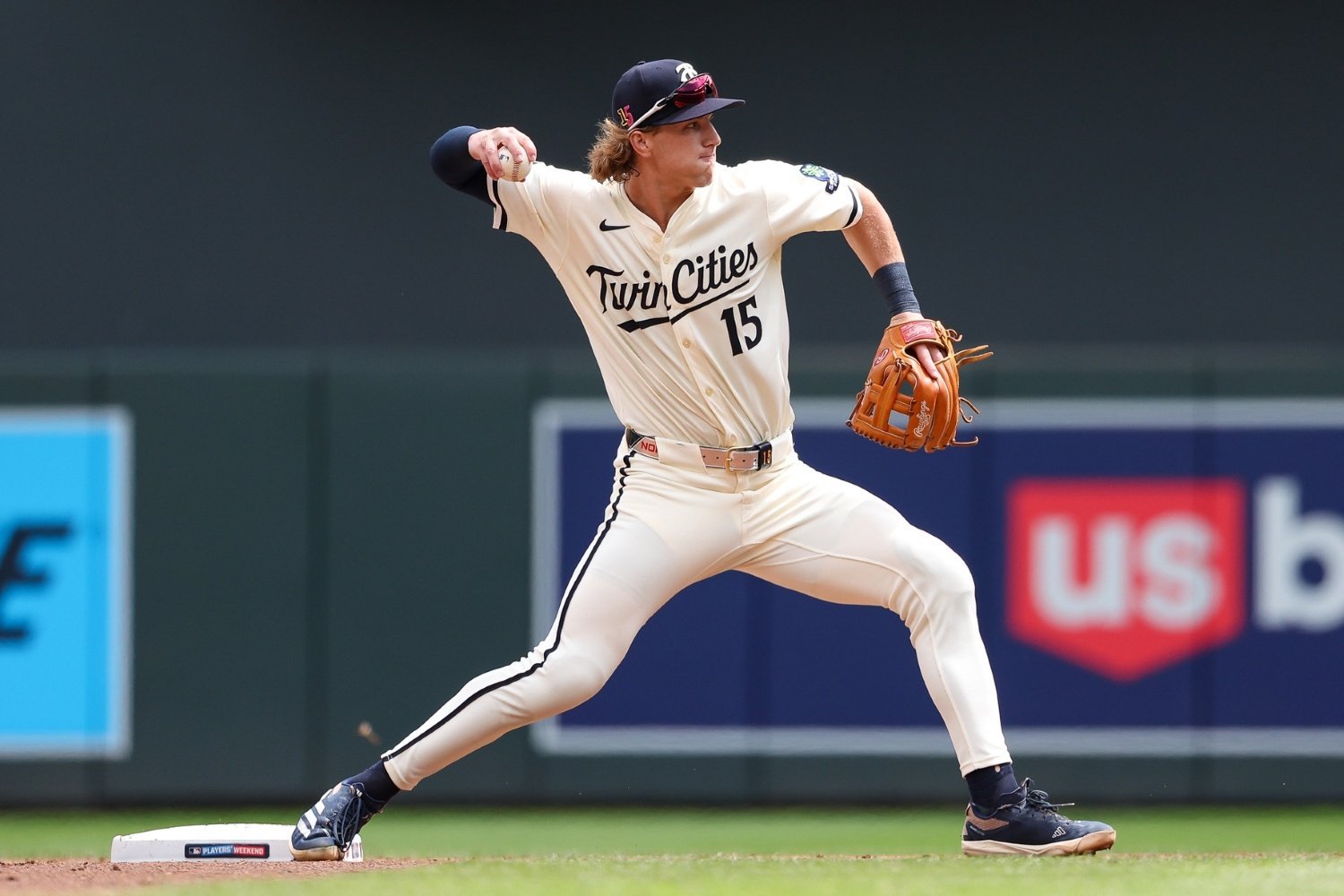
When the Minnesota Twins have been at their best, they’ve been strong up the middle. Catcher, shortstop, second base, and center field are the backbone of any good defensive club, and the Twins will rely on a familiar mix of youth and experience to hold those spots next season. Each player offers something unique, but there are questions that the team will need to answer before Opening Day.
Catcher: Ryan Jeffers
Jeffers has transformed into one of the stronger offensive catchers in baseball. Last season, he finished near the top among backstops in several hitting metrics. His bat makes him a fixture in the middle of the Twins lineup, but his glove continues to lag behind. Jeffers posted a Fielding Run Value of -5 last season, including negative marks in Blocks Above Average (-4), Caught Stealing Above Average (-5), and Framing (-1). While the Twins value his ability to handle a pitching staff, there’s no denying that his defensive numbers impacted the team in 2025. He could be one major beneficiary of the implementation of the ball-strike challenge system in 2026, if he proves adept at challenging the right pitches.
Behind Jeffers, the Twins have a modicum of organizational depth but no clear-cut backup ready to push for meaningful innings. Mickey Gasper and Jhonny Pereda both saw time late in the season, but didn’t inspire much confidence. Prospects Ricardo Olivar, Noah Cardenas, and Patrick Winkel are all, intriguing but face the added challenge of Rule 5 eligibility if they remain off the 40-man roster. The Twins may need to bring in a veteran defensive specialist to complement Jeffers’s offensive upside.
Shortstop: Brooks Lee
Trading Carlos Correa opened the door for Lee to become the Twins’ everyday shortstop. Lee’s strong baseball instincts and quick decision-making were part of his resume when the Twins drafted him, but his defensive metrics suggest there’s room for improvement. He posted a -3 Fielding Run Value and -1 Outs Above Average at shortstop, though those numbers were better than his time at second base. While Lee lacks Correa’s range and arm strength, his reliability and poise could make him a steady option as he gains experience.
The Twins’ shortstop depth isn’t particularly good, which could prompt the front office to add a veteran utility option this winter. Ryan Fitzgerald and Payton Eeles provide short-term depth, while prospects Kaelen Culpepper and Marek Houston represent the future. Culpepper’s athleticism and Houston’s pure glove skills could make either player a factor within the next couple of seasons.
Second Base: Luke Keaschall
Keaschall is the most intriguing young player on Minnesota’s roster heading into next season. Long viewed as a versatile defender capable of moving around the diamond, he has been slowed in his development by injuries. Following Tommy John surgery and a fractured arm from a hit-by-pitch, Keaschall’s return to full strength was one of the few encouraging stories of 2025. His defensive results were mixed, with -2 Outs Above Average at second base, but his athleticism and adaptability remain promising.
Second base would be his ideal long-term home, although the Twins could still experiment with putting him in the outfield. Austin Martin and Edouard Julien both provide depth, though both players’ defensive limitations make it more likely for the team to find other infield options. Kyle DeBarge and Jose Salas offer additional infield depth in the upper minors. Still, Keaschall’s development will play a key role in determining whether the Twins can solidify this position internally.
Center Field: Byron Buxton
When healthy, Buxton remains one of the best defensive players in the game. His 2025 season showcased that he can still make elite plays in center field, posting 3 Outs Above Average. However, there were subtle signs of decline, particularly in his first-step quickness and ability to cover balls in the gaps. The Twins aren’t ready to move him off center just yet, but with younger outfielders on the way, that decision could be looming in the next couple of years.
The organization’s outfield depth gives them options. Alan Roden and James Outman, two of the team’s trade deadline acquisitions, can each play center in a pinch, while Martin’s versatility allows him to shift around the outfield as needed. Later next season, top prospects Walker Jenkins and Emmanuel Rodriguez could make the conversation even more interesting. If Buxton continues to produce at the plate while maintaining his defensive value, the Twins will gladly let the future wait.
The Twins’ success next season may depend heavily on how well their up-the-middle defenders perform. This will become even more critical if the team trades away veteran pitchers and turns the rotation over to younger arms. Jeffers needs to tighten up his receiving. Lee must continue to grow into the shortstop role vacated by Correa. Keaschall will look to establish himself as a reliable everyday second baseman. Buxton remains the dynamic centerpiece of Minnesota’s defense. The group combines promise and uncertainty in equal measure, leaving the Twins with both optimism and plenty to prove heading into 2026.
How do you feel about the Twins’ up-the-middle defense entering next season? Leave a comment and start the discussion.