
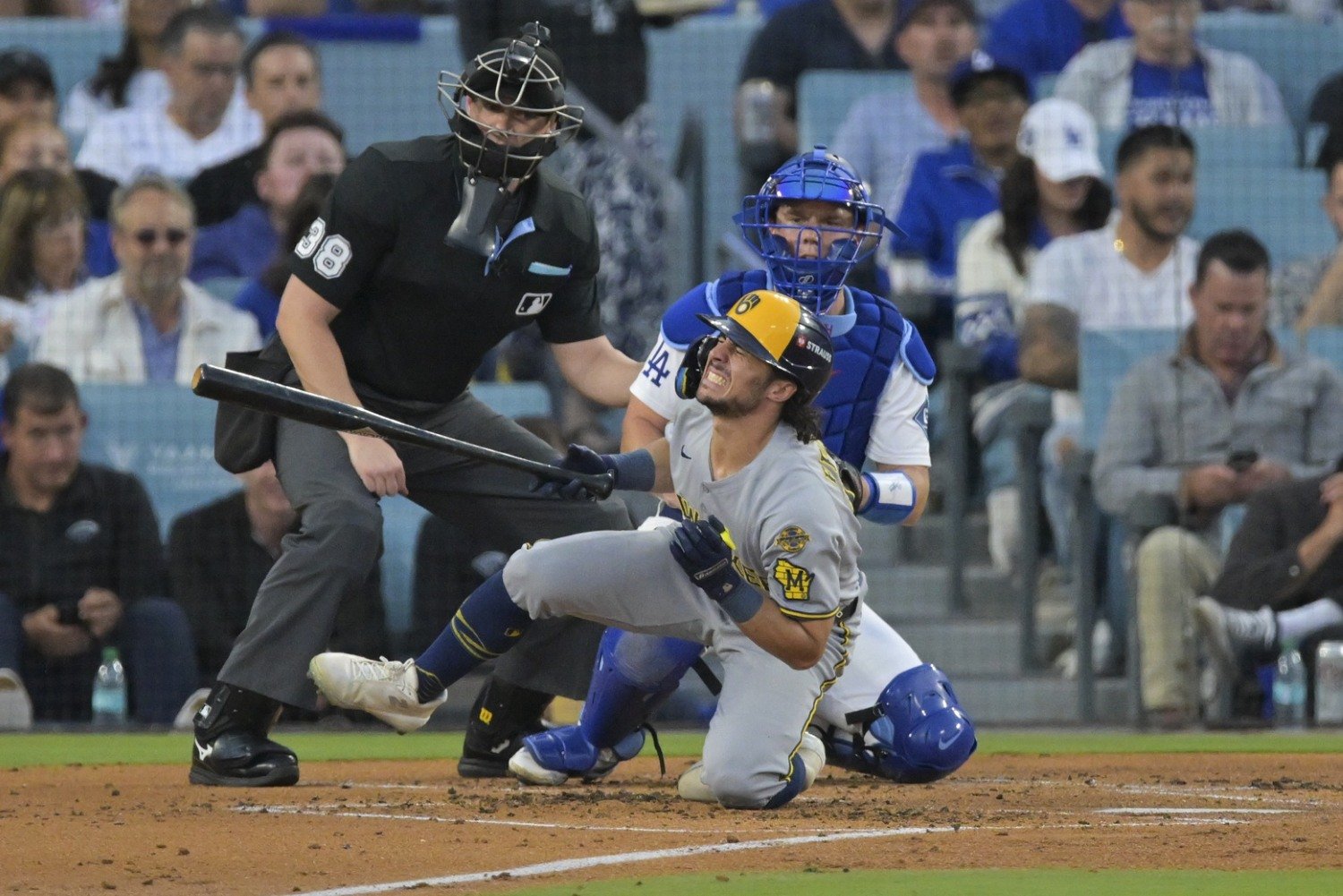
Brewers fans have been left heartbroken and mystified by the team getting swept in the 2025 National League Championship Series by the Dodgers. How did this happen to a team that went 6-0 against the Blue Bullies from Hollywood during the regular season?
Brewers manager Pat Murphy seemed to point the finger at the team’s triumphant five-game NLDS against the Cubs.
“The emotional series in the Cubs, you guys have to know the Brewers-Cubs thing well, you have to have been part of it to understand how it really zapped a lot out of us emotionally,” Murphy said. “And then to have to come back and play right away—and then we lose a one-run game, it just took us off it a little bit. And then the pitching performances by the Dodgers basically put the hammer down.”
In one sense, Murphy’s telling the truth, based on how the collective approach shifted for the Brewers after they went up 2-0 in the NLDS. But it’s not the whole truth, and a look back can show that in the midst of the team’s incredible summer run, the seeds of the team’s downfall were being planted by Murphy himself.
Several times during the NLCS, the question was asked whether the Brewers, as a team, were running out of gas, with Sal Frelick and Abner Uribe being the focal points of articles on the site. Frelick vanished at the plate in the playoffs, although he was involved in an incredible double play in Game 1 of the NLCS. Frelick had 70 more at-bats and played an extra 60 innings in the outfield, compared to 2024. This was despite a stint on the injured list in July. That had to play a part in his wearing down.
On the pitching side, Uribe may have paid the price for 75 regular-season appearances and a two-inning save in Game 5 of the NLDS. He wasn’t the only one: Grant Anderson, Jared Koenig, and Nick Mears each appeared in 63 or more games, and Trevor Megill had 50 appearances before missing a month at the end of the year.
Why did they get so much work? The answer may lie in an article from June 23 on this site that should be looked at in a new light after the NLCS collapse. The four players on the team’s bench (Eric Haase, Jake Bauers, Andruw Monasterio, and Daz Cameron) had a grand total of four plate appearances in an eight-game stretch. A starting nine playing that long and not getting off days (even partial ones) is a good recipe for the team to end up on fumes in October.
The team had been struggling with injuries (Tyler Black was recovering from a hamate injury, Blake Perkins was on the mend from a broken leg, and Garrett Mitchell was lost for the season), but Bauers is competent in the corner outfield and at first base, and could have eased the wear and tear on Frelick.
In a similar vein, Murphy stuck by Joey Ortiz, even as he became an almost unplayable black hole in the lineup, despite Monasterio showing he was a competent shortstop and having a potent bat this year.
On the pitching side, it is fair to note that Shelby Miller, who was supposed to shoulder some of the load, was injured. So were Brandon Woodruff and Logan Henderson. None of those three were overused, by any means. Furthermore, the team traded Nestor Cortes to San Diego at the trade deadline, reducing their depth instead of reinforcing it.
But for a fair bit of the summer, the Brewers seemed to be content to leave Craig Yoho, Carlos Rodriguez, Chad Patrick, and Tobias Myers in Nashville for extended periods of time, when (perhaps) they could have been helping out in Milwaukee. Patrick and Myers re-appeared late in the season, and Yoho was called up for an extra cup of coffee, but they could have been up much sooner. It might have required some delicate roster management, up to and including a dreaded “phantom” IL stint, but more proactive workload management was theoretically possible. The front office and Murphy elected not to pursue it.
There is no denying that Murphy has been incredibly successful in his first two years managing the Brewers, posting a 190-134 regular-season record. He’s helped the team greatly exceed expectations and has built a solid culture in the clubhouse. His everyday approach has made winners and better players of almost every player who’s passed through the roster. However, it does come with certain tradeoffs. Next October, the team needs to have better weighed those tradeoffs, so they can put up a better fight and keep swinging deeper into the fall.