
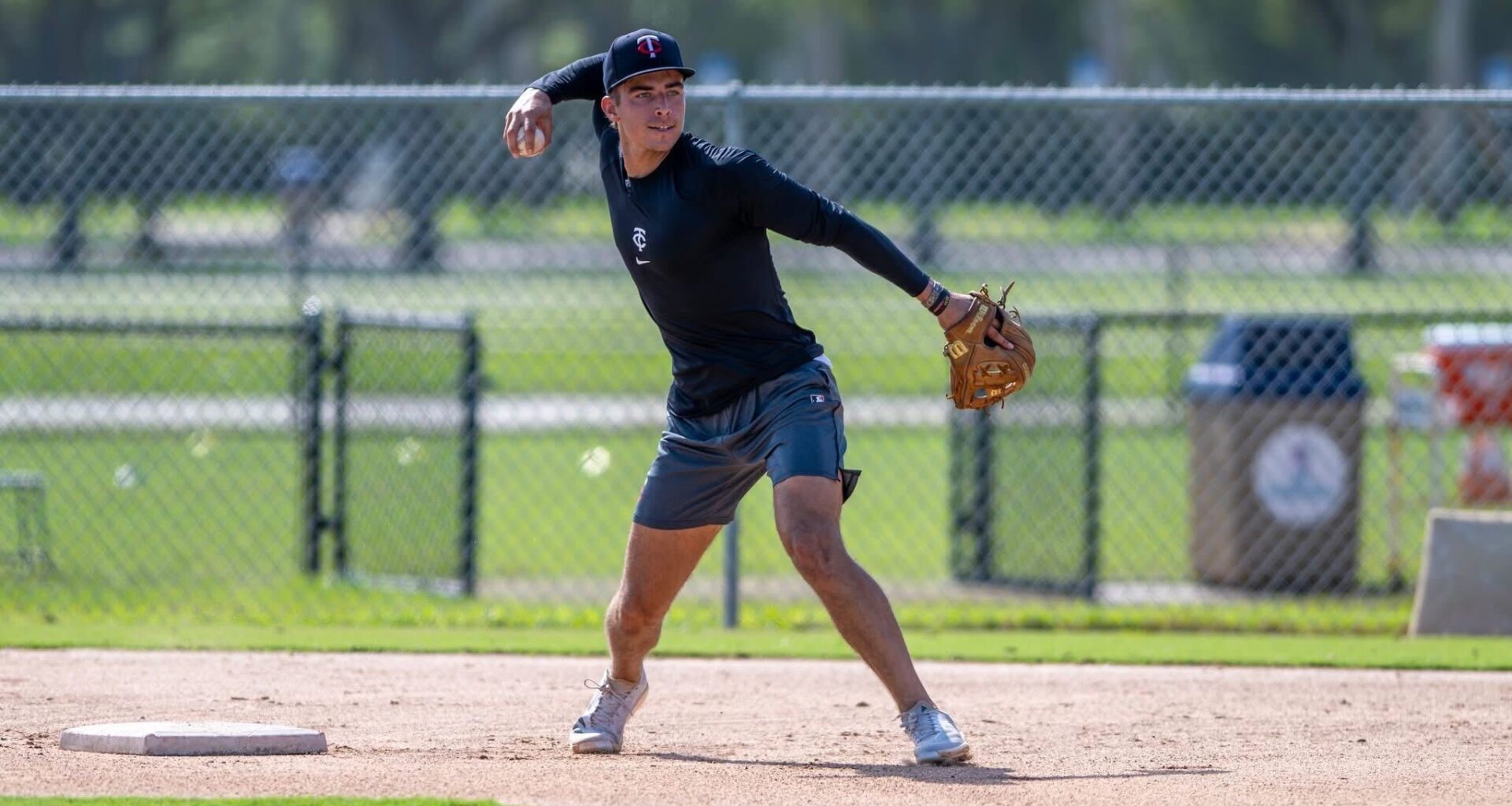
When the Minnesota Twins selected Marek Houston with the 16th overall pick in the 2025 MLB Draft, they were betting on a player who had turned himself from an unheralded college recruit into one of the premier defensive shortstops in the country. He was not on many national scouting radars when he arrived at Wake Forest. By the end of his junior season, he was the anchor of a powerhouse program and one of the most polished defenders available.
Houston’s rise began in 2023, when he won Wake Forest’s shortstop job as a freshman and helped lead the Demon Deacons to a third-place finish at the Men’s College World Series. He followed that up with a strong showing in the Cape Cod League, earning All-Star honors and catching the attention of professional scouts. During fall practices ahead of his junior year, he revamped his offensive approach, embracing a more aggressive swing path and driving the ball with more authority. The result was a breakout campaign that elevated him to a potential first-round pick.
He signed with Minnesota for $4.5 million, slightly below slot value, and jumped right into the organization’s developmental pipeline. The Twins gave him a taste of professional ball at Low-A Fort Myers, where he thrived in a small sample. In 12 games, Houston hit .370/.424/.444 with a 149 wRC+, showing advanced bat-to-ball skills and a mature approach. His promotion to High-A Cedar Rapids was more challenging, as his bat cooled off: he posted a .459 OPS and a 33 wRC+. Still, given the grind of a long year that included a college season, a draft, and two minor-league stops, fatigue likely played a role in his finish.
Scouting Breakdown
Defensively, he is the type of player who stands out on every field he steps onto. Houston combines quick hands, fluid actions, and impressive range, giving him a legitimate shot to stay at shortstop throughout his career. His arm strength and accuracy are reliable assets, and some evaluators believe he has Gold Glove upside. Even if the bat lags, he has the defensive chops and athleticism to move around the infield—or even slide into a utility role if necessary.
At the plate, Houston’s evolution remains a work in progress. He began college as a contact-oriented hitter, but has since adjusted to generate more loft and impact. The added strength in his frame could translate to 12-15 home runs annually, if he continues to refine his timing and pitch selection. His speed is better utilized in the field than on the bases, but his overall athleticism gives him a chance to be a steady contributor once his offensive approach settles.
Houston is expected to return to High-A Cedar Rapids to begin the 2026 season, where the Twins will emphasize consistency at the plate and continued strength gains. If he adjusts well, a midseason promotion to Double-A Wichita could mirror the developmental path Kaelen Culpepper followed in 2025.
Long-term, Houston’s defense gives him a legitimate pathway to the big leagues. Players with his glove and versatility tend to find roles even if their bats falter. For the Twins, the hope is that his newfound power continues to emerge, giving them a potential everyday shortstop capable of saving runs with his glove and contributing enough offense to keep his name in the lineup.
If his offensive development continues, Houston could rise quickly through the system. If not, his glove alone will still give him a chance to impact the major-league roster as early as 2026.
How do you view Houston after his professional debut? Leave a comment and start the discussion.
Interested in learning more about the Minnesota Twins’ top prospects? Check out our comprehensive top prospects list that includes up-to-date stats, articles and videos about every prospect, scouting reports, and more!