
Image courtesy of Bill Streicher-Imagn Images
Earlier this week, I provided an overview of the grim state of affairs for the Twins lineup. In short, nearly every hitter ended the season in a downward trend, leaving it difficult to feel a sense of optimism regarding an offense that was well below average in 2025 and gave away one of its better bats (faint praise) in Carlos Correa.
They have some work to do in the bullpen, obviously, but if the relief corps won’t matter much if the Twins can’t build leads. There’s probably not a lot of help on the way for a lineup that ranked 23rd in runs scored, and rising prospects likely won’t be quite ready for a full-fledged impact, so Minnesota’s improvement is going to hinge on a handful of former top prospects and top draft picks to lead the charge.
In this new series, we’ll examine what a rebound season would look like for five of these hitters, including the ingredients needed to make it happen. We begin today with a player whose outlook might be as closely tied to that of the team in 2026 as anyone.
Stuck in the Mud After a Hot Start in MLB
When he first arrived in the big leagues, Brooks Lee looked like the real deal. He’d been demolishing Triple-A last summer before his MLB promotion in early July, and wasted no time piling up hits as a Twin, with 11 in his first six games. In 185 games and 695 plate appearances since, he has slashed .227/.275/.348 with a negative-0.3 fWAR. Here’s the list of Twins hitters who have been less valuable over that span, according to FanGraphs: Manuel Margot, James Outman, Carson McCusker, Mickey Gasper, DaShawn Keirsey Jr., Edouard Julien, Jose Miranda.
Production-wise, Lee exists at the level of washouts and fringe major-league players. He’s had some bursts of power-hitting along with a BABIP-driven hot streak this past June, but his flashes have persistently been canceled out by prolonged droughts.
Turning 25 this offseason and now with considerable MLB experience under his belt, Lee is past the point of growing pains. He’s firmly beyond prospect status and establishing himself as a pretty low-caliber big-leaguer. But he’s still relatively young, and those occasional glimpses of power, along with his long track record of making adjustments and hitting for average, do give some cause for optimism.
A Track Record Worth Believing In
When the Twins drafted him eighth overall back in 2022, Lee was regarded as one of the best collegiate hitters in the country. He went to the minors and raked at every level, pushing his way to the majors in about two years’ time. Across 195 minor-league games, he hit .289/.360/.476, and he showed big pop at Triple-A.
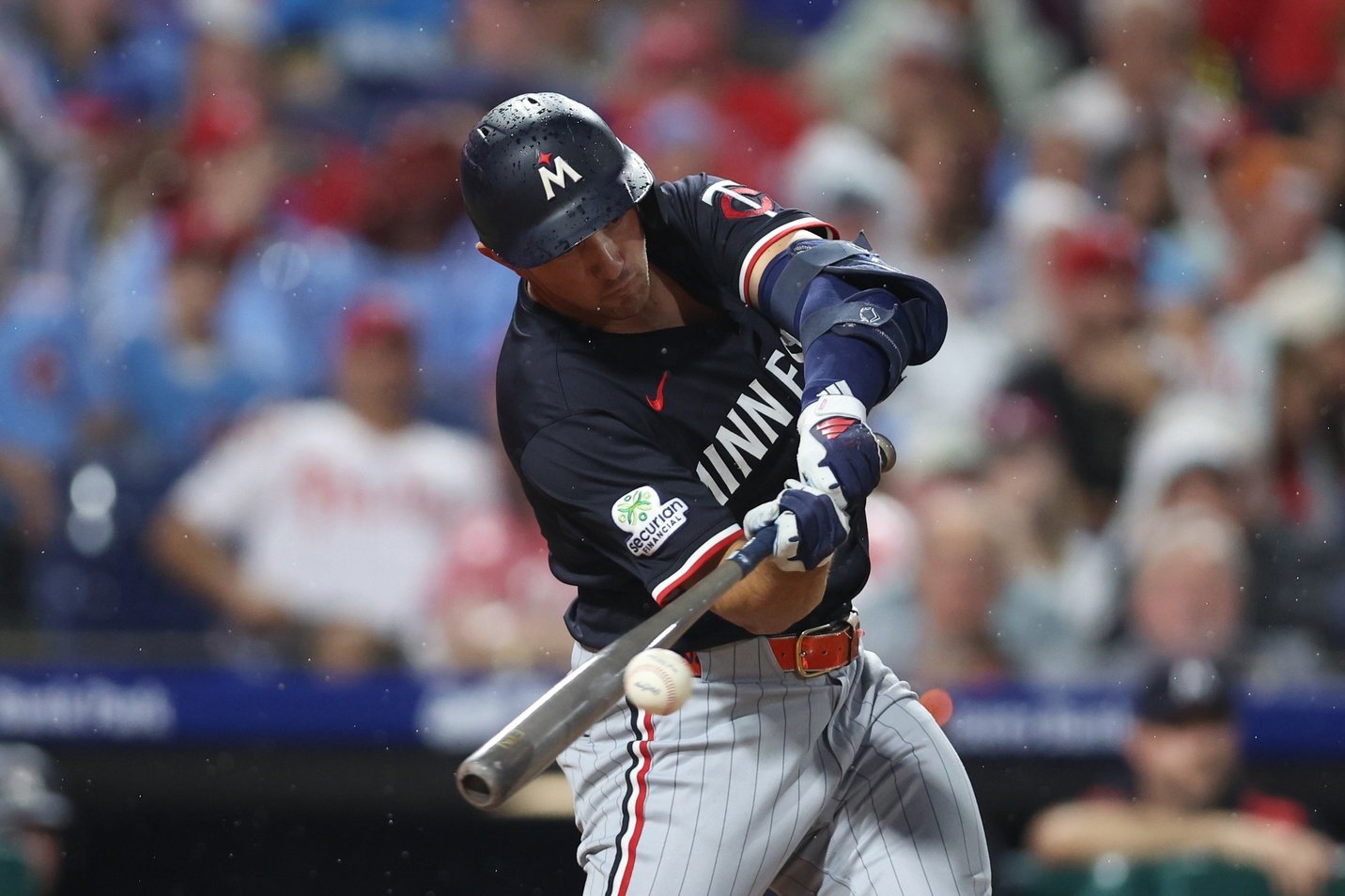
Tapping into that power with more consistency holds the key to Lee’s ability to break through. Hitting 16 home runs as a 24-year-old in the majors is impressive, all else aside. Just not enough on its own, as those homers came along with only 15 doubles, one triple and a .236 batting average in 527 plate appearances.
A quick glance at his Statcast sliders lays bare the central issue: too much weak contact. Lee’s sub-90 MPH exit velo is near the bottom quartile of the league, and his bat speed ranks among the worst. He has shown the ability to crush the ball on occasion, which makes him relatively hard to give up on, but too often Lee’s swings produce soft liners and easy grounders.
Muscle Up and Dial In, Kid
Here are some things I think we can safely say about Brooks Lee: he’s never going to be a swift runner or selective hitter. His best position is probably third base although he can hold his own at short. There are a lot of limitations in place so it’s vital that Lee fully maximize his strengths, and build an offensive identity around them.
Those strengths, namely: bat-to-ball skills and a swing that is theoretically geared for power. The idea of Lee being a .370 OBP guy has more or less gone out the window, but it’s not hard to see him hitting like .275/.330/.475 with the right advancements. For a capable shortstop or good defensive third baseman, that will absolutely play.
From my view, reaching this level at the plate will require Lee to do two things:
Add some strength in the offseason. He simply needs to swing the bat harder and make louder contact on a consistent basis. Lee certainly has the build for it, so it’s really about finding whatever ways he can — be it swing mechanics or strength training — to increase his swing velocity over the winter.
Unlock just a little more plate discipline. Often, the soft contact from Lee wasn’t a result of poor swings so much as poor swing decisions — chasing a pitcher’s pitch that offers little hope of a favorable result. Overcoming this mental aspect will be as important as anything he does physically. I’ve given up on Lee, who had a 31% chase rate and 6% walk rate this year, ever being a patient hitter. But a tiny bit more patience could go a long way toward getting Lee into more hitters’ counts with more chances to unleash the A-swing.
Right now, based on his complete lack of progression as a major-league player, it feels hard to have confidence in Lee’s outlook. And that is disturbing because the reality is that the Twins are all but committed to him as their starting shortstop for the foreseeable future.
However, we shouldn’t lose sight of who Lee has been on the baseball field, and what he could still become, even after an introduction to the majors that has perhaps redefined his ceiling and player type. No matter which direction they go this offseason, Lee is going to be pivotal to the plan going forward.