
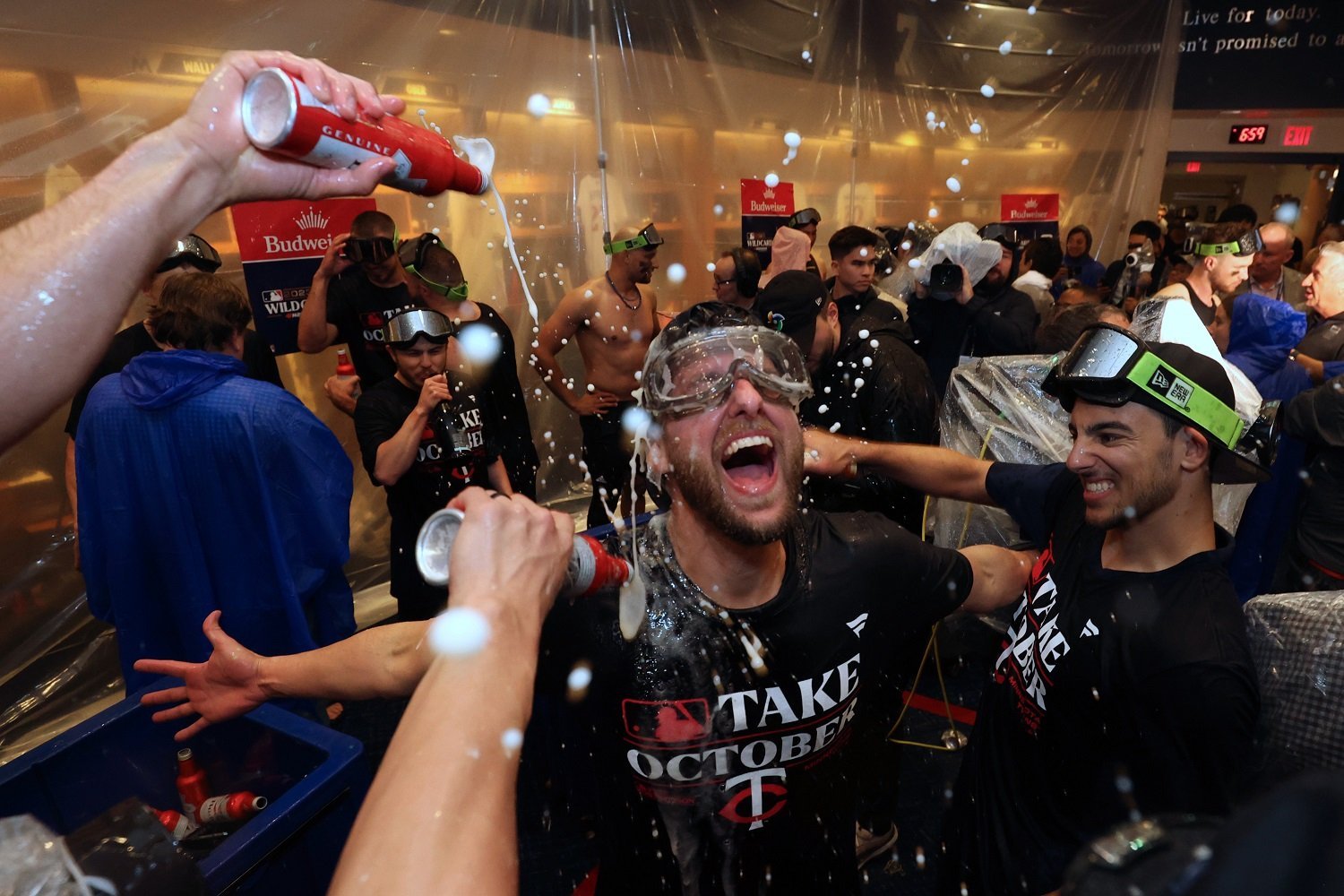
When the Twins swept the Blue Jays in the 2023 Wild Card Series, it felt like a defining moment. Minnesota had finally ended its postseason drought, Carlos Correa and Pablo López were at the center of a young and hungry roster, and the team’s competitive window looked as wide open as the skies above Target Field.
Toronto, on the other hand, was left reeling. The core that once looked destined for sustained success, with Vladimir Guerrero Jr., Bo Bichette, and a promising rotation, had sputtered. The Blue Jays went home searching for answers, while the Twins seemed to have all of them.
Then came 2024, and the trajectories began to shift. Minnesota’s ownership group stunned the fan base and front office by cutting payroll by $30 million, just months after the team’s playoff run. Despite those limitations, the Twins remained competitive, sitting comfortably in a Wild Card spot for much of the year. But an epic September collapse (filled with bullpen meltdowns, slumping bats, and a few untimely injuries) ended their postseason hopes. The Twins should have been there again, but baseball can be cruel that way.
In Toronto, things weren’t much brighter. The Blue Jays stumbled to a 74-88 record, watching their offense fade into mediocrity outside of Guerrero, who finished sixth in AL MVP voting but lacked consistent support. From a payroll standpoint, the Blue Jays had a $217 million payroll in 2024, which included four players making more than $18 million per season. The AL East is arguably baseball’s toughest division, and teams must spend to stay in contention.
Both franchises entered the offseason frustrated and uncertain. Rocco Baldelli’s seat was warming in Minnesota, while John Schneider faced similar scrutiny in Toronto. The Twins fired hitting coach David Popkins after the season, only to see the Blue Jays scoop him up almost immediately for the same role—a move that didn’t seem significant at the time, but would soon sting.
Fast-forward to 2025, and the contrast between the two clubs couldn’t be sharper. The Twins opened the year with a sluggish start before rattling off 13 straight wins, a stretch that briefly reignited postseason dreams. But the inconsistency returned, and after a rough post-All-Star stretch, Minnesota found itself spiraling. By the trade deadline, the front office sold off nearly 40 percent of the active roster, signaling the end of an era. When the dust settled, Baldelli was dismissed, and the club was left to pick up the pieces.
Meanwhile, in Toronto, everything clicked, and the roster was boosted to a payroll of nearly $260 million. Among AL teams, only the Yankees have a higher payroll allocation for the 2025 season. On the field, the Blue Jays exploded out of the gate, led by an offense transformed under Popkins’s guidance. Guerrero was brilliant; George Springer rediscovered his rhythm; and a balanced lineup powered Toronto to 94 wins and an AL East crown. Even former Twin Jeff Hoffman closed out Game 7 in dominant fashion, to add salt to the wound. Now, as they prepare to face the Dodgers in the World Series, Blue Jays fans are celebrating a long-awaited breakthrough, one that comes with a hint of irony for Twins followers.
Now, the Twins turn the page to what feels like a pivotal offseason. With Baldelli’s tenure officially over, the front office is searching for a new voice to guide a roster that still holds plenty of potential. Whoever steps into the manager’s chair will inherit a mix of proven veterans and young talent waiting for an opportunity. The core of Byron Buxton, Joe Ryan, and López remains intact, and the club hopes that Brooks Lee, Luke Keaschall, and Walker Jenkins will soon emerge as everyday contributors.
Minnesota’s path back to contention will depend on how quickly the next wave develops, and how much ownership is willing to invest to complement it. The front office has shown it can build a playoff-caliber roster, but sustained success requires more than flashes of brilliance. The Twins have been here before, on the brink of something special, only to see injuries, inconsistency, and financial constraints get in the way. Learning from those lessons could determine how long it takes for the team to rise again.
For now, the Blue Jays are living the dream the Twins once seemed destined for. Yet, baseball’s beauty lies in its unpredictability. Two years ago, Minnesota was the club on the rise, while Toronto was searching for answers. In another two years, the script could flip again. The Twins have the foundation, the prospects, and the motivation to write their own resurgence story. The challenge is making sure they’re ready when their next chance arrives.
What has changed between the Blue Jays and Twins since 2023? Is this strictly tied to payroll? Is Popkins the primary catalyst for their offensive improvements? Leave a comment and start the discussion.