
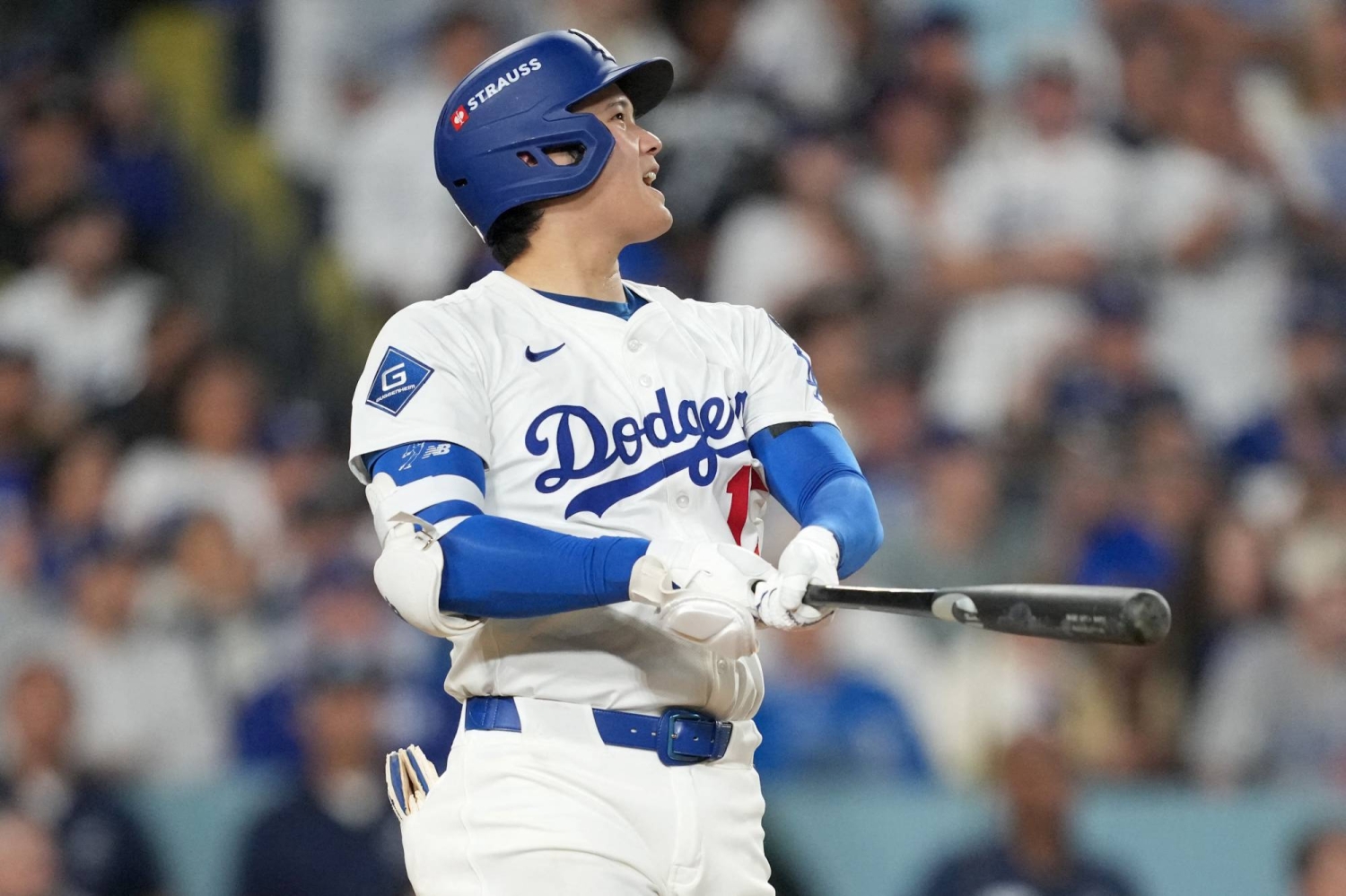
The Los Angeles Dodgers and the Toronto Blue Jays open the World Series on Friday, but all eyes remain on Shohei Ohtani — and deservedly so. Last week, in the fourth game of the National League Championship Series, he led the Dodgers to a league title, hitting a staggering three home runs, while pitching 10 strikeouts and six scoreless innings. Following the game, Ohtani’s teammate Mookie Betts marveled to MLB TV: “We’re like the (Chicago) Bulls and he’s Michael Jordan.”
Betts was likely thinking in baseball terms, and he wasn’t wrong. Ohtani, like Jordan once did, is single-handedly turning his team into a perennial championship contender. But as the legend of Ohtani grows, it’s natural to ask whether he can achieve Jordan’s transcendent cultural status, too.
That’s where the comparisons fall apart. Ohtani will always be a sports superstar, but he’ll likely never be able to match Jordan’s iconic reach and influence. He lacks the advantages that made the NBA legend a global icon: a unified mass media landscape, broad commercial appeal and a sport built to show off individuality.
When Jordan was drafted in 1984, national NBA coverage was limited. But cable was rapidly changing the ecosystem, enabling people far from Chicago to follow a player that they might have only read or heard about. The expanding audience drew advertisers who embraced Jordan’s good looks and charisma, balancing out his competitive ferocity with an accessible image (think Gatorade’s “Be Like Mike” campaign). He became a role model whose talent and hard work could inspire anyone.
The 1985 launch of Nike’s Air Jordan line intensified his brand; suddenly, anyone could wear the shoes of the greatest basketball player. Its impact on fashion, music and film was immediate and profound, even spawning sneakerhead culture that raised sneakers to collectible art. Then the 1992 Olympic “Dream Team” broadcast Jordan and that brand onto screens worldwide, transforming him into a cultural ambassador who redefined global stardom.
By one critical measure, his influence hasn’t waned. Sportico estimates that last year, more than two decades since his retirement, Jordan earned around $300 million, mostly from Nike.
Replicating that path won’t be easy for any athlete. But Ohtani has a good start. His dominance on the baseball diamond — both in the batter’s box and on the mound — has no equal in the century-plus history of professional baseball. Every time he steps on the field, he has the Jordan-like opportunity to redefine what greatness means, and — as his Game 4 heroics proved — he takes it. Fans notice.
Dodgers games are helping to resurrect baseball viewership and attendance in the U.S. and elsewhere. This season, MLB viewership in Japan often exceeded that of the U.S. Ohtani leads MLB players with 9.8 million Instagram followers, nearly twice as many as the Dodgers’ official account (a fact that surely doesn’t escape management’s notice).
He is monetizing those audiences. This year, he’ll earn $100 million in product endorsement income, split between brands based in the U.S. and Japan. His face and name are ubiquitous in Tokyo, showing up on everything from bottled beverages to billboards at some of the city’s busiest crossings.
Yet for all of his successes, Ohtani faces headwinds when it comes to expanding his reach.
The challenge begins with baseball itself. The game is played at a high level throughout the Americas and parts of Asia-Pacific, but remains a niche sport in other regions of the world, with few baseball diamonds and limited access to games and youth development.
Without that infrastructure, there’s simply no way for Ohtani to replicate Jordan’s (and Nike’s) post-Dream Team momentum.
Meanwhile, the baseball star lacks a brand ecosystem like Air Jordan that keeps public interest alive year-round. True, he has a signature line with New Balance, but his cleats aren’t likely to be worn anywhere but a baseball diamond, and haven’t and won’t connect with the broader culture like a sneaker.
Complicating things further is baseball’s unique culture. In basketball, players express themselves through signature moves — such as Jordan’s fade-away jumper and Kyrie Irving’s ankle-breaking crossover dribbles — that help grow fan interest. Baseball’s regimented pace and reverence for tradition, by contrast, leave little room for individual flair and creativity. It’s unlikely that athletes who are expected to restrain themselves will rise to global influence.
That’s especially true in today’s media ecosystem, which highlights what may be Ohtani’s biggest hurdle: timing. His rise — though no fault of his own — is happening as he and his business partners are forced to navigate a fragmented media landscape filled with numerous competing social media pages and distractions. He may be everywhere in Tokyo, but generating that kind of fervor and attention outside of his home market, much less Los Angeles, just isn’t realistic in 2025.
That’s no slight against Ohtani. He’s a singular athlete who deserves every accolade and sponsorship that comes his way. But transcending sports to shape global culture and commerce remains a big reach, even for baseball’s greatest player.
Adam Minter is a Bloomberg Opinion columnist covering the business of sports. He is the author, most recently, of “Secondhand: Travels in the New Global Garage Sale.”