
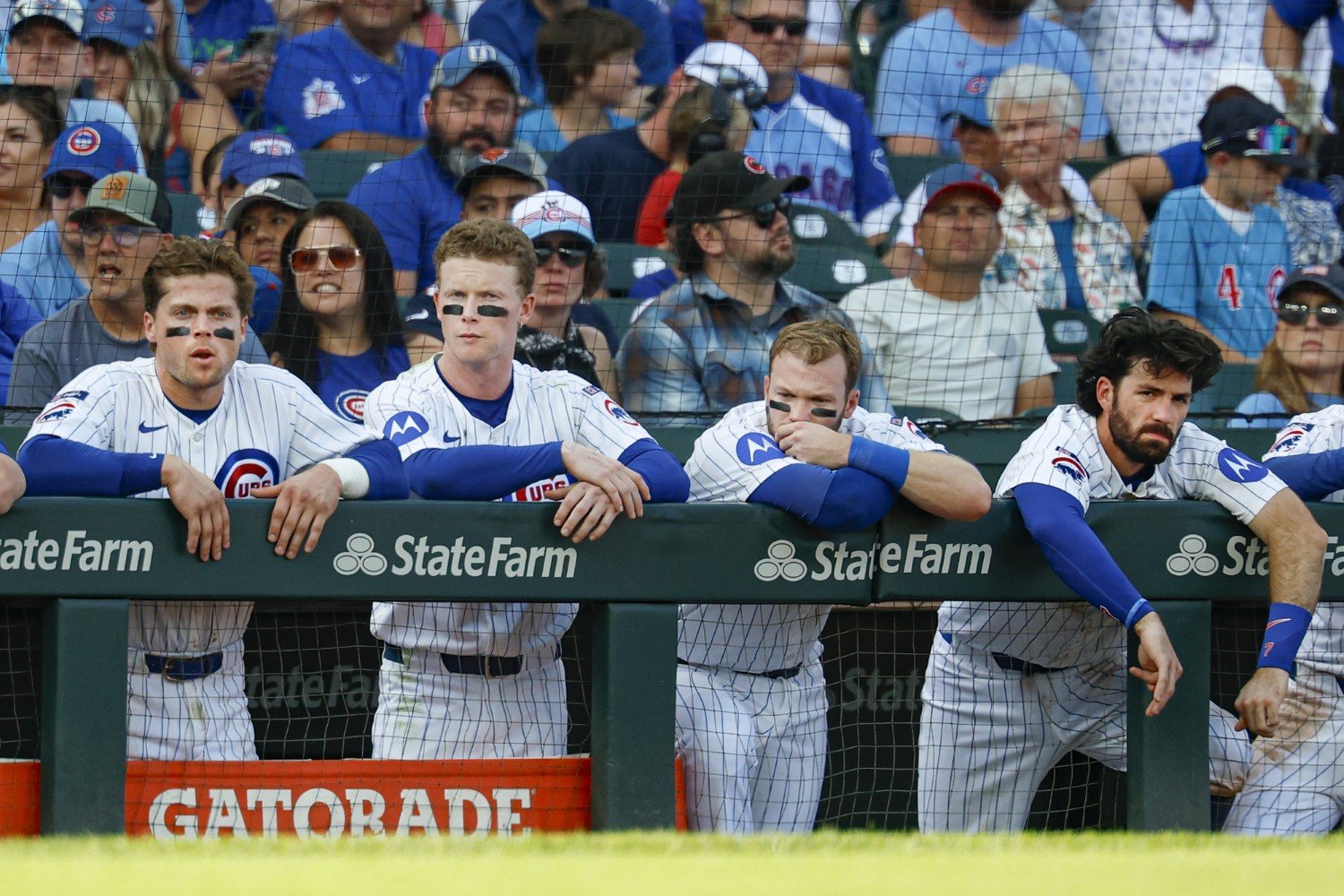
Nico Hoerner became the second Cubs second baseman to win a Fielding Bible Award Thursday, claiming the 2025 honor over Toronto Blue Jays star Andrés Giménez. Although center fielder Pete Crow-Armstrong lost out to Red Sox counterpart Ceddanne Rafaela, the Cubs also eked out the win for the first-ever Fielding Bible Award for teams.
This is big news, and should be all you actually care about when it comes to defensive honors at the end of each MLB season. The Gold Gloves are voted on by coaches and managers, many of whom pay only dim attention to the actual quality of fielders at each position. Though the frequency of embarrassingly bad Gold Glove honorees has dropped over time, the Fielding Bible Awards (FBAs)—created by Sports Info Solutions (SIS) and voted on by a panel of experts while incorporating high-level defensive metrics—are still far and away better gauges of defensive excellence. The company recognizes just one winner for the whole of MLB each season, which also makes the honor more exclusive than the Gold Gloves are.
Hoerner played exceptional defense at the keystone this season, earning his first FBA after being a down-ballot vote-getter in multiple previous campaigns. He’s the first Cubs second baseman to earn the prize since Darwin Barney did so in 2012. He’s the fifth Cub to win one of the awards overall, since they began to be handed out in 2006. In addition to Barney, Anthony Rizzo won at first base in 2016; Javier Báez won as the Multi-Position honoree in 2016, 2017 and 2018, and at shortstop in 2020; and Dansby Swanson won the 2024 award at shortstop. As I wrote in September, Hoerner did a masterful job this year of using positioning and an aggressive style to maximize his tools at second. In an interview with SIS editorial operations lead Mark Simon for the SIS Baseball podcast, Hoerner specifically mentioned that he felt he still hadn’t regained his full arm strength after offseason elbow surgery, and the pride he took in being able to overcome that to claim this season’s award as the best second baseman in the sport.
In a mild upset, Crow-Armstrong lost out on an award on which he seemed to have the inside track for much of the year. He was brilliant in center field this year, but just as he went over an offensive cliff in the second half, he seemed to lose a quarter of a step in center, as well. He was still good, but Rafaela sped past him to claim the award. That leaves another empty checkbox for the Cubs’ extremely hungry, talented center fielder heading into 2026, but there’s little doubt that (given good health and good enough adjustments to remain a regular for years to come) there’s an FBA in Crow-Armstrong’s future.
Despite the individual snub, Crow-Armstrong (along with third-place finishers for the left field and pitching awards, Ian Happ and Matthew Boyd, among others) did help the Cubs claim the inaugural Fielding Bible Award for team excellence. This season, the Cubs actually boasted the elite defense they attempted to field (but fell slightly short of) the previous two years. Swanson’s physical tools are starting to feel slightly stretched at shortstop, but he’s superbly smart and sure-handed, offsetting some of his physical limitations. Rookie Matt Shaw, though a mess at the plate, settled quickly into third base and was a plus defender there from mid-May onward. Michael Busch continues an impressive maturation into an above-average first baseman.
Happ, Kyle Tucker and a much-improved Seiya Suzuki provided good support to Crow-Armstrong’s superstar effort in the outfield. None of the three main corner outfielders are especially athletic, at this stage of their careers, but Happ and Tucker have good body control on slides and dives, while Happ and Suzuki bring plus arms.
The injury suffered by Miguel Amaya could have significantly disrupted the team’s defense behind the plate, but instead, it arguably improved it. Carson Kelly was great at preventing wild pitches and passed balls; Amaya replacement Reese McGuire became a lethal thrower when runners challenged him. McGuire was also a fine pitch framer.
Boyd led the way, but Cubs pitchers also did a tremendous job as a unit at stopping the running game. Shota Imanaga and Colin Rea joined Boyd in excelling in that aspect, and Rea is a subtly great all-around fielder of his position. There just weren’t holes in the team’s defense, the way there have been at times in the past, and it made a big difference as they surged to 92 wins. Now, they have a major team-level award to validate that greatness.
Extending Hoerner should be a priority for the Cubs this winter. They’re likely to continue discussions with Crow-Armstrong about one, too. Those two are the centerpieces, at this point, of a league-best all-around defensive unit, but the nature of fielding is such that they’ll need to continue refreshing their roster and infusing it with youth to make sure that they remain at the top of the heap in 2026.