
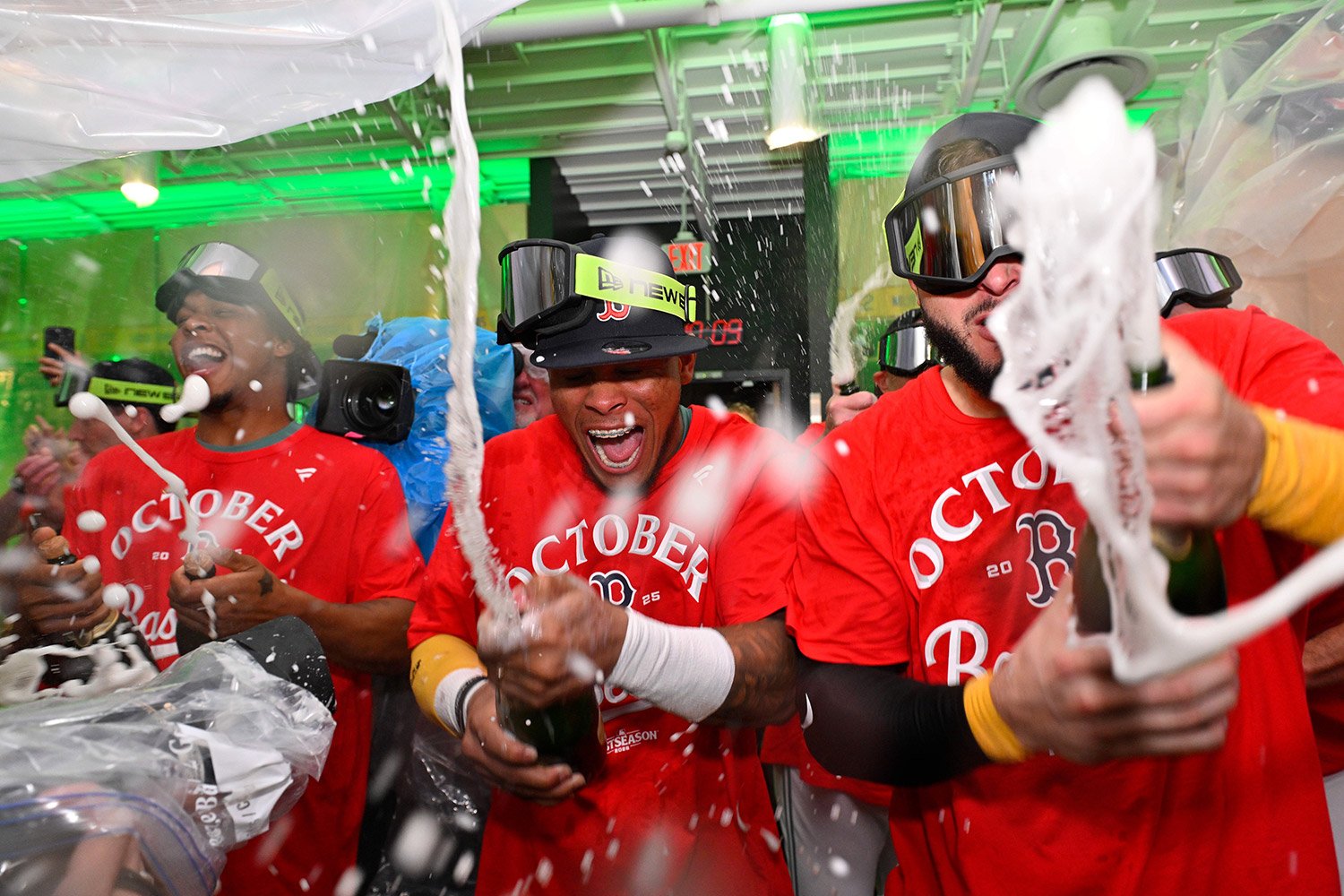
Baseball clubs are lucrative investments for owners. In 2002, John Henry bought the Red Sox for $380 million under Fenway Sports Group, now a global sports empire. Twenty-three years later, Forbes estimates the team’s value at $4.8 billion. According to CNBC, the Red Sox generated $514 million (6th) in revenue last year. While 2025 revenue hasn’t been released yet, 2025 proved to be a successful season for the Red Sox. Attendance increased by 1,439 fans per game from 2024 to 2025 (32,838 to 34,377), moving up from 11th to 10th in MLB. This season also marked the Red Sox’s first playoff appearance in four years.
Deep playoff runs are lucrative for clubs and their players. The 2024 World Series featured a marquee matchup between the Dodgers ($8 billion) and Yankees ($5.8 billion), the two most valuable teams in the sport with sizeable fan bases. Viewership increased to an average of 15.8 million per game, a 67% increase from the 2023 World Series.
MLB collects postseason gate receipts (the sum of ticket sales) and allocates the money to playoff teams using the following criteria outlined in the 2022-26 Collective Bargaining Agreement:
One Players’ pool shall be created from the World Series, the two League Championship Series, the four Division Series, and the four Wild Card Series. Contributions shall be made into the pool as follows:
(1) 60% of the total gate receipts from the first 4 World Series games;
(2) 60% of the total gate receipts from the first four games of each League Championship Series;
(3) 60% of the total gate receipts from the first three games (4 if the Division Series is expanded to the best of 7 games) of each Division Series; and
(4) 60% of the total gate receipts from the first two games of each Wild Card Series after deducting the traveling expenses of the visiting Clubs (up to a maximum of $100,000 per Club per game) from the total gate receipts.
Among the playoff teams, the playoff bonus pool is distributed as follows:
Players’ Pool Distribution Breakdown
World Series Winner
36%
World Series Loser
24%
League Championship Losers (2)
24%
Division Series Losers (4)
13%
Wild Card Series Losers: (4)
3%
Teams that advance further in the postseason receive larger shares of the players’ pool. Notably, the players’ pool significantly increased following the implementation of the expanded playoff format in 2022. Players determine how the money is allocated through full or partial shares. Postseason shares are not distributed to front office personnel, but players can vote to allocate shares to athletic trainers, clubhouse attendants, and coaches. Last year, the Dodgers’ World Series champion pool totaled $46.47 million, with full shares at $405,000.
Club owners receive the remaining 40% of the gate receipts for the guaranteed games and 100% of the gate receipts from additional playoff games. During the playoffs, home and visiting teams are treated the same, regardless of venue, so the gate receipts are divided evenly between them. The Yankees hosted the 2025 American League Wild Card Series. As the home team, the Yankees benefited from merchandise sales, concession sales, and parking revenue. According to the 2025 Yankees Postseason Ticket Pricing averaged at $223.60 for the Wild Card Series.
2025 AL WCS Gate Receipts Gate Receipts Estimates
Game/Date
Attendance
Average Ticket Price
Gate Receipt Share
Total
Game 1, 9/30
47,027
$233.60
20%
$2,197,101.44
Game 2, 10/1
47,993
$233.60
20%
$2,242,232.96
Game 3, 10/2
48,833
$233.60
*50%
$5,703,694.40
*Owners receive 100% of gate receipts for non-required games
Red Sox ownership received roughly $10,143,028.80 in total from the team’s 2025 playoff run. For a short-lived postseason run, a $10.143 million profit isn’t chump change. Any additional money is a surprise to be sure, but a welcome one, allowing for more funds to be reinvested in the team. Moreover, postseason runs yield additional benefits for teams, including heightened visibility, increased fan interest, a spike in ticket sales in the subsequent season, and new opportunities for advertising revenue.
At the Red Sox’s End of Season Press Conference, Red Sox Chief Baseball Officer Craig Breslow acknowledged that “the team’s window of contention is upon us.” Unlike the broken window at the Louvre’s Apollo Wing, the Red Sox’s contention window isn’t shattered – it’s wide open. The team has a solid core to build around with their younger players locked up for the foreseeable future. Garrett Crochet put together a Cy Young caliber performance in his first season as a full-time starter with the Red Sox. Roman Anthony is already a cornerstone and is just starting his major league career. The team ranked 6th in stolen bases (139) and 8th in RBIs (748). Meanwhile, the Red Sox’s bullpen was the best in the American League (6.8 WAR).
This offseason, the Red Sox must spend to address the holes in their roster. Fortunately, the team has plenty of opportunities to strengthen its lineup and pitching staff for a deeper postseason run in 2026. The Red Sox finished the 2025 season with a payroll of $248.64 million. Red Sox Payroll (a must-follow on social media) estimates the club is currently committed to $218.92 million in 2026. With the extra revenue from the team’s playoff run and additional money coming off the books, the Red Sox have the cash and momentum to make a substantial splash(es) in the coming months.
Note: Part 2 of this piece will review the Red Sox’s revenue, payroll, and EBITDA to shed further insight on the team’s financial position heading into the offseason.