
Around this time last year, the Miami Marlins selected Jared Serna, Deyvison De Los Santos and Dax Fulton to their 40-man roster to protect them from the upcoming Rule 5 draft. Doing so was a testament to both their perceived talent and major league readiness—it is difficult to navigate an entire MLB season when you’re devoting 40-man spots to players who can’t contribute yet. As it turns out, none of those prospects played for the Marlins in 2025, nor did they come close to earning an opportunity.
Serna endured a particularly disappointing season. Ranked sixth on the Fish On First Top 30 at the time of his 40-man selection, he has since plummeted to 24th after slashing .224/.310/.279 with only three home runs and a 79 wRC+ in 111 upper-minors games. He frequently made contact, just not with much impact. His defense at shortstop and baserunning were merely okay.
Very quietly, Serna found consistency at the end of his age-23 campaign. He reached base safely in each of his last 23 MiLB regular season games, posting a 125 wRC+ during that span. He also helped the Jacksonville Jumbo Shrimp to a Triple-A national championship by going 6-for-16 with two stolen bases during their playoff run.
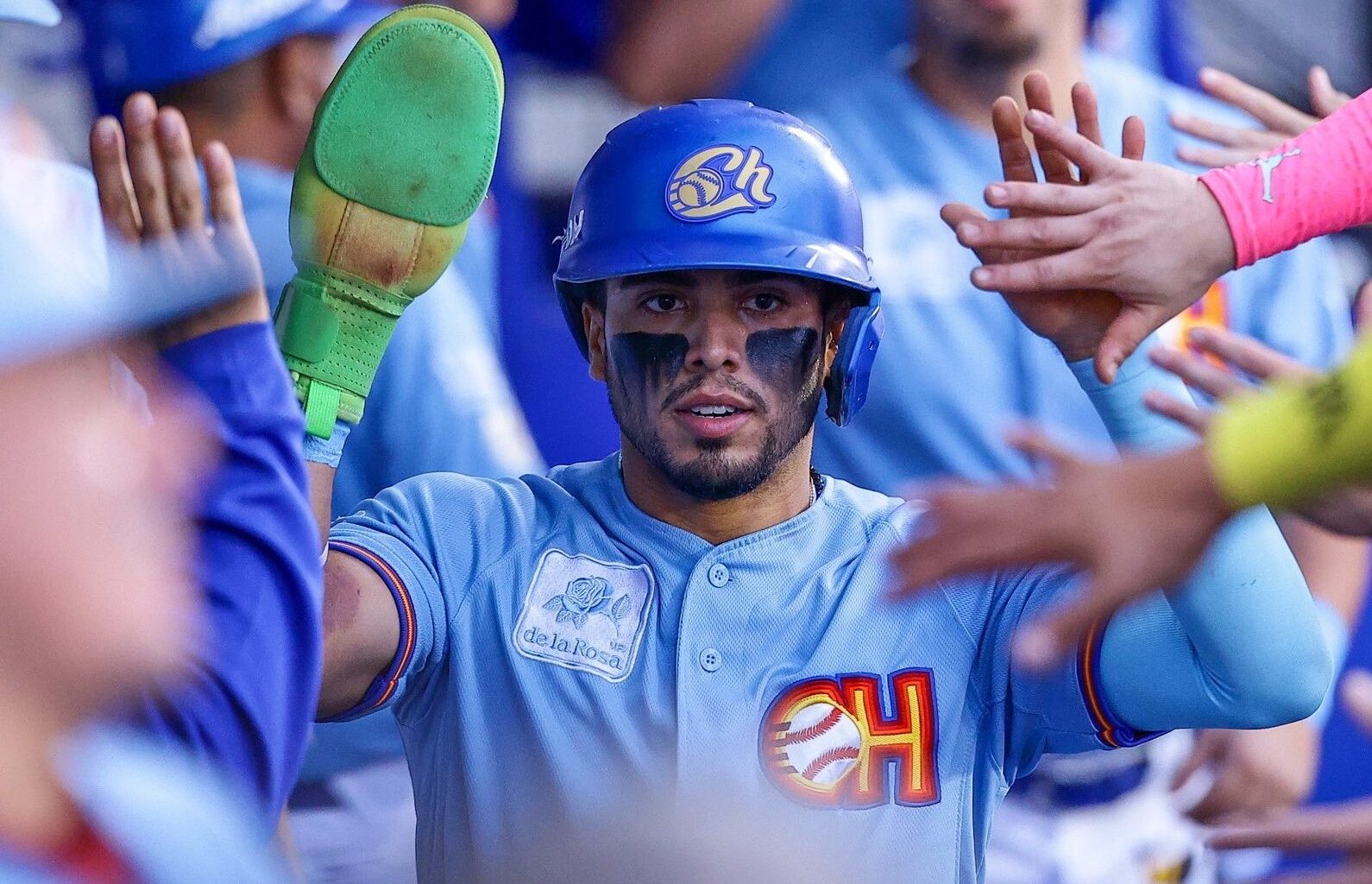
Serna had three weeks to rest between the Jumbo Shrimp’s title clinch and the start of the 2025-26 Mexican Pacific Winter League season. He has picked up exactly where he left off (and then some).
Entering Sunday, Serna is slashing .400/.514/.633 in nine games played for Charros de Jalisco. His 1.147 OPS is fourth-best in the entire league. The Guaymas native batted eighth in the Jalisco lineup when making his first start of the season on October 17, but this torrid stretch has propelled him to the very top of the order. Keep in mind, Serna is 6.2 years younger than the weighted average age of all hitters in the league, according to Baseball-Reference.

One major caveat applies.
Jalisco’s home ballpark, Estadio Panamericano, is somewhat comparable to Major League Baseball’s Coors Field. It’s in the city of Zapopan, which is situated nearly a mile above sea level (5,154 ft), allowing batted balls to carry farther than they would have under neutral conditions.
To counteract that, Estadio Panamericano has big dimensions—335 feet down both foul lines and 415 feet to straightaway center field. But that means outfielders have a ton of ground to cover. During his five years of winter ball experience (all of them with Jalisco), Serna has a career .358 batting average on balls in play. For context, his career BABIP in the minors is only .289. After leading their league in runs scored in both 2023-24 and 2024-25, Jalisco is tied for first in that category again this season.
Marlins fans have seen firsthand how being used out of position can disrupt all aspects of a player’s game, but Serna is seemingly unfazed. He’s been a full-time middle infielder over the past two seasons when playing affiliated ball. However, Jalisco is mostly deploying him in the outfield, including four consecutive starts in center where he had never previously started in a professional game.
From what I have observed, Serna has good range as an outfielder, composure when playing balls off the wall and decent throwing accuracy. His main challenge is compensating for below-average arm strength.
Although defensive versatility is always a positive, the Marlins organization is currently deeper in the outfield than the infield. This experiment doesn’t expedite his call-up timeline.
For Serna to revitalize his prospect stock this winter, it comes down to continuing to make smart swing decisions and demonstrating that he can slug in Jalisco’s road games.
Interested in learning more about the Miami Marlins’ top prospects? Check out our comprehensive top prospects list that includes up-to-date stats, articles and videos about every prospect, scouting reports, and more!