
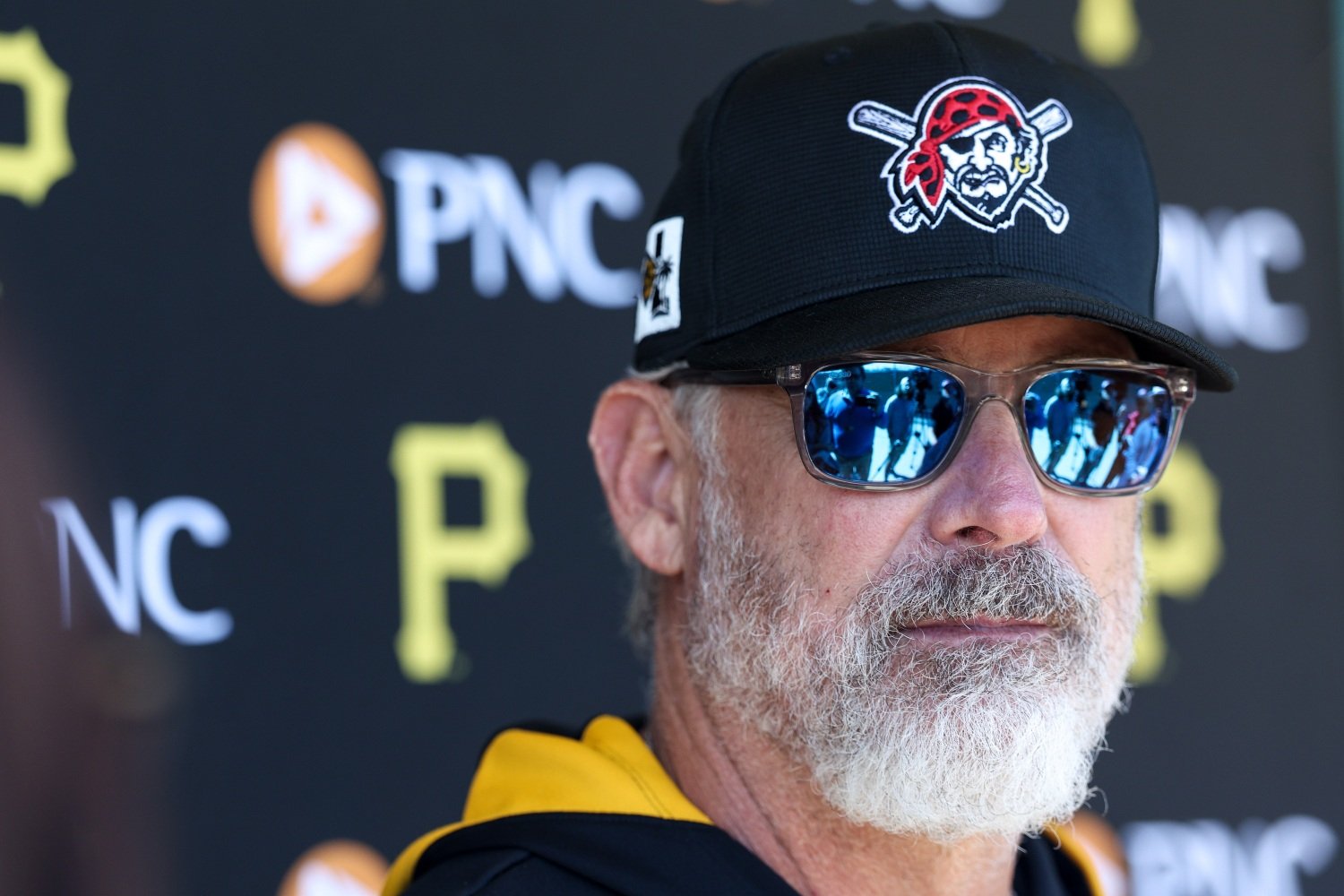
Heading into the offseason, the Twins front office faced a daunting task. They had to endeavor to convince a beleaguered fanbase that the team intends to compete in 2026. By hiring Derek Shelton, they sent a different sort of message entirely. It sure feels like they’re planning on a rebuild, but don’t want to say the words. Instead, they suggest that they actually plan on more of the same. More on that in a minute.
First, I want to be clear about something. Old friend Derek Shelton is qualified for this role. He’s a baseball lifer. He’s been a well-thought-of hitting coach for the Guardians and the Rays, two well-thought-of organizations. This background as a hitting coach has the potential to help some of the young hitters (who have infamously not hit, as a collective) improve. Additionally, he was a quality control coach for the Blue Jays, and then became bench coach for the Twins under both Paul Molitor and Rocco Baldelli.
Most recently, he was hired into the most futile of roles: manager of the ne’er-do-well (and not in a cool way) Pittsburgh Pirates. Surprising exactly nobody, his five-plus seasons at the helm saw results that ranged from poor to downright brutal, and he was fired in May after losing at least 86 games each year of his tenure, except the ones in which he managed many fewer games than that. The results are much less a reflection of Shelton’s competence, though, and much more a sign that the entire Pirates organization has been mired in a total system failure for about three decades.
So if he’s qualified, why does this move feel like a white flag of surrender? Simply put, it’s the situation Shelton tolerated in Pittsburgh, and the similarities to the one he will immediately be hampered by in his role with the Twins. Hiring Shelton suggests that the only change is the name and the face, not the strategy or execution. Let’s look at this through the lens of ownership and the front office.
The Ownership Situation
During Shelton’s six seasons in Pittsburgh, the team payroll was never higher than 26th in the majors, and it was dead last twice. Over his tenure, the Pirates’ payroll never rose higher than $87 million, per FanGraphs. Shelton has worked for an owner who cries poor, faces “sell the team” chants from fans, and says disingenuous, tone-deaf, and fundamentally incorrect things like: “I think that I’ve done everything that I can to provide the tools and resources to the team. There is a point where it becomes execution. That’s why you play the season. That’s why you play the games. We talk about winning on the margins…I know that. [GM Ben Cherington] knows that. Shelty definitely knows that.”
Does that sound familiar? It should. To put this another way, Shelton is used to faulty, incomplete rosters limited by insufficient payroll. He’s wrapped in the (in)security blanket of not being handed reinforcements, despite clear needs. He’s acclimated to the quiet feeling of despondence that goes along with doing your job with one hand tied behind your back. He’s familiar with ownership that’s more concerned with profit margins and operating cash flow than fielding a winning team. And, he’s no stranger to needing to pretend to agree with the direction of a bad team.
The situation he will inherit in Minnesota? More of the same. The Twins are unlikely to raise payroll for 2026; they seem more likely to reduce it. If they go into the season with a $100 million payroll, Shelton could look at even that low number as a blessing. In fact, he could be one of the only managerial candidates who would look at the Minnesota Twins Way, and ownership in general, and see an upgrade compared to what he was used to.
The Front Office’s Priorities
During his tenure, Rocco Baldelli took a lot of flak from fans on social media for not focusing on fundamentals; having a quick hook with his pitching staff; having teams that don’t run much; and being overly focused on analytics. If you listen to Pirates fans, they levy the same criticisms against Shelton. Why are Shelton and Baldelli both in on all those things? Because those focal points are fairly institutionally ingrained across baseball. They largely make sense, and when executed upon, they lead to winning baseball more often than not.
Of course, execution is key, and having a complete, deep roster is essential to winning. Derek Falvey seems to believe he’s capable of executing, despite little evidence that bears that belief out. In hiring Shelton, Falvey went with a familiar face, one with whom he has experience communicating—one similar to Baldelli, who understands the organizational norms. Basically, he’s a plug-and-play manager who can pick up right where Baldelli left off. This makes sense for Falvey, in his dual role. The less time he has to spend onboarding a new manager, the more time he can spend figuring out how to sell tickets and how he can fill approximately eight roster spots for a total of $10 million.
Shelton is used to the same constraints he will face with the Twins, and in taking this role, he signals that he is unlikely to push back against either his front office or ownership; will tolerate lengthy stretches of non-competitive baseball; and is willing to put a brave face on a bad situation. By hiring Shelton, with his only managerial experience coming in a nearly identical environment, Falvey seems to be saying the quiet part out loud: things will get worse before they get better.
Rather than go with a candidate who might challenge the status quo—one who might push back against flawed thinking, one who brings an outside voice, or one who demands excellence at all levels—Falvey went with inertia. In this case, the inertia is truly inert. The likeliest outcome, in my opinion, is that the team has to find another new manager for the 2028 season, if they feel they are ready to contend at that point. And if not, one has to imagine it’s time for a new front office, as well.