
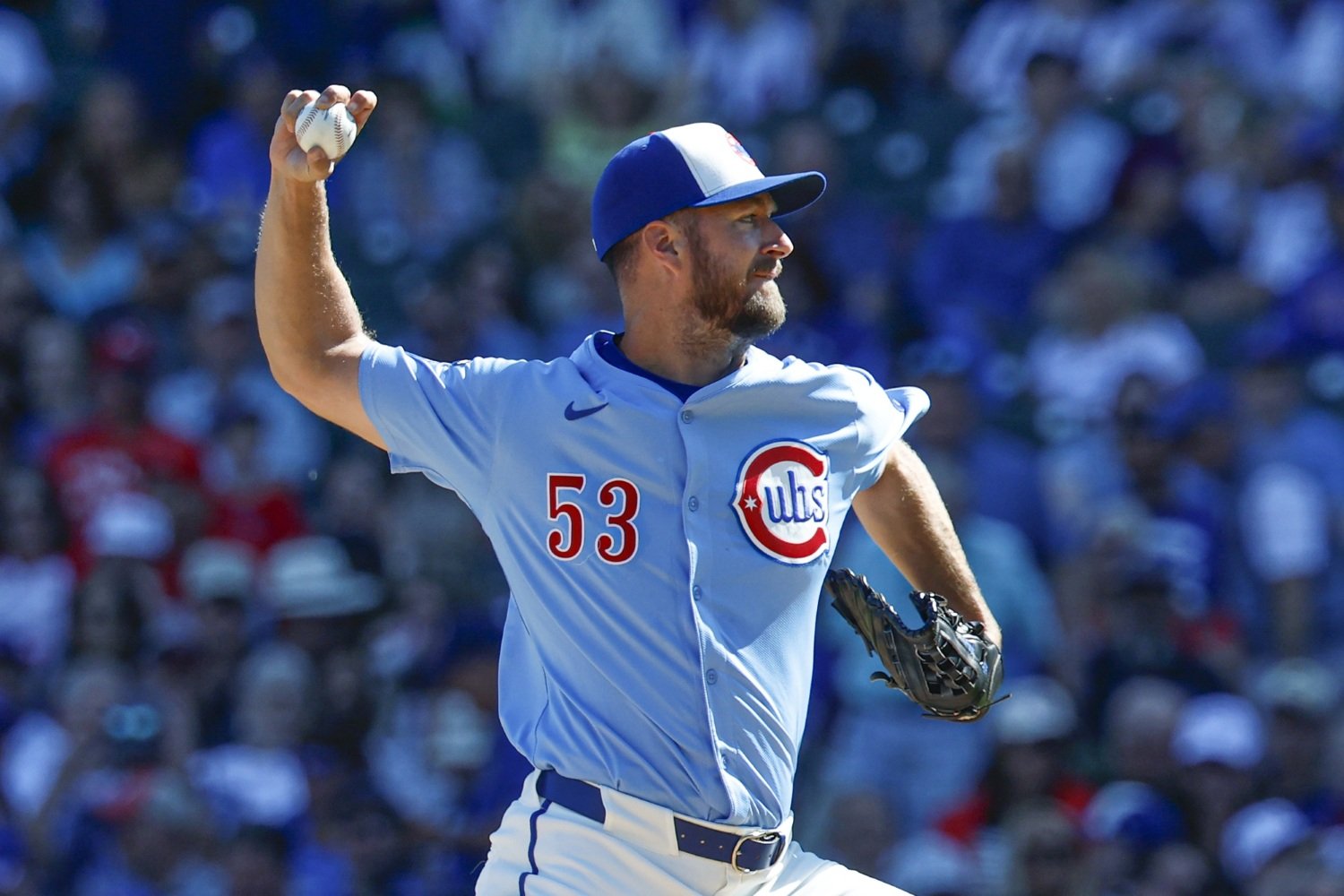
The offseason begins the moment the World Series ends, and even though the 2025 World Series ended in spectacular, exhausting fashion, teams have to start making choices immediately. The Chicago Cubs, for instance, have until Thursday to decide whether to exercise their club options on Colin Rea and Andrew Kittredge. We broke down those choices and their implications late last month. They also have one side of a mutual option with Justin Turner.
Chicago also has to decide whether to trigger their three-year, $57-million option on Shota Imanaga. As we discussed in the wake of his last appearance in Game 2 of the NLDS, the team will not pick that up. Once they inform Imanaga of that (a step they’ll take right away), the lefty has to decide on a $15-million option of his own, which also comes with another one for 2027. Imanaga is likely to exercise that option, but if he doesn’t, it leaves Chicago with another dilemma.
If Imanaga elects free agency over the promise of at least $30 million over two years, Chicago can give him a qualifying offer worth $22.025 million. They have the same choice to make about Kyle Tucker, of course, and technically, about out-of-nowhere relief ace Brad Keller. They certainly won’t make that offer to Keller, and sources indicate they won’t do so with Imanaga, either, should it come to that. They will extend one to Tucker, though.
All of the qualifying offer calls also have to be made by Thursday, which is when free agency opens for real. Until then, players can only negotiate with their own teams. Starting then, though, they can sign elsewhere, and the landscape will be better-defined. Players (including Tucker) have until Nov. 18 to accept or decline the qualifying offer. For Tucker, that deadline doesn’t matter. He’ll officially decline the offer right away, and the Cubs will be eligible for a pick after the second round when he signs elsewhere—although, of course, that signing is unlikely to happen until some time in December or January.
For other players, that two-week window will be much more like limbo. If, for instance, the Cubs surprise everyone by extending an offer to Imanaga, he’ll have to weigh the likely impact on his market and the security of that significant payday against the theoretical upside of a deeper foray into free agency. Some players on the margins prefer to get deals done by that deadline, electing to accept the offer unless they can hammer out a multi-year guarantee elsewhere.
Despite the lack of games, November has become a busy month on the baseball calendar. The Cubs’ offseason plans will come into focus over the next four weeks; they have a lot of work to do. With labor unrest looming next winter, this could be a deep-freeze winter, but Chicago doesn’t have the luxury of remaining inactive for long.