

If sports teach anything it is if you fail, try and try again. For hopeful former Major League Baseball players wanting into the Hall of Fame, a second chance was created back in 1939 under former commissioner Kenesaw Mountain Landis to elect 19th-century players to the Hall of Fame. The name has changed but the idea remains the same.
On Monday, November 3, 2025, the Contemporary Baseball Era player ballot was released with eight marquee names listed. Beyond the intrigue of seeing favorite players with a plaque in Cooperstown, could newly selected Hall of Famers add some extra coin to rookie card values?
The committee’s name and era to vote upon has changed over time, but the purpose of the 16-person committee has not changed – elect players worthy of entry to the Hall who were passed on by the Baseball Writers’ Association of America.
The construct of the Contemporary Baseball Era: on a rotating ballot covering contemporary players (2026), then contemporary baseball – managers, executives, and umpires (2027), and “Classic Baseball” (2028) – the era prior to 1980 and including Negro Leagues and pre-Negro Leagues stars.
The 2026 Contemporary Baseball Era Ballot:
Barry Bonds
Roger Clemens
Carlos Delgado
Jeff Kent
Don Mattingly
Dale Murphy
Gary Sheffield
Fernando Valenzuela
Eight Careers at a Glance
Barry Bonds
A 22-year career that started in 1986 with the Pittsburgh Pirates and ended with the San Franisco Giants can most easily be summed up as one of the game’s all-time best. The 14 All-Star Game selections are impressive, but Bonds was also a seven-time NL MVP, eight-time Gold Glove winner, and a 12-time Silver Slugger Award recipient.
Although a feared slugger ,setting the single-season home run record (73) and the career dinger record (762), in the later half of his career, Bonds twice led the league in hitting with a personal best of .370 in 2002.
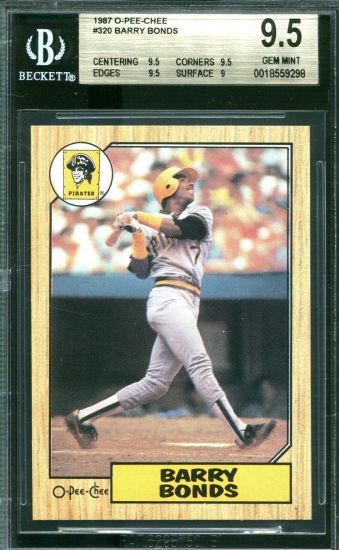 1987 O-Pee-Chee #320 Barry Bonds RC
Roger Clemens
Getting his first taste of MLB hitting in 1984 with the Boston Red Sox, Clemens has all the needed Hall of Fame credentials. At the minimum, 354 career wins, ninth all-time, and 4,672 strikeouts, third all-time.
The Rocket pitched for five teams over 24 seasons, earning 11 All-Star selections, seven Cy Young Awards, two pitching Triple Crowns, and the AL MVP in 1986. Can’t leave out the two rings with the Yankees in 1999 and 2000.
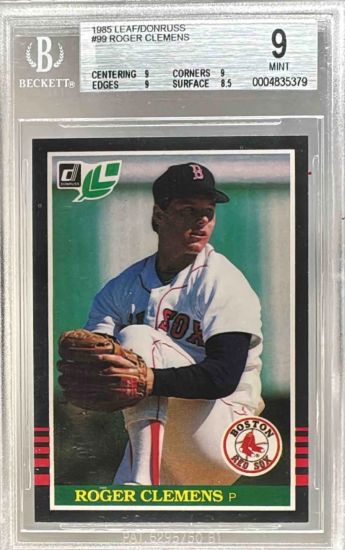 1985 Leaf/Donruss #99 Roger Clemens RC
Carlos Delgado
Twelve of Delgado’s 17 seasons in the league were spent in Toronto, which could be a reason why he was overlooked during his career. On the resume, nothing pops out beyond leading the AL in RBI in 2003 (145) and doubles (57) in 2000, but the first baseman was just consistently good; don’t let the just two All-Star Game selections fool you.
Delgado eclipsed the 2,000-hit milestone and was just 27 long balls away from the unofficial HOF milestone of 500. For 10 years straight, Delgado slugged 30 or more homers (1997-2006).
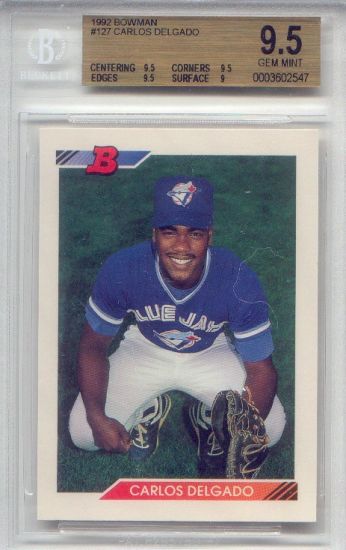 1992 Bowman #127 Carlos Delgado RC
Jeff Kent
An oddity in more ways than one, Kent was drafted in the 20th round of the 1989 MLB draft by the Toronto Blue Jays and was known as a slugging second baseman. Shifted around the infield throughout his career, playing third, short, second, and first, to earn that spot in Cooperstown, the focus will be on Kent’s lumber, not on his glove.
Getting the call up with the Blue Jays in 1992, bouncing from the Mets and Indians, Kent finally found a home in 1997 with the Giants. Kent earned his first three of five All-Star nods with the Giants and was named NL MVP in 2000 playing in the Bay area. In 2000, Kent hit .334 with 33 HR, 125 RBI, 41 doubles, 7 triples, and scored 114 runs. Kent batted .290 for his career with 377 home runs and 2,461 hits.
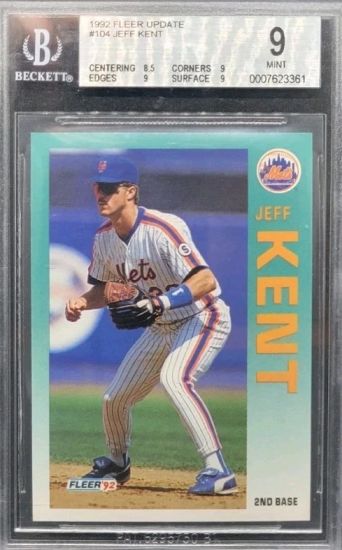 1992 Fleer Update #104 Jeff Kent RC
Don Mattingly
One of the greatest “what ifs” in MLB history. Back injuries slowed the prolific hitting first baseman, robbing him of his long ball power but not from extra base hits or hitting for good average. Just as Mattingly was putting the end to his 14-year career, while still playing at a high level, the Yankees were setting up for a dynasty run.
From 1984 to 1989, Mattingly was one of the game’s best. A six-time All-Star, nine-time Gold Glove winner, three-time Sliver Slugger, and the 1985 AL MVP. Mattingly’s .307 batting average is Hall worthy along with his defensive play. The career numbers for hits (2,153) and RBI (1,099) are low. His lifetime WAR of 42.4 is below the 50 gauged for entry, but, what if?
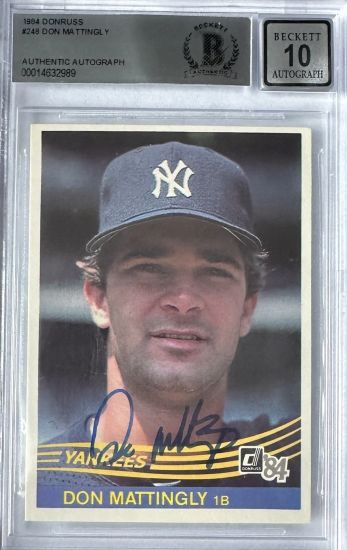 1984 Donruss #248 Don Mattingly RC AU
Dale Murphy
“Murph” was another player in the ‘80s who was without a doubt one of the best of his era. A solid hitter at the plate, Murphy caught fire in 1980 with an All-Star run extending into ’87. In addition to being a seven-time All-Star, the Braves outfielder was also a two-time NL MVP (1982, 1983). Twice with the Braves, Murphy led the league in homers and RBI.
The career numbers are close: 46.5 WAR, 2,111 hits, 398 HR, 1,266 RBI. One could argue, for 14 or 15 of his 18 years in the show, Murph was a feared hitter with very good power. Often overlooked, his defensive skills. Murphy won five Gold Gloves (1982-86).
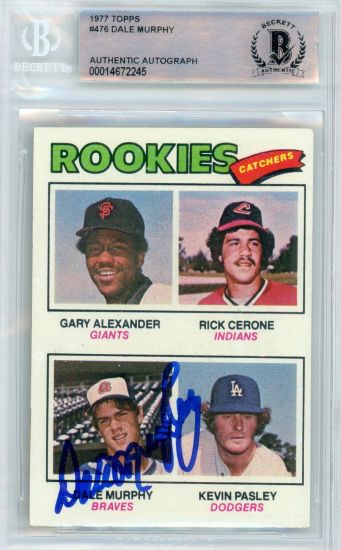 1977 Topps #476 Rookie Catchers/Gary Alexander RC/Rick Cerone RC/Dale Murphy RC/Kevin Pasley RC
Gary Sheffield
Like Sheffield or not, all the numbers scream Hall of Famer. Career numbers: 60.5 WAR, 509 HR, 1,636 runs, 1,676 RBI, and 2,689 hits.
Sheffield was a gamer, playing for 22 years with eight different clubs. Through the years, he was selected nine times to the All-Star Game, was a five-time Silver Slugger, and won a World Series with the Florida Marlins in 1997.
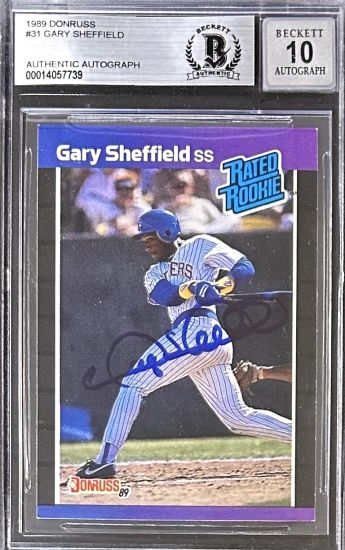 1989 Donruss #31 Gary Sheffield RR RC AU
Fernando Valenzuela
With a starting pitcher, casting a ballot based on modern metrics has become a lot harder. Valenzuela had six to seven really good seasons – one of them, 1981, led to NL ROY and Cy Young honors. What he did then will not be duplicated in the near future. In 1981, Valenzuela had 11 complete games with 8 shutouts. Arguably his best season, in 1986 he posted a 21-11 record throwing 269.1 innings with 20 complete games, striking out 242 batters.
Aspects of the 17-year career totals are shy of Hall of Fame material: 173 wins against 153 losses. But he carried a career 3.54 ERA, has 113 complete games, and threw 31 shutouts.
The topping on his career, a 1981 World Series title. During the ’81 postseason, Fernando started five games, posting a 3-1 record with 2 complete games and a 2.21 ERA in 40.2 innings pitched.
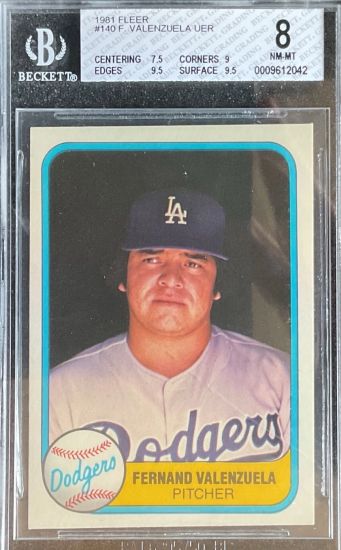 1981 Fleer #140 Fernando Valenzuela RC/UER Misspelled Fernand on card
Rules of the Voting Game
Per BaseballHall.org: “Any candidate who appears on a ballot and does not receive votes from at least five of the 16 voters will not be eligible to be placed on the ballot within its next three-year cycle.
“Any such candidates would remain eligible to return to an Era Committee ballot in the following election cycle. Any Era Committee voting results prior to December 2025 do not apply to this rule.
“Additionally, any candidate that does not receive at least five of 16 votes in multiple appearances on Era Committee ballots will not be eligible for future ballot consideration.”
Get your cards graded with Beckett
Preserve and enhance the long-term value of your favorite baseball cards with Beckett Grading Services – The Gold Standard in Grading.