
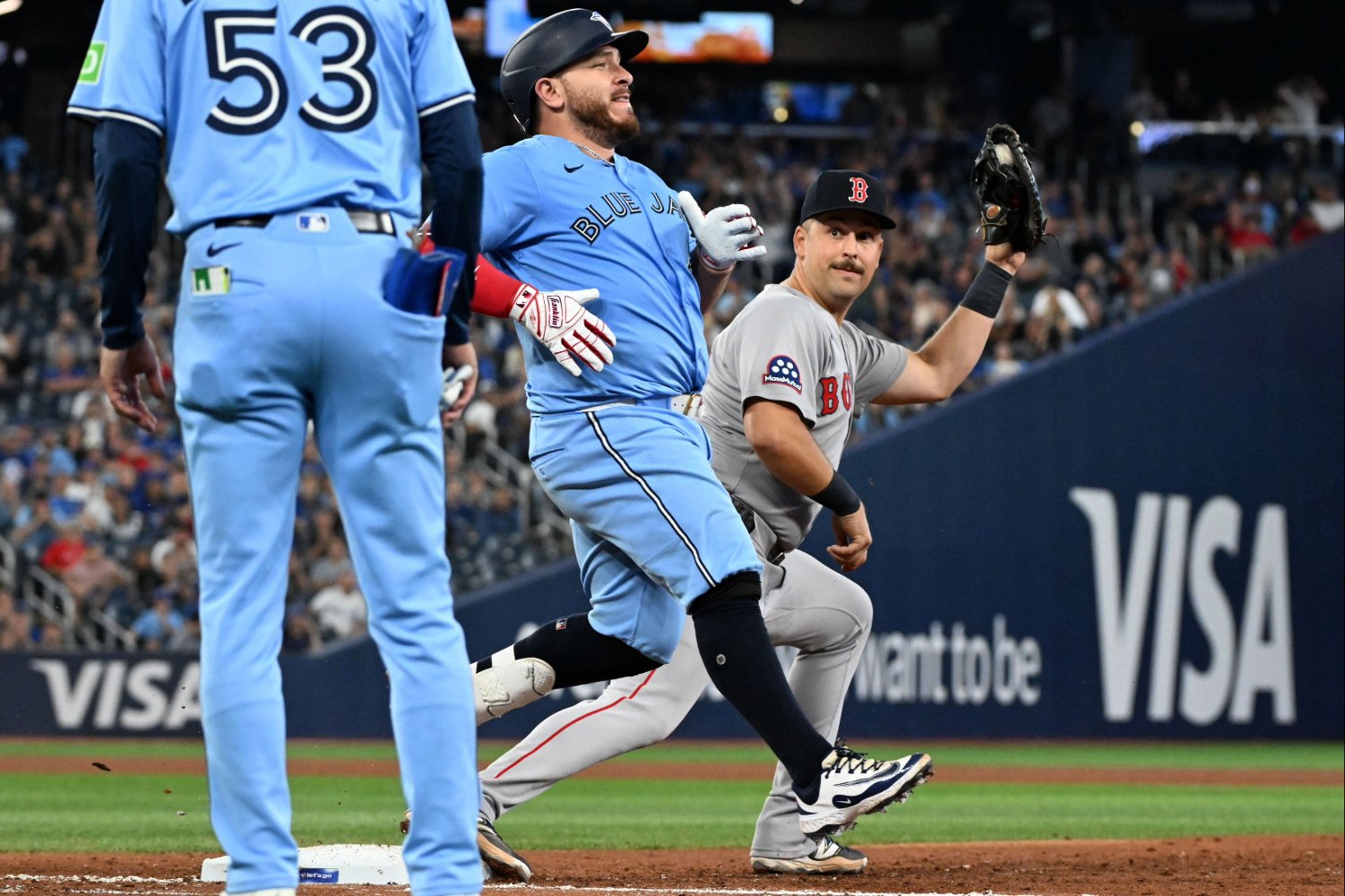
The Toronto Blue Jays flew in from nowhere this season. Despite objectively poor (offensive) additions in Andrés Giménez (70 wRC+) and Anthony Santander (61 wRC+), they still managed to make major strides as a team in OPS, K%, wRC+, and AVG, leading the league by seven points in the latter. Their position-player fWAR jumped from 21.8 in 2024 to 32.6 in 2025, an improvement equivalent to adding both Fernando Tatis Jr. and Matt Olson in a single offseason.
They entered the season ranked ninth in FanGraphs’ projected AL playoff odds and fourth in the AL East, an afterthought coming off a 74-88 finish the previous year. On May 7, they were 16-20, and by May 27, they sat eight games back in the division. While this wasn’t quite a 2019 Nationals-style comeback, it was still a remarkable rise for an underdog that found success by maximizing its strengths.
The Boston Red Sox felt the effects of that dominance, as the Blue Jays were the only team in the AL East they did not beat in the season series. So what did the Blue Jays do so well, and what can the Red Sox learn from it to put themselves in championship contention in 2026?
The Power Behind the Swing
Travis Sawchik wrote a blog post for Driveline Baseball explaining how the Blue Jays managed to improve so drastically despite their underwhelming offseason moves. Among several factors, Sawchik identified a significant improvement in bat speed as a key contributor to their offensive explosion.
It’s commonly believed that if you swing harder, the ball will naturally travel farther and be hit harder. The same is true in golf; big hitters like Bryson DeChambeau swing as hard as possible off the tee and crush the ball, which is far from a novel concept but rather something that has only recently started to be perfected on the links. Similarly, we also saw O’Neil Cruz put on a show in the Home Run Derby with his exit velocity and distance.
The key is managing an “A Swing” so that when hitters put extra effort into their swings, they do not lose their mechanics. MLB teams generally want their hitters’ average swing speed to improve rather than their hardest possible one. This ensures that when batters are in disadvantageous counts, such as 0-1, 0-2, or 1-2, they can still put a powerful, controlled swing on the ball.
The Blue Jays focused on this after hiring Driveline coach David Popkins, and as a result, they finished with the sixth-highest improvement in average bat speed in baseball, increasing from 70.7 mph to 71.2 mph. While that might seem minor, even small increases in bat speed have been shown to directly correlate with higher wRC+. The graphic below from @jacklambert_ on X illustrates that relationship perfectly.
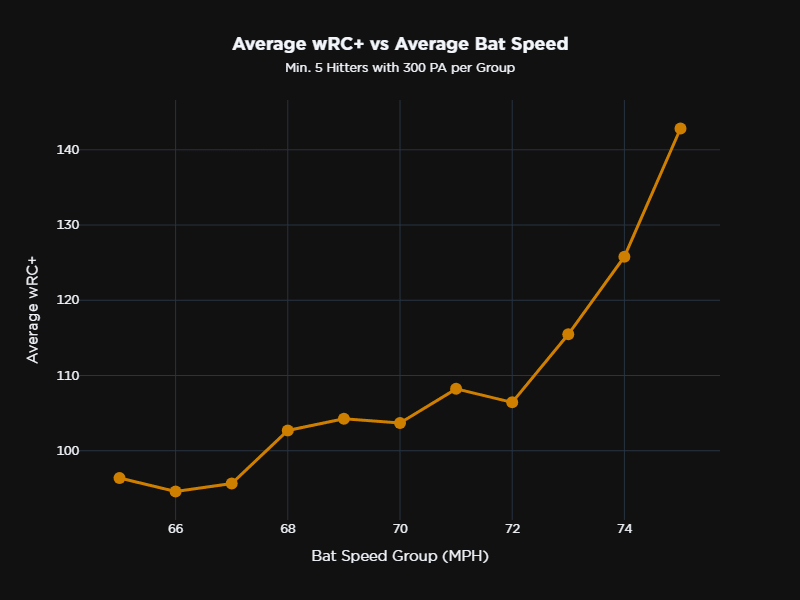
A 75 mph swing qualifies on Baseball Savant as a “fast swing.” The statistical improvement from a fast swing (first number listed) compared to a slow one (second number) is significant:
AVG: .307 vs. .246
SLG: .603 vs. .369
wOBA: .389 vs. .266
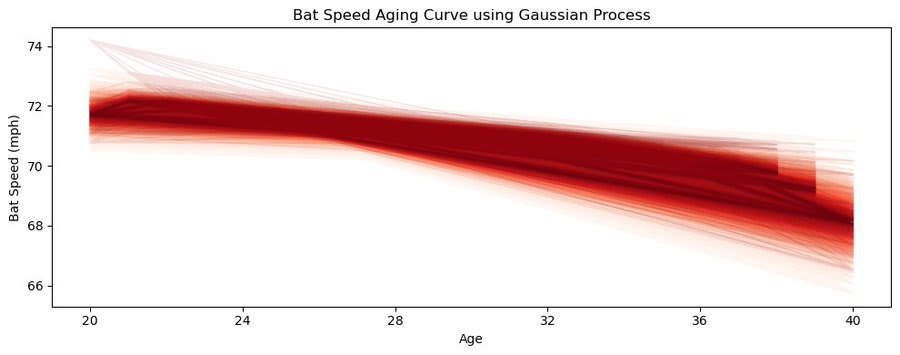
There is also a clear increase once bat speed reaches 72 mph, a number the Blue Jays hit in September as they made their postseason push. Anecdotally, George Springer experienced a resurgence this season, largely due to an improvement in his bat speed, jumping from the 53rd percentile to the 72nd. Since bat speed typically declines with age, this improvement directly contradicts conventional wisdom.
(Image from @justinochoi on X)
The Red Sox’s Path Forward
The Red Sox “Big Three” prospects all posted above-average swing speeds, with Roman Anthony leading the team at 75.1 mph, Marcelo Mayer at 74.1 mph, and Kristian Campbell at 73.3 mph. It’s clear the organization is emphasizing swing speed development in its young players. Even Jhostynxon Garcia, during his brief MLB stint, averaged 75 mph on his swings.
Of course, there is more to hitting than simply swinging hard. Campbell struggled after a hot month, while Mayer and Garcia never found their footing in 2025. However, both Campbell and Mayer had MaxEVs of 112.2 and 108.7 respectively, showing that the power potential is already present despite their early struggles.
The Red Sox already have Driveline founder Kyle Boddy as an advisor, and they recently hired John Soteropulos as an assistant hitting coach for the upcoming season. The team is clearly working to refine its hitting philosophy and build improvement from within rather than relying solely on big-name acquisitions.
Now that the Red Sox have watched their division rivals compete (and, ultimately, come up just short) in the World Series, they should focus on emulating Toronto’s success. Baseball is a copycat league, and copying the American League champion is not a bad idea. Boston is trending upward, but a team wRC+ of 103 will not cut it in the AL East. They have the talent and development foundation in place; it’s time to maximize it.