
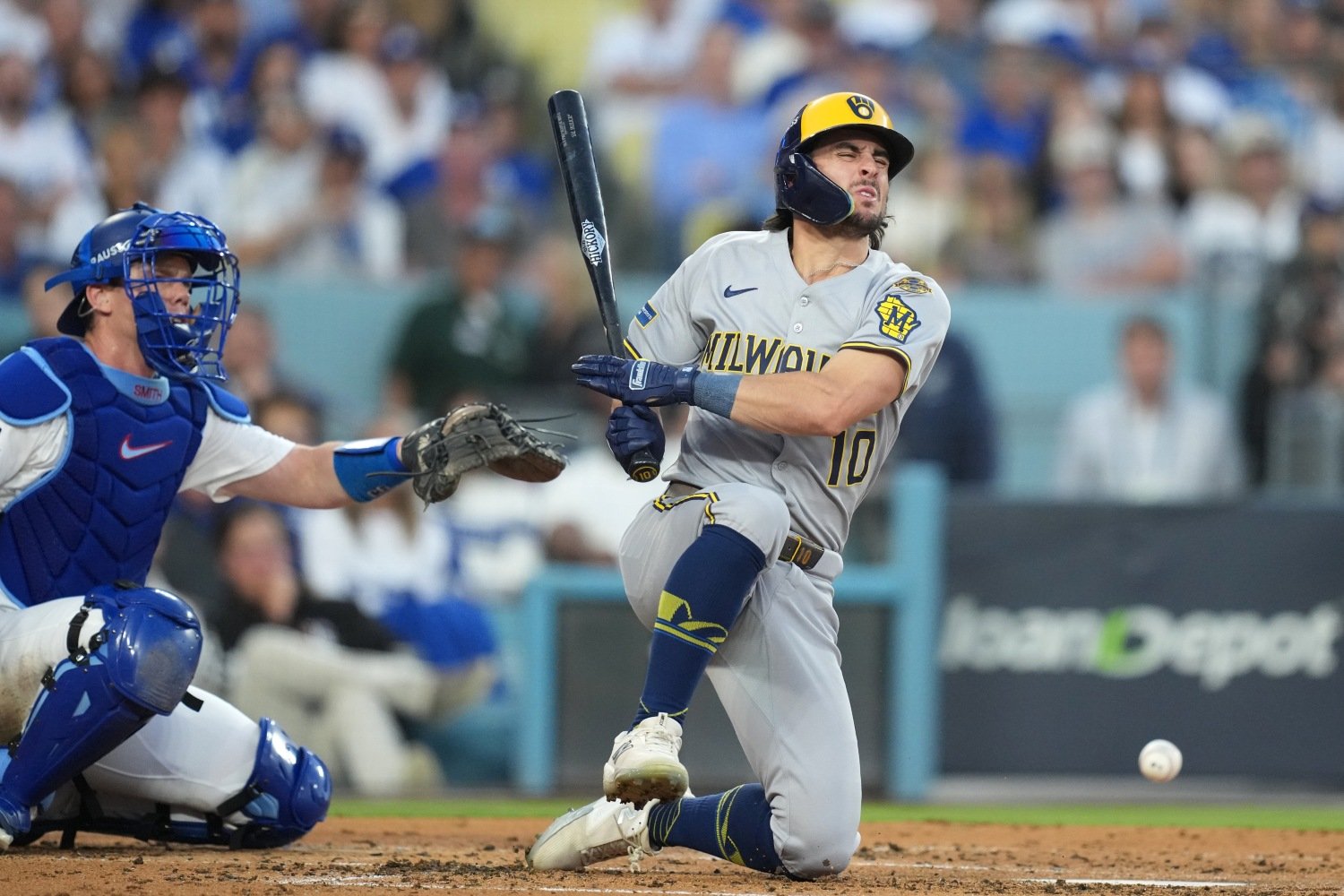
After slashing .255/.326/.339 with five home runs through his first two big-league seasons, Sal Frelick posted a career-best .288/.351/.405 line with 12 home runs in 2025. With a 114 wRC+, it was his first campaign of above-average offense, elevating him from a capable glove-first right fielder to tying with William Contreras as the Brewers’ second-best position player by fWAR.
He got there by improving his batted-ball profile, without compromising his contact skills. Frelick increased his average bat speed by 1.9 mph, the 13th-highest gain among qualified hitters from 2024 to 2025, while making what looked like a concerted effort to hit the right pitches further out in front of his body. Those changes allowed him to hit more balls harder to his pull side, boosting his production on contact. As Matt Trueblood wrote last month, he specifically eliminated some of his least valuable batted balls and created more of his best ones.
Season
Avg. Bat Speed (MPH)
Intercept vs. Center of Mass (inches)
Attack Angle
HardHit%
Pull%
BABIP
wOBAcon
2023
67.1
22.7
6°
23.6%
29.3%
.286
.307
2024
66.3
24.8
6°
19.5%
29.5%
.306
.301
2025
68.2
27.8
9°
27.4%
41.0%
.317
.345
Process-based metrics recognized that Frelick improved, but not to the extent of his results. Baseball Prospectus viewed his offensive performance as average, rather than good, crediting him with a deserved .264/.332/.375 line and a 101 DRC+. Statcast was more bearish, assigning him an expected .263/.332/.351 and a .306 xwOBA that ranked in the 20th percentile of hitters.
The issue is that it’s still difficult to fully buy into his power surge. For Frelick to sustain it—let alone further improve upon it—he’ll likely have to swing the bat even faster and hit the ball even harder more often. Those will never be his greatest strengths, but his improved bat speed and hard-hit rate still ranked in the 7th and 4th percentiles, respectively.
It’s hard to generate double-digit home-run power with that lack of thump. The average home run in 2025 left the bat at 104.6 mph, but Frelick’s 12 of them averaged 101.5 mph. He hit five of his round-trippers (41.7%, the third-highest rate among hitters who went deep at least 10 times) less than 100 mph, meaning a significant chunk of them were struck well but not driven like a standard, surefire blast. Frelick caught those five pitches on the barrel at the perfect time and at the ideal angle, allowing them to travel far enough without generating typical home-run power on his own.
That’s not a new playbook. Houston Astros third baseman Isaac Paredes has built a career on creating more power than expected from poor bat speed and exit velocities, by pulling the ball at the proper launch angles. Caleb Durbin does it to a lesser extent, too. It’s too early to say whether Frelick’s excellent bat control affords him that ability, though. Given the razor-thin line between that kind of homer and a routine flyout (and how valuable his on-base ability is to Milwaukee’s offense), it probably isn’t a gambit he should attempt too often, anyway.
If a handful of those pulled fly balls find gloves instead of carrying into the first few rows of seating, Frelick could drop 30 to 50 points of slugging average despite swinging the bat very similarly to how he did in 2025. He’ll never be a slugger; nor does he need to be. However, he will likely need another round of growth similar to the one he just experienced to remain a catalyst in the Brewers’ lineup, rather than a supporting character. In his fourth big-league season, he should aim to continue raising his floor, even closer to the gear he’s flashed when fully unloading his best swing.