
The MLB offseason reached its first interesting phase on Thursday. Qualifying offers were made, National League Silver Sluggers were announced, contract options were picked up or declined, and free agency officially got underway, as players who qualify for that right can now negotiate with all 30 teams. For the Twins, that meant some roster moves—seven of them, in fact. Some of these were expected, but there was at least one small surprise. I’ll look at these moves in groups.
The Formality
For starters, Alan Roden was activated off the 60-day IL This move is really just a formality, as the 60-day IL doesn’t exist during the offseason. Roden is expected to be a full go for the 2026 season. That’s good news, because while he didn’t perform well with the Twins in limited action, he is a legitimate prospect and should be (at the very least) in the fourth outfielder mix.
Topa’s Slight Pay Cut
The Twins declined Justin Topa’s 2026 option. It was worth $2 million, and had a $225,000 buyout. His contract is a bit unique, in that he’s still under team control, but will head to arbitration for the final time. The interesting part here is that MLB Trade Rumors estimated his arbitration amount at $1.7 million. Assuming that’s close to correct, that gets his 2026 salary to $1.925 million, for a $75,000 savings. It’s possible the Twins will lean on him to accept a bit less than that figure, or non-tender him when the deadline to decide about arbitration-eligible players arrives later this month.
Four Fungible Relievers Cut
Michael Tonkin, Génesis Cabrera, Anthony Misiewicz, and Thomas Hatch were all outrighted and became free agents. There really aren’t any surprises here, as none of the four were impact arms, and all lack upside at this point in their careers.
Tonkin was estimated to make $1.4 million in arbitration, and is not an impact reliever. He was worth exactly 0.0 fWAR in 2025; the Twins can find someone similar within their own system and save $600,000 or so. In the past, Tonkin had durability to recommend him, even when his skills didn’t stand out. After an injury-plagued campaign, that’s out the window.
Cabrera did not perform well for the Twins, or the other three organizations he played for in 2025. He allowed five home runs in 14 2/3 innings; opposing hitters hit .298 off of him; and he also walked nearly a batter an inning. Similarly projected to earn $1.4 million, he is four years removed from an average or better performance.
Misiewicz signed with the Twins on a minor-league deal and is out of options. With below-average stuff and a 9.64 ERA, he presumably wouldn’t have remained on the roster this long, but for getting injured shortly after his July callup and only returning for one appearance on September 28.
Thomas Hatch is a tinkerer, but unfortunately, his tinkering didn’t get results. His strikeout and walk rates were much worse than average, he gave up too much hard contact, and as a soft tosser, he didn’t bring enough to the table to justify even a league-minimum salary.
As the Twins enter at least a soft rebuild, it will make more sense for these four roster spots to go to younger pitchers with more upside. The Twins will almost certainly need to convert some starters to relievers this offseason, as they have a glut of pitchers presumably fighting for just a couple of rotation spots, with more prospect depth on the way.
Former Top-100 Prospect Outrighted
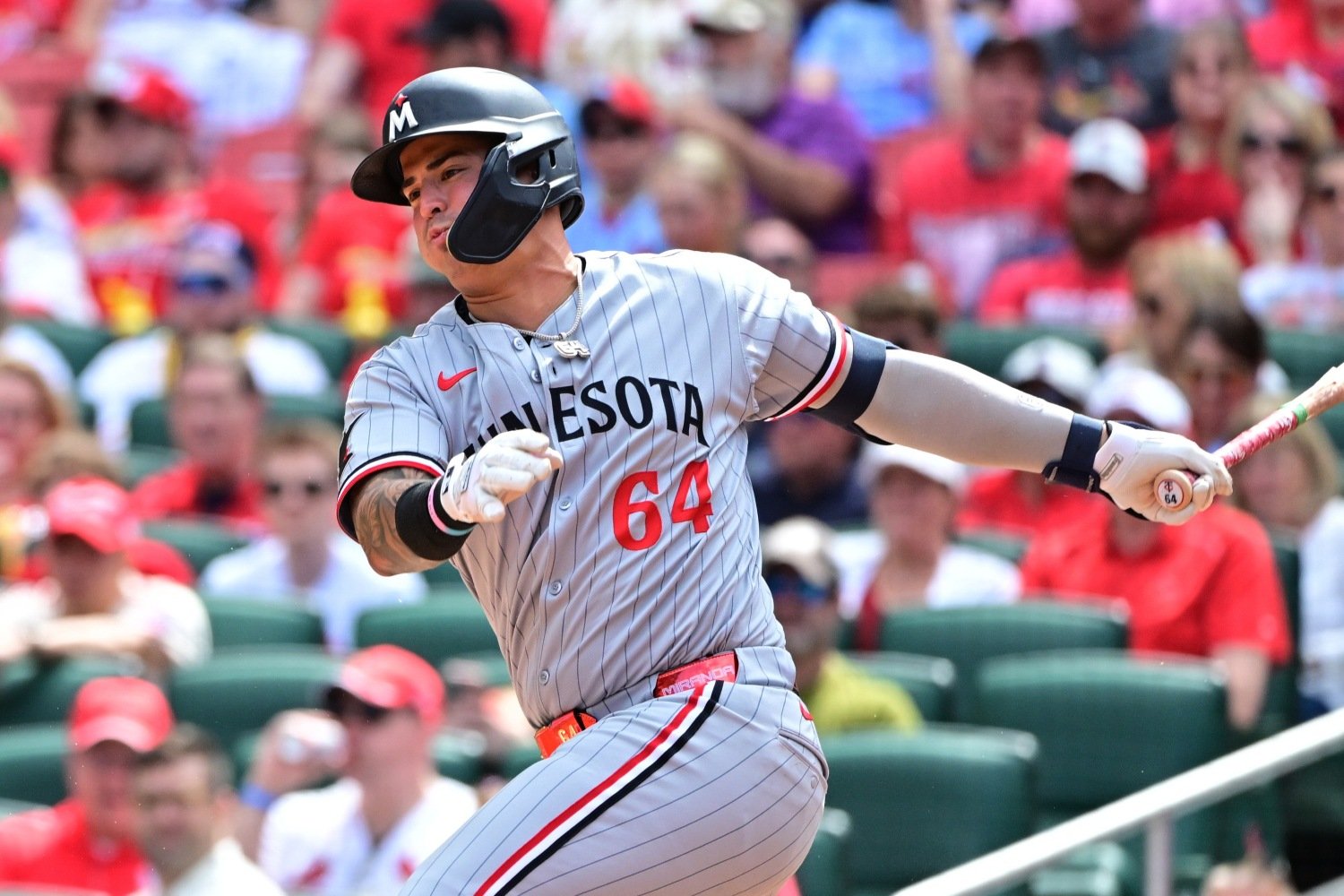
Jose Miranda’s time as a part of the Twins organization has come to an end. He was one of the Twins’ biggest failures in prospect development in recent seasons, as he was unable to find consistency or stay healthy. With elite contact skills, he demonstrated the capability to tie the major-league record for consecutive hits, and at one point, he looked like a building block.
However, the formerly ascendant hitter failed to do that with any regularity, and throughout the 2025 season, he looked overmatched—even after being sent down to Triple-A St. Paul. Lacking defensive chops even at the bottom of the defensive spectrum, and frequently making mental mistakes while fielding or on the basepaths, the writing was on the wall when he failed to receive a call-up after the deadline selloff.
It’s impossible to say how much of his struggles are health-related, as he has dealt with frequent injuries to his shoulder, back, and arm. The most unfortunate aspect of him being cut at this point is that the Twins failed to capitalize on his value while he had some.
The Slightly Curious Move
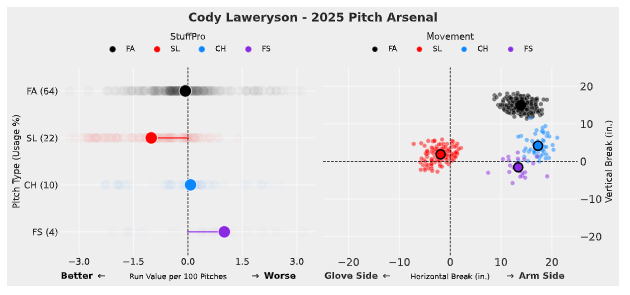
The one surprise, at least to me, was the Twins waiving Cody Laweryson. With the team needing to fill out almost an entirely new bullpen for 2026 after trading away all of the non-mop-up options aside from Cole Sands, I would have expected them to give him a longer look, particularly since he had six full seasons of team control remaining, and three minor-league options.
He looked decent down the stretch, and the data bears this out. He didn’t walk anyone in 7 2/3 innings, had a roughly average strikeout rate, and FanGraphs rated his Stuff+ at 96, where 100 is average and higher numbers are better. They had his Location+ and Pitching+ as well above average, and he had the look of someone who Derek Shelton could send out in the fifth inning when a starter doesn’t go deep. Obviously, the Twins disagreed. The Angels claimed him, and he will have a chance to develop into a bullpen weapon for them. His slider, in particular, makes him worth watching.
With these moves, the Twins’ 40-man roster sits at 33, giving some room to add players to the roster ahead of the November 18 deadline to protect prospects from the Rule 5 Draft. Best wishes to the six players departing the organization on the next legs of their journeys.