
Slightly inspired by Ely Sussman’s article from last Monday, I figured I’d do an offseason blueprint myself, albeit slightly less in-depth. From being 62-100 in 2024, to 79-83 in 2025, the Marlins have made a leap that not even the most optimistic fan could’ve truly saw coming. In the words of Bruce Sherman, “We’re going to win a lot more games than you think.” Well, they’ve done that. Now, it’s time to expand on that. As the 2026 free agency period has begun, there has mostly been marginal moves that have been made so far, as it usually always is for the MLB free agency at the beginning. The Marlins have already placed a number of players on waivers, most of them being sent outright and electing free agency. They’ve also recently claimed RHP Zach Brzykcy off waivers. Because of that, I’ll start with the Rule-5-preventing selections to the 40 man roster.
Marlins select C Joe Mack, RHP Josh White, and RHP William Kempner to the 40-man roster
Being in agreeance with Ely, these are the 3 prospects that are Rule 5 eligible this winter that I feel will be added to the 40-man roster to prevent another team from selecting them in the aforementioned draft. Joe Mack is a surefire defensive backstop, having incredible pop time which allows him to dominate the running game, an element that is much needed for the Marlins. In addition to that, he has the power potential to hit 20+ HRs a season, something that he’s done in the past two seasons. Overall, Joe Mack is a no-brainer for this selection, and should be a vital part of the Marlins’ future. William Kempner & Josh White are two guys who may not be as known to many, but are both cut from the same cloth. Both have funky arm slots, William Kempner throwing at a 6° arm angle, & Josh White throwing at a 74° arm angle. These funky deliveries have led to dominance in the upper minors, each having high strikeout percentages (33.3%, Kempner, 37.3%, White) respectively in AAA. I’d protect the both of them as well from being selected in the Rule 5 draft.
Free Agency Signings
Before I get into any major league signings, I’ll start with some players that I’d consider signing to a minor league contract:
Marlins sign OF Dylan Carlson, C Brian Navarreto, RHP Spencer Turnbull, 1B/OF Lamonte Wade Jr. to minor league contracts with invites to Spring Training
The Marlins have depth at a lot of positions, but it doesn’t hurt to add on the margins via minor league contracts.
A former top prospect, Dylan Carlson has struggled to truly establish himself in the MLB. As one of the most forward-thinking organizations, the Marlins preach that development isn’t linear, and Carlson could look to revitalize his outlook as a player, as well as provide organizational depth in the upper minors in the outfield. His ability as a switch hitter helps that as well.
Brian Navarreto did well in his cup of coffee of the major leagues at the end of the 2025 season, and contributed to the best AAA team in the league last season. No reason to not bring him back, if available.
Spencer Turnbull is a solid depth signing that can provide potential MLB innings in case of injury or overall poor team performance, which may lead to trades.
Lamonte Wade Jr. is probably my favorite of them all, providing a potential solid platoon bat against right-handed pitching, not being too far removed from a 119 WRC+ season in 2024. He’s historically known for not chasing outside pitches, but struggled big time this past season with a -1.6 fWAR. Overall, a low-risk, high-reward signing if he’s able to get back to doing the things that helped him succeed offensively. This could also showcase himself to other teams if the fit isn’t quite there with the Marlins.

Now, let’s do some major league contracts (Yay!).
RHP Michael Kopech (1 year, $5 million)
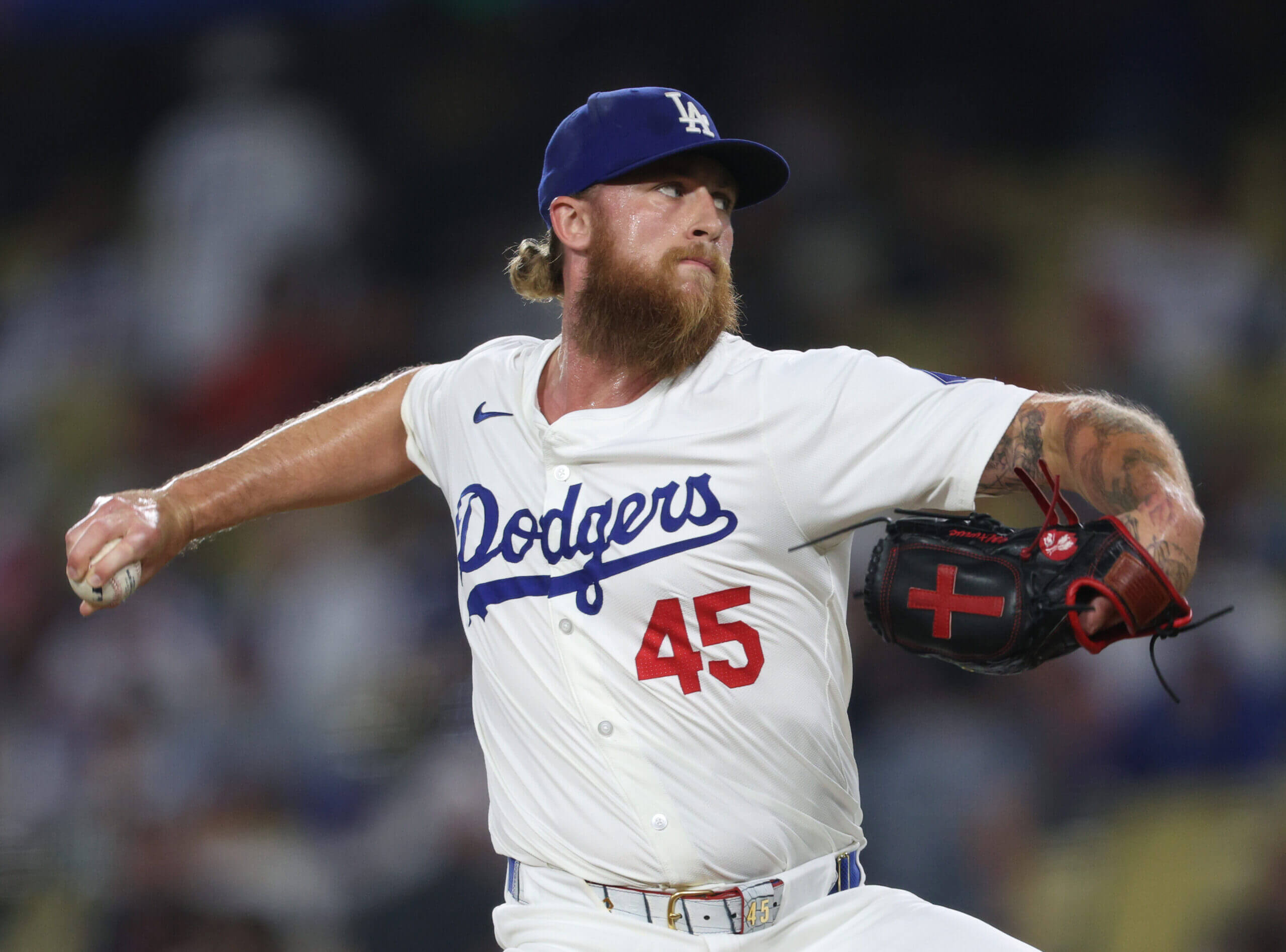
Ah yes, Michael Kopech, one of the most well-known flame throwers in the MLB. Having previously been a starter, Michael Kopech experienced a career power surge after being moved to the bullpen. Unable to control most of his pitches as a starter, he heavily relied on his plus-plus fastball out of the bullpen, which led to him being successful enough to get traded to the Dodgers in 2024. This past season, his walk rates were absurdly high (24.5%), and dealt with injuries. However, I have a feeling that his plus-plus four-seam fastball could become MORE elite if cuts his usage down a lot (83%!) and emphasize potential secondary offerings. When he gets hit, he gets hit hard, so emphasizing secondary offerings, which the Marlins are adamant on doing, could lead to weaker contact and increased whiff rates. Overall, a low-risk, high reward signing.
LHP Caleb Ferguson (1 year, $4 million)
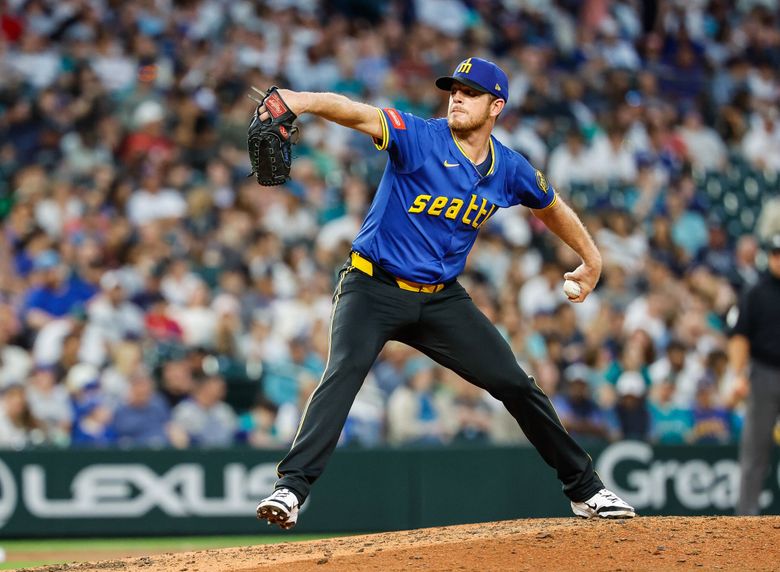
Caleb Ferguson is here to do one thing: shut down left-handed hitters. With the uncertainty of Andrew Nardi who hasn’t pitched since 2024, there are only the potential left-handed options of Cade Gibson and Josh Simpson. Caleb Ferguson provides much needed help against LHH, with said hitters posting a .465 OPS against him this past season. His stuff doesn’t stand out too much, but he induces plenty of soft-contact, his Hard-Hit percentages being 27.7%, and AVG Exit Velocity being 84.8, respected percentiles being 100th and 99th, among the best in the league. A no-brainer signing to help balance the bullpen.
RHP Devin Williams (3 years, $36 million, can opt out after 2026)
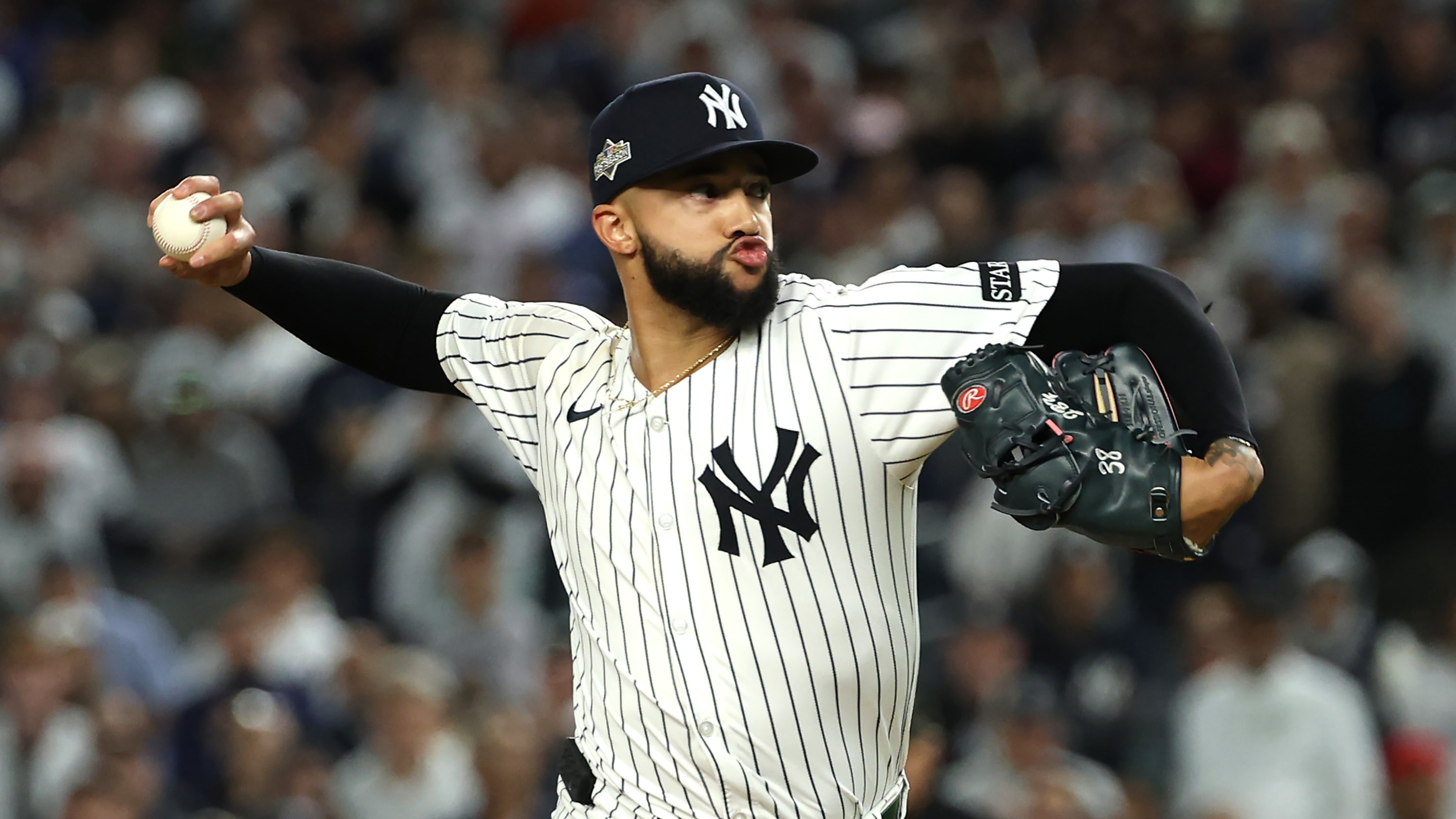
Mr. Air Bender himself, Devin Williams is known for having an outlier changeup with downward, arm-side break, almost like a screwball. After having signed with the Yankees, Devin Williams went on to have the worst season of his career, posting a 4.79 ERA in 62 innings. The strange thing about his struggles is that his peripherals were still well above average, striking out 34.7% of batters and a 2.68 FIP. For whatever reason, his time with the Yankees as their primary closer didn’t work as expected. I’m sure that most teams see that he’s still in his best form stuff-wise, but the Marlins are the team that Devin Williams likens himself to: a team with not as high expectations, young, and hungry, that being the 2026 Marlins.
Trades
For this section, I’ll do 2 trades that have both the present, and future in mind.
Marlins trade RHP Edward Cabrera and RHP Calvin Faucher to the New York Yankees for 1B Ben Rice
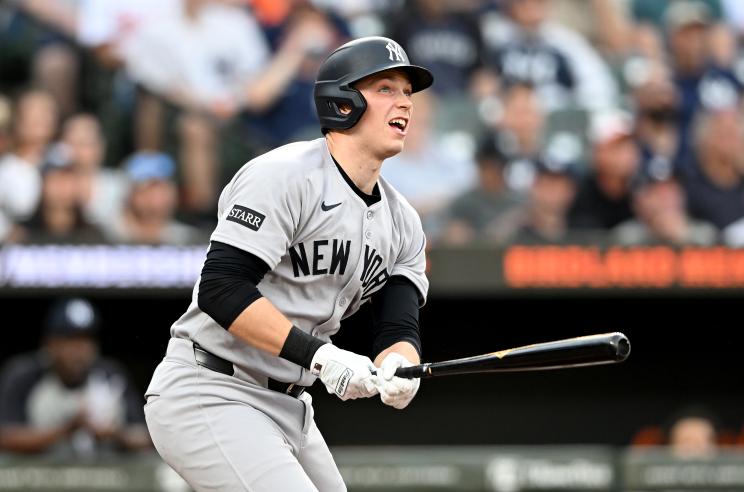
In this potential deal, the Marlins acquire their 1B of the foreseeable future in Ben Rice.
From the Yankees’ perspective, the move would be about bolstering their pitching depth with controllable arms. Edward Cabrera’s struggles with command and injuries, while flashing electric stuff is well documented. This past year, the Marlins were able to get a breakout season from Cabrera, having a career low 3.53 ERA and crossing the 100 IP threshold for the first time (137.2 IP). With both Carlos Rodon and Gerrit Cole starting the 2026 season on the injured list, Cabrera would provide much needed depth as a middle-of-the-rotation arm. He also isn’t a free agent till 2029.
Calvin Faucher is a versatile bullpen option with closing experience (15 SV in 2025) and has posted solid ERA numbers in the past two seasons (3.19 in 2024, 3.28 in 2025). He also isn’t a free agent till 2030.
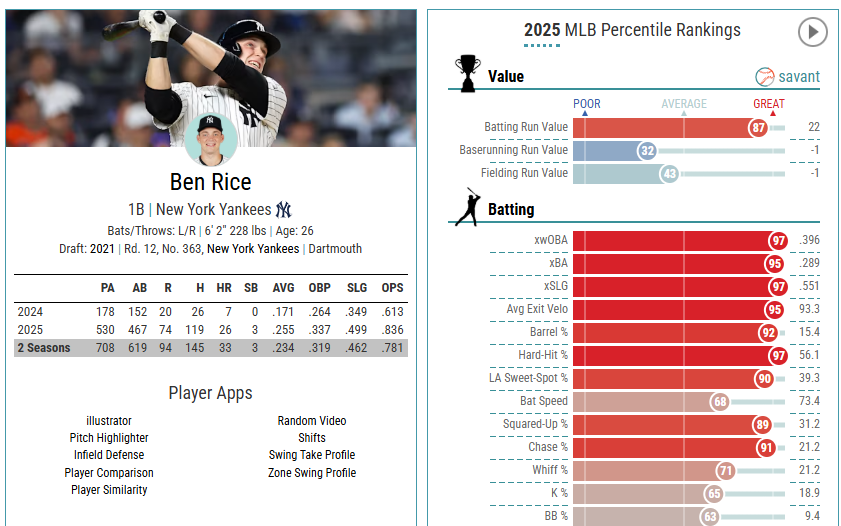
For the Fish, this trade would address their ongoing need for offensive help in the infield corners. This past season, Rice broke out in a big way, hitting 26 HR and posting a .836 OPS. When you look at the expected numbers, it even suggests that he was somehow UNLUCKY during his season-long offensive surge. Rice improved in every metric hitting wise, also along with increasing his bat speed, which correlates with added power potential. Not to mention, he could play catcher in a pinch in case of emergency. He isn’t arbitration eligible till 2028, and isn’t a free-agent till 2031, so Rice would definitely be here for the long-term.
This trade keeps in mind that the Yankees have the resources to make splashier moves in the offseason, as far as signing the upper echelon of free agents such as Pete Alonso, a potential NPB signing of Munetaka Murakami, etc. Overall, a potential win-win for both sides.
Marlins trade RHP Adam Mazur and RHP Anthony Bender to the Athletics for OF Gavin Turley and 3B/1B Tommy White
Inspired from Ely’s trade from his offseason blueprint, I am adding an extension to the trade with the Marlins also shipping out Adam Mazur along with Bender in exchange for Tommy White and Gavin Turley, two young prospects with a ton of potential. Tommy White has a blend of contact and power that is hard to find, and having the ability to potentially stick at 3B only increases his value. Gavin Turley, recently selected in the 2025 MLB Draft, posted a solid 105 WRC+ in 125 PA in Low A. There are contact concerns in regards to Turley, but he is renowned for his exceptional athleticism, which allows him to hit the ball hard and play solid defense.
The Athletics get back much needed starting pitching and relief depth in Adam Mazur and Anthony Bender. Adam Mazur hasn’t quite established himself yet in the major leagues, but with some of the options that the Athletics currently have, he would at the very least make well for a back-of-the-rotation option. Anthony Bender posted the best ERA of his career this past season (2.16), primarily effective against RHH (.452 OPS allowed). Overall, a fair trade given the Marlins’ strength in pitching depth, and the A’s strength in position player depth.
As far as extensions, I do see the Marlins making at least one, preferably for a guy like Eury Perez, as it’s easy to predict that his best years are ahead of him. I’m in agreeance of that extension happening, but it would be hard for me to project any number for him, or any other extension candidate on this team, so we’ll skip this section.
The 2026 Spring Training 40-man roster
After making concise, calculated moves to boost the major-league team, as well as the farm system, the Marlins 40-man roster would currently stand as constructed for Spring Training:
Pitchers (20): RHP Sandy Alcantara, RHP Lake Bachar, RHP Zach Brzykcy, LHP Caleb Ferguson, LHP Dax Fulton, LHP Cade Gibson, LHP Braxton Garrett, RHP Ryan Gusto, RHP Ronny Henriquez, RHP Janson Junk, RHP William Kempner, RHP Michael Kopech, LHP Andrew Nardi, RHP Max Meyer, RHP Eury Perez, RHP Michael Petersen, RHP Tyler Phillips, LHP Ryan Weathers, RHP Devin Williams, RHP Josh White
Hitters (20): INF Maximo Acosta, OF Griffin Conine, 1B/3B Deyvison De Los Santos, 2B Xavier Edwards, OF Heriberto Hernandez, C Liam Hicks, SS Otto Lopez, C Joe Mack, OF Jakob Marsee, OF Victor Mesa Jr., OF Dane Myers, 3B Connor Norby, INF Graham Pauley, C/DH Agustin Ramirez, 1B Ben Rice, UTIL Javier Sanoja, INF Jared Serna, OF Kyle Stowers, 1B Eric Wagaman, OF Joey Wiemer
These are just some slight projections that I made to fill out the 40-man roster, as some of the end of the roster players will probably still be waived/traded during the offseason. As far as payroll, since I left the potential of extensions up for interpretation, the Marlins’ payroll still hasn’t increased a huge amount, but I don’t really think that it needs to, for at least another season. With the upcoming CBA expiration after the 2026 season, potential discussions regarding a salary cap could lead to a potential lockout between the players and owners, so the Marlins should proceed with caution.
You can begin to see a foundation being built here in South Florida. From establishing organizational continuity in the front office, to new infrastructure being added soon around the ballpark in the form of Miami Live! to building player development, the Marlins certainly seem to be doing the things that could lead to potential long-term success. It all comes down to ownership being able to supplement the steps of Marlins’ president of baseball operations, Peter Bendix. Go Fish!