
The best thing about free-agent starting pitchers is that there are so many of them. The other best thing about them is that they’re all going to pitch well in 2026. They’re all going to make the All-Star Game. In your mind, at least.
That 40-something starter with Cooperstown credentials and a fastball that isn’t what it used to be? He’s got one more great season in him, you’ll see. That oft-injured fireballer with the 70-grade slider and a career 4.97 ERA? He needs the right pitching coach to put it all together. The former Cy Young candidate who missed most of 2023 and all of 2024 because of injury? Well, he’s back, and he’s older and scarier. But this time it’s going to work out.
Those descriptions aren’t for the pitchers at the top of the market, either. At the top of the market are the pitchers who are going to be pillars of the rotation for years to come. Just ignore all of the times when those kinds of expensive pitchers disappointed their new teams. Also, ignore all of the times when they really disappointed their teams. Actually, please make a list of all the free-agent pitchers who did as well as everyone hoped. You can use the top half of a Post-It note to make the list, then doodle on the bottom half when you get bored.
Free-agent pitchers: Almost always a bad idea.
Yet the Giants have thrived in free agency compared to most teams seeking starting pitching, and they’ve done so in an unorthodox way. They want their pitchers to leave after a year. Thanks for the help, now go on ‘n’ git. They love their one-year deals. They also love multiyear deals with player opt-outs for the most talented pitchers with something to prove. If those pitchers leave, that means everything has gone right.
The strategy also has downsides. Their aversion to long-term risk has cost them, specifically the loss of Kevin Gausman, who excelled for the Giants on a one-year deal in 2020 (and returned on a one-year deal after accepting the qualifying offer), but then went to the Toronto Blue Jays on a long-term deal the Giants wouldn’t give him. In general, however, they’ve had success with their strategy.
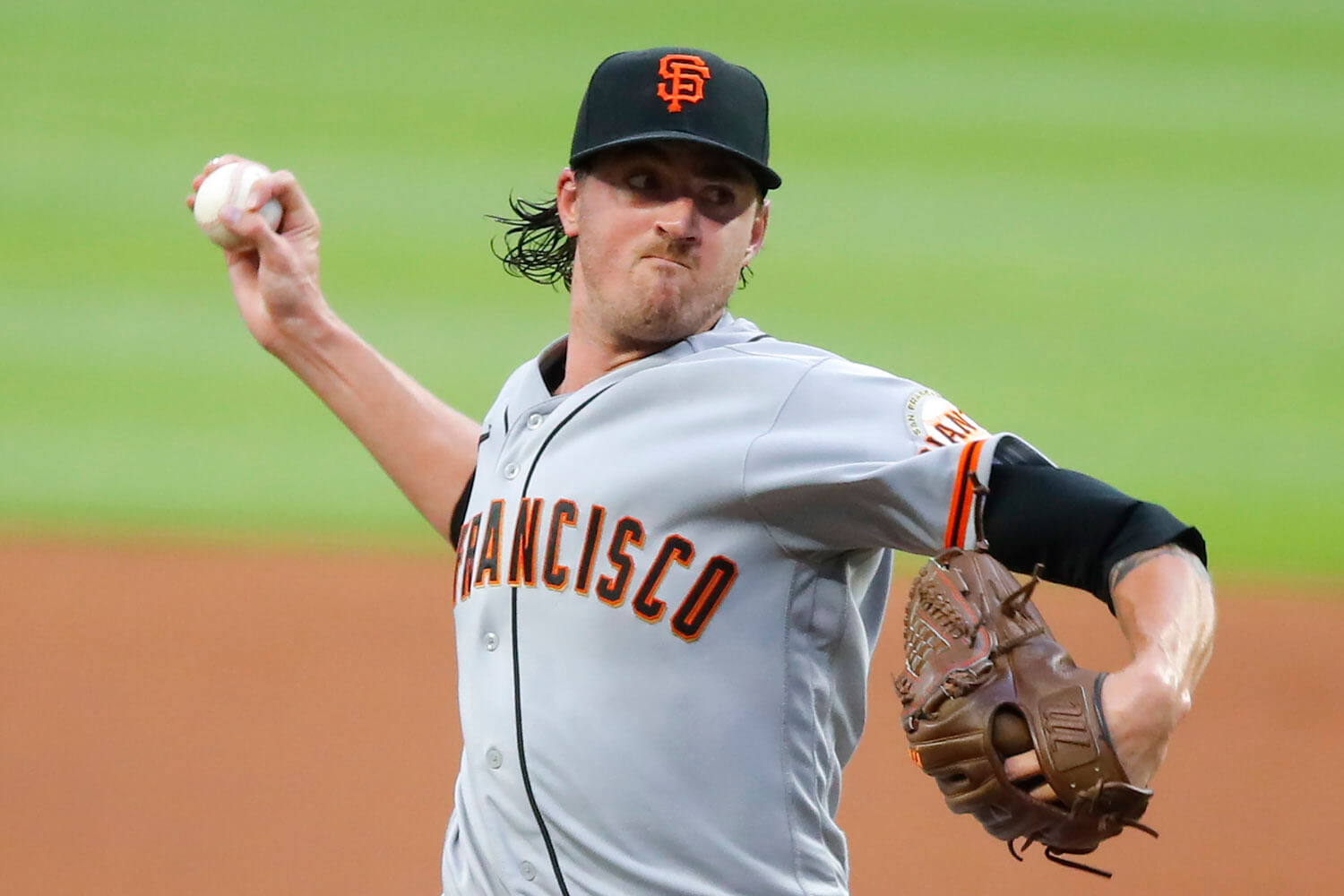
Kevin Gausman was a great value for the Giants on a one-year deal — twice. (Todd Kirkland / Getty Images)
Here are the pitchers who signed short-term deals with the Giants starting in 2020, as well as the ones who became free agents after a single season because of a player option:
2020: Gausman (1.3 WAR in a 60-game season)
2021: Gausman (5.2), Anthony DeSclafani (4.2), Alex Wood (1.7)
2022: Carlos Rodón (5.2), Alex Cobb (2.5)
2023: Sean Manaea (0.2), Ross Stripling (0.1)
2024: Blake Snell (2.1)
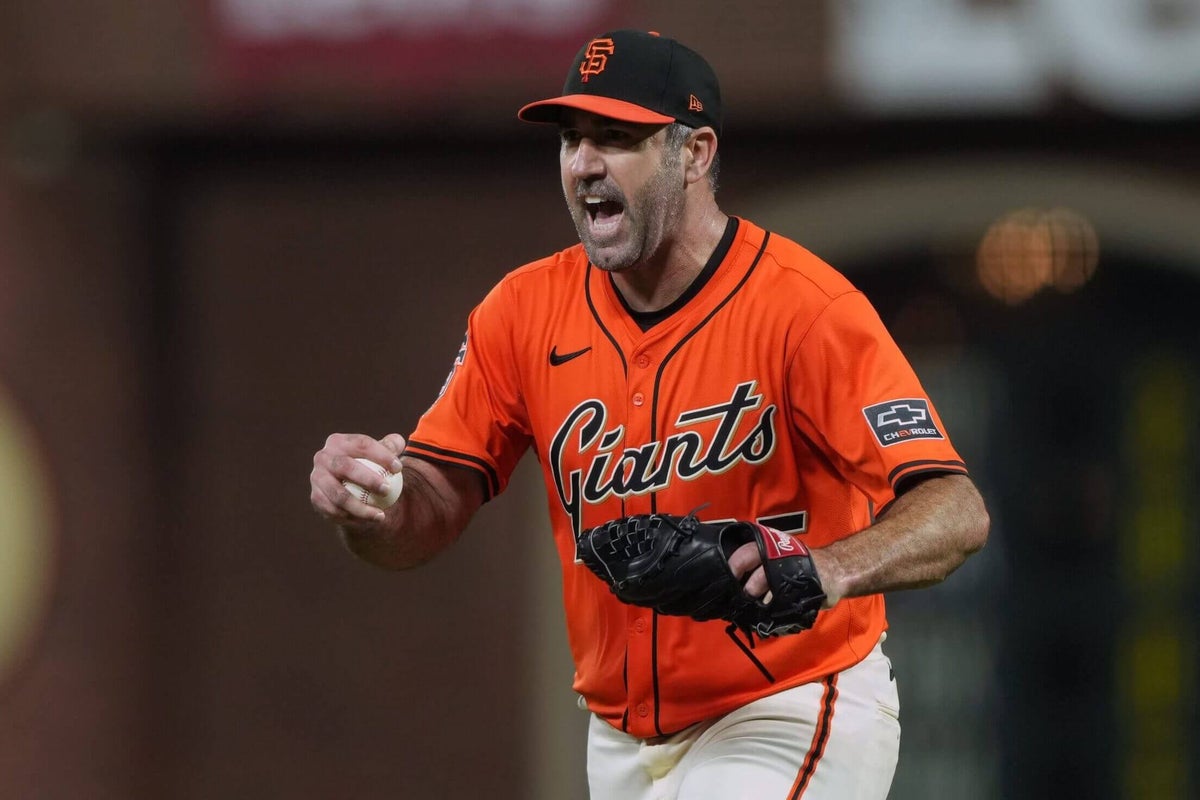
2025: Justin Verlander (1.2)
That was a rough offseason leading up to the 2023 season, but it was also an anomaly. In every other season, the Giants got at least the value they expected — and usually much more — in the first year of those deals.
Compare the value the Giants got out of their best one-year deals to riff raff and general flotsam with the value the teams got out of a bona fide ace signed before the 2020 season:
Best Giants 1-year
PHI/Wheeler
NYY/Cole
WAS/Strasburg
2020
1.3
2.8
2.2
-0.2
2021
5.2
7.5
5.7
0
2022
5.2
4.8
2.6
-0.3
2023
0.2
4.2
7.4
0
2024
2.1
6.1
1.9
0
2025
1.2
5
0
0
Total
15.2
30.4
19.8
-0.5
With the benefit of hindsight, the Philadelphia Phillies made the best decision by signing Zack Wheeler, and the Yankees have received great seasons from Gerrit Cole. But the Nationals got nothing but frustration and bittersweet nostalgia from their Stephen Strasburg extension. The Giants whiffed on 2023, alright, but they got to try again the following season. They’ll also get to try again this offseason, too, with the Phillies, New York Yankees and Washington Nationals getting between nothing and very little from their expensive current or former aces.
That’s just comparing the Giants’ best one-year signings to legitimate aces on long-term deals. The differences get even more stark when you get to the next tier of starting pitchers. Other pitchers who received multiyear deals before the 2020 season include Madison Bumgarner (Arizona Diamondbacks) and Hyun Jin Ryu (Blue Jays), both of whom flopped. This has been the tier of impending doom for the Giants, too, considering the Jordan Hicks signing and the extensions given to both DeSclafani and Wood after their initial one-year deals.
The lesson? When in doubt, sign the best starting pitchers in baseball, and don’t bother so much with the tweeners. If the best pitchers are unavailable, however, it’s better to sign the pitchers who want to become free agents again quickly. They have the physical talent to become very rich but need one more year to prove it. The Giants have been happy to help them, and it’s a plan that’s worked so far.
It’s a plan that has also worked out very well for pitchers like Gausman, Rodón and Snell. Oracle Park is perfect for the talented pitcher who wants shiny statistics to take into the offseason. It would be a minor surprise if it isn’t the agents who start some of these conversations. They know which ballparks make money for their clients.
Now that I’ve sold you on the idea, let’s talk about how this is the worst possible offseason for the Giants to repeat this strategy.
It all comes down to the collective bargaining agreement that expires after next season. There might not be a 2027 MLB season. This would reduce the value of a pitcher reestablishing his worth to charge back into the market. There needs to be a market to charge into. This is before you get to the part where these pitchers would be signing a one-year deal without knowing what the MLBPA has won or lost in negotiations. They’ll have no idea what kind of offseason to expect next winter, if there even is one at all.
This will impact some types of pitchers more than others. Consider the contracts Snell and Rodón signed with the Giants, which were longer-term deals that guarded against career-threatening injury, while also including a player opt-out if they pitched well. Both pitched well, and they combined for $300 million the following season. They were happy. The Giants were delighted. These are precisely the kinds of deals that shouldn’t be available this offseason, which limits the possibilities.
Dylan Cease might have taken a Snell-like deal, but now? Hard to imagine. He might want more of those years guaranteed, even if that costs him his last chance at another multiyear deal. The same goes for Michael King, Zac Gallen, Shota Imanaga, Lucas Giolito and others. These are the pitchers with the potential to get Cy Young votes in any given year, but who are available at Nordstrom Rack for a specific reason. These are the kinds of pitchers the Giants have been the best at nabbing, and they shouldn’t be as great a fit as they might have once been.
There are still pitchers who will work on a one-year deal, and you shouldn’t scoff at the category. That’s the one that Gausman was in, after all. These include the pitchers who were seriously injured and/or haven’t had a good season in years.
Brandon Woodruff is the example that comes to mind, although there’s a chance he can extract a multiyear deal from someone (he seems to be making that bet, having turned down a player option to stay in Milwaukee for next season). There are also the old-timers who wouldn’t have gotten a multiyear deal in the middle of a typical offseason. Verlander knows where the bathrooms at Oracle Park are, and Max Scherzer is apparently best buds with the new manager, so expect one of them to sign with the Giants.
There’s also a chance that I’m totally misreading the market. Shane Bieber and Jack Flaherty opted in to their one-year player options this year, which suggests that their agents are predicting a bear market. If salaries for starting pitchers drop so low that Bieber and Flaherty look smart, then none of this applies. Get whatever pitchers you want. Put some in the freezer for later.
The proper strategy is probably still to attack the top of the market, hoping to get a Wheeler or Max Fried-type pitcher to pair with Logan Webb, while also digging around the outlet store like normal. That’s the dream. Get a Tatsuya Imai to pair with this year’s version of Verlander, if not the actual Verlander. Get Framber Valdez to pair with the best available pitcher willing to sign a one-year deal. It’ll be a risk, but it wouldn’t be as risky as getting two mid-tier pitchers who would affect the payroll through 2028.
It would have been a lot better if the Giants could have had these holes in a typical offseason, though. They could have been aggressive with the top-shelf pitchers while waiting for the rest of the free agents to get impatient. They would have had a chance at two pitchers with Cy Young potential in the best-case scenario, even if one of them was always much more likely to reach that ceiling.
Instead, they’re almost assured a less exciting option, someone who might eat innings well enough, but won’t take them beyond that. Now imagine the offseason being a couple of those guys, and the Giants missing out on the top pitchers on the market.
Now imagine the worst scenario of all: The Giants signing two reasonably effective and semi-reliable pitchers to market-value multiyear deals. Brrr. The blood goes cold just thinking about it. Just say no to that middle tier.
There will still be pitchers who want to come to Oracle Park and reestablish value. Maybe some of them aren’t as worried about a future lockout. Perhaps some of them will misread the market and wait too long to sign. The Giants need pitching, and there’s still plenty of it.
There are more risks with this year’s crop, though. There are still many permutations and combinations that would work. There are just a lot fewer of them. You shouldn’t whine about how the world is unfair to the Giants, but it’s hard to concoct a hypothetical offseason that would have hosed them more than this expiring CBA will.
Their template is gone. In its place, there should be a whole lot more risk in future seasons.