
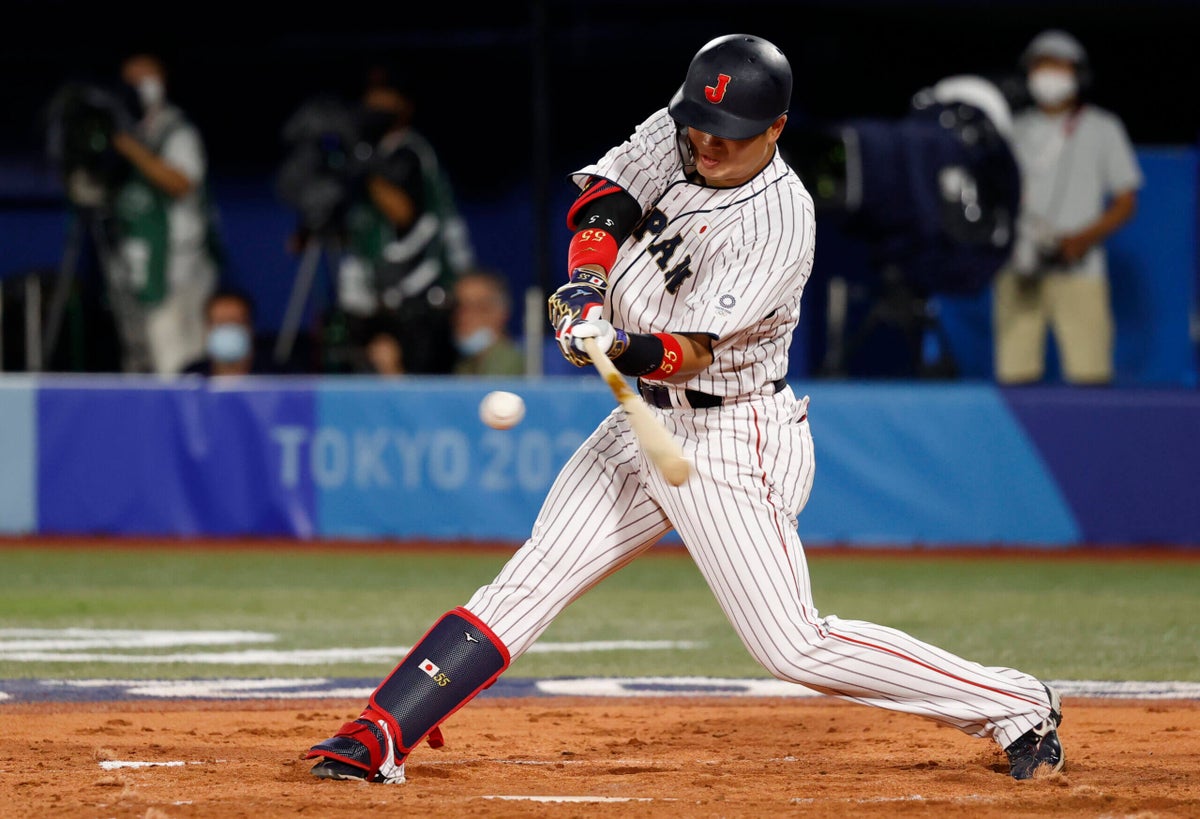
Kyle Tucker would be a curious way for the San Francisco Giants to spend their money. The soon-to-be 29-year-old is a fantastic player, a four-time All-Star and minor WAR deity, but he’s a left-handed hitter and has exactly the kind of profile that Oracle Park swallows up. He has average bat speed and average exit velocity. Baseball Savant has a tool that estimates how many home runs a player might have hit in every MLB ballpark, and it says that Tucker’s 22 home runs at Wrigley Field would have been 18 at Oracle, and that feels optimistic.
Should Tucker be the deepest, darkest fear for Giants fans this offseason? Oh, goodness, no. He would still be good for the Giants. Really good. Possibly even excellent for several seasons. He’s the kind of overall player who’s always going to add value, even if the unadjusted batting line isn’t pretty. It would be a huge risk, and it would have the potential to mess with the Giants’ payrolls deep, deep into the future. But at least there’s some cost certainty in the player.
There are other free agents for Giants fans to be scared of. In some of these cases, it’s not the player who’s the problem, necessarily. It might be a problem with the ballpark or a history of free agents at the position. Other teams might not fear them nearly as much, but the Giants should stay far away.
Here are three free agents who fit this description:
Munetaka Murakami, 3B/1B
The Giants aren’t likely to be that interested in signing a player who will probably be limited to first base, so don’t let this idea keep you up at night. But Murakami isn’t just any free agent. He doesn’t turn 26 until February, and he’s already hit 265 home runs in Nippon Professional Baseball. He had a 1.051 OPS last season in a league where the average player hit .242/.302/.350. You make accommodations for that sort of player.
What kind of accommodations? A 26-year-old with 40-homer potential is worth thinking goofy thoughts. If he’s the future of first base, that would allow the Giants to explore the very, very top of the trade market for players like Tarik Skubal, MacKenzie Gore or Joe Ryan. Or maybe they move Matt Chapman to shortstop and Willy Adames to second base. Or maybe they ask Rafael Devers to play second base. It’s not that hard. Tell ’em, Wash.
You get the idea. These kinds of players don’t come along often. Now that I’ve sold you on Murakami, here’s why he’s so much worse of an idea for the Giants than anyone else.
Yes, Oracle Park gets the bulk of the blame, although it’s at least possible that Murakami has the kind of power that would play there. He hit a ball harder in Japan last year than Pete Alonso, Nick Kurtz or Devers did in the majors this season, and it’s not like it’s impossible for a lefty to succeed at 24 Willie Mays Plaza. There was once a left-handed hitter who was so good at hitting home runs, that he personally obscured the ballpark’s true pitcher-friendly effect for years. It can happen.
The dealbreaker is Murakami’s strikeout rate, which has been between 28.1 and 29.5 percent over the last three NPB seasons. That would be a top-10 strikeout rate in the majors if you just copied and pasted the numbers straight from NPB, but there’s likely to be a learning curve on top of the 29-percent strikeout rate. There’s a chance that he’ll struggle, at least initially, without any guarantees that he’ll make enough contact to justify the mega-contract he’s likely to get.
And it would look so much worse at Oracle Park, at least on the surface.
Trent Grisham, CF
Grisham is a good player. Some of his seasons have been better than others, but he always gives his team some positive value. In five of his last six seasons, he’s been worth between 1.8 WAR and 3.5 WAR. That means he’s been between an average and above-average regular for years now. He’s just 29, too, so you’re still getting a couple of years of his prime.
Oracle Park is a problem, let’s get that out of the way. Teams will be paying for Grisham’s 34 home runs last year, at least in part. That goes down to 23 homers at Oracle Park in the Baseball Savant adjustment, which is probably selling the difference between Oracle Park and Yankee Stadium short. It was also an outlier season for Grisham, with his home run totals much likelier to be in single digits over his career.
Even if you buy the career year — his eye was impeccable, and he hit the snot out of the ball, so maybe it’s for real — the reasons the Giants would really want Grisham would be for his speed and defense in center. The problem is that there are all sorts of red flags in both departments. His defense was below average last year by almost every metric, and his sprint speed was in the 32nd percentile. It’s possible this was all just a blip.
It would be better for another team to find out, though. Getting serious Dave Roberts (the player) vibes over here. Plus, don’t forget that it was Grisham who hit a walk-off homer for the San Diego Padres at Oracle Park. Here’s a picture I took with my parents that day.
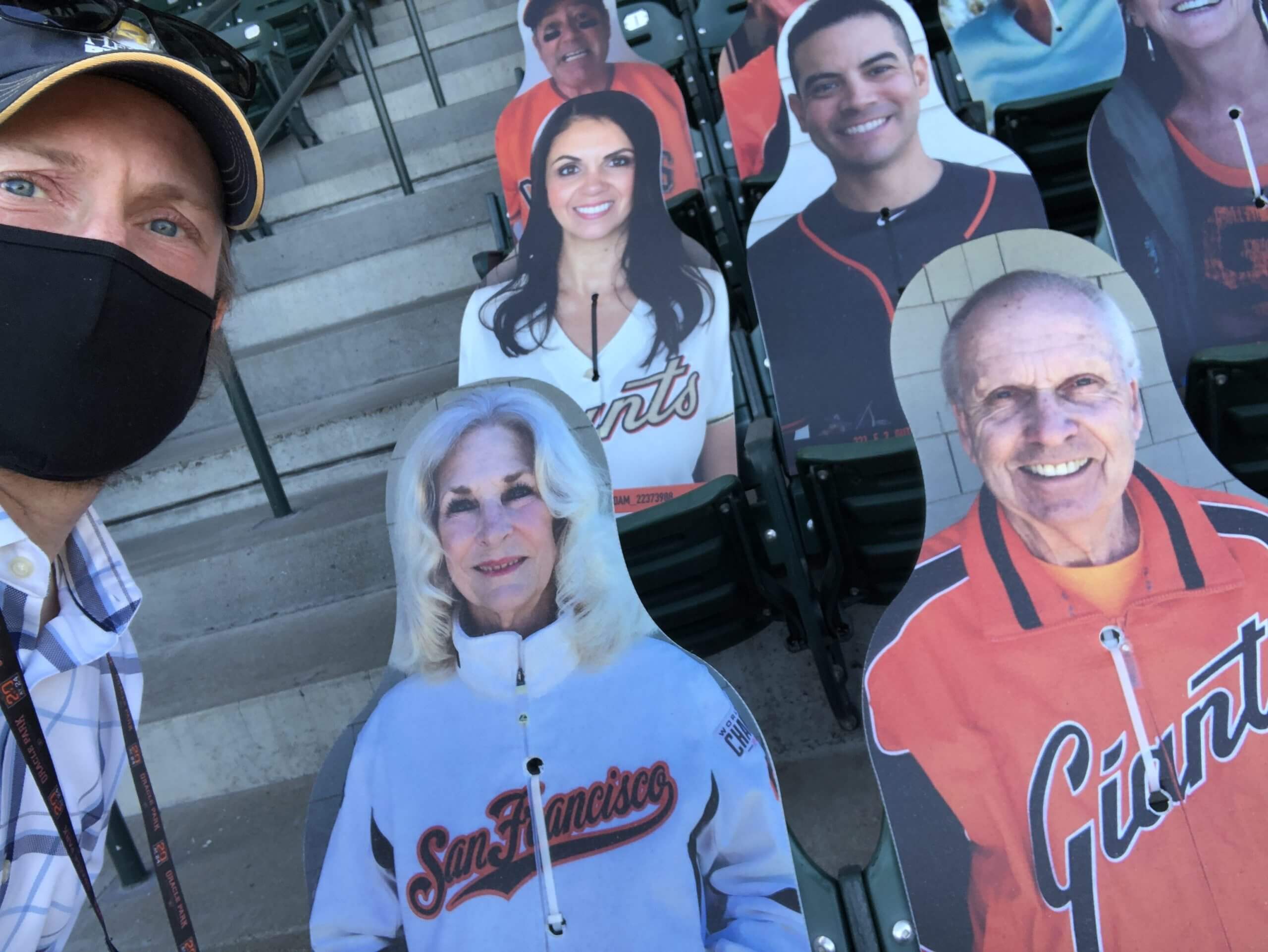
HI, MOM. HI, DAD. SEE YOU IN 2021 IF YOU’RE STILL ALIVE.
Grisham is a cursed baseball player, at least from the perspective of the Giants. No, thank you.
Literally any closer
Look at these contract projections from The Athletic’s Tim Britton. He has Edwin Díaz getting four years, $84 million and Robert Suarez at three years, $54 million. Even if you shop in the dents-‘n’-dings aisle of the closer store, you’re paying close to $20 million for someone like Raisel Iglesias and Devin Williams. In Andrew Baggarly’s last article, he slipped in a mention that the Giants are still paying Mark Melancon next season. And we’re all still paying for Armando Benítez every season, if you think about it. Those kinds of late-inning scars don’t heal.
Maybe the market drops out for these guys, along with others like Ryan Helsley, Michael Kopech and Emilio Pagán. Maybe the Giants get all three of them for the same price as one established closer on the open market.
Maybe. But I’d be surprised if the Giants gave a reliever an eight-figure contract this offseason, even though their entire bullpen has open postings on Indeed. The Giants have been much better over the years at finding homegrown closers from within the system. That’s because that strategy works much, much more reliably than spending big money on established relievers.
Here’s an anecdote about how mercurial relievers can be. While you can purchase Baseball Superstars 2026 at your local Scholastic Book Fair right now, the actual text of the book was submitted in early 2024. When I wrote it, Díaz was so bad that I took him out and replaced him with Emmanuel Clase. It seemed like a good bet at the time. My book editor was a die-hard New York Mets fan, and he told me that he completely understood the decision.
Never pay for closers. They’ll get hurt or become ineffective or … do whatever in the heck Clase might have done. But mostly the hurt and ineffective parts. They’re relievers. They keep like freshly caught fish. If the Giants are going to spend, spend, spend, then they might as well pick a couple up. But if they’re on a self-imposed budget, forget it. It would be easier (and cheaper) to fix any oversights at the trade deadline. Spend that money on the rotation.