
The Chicago Cubs ended their 2025 campaign with a game started by Drew Pomeranz. There was a time (before the Covid-19 pandemic) when that sentence wouldn’t have seemed crazy, but that was also the last time that it wouldn’t have. Since then, Pomeranz has transitioned from a starting pitcher to strictly a two-pitch reliever. Shota Imanaga, who was on regular rest, spent the entire game in the bullpen.
There are many reasons the Cubs didn’t win the World Series in 2025, but their loss in Game 5 was truly a microcosm of what was wrong with the roster. They were one pitcher short, relying too much on a bullpen to hide the deficiencies of their rotation.. Jed Hoyer, in his end-of-year press conference, essentially admitted as much, speaking of how difficult it was for the team to make the additions they wished they could at the deadline. This will have change as the team looks to build on their 92-win season in 2026.
Luckily for the Cubs, there are many options on the market. If they would like to attack the free-agent class, top-line arms such as Framber Valdez, Dylan Cease and Ranger Suárez are all available to be signed while surrendering draft-pick compensation. If they don’t love any of these options, they could look to the trade market, hoping that the prices on Joe Ryan, MacKenzie Gore or Edward Cabrera have come down. Instead, though, the Cubs may look to a place they have looked multiple times in the last few seasons: across the Pacific Ocean, to Japan.
Enter: Tatsuya Imai, a 27-year-old right-handed pitcher from Japan’s top flight, Nippon Professional Baseball. Imai’s club, the Seibu Lions, have confirmed their intentions to allow the pitcher to come to America this offseason. His agent, Scott Boras, said Wednesday that the hurler will officially be posted on November 19, which is next Wednesday. Imai is likely to have plenty of suitors, and his contract is expected to rival those in the top tier of free agency, with The Athletic predicting he will earn north of $140 million. The Cubs have not been a team we associate with big-time free-agent contracts in recent years, but I think the righty may be the type of player the Cubs will be willing to break the bank on.
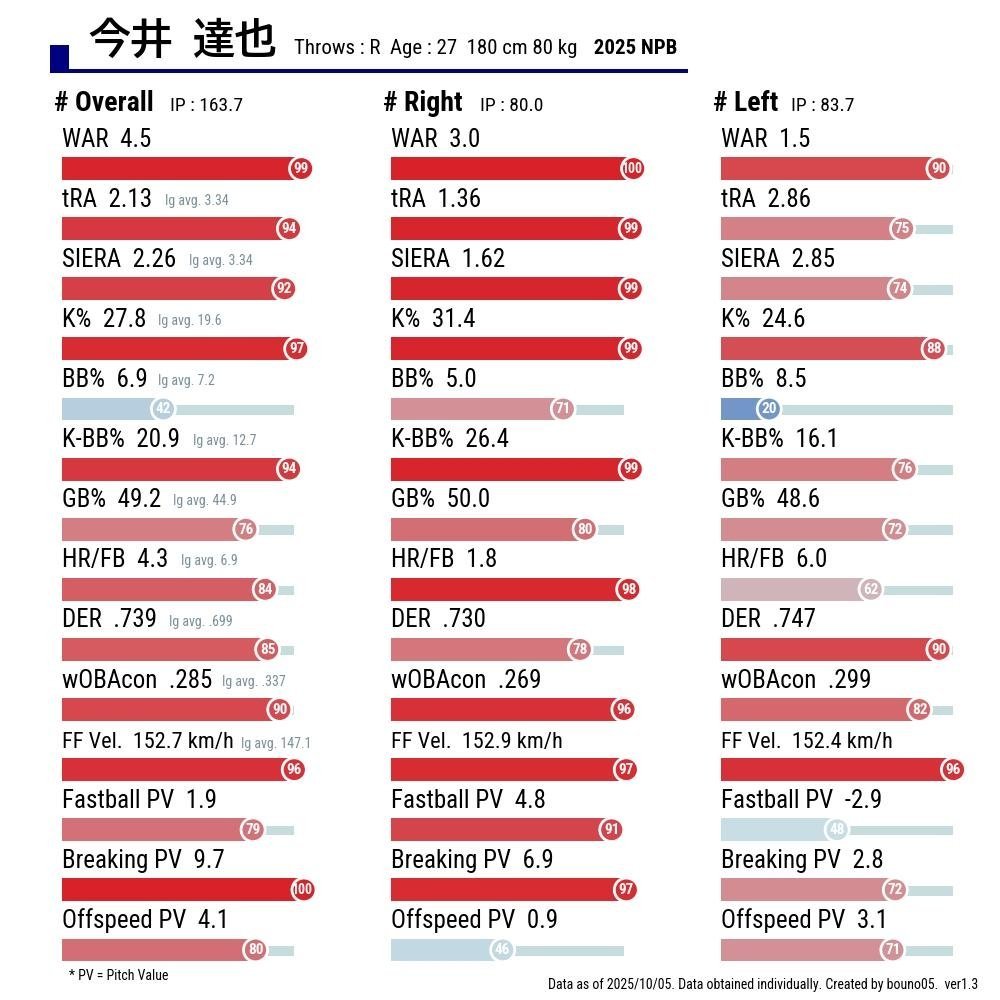
To understand why the Cubs may target Imai, we need to first understand what the Cubs rotation lacks: strikeouts. In terms of ERA, the Cubs finished in the top 10, but they were 23rd in strikeout rate. Chicago’s defense is excellent, but adding more swing-and-miss would give the team’s run prevention a needed boost, and the Japanese star would certainly do that. He struck out 27.8% of all hitters and over 31% of righties in 2025. Ben Brown is the only Cub who made more than five starts with the team and struck out even 25% of opposing hitters.
There is a caveat. Imai’s fastball isn’t going to be nearly as special in terms of velocity when he comes over. However, I don’t think this will scare off the Cubs.
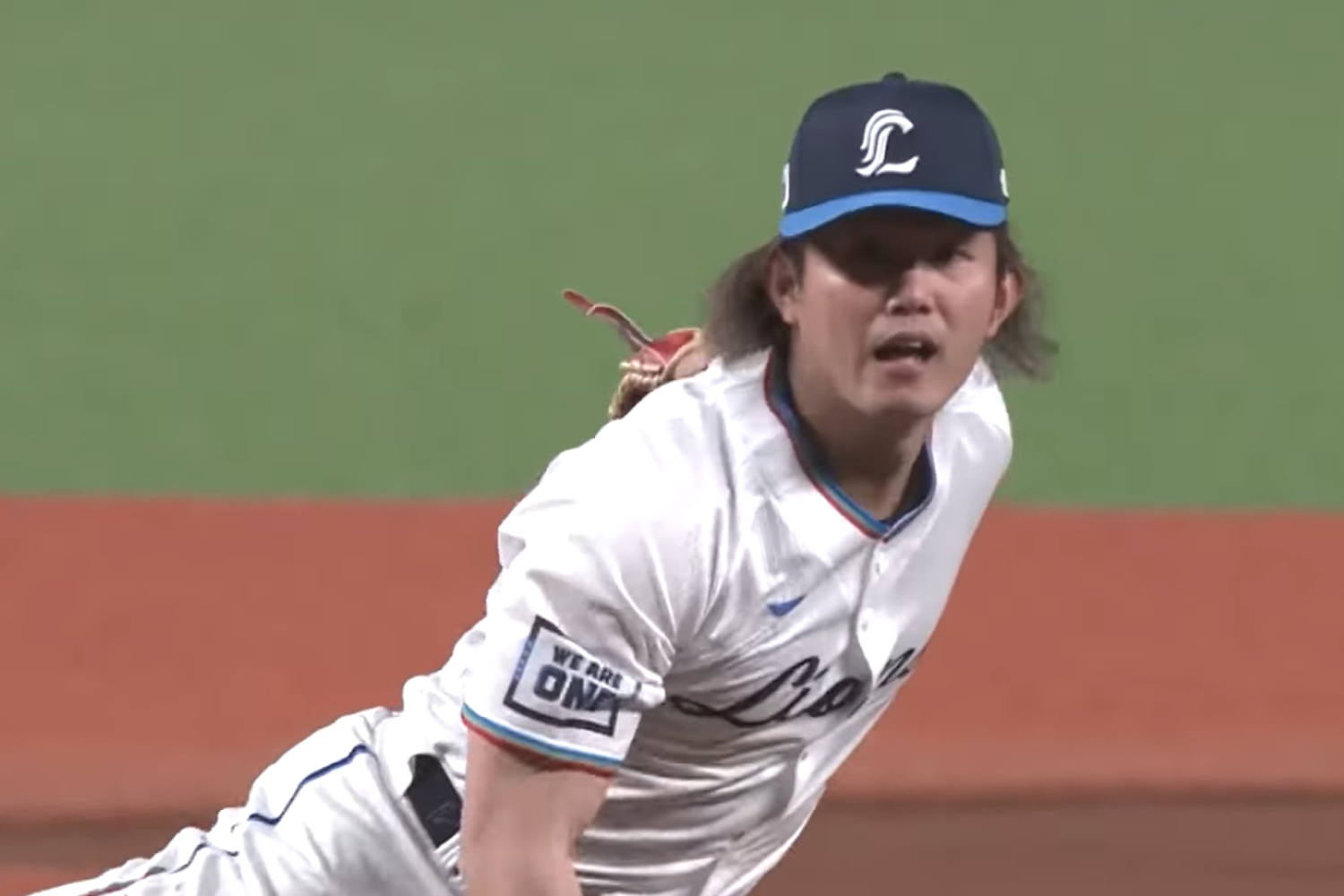
To put it in context, in NPB, Imai had the second-fastest fastball in the league, clocking in around the 95-mph mark and touching 99 on occasion. When he comes over, though, his fastball will be around average for a right-handed starter in Major League Baseball, which was 94.6 mph last year. The good news for Imai is that his arm angle is funky, which should allow him to create deception. While NPB does not make arm angle public on their tracking site, it’s likely that his angle will put him around the flattest in baseball. Compare the above video of Imai to the below video of Seattle Mariners’ starter Bryan Woo. Woo clocks in around a 23° arm angle, the 12th-flattest of any starter in 2025. I expect Imai to be in that range.
Uk8yeU5fWGw0TUFRPT1fVUFVSFZGUUhYd2NBWEFSVUFBQUhBVkFFQUZrRFUxa0FVRlVNVWxJRlV3b0RVVkZR.mp4
While I hesitate to compare the two directly in terms of fastball value, Woo’s fastball sat at 95.6 mph last year. And while the shape of Woo’s fastball is good, grading out on FanGraphs’s Stuff+ as a 105, on shape and velocity alone, it falls short of elite. Despite that, Woo’s fastball performs among the best in the league. It’s pretty well-known that the Cubs, who threw the most four-seam fastballs of any team in 2025, value the pitch highly.
While we shouldn’t expect Imai to duplicate Woo’s success with the four-seam fastball, it also wouldn’t be surprising to see the Cubs attempt to use Woo as a template for what can be done. The Cubs have managed to squeeze extra velocity out of a few arms in their system over the years, and when you add year two of Tyler Zombro and everything Tread Athletics can do, it gives the Cubs a strong foundation to help get the most out of him. Imai may never dominate on velocity alone, but I think there’s potential for the pitch with a good fastball organization, like the Cubs.
Imai’s most unique offering is his “slider”. I’m going to be careful what I call it, though. It’s not really a slider, at least in the traditional sense, because Imai throws his with arm-side run. This effectively makes it a “reverse” breaking ball, or screwball, running toward a right-handed batter instead of away from them (as most righties’ sliders do). I suspect that Stuff+ models will hate the pitch, but the results in Japan were stunning. The slider generated a 45.9% swing-and-miss rate, which would have placed it in the top 10 in whiff rate in MLB. It’s fair to wonder how the pitch will play against American big-league hitters due to its unique nature, but if there’s one thing I’m confident about, it’s that the Cubs aren’t afraid of a funky pitch.
Due to his slider-fastball combination, Imai has been absolutely deadly against right handed hitters. On the surface, this makes sense; both of these pitches play up against like-handed hitters before we factor in the funk factor of his delivery or slider profile. Beyond that, it would appear as though he added a sinker to his repertoire late in the season—yet another pitch that will help him navigate the best righty batters in the world. It’s great to have all of these offerings, but there’s a drawback; none of these pitches are great against left-handed hitters, and this has been a general Achilles heel for him over his career in NPB.
One of the hallmarks of the Cubs pitching staff in 2025 was their on-the-fly development of changeups, a pitch often used to attack opposite-handed hitters. Both Cade Horton and Jameson Taillon, who badly needed an extra offering, developed very strong kick-changes before or during the 2025 season. It wouldn’t appear as though Imai would be a direct candidate for the kick-change like the other two, as he tends to be more of a pronator to begin with. (The kick-change, which involves using the placement of the middle finger to “kick” the spin axis sideways as the ball comes off the fingers, has usually been a tool employed by pitchers who tend to supinate and specialize in glove-side movement.) Despite that, an organization who can continue to get the best ot his changeup is likely the organization willing to spend big on the pitcher to begin with.
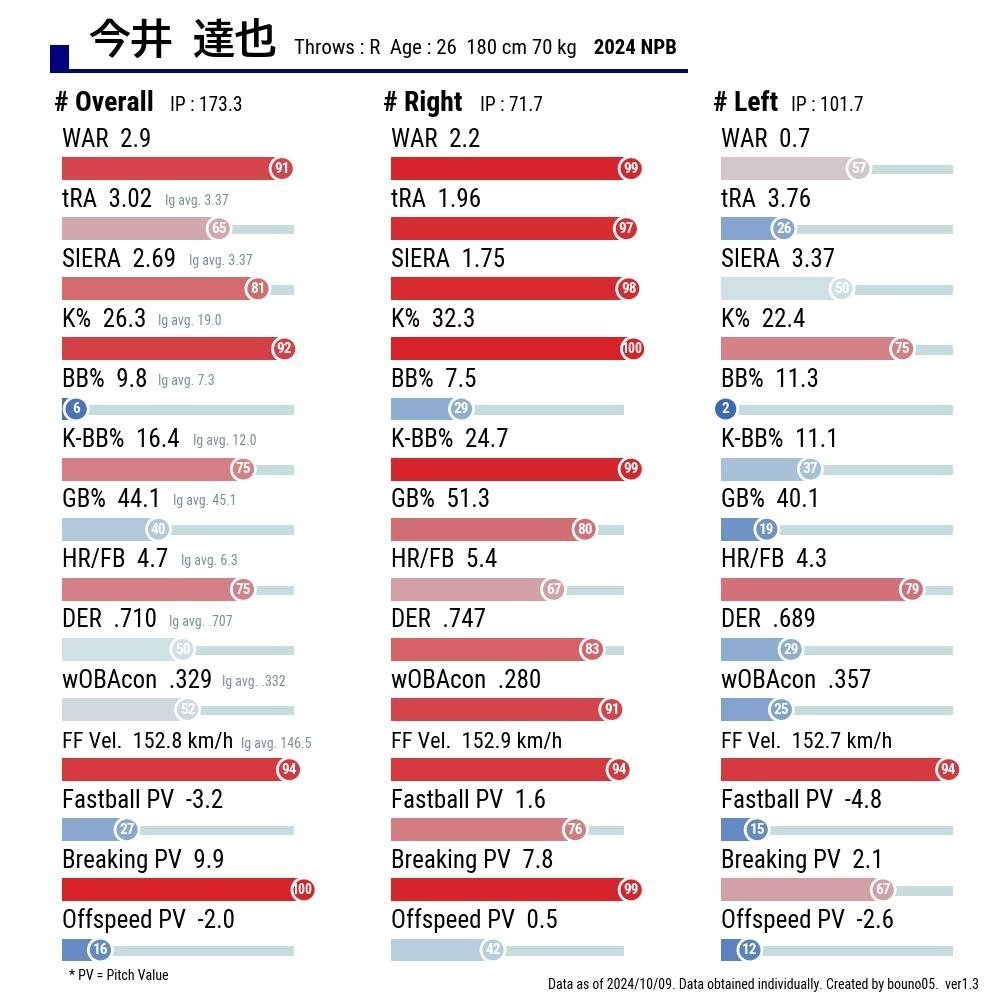
Before 2025, Imai had terrible walk issues with lefties, specifically, walking 11% of them in 2024. He developed a better changeup in 2025, which dropped his walk rate against lefties to 8.5% and allowed him to make major strides in terms of run prevention against them. The Cubs, an organization that excels at teaching the changeup, would continue to work with the pitcher to solve this issue. It’s likely that this isn’t entirely behind him, as the step up in competition will push him to his limits.
I don’t think that the overall package that Imai has today puts him in the same tier as Yoshinobu Yamamoto was when he came over from NPB two offseasons ago; I don’t think anyone does. Even the priciest predictions have Imai making around half of the $325 million that Yamamoto got from the Dodgers. But he’s also a clear step above what Shota Imanaga was when the Cubs signed him, and he’s proven capable of being somewhere between a second starter and a fourth-best option. I wouldn’t expect Imai to headline a rotation, but I do think there’s more than enough clay to mold a front-line option. There are probably going to be some tweaks. Imai’s fastball location leaves something to be desired; the changeup is just starting out and likely needs refinement; and it will take a good organization to best use Imai’s funky reverse slider. Still, I think he fits into how the Cubs view pitchers. They love four-seam fastballs, lower arm slots, changeups and funk.
Imai fits Chicago in other ways, too. The Cubs have been active in scouting Japanese players under Hoyer. They have signed both Seiya Suzuki and Imanaga. They have been major players, regardless of outcome, when it comes to Shohei Ohtani and Roki Sasaki. They have even reportedly offered a contract to 22-year-old, undrafted NPB outfielder Kotaru Tsunematsu (though we are unsure if he’s accepted as of writing this article, and he seems as likely to become a force in their front office someday as to blossom on the field).
He’s also the right age for this kind of investment. Pitchers rarely hit the market at the age of 27. While the Cubs have shied away from big contracts, their two biggest signings of the last decade were offered to 26-year-old Jason Heyward and 29-year-old Dansby Swanson. Pitchers are aging better than hitters lately, too.
Will Imai end up in Chicago? It’s no sure thing. The New York Mets are interested, and have recently signed Kodai Senga. The New York Yankees are always a premium destination and are looking for pitchers. There will be plenty of competition. But I also feel like this is a unique situation in which the pitcher’s style aligns with much of what the Cubs like. Coming over from Japan, there is no draft-pick compensation attached, which is likely a factor for the Cubs. Taking all these factors in conjunction, I think the Cubs are going to put him very high on their offseason list. If the Cubs are going to spend $150 million on a player, Imai is probably the type they are willing to look at.