
My mother was a gambler. A good one.
She was a card counter who, were she a bigger bettor, would have been banned from playing in any Las Vegas casino.
Over the years I played, conservatively, 1,500 games of gin rummy with my mom. I won three. Not only would she beat me, she would then recite what cards were in my hand that I had horribly misplayed.
My friends loved my mom. They would all come over after school to play poker with her. And my mom would promptly beat them out of all their allowance money. But they loved her brownies, and they kept coming back.
That’s the problem with gamblers. They just keep on coming back.
And if you combine the urge to take a chance with being flat out stupid, what you have is the living, breathing, essence of that pitiable character: The Loser.
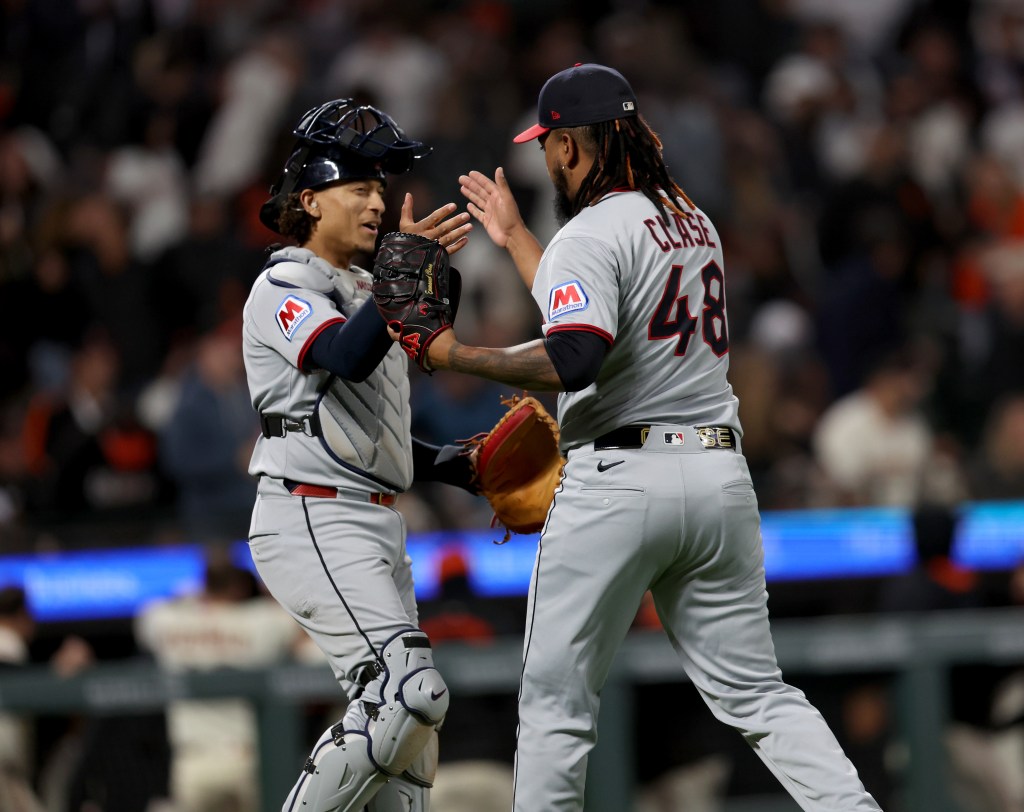
Ladies and gentlemen, I give you Emmanuel Clase and Luis Ortiz.
Here are two guys who achieved what every 10-year-old kid who’s ever tied a new glove around a baseball dreams about: Playing in the major leagues.
Clase is a 5-year relief pitcher for the Cleveland Guardians, and he’s been successful. In his career he has a combined ERA of 2.78 and boasts a 5:1 strikeout to walk ratio. For that he earns a salary that pays him a cool $6.4-million a year.
Ortiz has been in the big leagues for 4 years and has had moderate success as a relief pitcher with the Guardians. He gets paid a meager $800,000 annually — or roughly 55 times the average yearly salary in his native Dominican Republic.
So, help me out with this logic, Clase allegedly gets a call from some friends saying that they’ve got a way to make some easy money. Now, I’m rather of the belief that his response would more likely have been something like, “I think I’m already doing that pal.”
But no! This scenario has Clase responding with something like, “Hmmm, tell me more.” To which said friend theoretically responded, “Look, all you have to do is throw a couple of pitches outside the strike zone at a given time, I collect prop bet money and I’ll slip an envelope with $5k in it for you. Or if you’d like, give me $40k or $50k and I’ll get you in on the action.”
This apparently seemed like an easy money proposition. After all $6.4 million just doesn’t go as far as it used to, so why not pick up a little harmless pocket change? In fact, I’m going to call Ortiz and see if he’s willing to throw a couple of pitches in the dirt for a piece of the action. And he needs the money. He’s only raking in a lousy $800k every season.
So, Clase and Ortiz are allegedly told to throw a few pitches outside of the strike zone at a predetermined time, their pals have made a perfectly legal wager on a prop bet that says the next pitch will be a ball, they cash the ticket, toss a few dinero into the wallets of the two pitchers, and celebrate with a shot of Don Julio Anejo.
Clase and Ortiz, meanwhile, have enough pocket change that they no longer have to order off the kid’s menu at McDonald’s and can be comfortable that their little indiscretion didn’t cost their team the game. Life was good.
Until the FBI knocked on their door, slapped a bracelet on their wrists that was not up to the gold standard they’d come to expect, and charged them with allegedly rigging pitches in professional baseball games so that an inner circle, and occasionally themselves, could quietly cash out their winnings.
If given the maximum sentence allowed for being found guilty of their indiscretions, they could be in their 80s when released from prison. And, I’m quite sure the salary of a convicted felon falls somewhat short of their MLB paychecks.
In the process, I think Major League Baseball and, in fact, all professional sports needs to take a good hard look in the mirror and come to grips with what they’ve created.
Anything remotely connected to gambling was verboten in professional sports for decades. For the first 40 years of my broadcasting career I was not allowed to so much as give a point spread on the air. Any reference to gambling in the slightest was cause for suspension or firing.
But with the advent of Fantasy sports and on-line availability of wagering, the suits who run professional sports realized they had a cash cow the size of Godzilla right in their midst.
Now network broadcasts feature a segment within a game broadcast that discusses the line, over/under’s, and prop bets that we the viewer can actually participate in during the broadcast.
It is the prop bet and more recently the “microbet,” that has opened the door for cases like the one in which Clase and Ortiz are currently embroiled.
When betting only involved the outcome of the game it was easier to discover by those who control the gaming industry. But the prop bet is much harder to detect because it does not affect the outcome of the game. The “microbet,” which is what brought down Clase and Ortiz is even more difficult because it can be a single pitch in the context of an entire game.
This is the biggest gambling story in baseball since the Black Sox Scandal in 1919. And it’s not exclusive to our National Pastime. The NBA is dealing with a gambling issue of its own. It’s happened in the Australian Rugby League and on the Pakistani cricket team.
Clase and Ortiz I’m sure just thought of being a part of a scam as “no harm, no foul.” They were obviously wrong.
The sport itself in the meantime, might have made a deal with the devil. And has to deal with it before it goes to hell.
Barry Tompkins is a 40-year network television sportscaster and a San Francisco native. Email him at barrytompkins1@gmail.com.