
Trading their top five relievers in a deadline fire sale gutted the Minnesota Twins’ bullpen, taking what had been a relative strength and turning it into a glaring weakness. Twins relievers collectively had the American League’s worst ERA after the trade deadline, and the 2026 outlook is similarly bleak.
As the offseason begins, the Twins have a severe shortage of MLB-caliber relievers, let alone late-inning options. Cole Sands, Kody Funderburk and Justin Topa — middle relievers who combined for a 4.06 ERA in 2025 — sit atop the bullpen depth chart. By comparison, the rotation is way sturdier.
If the Twins have any notion of fielding a competitive team, major bullpen help is required. The good news? Competent veteran relievers tend not to cost a premium in free agency, where the pool is always very deep. The bad news? That won’t matter if the Twins aren’t willing to spend anything.
Twins president Derek Falvey has dodged payroll questions by saying he’s still waiting for ownership to provide clarity. That’s odd in mid-November, especially considering the current payroll is below $90 million after being in the $135 million range for 2024 and 2025 (and $160 million in 2023).
If the payroll isn’t going to drop further, why not say so? And if it is going to drop further, the front office will be shopping in the bargain bin, again, after spending a grand total of just $18 million on free agents in the previous two offseasons, including no more than one year or $6.25 million for any pickup.
I’ll put myself in the front office and choose 12 free-agent fits for the Twins’ bullpen who aren’t ranked among The Athletic’s top 40 free agents. In other words, no one expected to command long-term deals or even huge one-year contracts. I’m picking through the clearance rack, just like the front office.
Let’s try to find some bargains for the Twins’ bullpen after doing the same exercise for the lineup in a separate article.
Kenley Jansen, RHP (Angels)
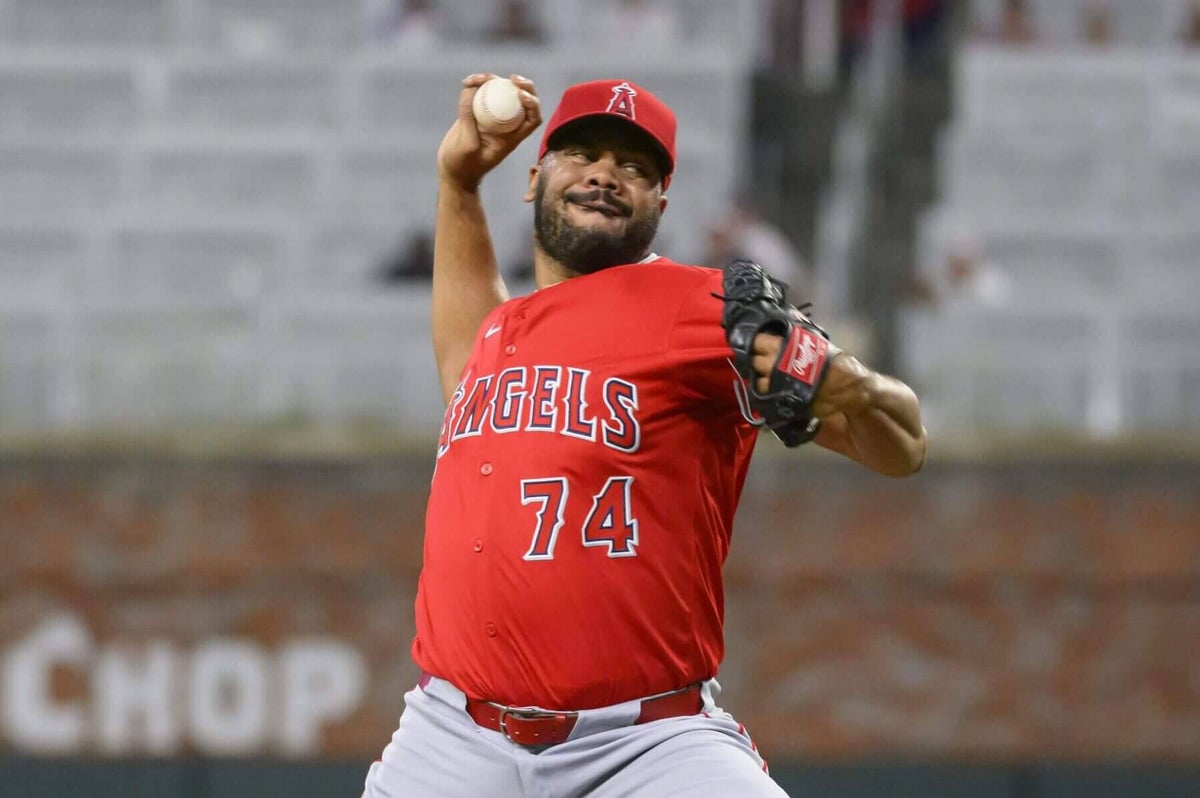
Jansen is 24 saves from joining Hall of Famers Mariano Rivera and Trevor Hoffman in the 500 club, and the 38-year-old might have to sign with a non-contending team to get them. It’s what Jansen did last winter, signing with the Los Angeles Angels for $10 million and saving 29 games with a 2.59 ERA.
While no longer the dominant force he was with the Los Angeles Dodgers for more than a decade, Jansen’s career-making cutter is still one of MLB’s most effective pitches. He’s posted a sub-3.75 ERA with a positive Win Probability Added in all 16 seasons in the majors, and opponents hit just .175 off him in 2025.
Career save No. 450 for Kenley Jansen!
(MLB x @BudweiserUSA) pic.twitter.com/jupTKEQOv1
— MLB (@MLB) April 9, 2025
Raisel Iglesias, RHP (Braves)
Iglesias is fourth among active pitchers with 253 saves, and he’s posted an ERA below 3.25 in all but one of his 10 seasons as a reliever, yet he’s never been an All-Star and is rarely mentioned as a top closer. At 35 years old, and after dips in velocity and strikeouts, he could be in the Twins’ price range.
Even with lesser raw stuff last season, Iglesias still averaged 94.8 mph with his fastball and struck out 73 against 16 walks in 67 1/3 innings. And he was excellent in August and September, allowing one run in 23 2/3 innings. Older fly-ball pitchers are risky bets, but he’d be a good placeholder closer.
Tyler Rogers, RHP (Mets)
Rogers, the twin brother of ex-Twins closer Taylor Rogers, is MLB’s softest-tossing pitcher with a fastball that averaged 83.5 mph last season. And he’s also been one of MLB’s best relievers, logging 424 innings with a 2.76 ERA since debuting in 2019 at 28, including a 1.98 ERA in 2025.
Like the bizarro version of his southpaw sibling, Tyler Rogers is a rubber-armed, submarine-style right-hander who gets batters to pound his sinker into the ground and baffles them with a “rising” mid-70s slider. If he threw 93 mph, he’d be way out of the Twins’ price range, but at 83 mph … maybe.
Tyler Rogers, 3Ks in the 8th. pic.twitter.com/ARlrOBqM6g
— Rob Friedman (@PitchingNinja) April 24, 2025
Taylor Rogers, LHP (Cubs)
Rogers had a couple shaky years after being traded by the Twins on the eve of Opening Day 2022, but he settled back in with a 2.85 ERA during the past two seasons. Once an All-Star closer, now he’s become more of a secondary setup man at age 34, losing three mph from his peak velocity for the Twins.
With the Twins’ bullpen in need of a No. 1 lefty and Rogers perhaps looking for a familiar place to wind down his career, a one-year contract could be a fit for both sides. Or maybe the Twins can convince the Rogers brothers to come to Minnesota as a package deal.
Kyle Finnegan, RHP (Tigers)
Finnegan has lots of closing experience, totaling 108 saves and one All-Star selection for the Washington Nationals from 2020 to mid-2025, and he pitched very well as a setup man after a deadline trade to the Detroit Tigers. He’s ridden a 96-98 mph fastball and increasingly strong splitter to a career 3.55 ERA.
Despite that consistent success, Finnegan found a lukewarm market as a free agent last offseason, eventually re-signing with the Nationals for just $6 million during spring training. It may be a similar story again, because Finnegan is 34 and his middling strikeout rates don’t scream closer.
Emilio Pagán, RHP (Reds)
Just kidding. (Pagán was good last season as the Cincinnati Reds’ closer, though.)
Pierce Johnson, RHP (Braves)
Johnson had a 2.91 ERA and 158 strikeouts in 139 innings over 2 1/2 seasons with the Atlanta Braves, but they declined his $7 million option after the 34-year-old struggled in September. His velocity and strikeout rate were down a bit, but Johnson posted a 2.15 ERA in 50 1/3 innings through the end of August.
At his best, Johnson uses a mid-90s fastball just enough to keep opponents from focusing entirely on his go-to curveball, which he’s thrown 60 percent of the time for his career and 72 percent the past two seasons. It’s a simple, effective recipe, and Johnson will presumably cost less than $7 million.
Pierce Johnson Hammers. ⚒️ pic.twitter.com/CCNk1WPYSr
— Rob Friedman (@PitchingNinja) March 29, 2024
Gregory Soto, LHP (Mets)
Soto is one of MLB’s hardest-throwing left-handers, averaging 97 mph with his sinker in 2025, and his high-80s slider is a swing-and-miss pitch against lefties and righties. But poor control has kept his results from matching his raw stuff, with an ERA above 4.00 in three straight seasons.
Walks are painful to live with in a high-leverage role, but there aren’t going to be many power lefties with late-inning experience in this price range. He rarely allows homers and has 200 strikeouts in 173 2/3 innings over the past three seasons, so even slightly better control could lead to big things.
Phil Maton, RHP (Rangers)
Maton is the definition of a journeyman at age 32, pitching for seven teams in the past seven seasons. He’s also coming off his best season, adding two mph to his cutter on the way to a 2.79 ERA with 81 strikeouts and just three homers allowed in 61 1/3 innings.
Even after adding velocity, Maton is still one of the softest-tossing relievers, but his low-90s cutter misses bats and limits hard contact, and his curveball racks up whiffs. He’s a reliable setup man, and low-end velocity will keep his price down. He signed for just $2 million in mid-March last offseason.
Danny Coulombe, LHP (Rangers)
Coulombe was an ideal bargain-bin find last winter, returning for a second Twins stint on a one-year, $3 million deal and giving them 31 innings with a 1.16 ERA before being traded at the deadline. He was effective versus lefties and righties, and adept at rescuing other pitchers from mid-inning jams.
Coulombe will be inexpensive again, because he mostly struggled with the Texas Rangers down the stretch and the market for a soft-tossing, oft-injured 36-year-old is always tepid. Maybe the front office’s goal should be to find the next Coulombe, but the current version could still get the job done cheaply.
DANNY COULOMBE GETS OUT OF THE JAM HOLY MOLY pic.twitter.com/LqYTZlhtbw
— Rangers Nation ⚾️ (@Rangers__Nation) August 2, 2025
Shawn Armstrong, RHP (Rangers)
Armstrong is a 35-year-old nomad, pitching for eight teams without making more than $2 million in a season, yet he has a 3.82 ERA with 434 strikeouts in 421 1/3 career innings. He leaned into a revamped sweeper last season, posting a 2.31 ERA and 74-to-20 strikeout-to-walk ratio in 74 innings.
Adding a new wrinkle to his three fastball variants unlocked another level of upside. Opponents batted .155 against Armstrong, fifth-lowest in MLB behind Aroldis Chapman, Mason Miller, Josh Hader and Matt Svanson. Armstrong is a solid setup man and unlikely to be in huge demand.
Caleb Ferguson, LHP (Mariners)
Ferguson’s strikeout rate plummeted to a career-low 7.0 per nine innings in 2025, a result of swapping four-seam fastballs for sinkers in search of softer contact. And it mostly worked, as he posted a 3.58 ERA thanks to a ground-ball rate of 50 percent and just two homers allowed in 65 1/3 innings.
What makes Ferguson intriguing is that he previously missed a lot of bats, totaling 314 strikeouts in 261 2/3 innings from 2018-24. And he has a career 3.66 ERA, so he’s simply been a solid lefty, regardless of approach. Finding more of a blend that combines strikeouts and grounders would be ideal.
Caleb Thielbar, LHP (Cubs)
Why not? After two stints totaling eight years in a Twins uniform, Thielbar left as a free agent last offseason. He was 37, and coming off a career-worst 5.32 ERA, so the market was limited. Thielbar inked a one-year, $2.5 million deal with the Chicago Cubs and bounced back with a 2.64 ERA in 58 innings.
Thielbar is a Minnesota native, so finishing his career back home would be appealing. He also fared really well for the Cubs, shutting down lefties (.161 AVG) and righties (.205 AVG). Also, no left-handed reliever in Twins history has made more appearances (347) with a lower ERA (3.38) than Thielbar.