
1944
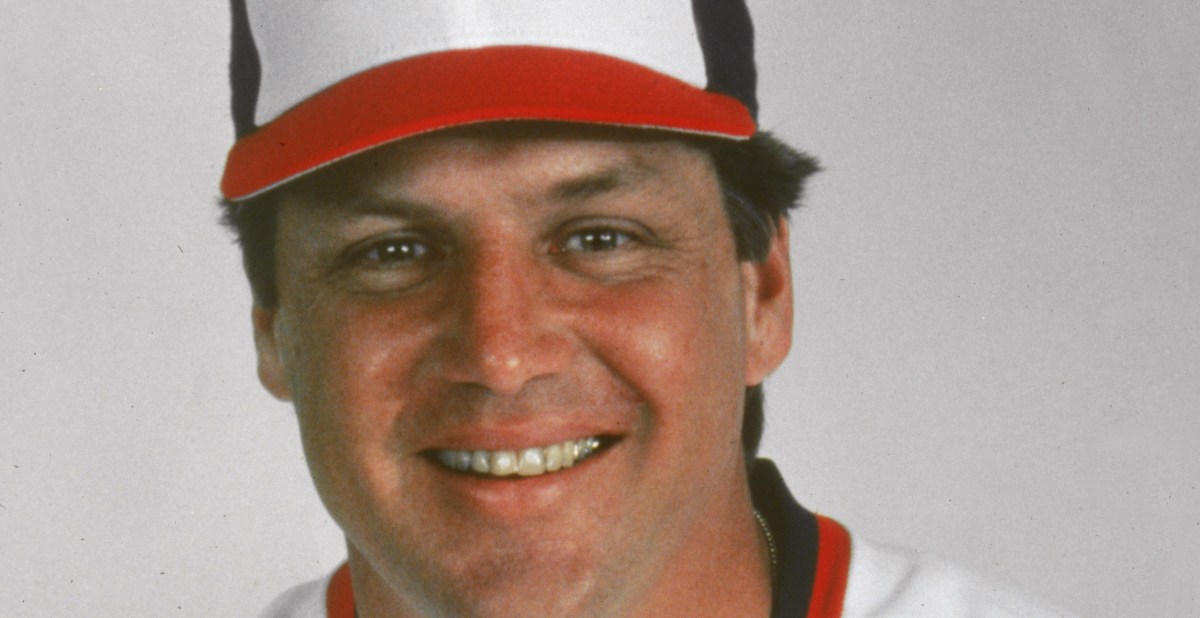
Tom Seaver, who was brilliant pitching for the White Sox at the autumn of his career was born, in Fresno, Calif. The future Hall-of-Famer came (reluctantly) to the White Sox before the 1984 season, as GM Roland Hemond noticed that Tom Terrific was left unprotected by the New York Mets and used a free agent compensation pick to nab him.
Seaver was coming off of three substandard (at least by his lofty standard) seasons in his last four, was positively brilliant with the White Sox, pitching two-plus seasons to a 33-28 record with a 3.67 ERA, 116 ERA+ and 9.7 WAR. Perhaps most impressively, he threw 547 1/3 innings (that’s 250 per season) — an amazing workload, even without considering the 4,000+ innings already on his arm in his career.
Just six pitchers in White Sox history have thrown up to 550 innings with a higher WAR than Seaver’s 9.7 — and none of them finished doing so in their 40s!
1953
The St. Louis Browns, relocated to Baltimore, officially became the Orioles — and without owner Bill Veeck.
Veeck knew he’d have to leave St. Louis after the 11th-hour purchase of the Cardinals by Anheuser-Busch (the team’s highest offer would have had it move to Houston, but ownership accepted a lesser deal so the team would stay in the city). First, he chose Milwaukee, where he’d once owned the (minor league) Brewers; but the parent club of the Triple-A Brewers, the Boston Braves, had territorial rights and rebuffed Veeck’s plan (and moved the Braves to Milwaukee weeks later!).
Baltimore was the next target, and Veeck’s outline was to retain 40% of the club in the move; however, in spite of assurance the move would be approved, AL owners backstabbed Veeck and left him with just four of eight votes of support, two shy of approval.
Veeck was forced to sell outright to the Baltimore interests, and he would remain out of baseball until 1959 and his purchase of the White Sox.
1977
In the wake of free agent defections by Richie Zisk and Oscar Gamble but aspiring to a second year of Rent-a-Player success, the White Sox signed Ron Blomberg to a four-year, $600,000 contract — an absolutely insane commitment to a one-dimensional slugger who had played in just 35 games over the prior three seasons due to injury. The three-sport prep star was a first round choice of the Yankees in 1967 but never played in more than 107 games in a single season of his career — and remember, these were uncharacteristically mediocre Yankees teams at the time.
Blomberg hit a game-tying home run in the bottom of the ninth inning of a raucous home opener win over Boston to get Bill Veeck’s bargain bin shopping off to a sweet start for the season. However, though a mere DH Blomberg played in just 60 more games for the horrible 1978 White Sox with five homers, 22 RBIs, a .652 OPS and 82 OPS+, and -0.1 WAR. (Recall that Veeck only turned his sights on Blomberg after Gamble took a last-minute offer from the Padres after the Sox thought they had a deal to keep him on the South Side.)
Blomberg retired after the season, at age 30, and remains one of the worst free-agent signings in White Sox history.
1992
The expansion draft to stock two new National League teams in 1993, the Colorado Rockies and Florida Marlins, was held.
For the first time in expansion draft history, this 1992 draft used teams from both leagues to stock one-league-only teams. So because this expansion draft featured players exposed by American League teams, too, the White Sox lost pitchers Greg Hibbard (No. 12 pick overall) and Robert Person (No. 47) to the Marlins.
Hibbard never actually pitched for Florida, however, as the Marlins made a draft-day deal to send him to the Cubs. The southpaw was already at the end of his short career; after getting off to a 6.2 WAR in his initial 1989 and 1990 seasons on the South Side, he basically was negative-WAR after that, and was done for good in 1994.
Person, acquired by the White Sox from the Mets as a minor-leaguer, had a season-plus of strong play in the Chicago system before being snatched away by the Marlins. He pitched in 142 games over nine seasons, with a peak of 6.3 WAR over three years as a regular rotation member of the Phillies from 1999 to 2001.