
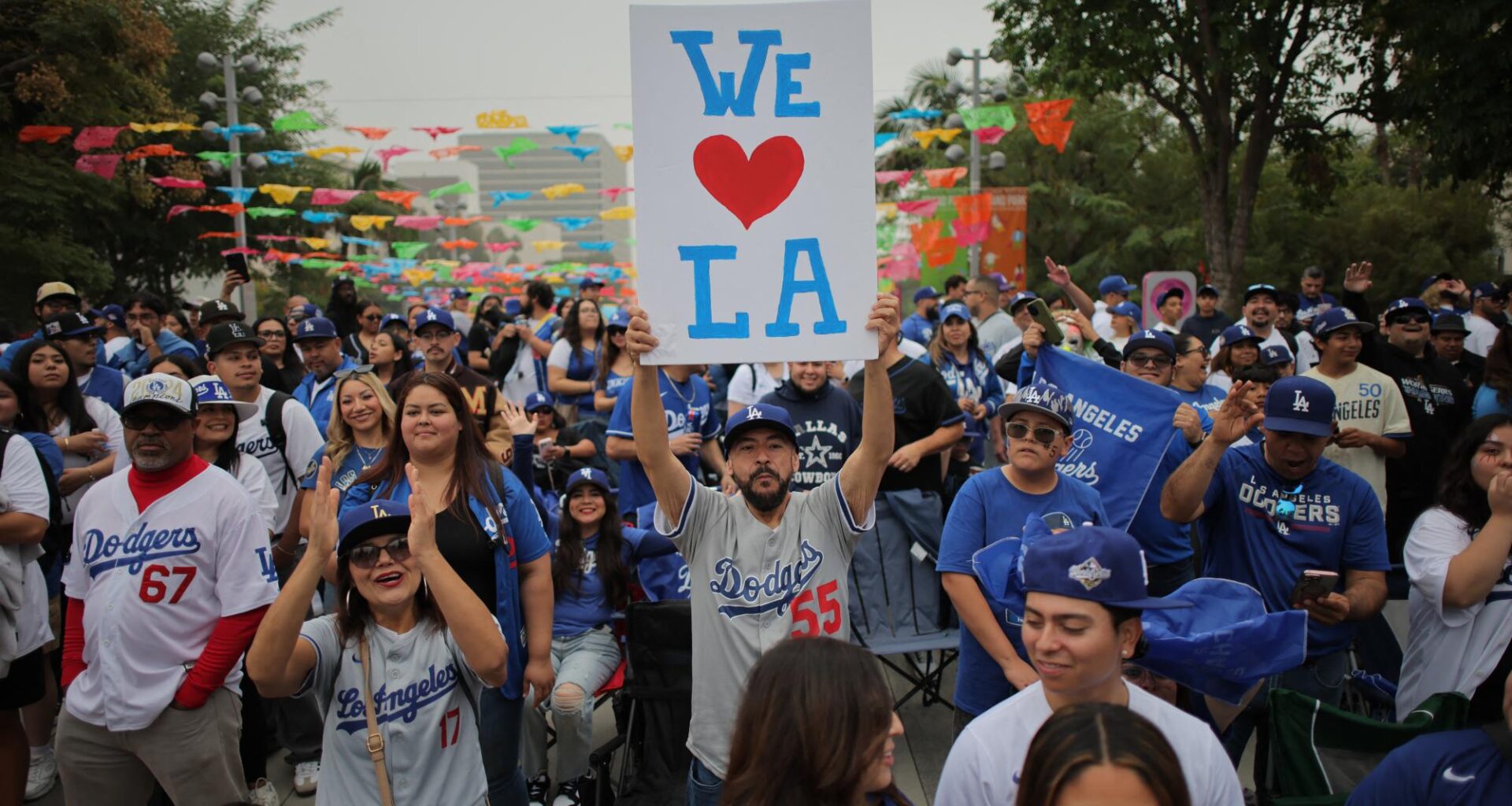
As the Los Angeles Dodgers celebrate their World Series win, many are left conflicted about celebrating with their team or holding them accountable for being silent during the intense ICE raids across Southern California.
There were Los Angeles sports teams that spoke out and expressed that they stand with the immigrant families while others with a big immigrant fan base did not.
Some say that politics and sports will not and should not mix.
But when a community that helps run a huge franchise is affected by an organization that the franchise has donated to in the past, fans can not help but feel angry about not feeling supported.
British-born journalist for The Guardian, Andrew Gumbel, wrote, “When the Trump administration began conducting aggressive immigration raids in Los Angeles in early June… two of the city’s soccer teams quickly put out statements of solidarity with immigrant families but not the Dodgers.”
Yes, it is just a sport, but how can a community that gives so much to a franchise not be hurt by a team that supports an organization that harms the community?
The team’s initial silence, particularly given its deep roots in the Latino community, was not just a missed opportunity; it was a profound failure of moral leadership that turned a shared victory into a divisive wound.
It is said that Latino fans make up almost 50 percent of the Dodgers’ fan base.
Dylan Hernández, a sports columnist for the LA Times, said, “The Dodgers boast that more than 40% of their fan base is Latino, but they can’t even be bothered to offer the shaken community any words of comfort.”
The silence on the immigration raids from the Dodgers organization did not sit right with many.
As some stayed quiet, others wanted undocumented Angelenos to know that they are not alone.
In June 2025, a small but bold statement made by Dodger pitcher Clayton Kershaw sparked mixed reactions and a debate regarding his choice of adding a Bible Verse, “Genesis 9:12-16”, on a special hat worn by the players on the annual Pride Night.
Kershaw, a known outspoken Christian, made this decision, being seen as a way of protest and reclaiming the symbol of the rainbow. He is entitled to stand up for his beliefs. There’s no judgment on that, but this proves that the players do carry power and can spark conversations in what they choose to speak up about.
This incident ties to the players and organization picking and choosing what is important to them and why their silence is so hurtful for many fans.
With the continued protests and frustrations in Los Angeles due to the ICE raids, singer Vanessa ‘Nezza’ Hernández looked to make a statement when asked to sing the US National Anthem at Dodger Stadium.
She decided to sing it in Spanish to make a statement, even though she was told not to, because she knew it was important to be heard.
After her performance, an unidentified Dodgers employee informed Hernandez and her team not to contact them again and that she would not be welcomed back.
“To see the Dodgers take such a PR conscious approach to it, seeking not to alienate certain folks while sacrificing other communities, has been really dispiriting,” Sergio Perez, executive director of the Center for Human Rights and Constitutional Law, said in response to the incident between the organization and Nezza.
The Dodgers’ highly calculated PR response to the incident was disheartening because it prioritized broad acceptance over the unwavering support of specific, affected communities that have been the heart of the Dodgers’ fan community.
The Dodger organization’s pick-and-choose method is starting to rub fans the wrong way, as it profits from nights such as Salvadoran Heritage Night, Mexican Heritage Night, Korean Heritage Night and many more events.
The Dodgers’ decision to remain quiet despite vocal solidarity ultimately suggests that loyal fan support is a currency they are willing to accept but not consistently repay.
Story continues below advertisement