
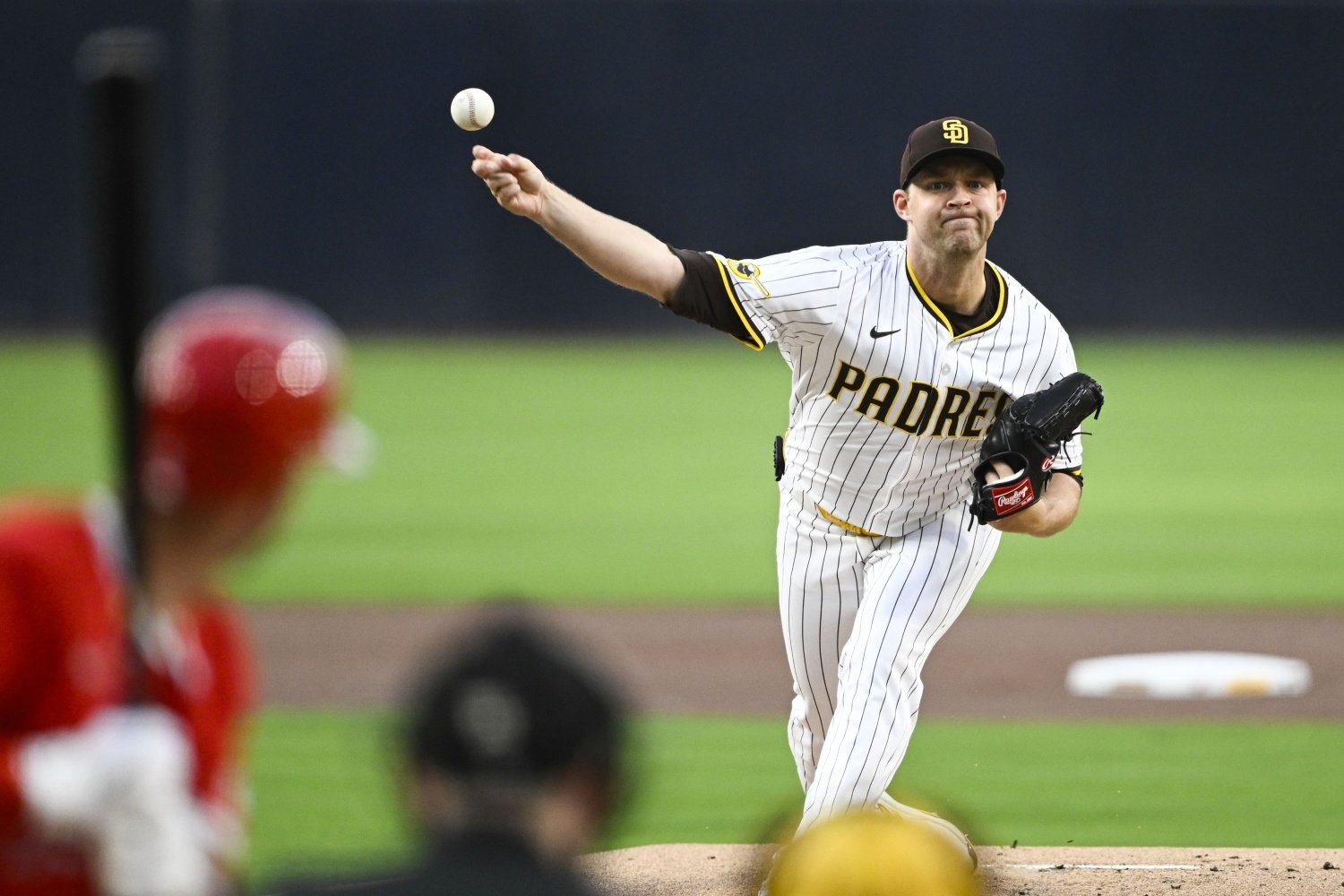
According to multiple reports, the Cubs are among the teams with significant interest in Michael King. That’s just preliminary speculation, but it’s interesting, because (according to a source familiar with their thinking) the Cubs still view signing King as an option even after Shota Imanaga accepted the qualifying offer on Tuesday, King, who enters his age-31 season next spring, ranked 13th on DiamondCentric’s top 50 free agents list, and we project him to find a four-year deal worth $75 million.
Right now, however, the Cubs project to spend about $70 million on their existing rotation for 2026. Adding King to the mix would push that number to roughly $90 million, and it would force at least one pitcher whom both the team and the player themselves see as a starter into relief work. Even if Chicago uses a six-man rotation to open next season, it would go something like:
That would leave Javier Assad out of the mix to begin the campaign, and it would mean pushing Rea (or someone else, perhaps) to the bullpen once Steele returns from Tommy John surgery. That’s not a deal-breaker in and of itself, because both Assad and Rea have experience in the bullpen, but it’s probably incorrect to assume they’ll use a six-man rotation, too. There are too many days off in the new version of the MLB schedule to make that the best use of a limited pool of pitchers. Thus, even without Steele, signing another high-end free agent would push both Rea and Assad to the pen, unless and until someone gets hurt.
The team should plan for injuries, especially with this group. Thus, the logistical hurdles to signing a player like King are relatively trivial. However, the issue of the salary King is likely to command is harder to work around. Chicago owes Dansby Swanson, Ian Happ, Seiya Suzuki, Nico Hoerner and Carson Kelly a combined $83.75 million, and they have holes to fill in both the positional corps and the bullpen. Pushing their collective spending on the rotation as high as signing King would might interfere with their plans.
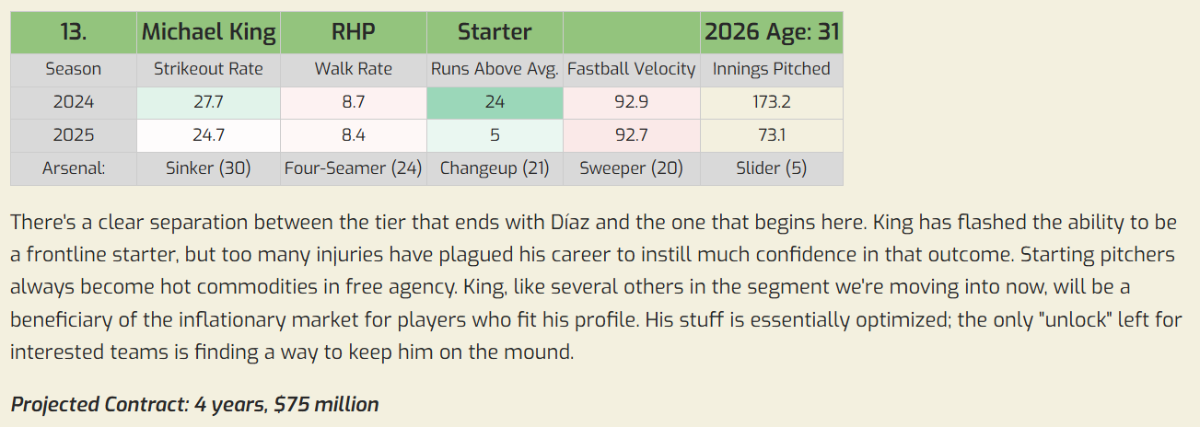
Much hinges on what the Ricketts family is willing to spend in 2026. They should have another $60 million to commit to players this winter, even after Imanaga returned—but it could turn out to be more like $40 million, and the difference there being similar to what King would earn on an annual basis is a telling coincidence.
Since King turned down a qualifying offer, it would also cost the Cubs a draft pick to sign him. That’s not a deal-breaker, either, because the team is likely to receive a pick when Kyle Tucker signs elsewhere, but the small problems with signing a top-flight starter keep adding up.
For a pitcher who profiles more like an ace, it’d be easier to look past all the drawbacks to acquiring him. Alas, he’s battled frequent injury trouble, and even when on the mound, his stuff didn’t stand out in 2025.
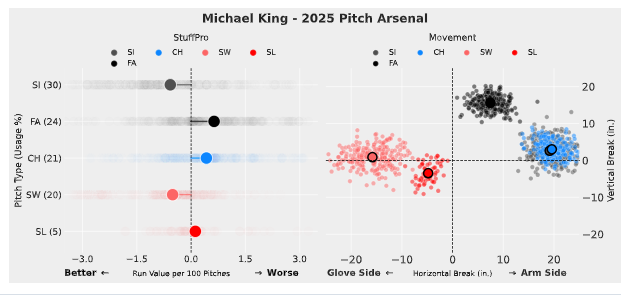
King does have a very heavy sinker, and that pitch and his sweeper play gorgeously off one another to righties. To lefties, his four-seamer and changeup play well. He offers a lot to dream on; the 2024 version of him was a solid No. 2 starter. Unfortunately, it’s not clear that his injury issues are entirely behind him. Signing him would give the rotation much-needed upside, but not the swing-and-miss element that has been missing for years. It would also constrain their efforts to round out the lineup and replace most of their bullpen.
The workaround, of course, is to trade someone from the existing group as they sign King, thereby keeping some money free to spend elsewhere while making the upgrade from whomever they replace to King. The best candidate for that is Taillon, whom they’re set to pay $18 million in the final season of a four-year deal. Taillon, 34, had a 121 DRA- last year, marking him as far worse than an average starter, and his strikeout rate has been under 19% in each of the last two seasons. For those very reasons, though, Taillon has virtually no trade value.
We could be heading toward a situation similar to the one the Cubs ended up in with Cody Bellinger last year. After planning for life without Bellinger and expecting him to opt out of his deal, the Cubs had to pivot when the slugger elected to opt in. They needed someone better than him, so they traded for Kyle Tucker, but that left them needing to get rid of a player with little trade value. They dumped him for Cody Poteet, whom they wouldn’t even hold onto through spring training.
It would be wasteful to trade Taillon that way this winter, but it might be necessary, in the wake of another failure to figure out what a key player would do upon studying their options in the marketplace. If the Cubs want to sign King, they probably need to move Taillon, to save themselves the flexibility they need to get better. Starved for leverage, they won’t get much back.