
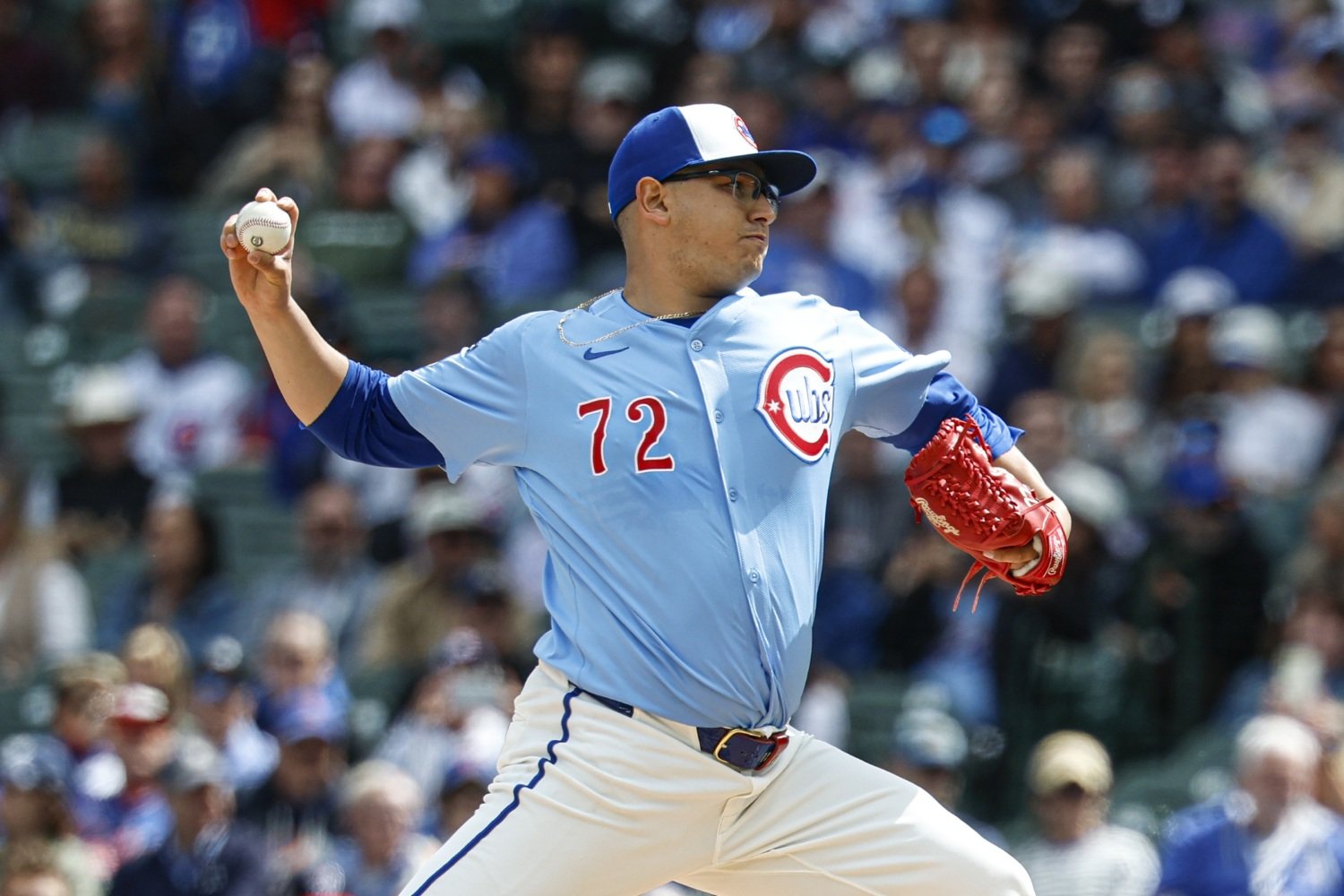
Under no circumstances will the Cubs non-tender Justin Steele or Javier Assad Friday. Though Steele is unlikely to make it back from Tommy John surgery until midsummer, he’s a vital part of their medium-term pitching plans. Both he and Assad, who is arbitration-eligible for the first time and projects to make less than $2 million, have trade value even if the Cubs ultimately build a pitching staff into which they no longer fit.
That doesn’t mean there won’t be news about one or both of them before the end of the day. Chicago could try to strike a two-year deal with Steele, who is set to hit free agency after 2027, anyway. That would give them cost certainty for the balance of the term of Steele’s team control, and let Steele dispense with worrying about his earning power as he rehabs throughout the winter and spring from his operation this April. Often, with players who are sure things to receive a contract, the deadline that spurs action on deals like that is the one for exchanging arbitration figures (which will be on Jan. 8, 2026), but getting Steele’s salary figured out early would give the team more clarity as they plot an active pursuit of further pitching upgrades.
Assad is less likely to settle on a salary Friday, but in his first year in the system, he has relatively little earning power. The Cubs might elect to lean on him and agree to terms early, if only so there’s a fixed salary associated with him when (inevitably) his name comes up in trade discussions over the next six weeks. Since Assad still has minor-league options, the Cubs can afford to stash him in Triple A and keep him stretched out as starting pitching depth in 2026. That doesn’t seem like the highest use of him at this stage of his career, but flexibility always has value—to the team that currently owns the rights to a player, and to trade partners.
The other two Cubs eligible for arbitration this winter are on shakier ground, and will almost certainly be involved in a transaction Friday. In Eli Morgan‘s case, the question is whether the Cubs will jettison him by non-tendering him, or sign him to a low-dollar deal in the neighborhood of the $1.1 million he’s projected to earn in his second trip through arbitration. If the two sides can’t agree on a deal before the deadline, Jed Hoyer and company will probably just cut the righty reliever loose, but there’s little roster pressure to do so. Chicago’s 40-man roster still only has 32 players on it, so Morgan could easily survive. It’s just unlikely that the Cubs let the question of how much he’ll make linger past Friday, This deadline will be enough to spur action on such a fringy case.
It’s a different dilemma where Reese McGuire is concerned. After being an adequate stopgap amid Miguel Amaya‘s injuries in 2025, McGuire is under team control for one more season, if the Cubs are willing to pay him $1.9 million or so. However, he’s ineligible to be sent to the minor leagues without being exposed to the other 29 teams. With Amaya and Carson Kelly set to remain the team’s catching tandem of choice and Moisés Ballesteros available as at least an emergency option at the position, McGuire doesn’t really fit the 2026 Cubs. They could non-tender him, but he should have (very limited) trade value, if they choose to extract it.
Because McGuire is little more than a solid backup catcher, he won’t bring back a player of any substantial value in a deal. Rather, the Cubs could swap him for a player with about the same ceiling but who isn’t ready for the majors. It would have to be someone another team views as a potential strain on their own 40-man roster in the year ahead, but in a different way. Rather than being out of options or near free agency, like McGuire, the target would need to be a pitcher who projects to spend much of 2026 on the injured list or a prospect already on the 40-man roster who isn’t ready for the big leagues but still has an option year remaining. Even that’s relatively unlikely. The best bet is that McGuire would get them only cash.
Usually, in trades like the one McGuire would be involved in, a team receives something like $100,000. The Cubs would thus save about $2 million by trading him. That’s nothing to sneeze at, but most of those savings can also be realized by non-tendering him. Unless they get an offer too good to pass up, the team might release McGuire just for the greater goodwill doing so would engender. One way the Cubs position themselves to scoop up players like McGuire (or, for instance, Brad Keller, whom they signed on a minor-league deal last winter) is by cultivating a reputation for fair dealing with players in situations like these. Allowing McGuire to become a free agent and choose his next employer might be worth more to the team than they could acquire by trading him, payable in doors opened and calls taken by future free agents.
Amaya and Ethan Roberts each fell about a week shy of qualifying for Super Two status, so the team only has Steele, Assad, Morgan and McGuire to worry about Friday. However, they might also make news in a different way. With other teams forced into tougher decisions due to crowded 40-man rosters and/or budget constraints, there will be multiple trades Friday involving not only players like McGuire, but slightly better ones who just don’t fit their current clubs. With the extra space on their roster, the Cubs could be a destination for such a player.
The Orioles are considering non-tendering right-hitting first baseman Ryan Mountcastle, who’s set to earn over $7 million in his final year of arbitration eligibility. Coming off a poor season, Mountcastle isn’t worth that much unless you believe he’s due for a rebound, but he’s a career .282/.334/.479 hitter against left-handed pitchers, and could be a nice bench bat for the Cubs, rotating in at first base and designated hitter to spell Michael Busch, Ballesteros and/or Owen Caissie in various configurations. Andy Ibáñez (of the Tigers) and Jonathan India (of the Royals) are also righty batters with good track records against lefties, coming off rough seasons and on the bubble as Friday dawns. There are also, inevitably, a dozen or so intriguing arms who might shake loose easily.
It’s a day for small moves, but for a team with few arbitration cases to worry about and lots of room on the 40-man roster, it’s a day full of opportunities. The Cubs will make some news Friday, and it could begin to indicate the direction of the offseason to come.