
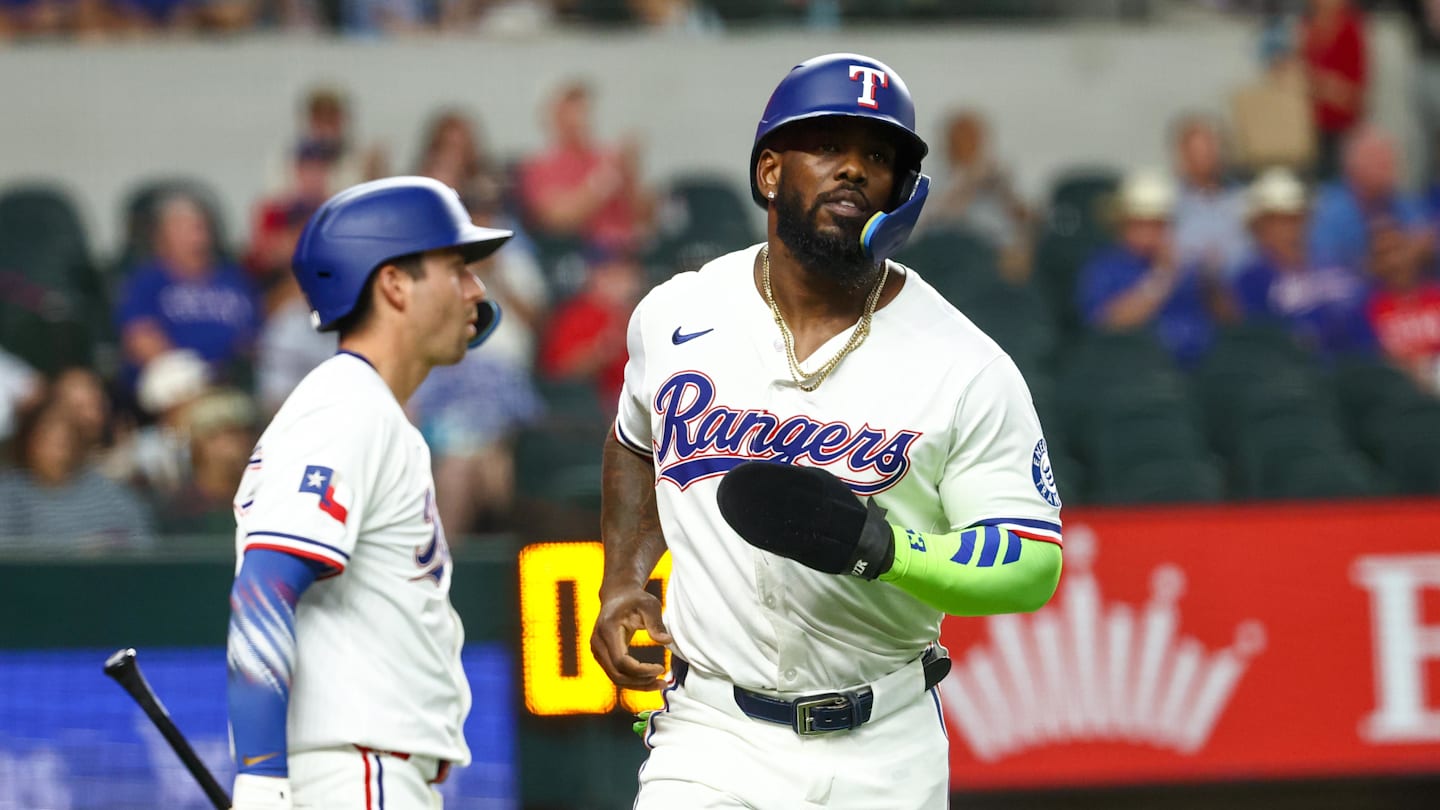
The Texas Rangers are aiming to get younger and less expensive next season. Their non-tender moves on Friday reflected that desire.
The Rangers non-tendered four arbitration-eligible players — outfielder Adolis García, catcher Jonah Heim, pitcher Josh Sborz and pitcher Jacob Webb. While none of them are old in the real world, all are 30 or older, making them a bit longer in the tooth in baseball years. Performance and injuries had something to do with it, too.
Both García and Heim have had significant offensive downturns since their star turns in the 2023 World Series. Both were reportedly shopped in trade before the deadline on Friday. Sborz missed the entire 2025 season after shoulder surgery. Only Webb performed at an expected level, as he finished with a 3.00 ERA in 55 games.
Non-tendering any of the four doesn’t rule out the Rangers re-signing them, but that will come at a reduced cost than expected in arbitration. Texas likely kept that in mind before making the moves.
How Rangers Current Payroll Looks Now
Kevin Jairaj-Imagn Images
Per MLB Trade Rumors, which projected the arbitration cost of every player this offseason, non-tendering García, Heim, Sborz and Webb saved Texas a projected $21.2 million. Texas also agreed to a deal with outfielder Sam Haggerty to avoid arbitration. The Rangers didn’t announce the terms, but he was projected to get $1.4 million.
Texas has four other arbitration-eligible players — infielder Josh Smith ($3 million), first baseman Jake Burger ($3.5 million), infielder Ezequiel Duran ($1.4 million) and third baseman Josh Jung ($2.9 million). Assuming they receive the projected deal, the Rangers will have paid $12.2 million in arbitration, including Haggerty’s projection.
That may sound like nickels and dimes in baseball terms, but per Spotrac the Rangers already have a projected $149.7 million in veteran payroll spread among six players — pitcher Jacob deGrom, shortstop Corey Seager, second baseman Marcus Semien, pitcher Nathan Eovaldi, designated hitter Joc Pederson and catcher Kyle Higashioka.
If the Rangers kept all nine arbitration-eligible players, they likely would have paid a projected $33.4 million. The Rangers adjusted that bill to $12.2 million, giving them a payroll of $161.9 million for 11 players that are likely to be on the 26-man roster next season. That also drops their overall projection, including pre-arbitration players, from $191.9 million to $170.7 million.
The Rangers certainly aren’t done making moves yet. But shedding $20 million allows president of baseball operations Chris Young and his staff money to pursue an extra starting pitcher, more bullpen help or another hitter. The Rangers could also make a trade, and while the rumor mill went rampant about a potential deal involving Seager, the Rangers are unlikely to trade their best hitter.
Friday’s moves were to open up flexibility to allow Young to make moves that he hopes will make the Rangers competitive in 2026. He said earlier his year that while the Rangers expect to have a smaller payroll, they still expect to remain competitive.
Recommended Articles