
Arn Tellem
| Special to Detroit Free Press

Best thing for Detroit Tigers, Tarik Skubal? Jim Duquette explains
On “Days of Roar,” former general manager Jim Duquette explains what the Detroit Tigers should do with Tarik Skubal in the 2025-26 MLB offseason.
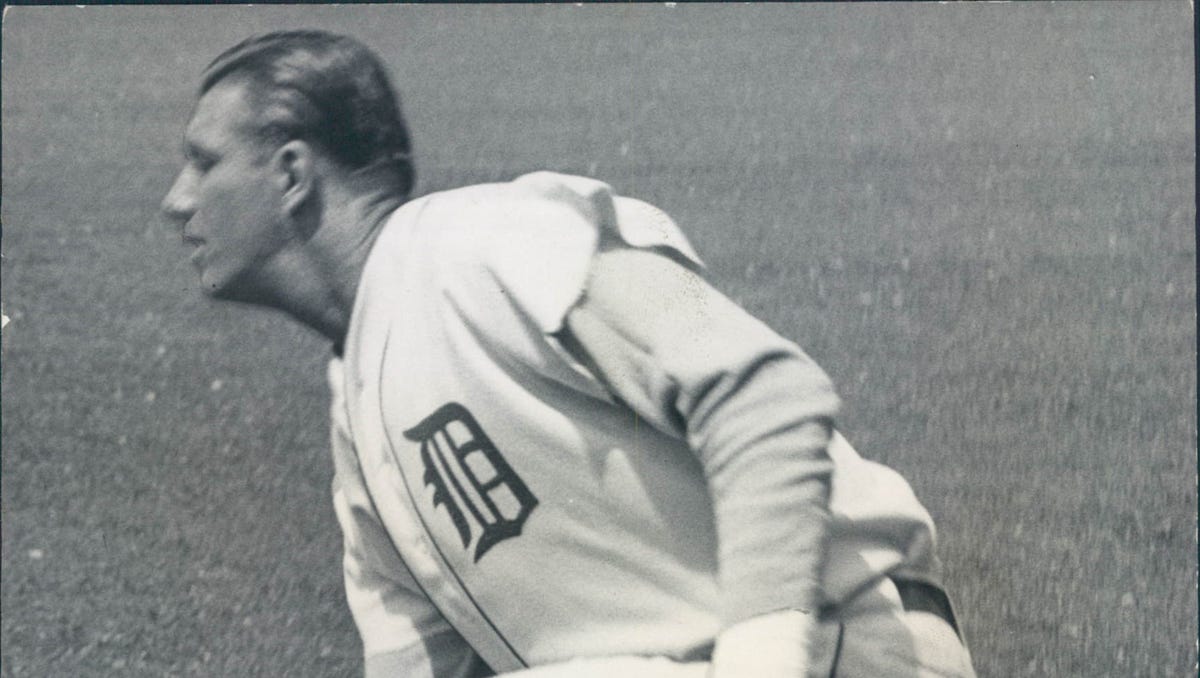
As I was riveted to the screen watching Shohei Ohtani, Yoshinobu Yamamoto and Vladimir Guerrero Jr. star in an epic 7-game World Series, I found myself reflecting on another towering moment in baseball history — one that holds special meaning for Detroit and for our community. It was 80 years ago that the Detroit Tigers captured the 1945 championship, and it is right to pause and remember the man whose return and performance helped define that era: Hank Greenberg.
Greenberg, a Hall of Famer and one of the greatest Tigers ever, embodied more than raw power at the plate. He remained steadfast in honoring his Jewish faith — famously refusing to play on Yom Kippur in September of the 1934 pennant race — and he also stands among the few major-league stars of his time to publicly welcome Jackie Robinson into the league and demonstrate the kind of character and openness that transcends sport.
When the United States entered World War II, Hank was one of the first big-league players to answer the call. He enlisted in 1941, after the attack on Pearl Harbor, and ultimately lost roughly 3½ seasons of his major-league career in service to his country. He had last appeared in 1941, returned to civilian status in June 1945, and rejoined the Tigers that summer. One question loomed: Could the man who had slugged 58 home runs in 1938 and been a two-time American League MVP regain his form?
When Greenberg returned to the Tigers on July 1, 1945, the baseball world watched. In his first game back, he hit a home run into the left-field stands at Briggs Stadium and electrified 48,000 fans, their largest crowd of the year. He had resoundingly answered the question. On Sept. 30 – the regular-season finale – Detroit needed a win to clinch the pennant. With the bases loaded in the top of the ninth, Greenberg belted a grand slam to secure the American League flag. From there, the Tigers advanced and defeated the Chicago Cubs in seven games to claim the 1945 World Series championship — Detroit’s first since 1935 and second in franchise history.
Greenberg’s 1945 season numbers don’t leap off the page by modern standards — but the context makes them extraordinary. He had been absent from the game for years, returned without the benefit of full spring training, and yet anchored a championship-caliber club in a city still girding for peace and revival. In the World Series, he hit .304 with two home runs, and seven RBIs. His comeback spoke of resilience, of commitment, and of a legacy far larger than any single statistic.
For Detroit, 1945 was a moment of catharsis. The war in Europe was ending, the city’s manufacturing engine was roaring back into civilian gear, and the Tigers’ triumph provided a unifying symbol. Greenberg bridged the pre-war baseball glory years and the post-war era that would bring new challenges and opportunities. In a city of blue-collar grit and transformation, the “Hammerin’ Hank” story resonated.
On a personal note, I had the privilege of working with his son, Steve Greenberg — and spending many lunches at the Beverly Hills Tennis Club, where Hank would often join us. One of my favorite stories: Actor Walter Mathau joined the club, notwithstanding that he didn’t play and had no interest in tennis, solely so he could have lunch with Hank. Those encounters revealed the person beneath the legend: smart, generous, compassionate, at ease with his own greatness yet grounded in his values.
Celebrate 125 epic seasons of the Tigers with a new book!
Eighty years on from that remarkable 1945 campaign, Detroit still benefits from the memory of Hank Greenberg’s courage and character. His refusal to play on Yom Kippur reminds us that faith and identity need not be separate from athletic excellence. His open embrace of Jackie Robinson’s arrival in the majors reminds us that sport can serve as a bridge, helping communities overcome differences. And his decision to serve in the military and later return to lead a championship club reminds us that leadership and sacrifice walk hand-in-hand.
As our city celebrates and re-examines its past — both in sport and in civic life — let us pause to honor Hank Greenberg. Not just because he knocked home runs or patrolled first base for the Tigers, but because he carried Detroit’s spirit in his swing: resilience, integrity, hope, and renewal. In remembering him, we remember what this city is capable of, and why the 1945 triumph remains more than a score in a history book — it remains a part of Detroit’s heart.
Arn Tellem is vice chairman of the Detroit Pistons.