
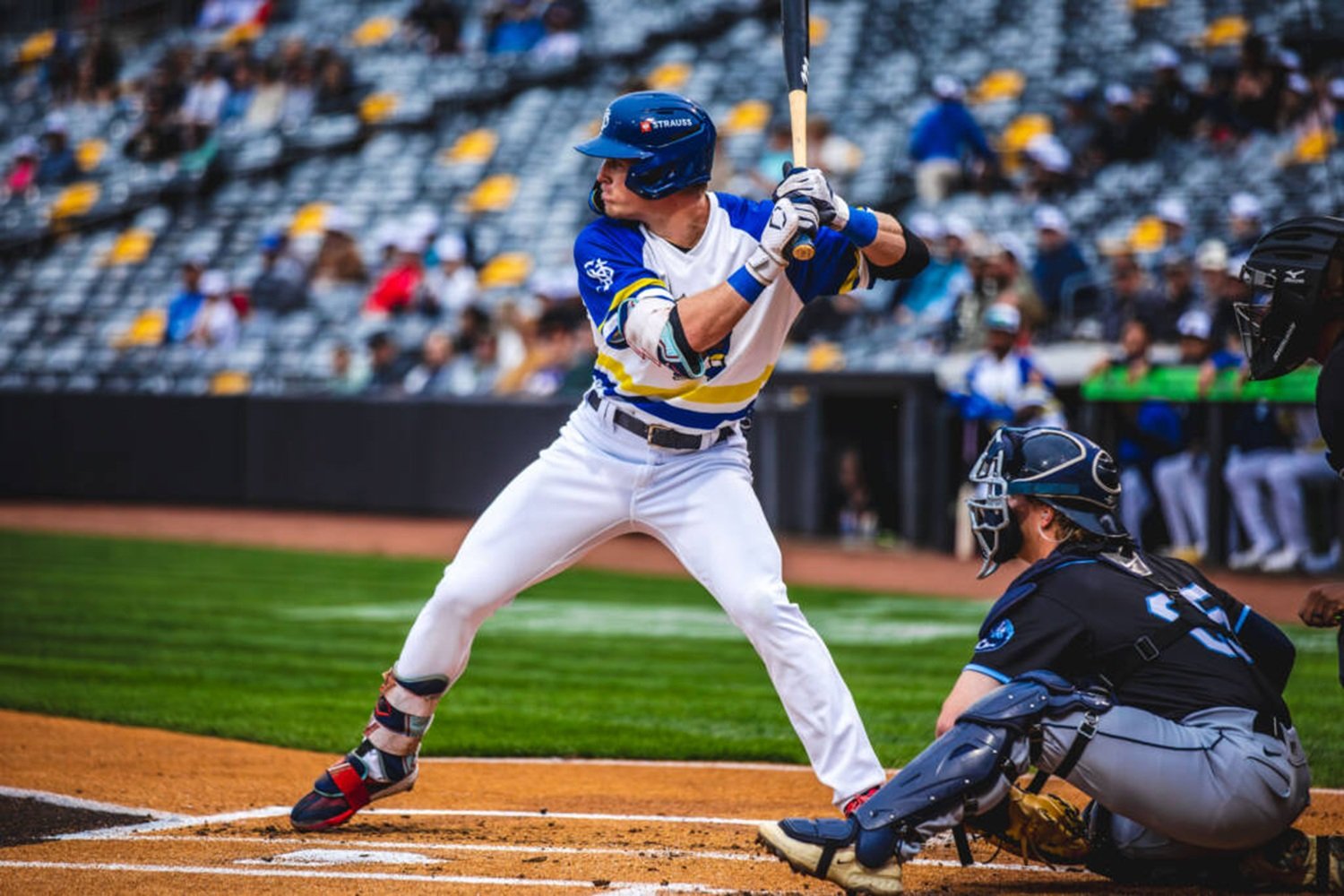
Predicting a lineup several years into the future is always an exercise in projection and optimism, but the Twins have placed themselves in a strong position for long-term success. A wave of high-end prospects is poised to join an established big-league core, giving Minnesota the type of roster flexibility that front offices crave. If everything breaks right, the 2029 Twins could feature a roster built around homegrown stars, polished young talent, and a few veterans who still have more to give.
Let’s take a look at how the 2029 lineup might take shape, and why each player fits into Minnesota’s long-term vision. Behind each player’s name is their age during the 2029 campaign.
Catcher: Eduardo Tait (22)
The Twins are dreaming big with Tait. As the top prospect acquired in the Jhoan Duran deal with Philadelphia, Tait arrived with significant development time ahead of him. He finished his age-18 season at High-A Cedar Rapids, where he posted a 103 wRC+ while facing competition more than 4 years older on average. Minnesota is hoping the early grind pays off and that Tait grows into the athletic and durable catcher who can anchor the position for the next decade.
First Base: Luke Keaschall (26)
Keaschall showed flashes of his offensive upside in 2025, but his long-term defensive home remains unsettled. As he moves further from Tommy John surgery, the Twins expect him to get plenty of reps at second base and even in the outfield during the next couple of seasons. By 2029, Minnesota should have stronger defenders locked into its infield spots, making first base a natural landing place where Keaschall can focus on providing steady offensive production.
Second Base: Brooks Lee (28)
Lee will get every chance to be the club’s everyday shortstop in 2026, but his lack of speed and the wear of age may prompt a position switch by 2029. Even with that shift, the Twins believe his sharp instincts and plus bat-to-ball ability can shine in an up-the-middle role. If his minor-league contact skills begin to appear more consistently in the majors, Lee can remain an impact player even after moving off shortstop.
Third Base: Kaelen Culpepper (26)
Culpepper surged through the system in 2025, with a 138 wRC+ in a campaign split between High A and Double A. Improved defense and a strong arm give him a chance to debut as a shortstop as early as 2026, but by 2029, the Twins may prefer him at third base. The key question will be whether his power breakout proves sustainable, because a permanent move to the hot corner requires consistent extra-base authority.
Shortstop: Marek Houston (25)
Houston was selected in the first round of the 2025 draft, largely because of his standout defensive ability. Scouts view his glove as major league-ready, though opinions vary on how much offensive value he can provide. He hit .354/.458/.597 with 15 home runs and 14 doubles in his final collegiate season, but those numbers may be difficult to replicate in pro ball. If the Twins can help him find even modest offensive consistency, his defense gives him a real chance to become a reliable everyday shortstop.
Left Field: Emmanuel Rodriguez (26)
The story with Rodriguez has always centered on health. When he is on the field, he brings a rare blend of patience, power, and defensive value, highlighted by a walk rate over 20% and a 135 wRC+ last season. He can handle center field if needed, but his availability has been limited, as he has not eclipsed 100 games in any professional season and has averaged only 56 games over the last two years.
Center Field: Walker Jenkins (24)
Jenkins is the projected centerpiece of the organization’s future. Ending his age-20 season at Triple-A St. Paul is an indicator of his prodigious potential, and his 154 wRC+ in Double A cemented his status as a franchise-level talent. With a debut coming as soon as the first half of 2026, Jenkins should be firmly established by 2029 and ready to lead a young, dynamic Twins lineup.
Right Field: Byron Buxton (35)
Buxton’s contract runs through 2028, which means a new deal would be required for him to be part of this roster. If he wants to remain a Twin for life, the door will be open, especially after a season in which he captured a Silver Slugger and finished 11th in American League MVP voting. Even in his mid-30s, Buxton’s combination of athleticism, leadership, and power could make him a valuable piece of a youthful lineup.
Designated Hitter: Matt Wallner (31)
The 2029 season will be Wallner’s final year under team control, and by then, he may have transitioned fully into the designated hitter role. His defense regressed in 2025, and the organization could shift him to first base or DH even sooner. Wallner’s value is built almost entirely around his powerful left-handed swing, making the DH spot an ideal long-term fit.
Some of the most notable changes from last year’s prediction include the absence of Carlos Correa, Royce Lewis, and Ryan Jeffers. Minnesota’s farm system also took on a different look since this point last year, with additions made in the MLB Draft and through trades. It’s hard to imagine that all of the young hitters above will translate their minor-league production to the big-league level. Minnesota has struggled to turn top prospects into consistent big-league contributors; that will need to change by 2029.
A lot can change in four years, but the Twins appear well-positioned to build a roster that blends stars, veterans, and emerging talent into a competitive core. Which players do you see locking down spots in Minnesota’s 2029 lineup? Share your thoughts and join the discussion.
PREVIOUS YEARS’ PREDICTIONS
— 2026 Lineup
— 2027 Lineup
— 2028 Lineup