
As Thanksgiving approaches and the GM meetings have passed, the deadlines hit and fans on the South side gained a clearer sense of how this offseason may take shape. General manager Chris Getz swung two trades and added a pair of arms to the 40-man roster ahead of the Rule 5 Draft. He then closed the week with tender decisions that clarified what he wants to prioritize. Mike Tauchman was the most notable cut, and his exit helped outline how the front office views the current outfield group.
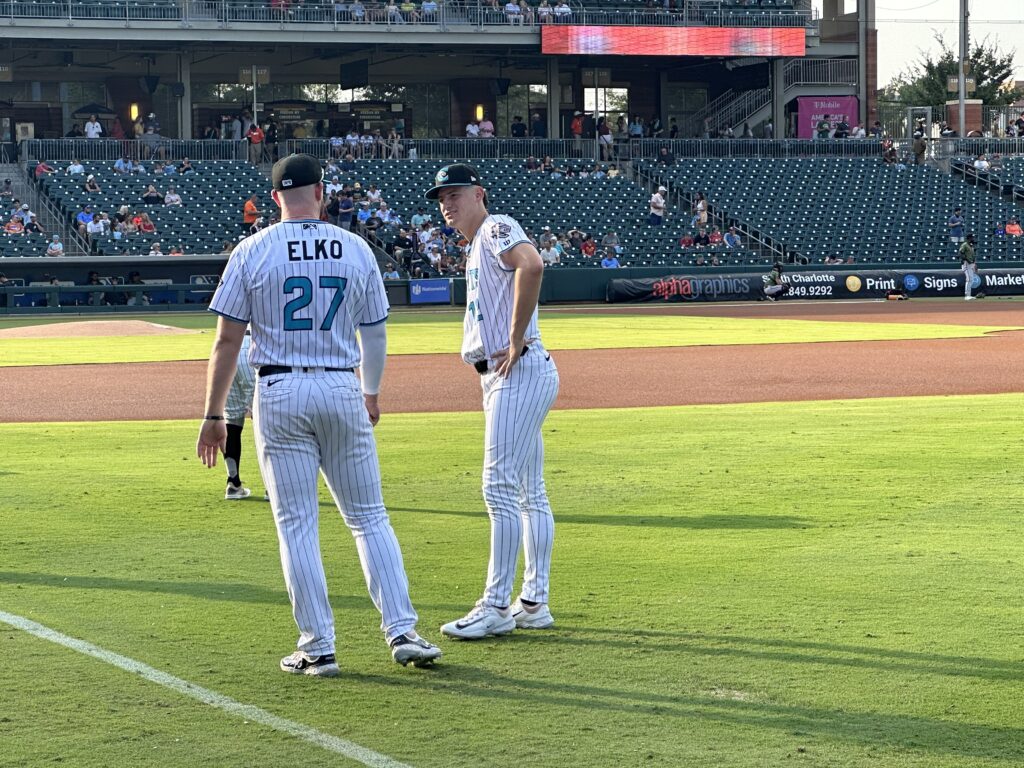
The Chicago White Sox have agreed to terms on a one-year, $900,000 contract with outfielder Derek Hill, avoiding arbitration, and have declined to tender 2026 contracts to left-handed pitcher Cam Booser, first baseman Tim Elko and outfielder Mike Tauchman.
— Chicago White Sox (@whitesox) November 21, 2025
This stretch of moves reflects the same blueprint we saw at the trade deadline, where the White Sox shifted short-term pitching depth into controllable talent and continued to tighten the roster around defense and versatility. The decisions made this week set the stage for the rest of the offseason. Here is a closer look at the newest faces in the organization and what the White Sox are signaling with their latest decisions.
White Sox LHP Chris Murphy (acquired from Red Sox for C Ronny Hernandez)
Chris Murphy arrives from Boston as a 27-year-old left-hander who has already logged big league innings and still carries some starter traits. He debuted with the Red Sox in 2023 as a multi-inning reliever and sat in the low to mid-90s with a fastball while leaning on a deep mix that long appealed to their development staff.
Tommy John surgery in 2024 stalled that momentum and wiped out his season. Murphy returned to the mound in 2025 and turned in one of his better stretches in the majors. Over 34.2 innings with Boston this year, he posted a 3.12 ERA with 30 strikeouts and a 1.18 WHIP. His walk rate climbed as he worked through post-surgery rust.
There is more to like beneath the surface. Murphy’s curveball drew strong marks with 2.5 run value per 100, and it ranked among the most effective breaking balls thrown with a 50 plate appearance minimum. The pitch shows above-average depth with strong horizontal movement, and he can work it down and to the glove side to force a swing and miss or weak contact off the barrel. He pairs it with a fastball that can miss bats at the top of the zone, while the slider and cutter have tightened in recent months. His changeup continues to improve as he gains more distance from surgery.
Boston used him mostly in lower-leverage spots after his return and often asked him to cover multiple innings. His strikeout rate dipped, and the walk rate jumped to 13.5 percent, but he still held opponents to a .171 average and kept more than half of balls in play on the ground. Scouts and analysts have described him as a tinkerer who experiments with shapes and usage rather than sticking to one mix, and that gives Brian Bannister and the White Sox something to work with as they plug him into their pitch design group.
For now, Chris Getz has indicated that Murphy will open in a multi-inning bullpen role as the club monitors his strike-throwing as he continues to move past surgery. His experience as both a starter and a reliever gives Zach Bove more flexibility. If the command improves and the stuff holds across longer outings, they could evaluate him as rotation depth.
Murphy still has a minor league option remaining, so the White Sox can move him between Chicago and Triple-A Charlotte in 2026 without risking losing him on waivers. He steps into the left-handed bullpen opening created by Fraser Ellard’s retirement with more runway as a controllable southpaw who offers length with ground ball traits while leaning on a breaking ball that already grades as a real weapon.
White Sox OF Everson Pereira (acquired from Rays for RHP Steven Wilson and RHP Yoendrys Gómez)
Everson Pereira is the loudest upside swing in the Rays deal. He is a 24-year-old right handed hitting outfielder who has not yet carried his tools into the majors. The Yankees signed him as a high profile international prospect who later became a Baseball America Top 100 name with the physical frame and athleticism clubs want in a power hitting center fielder.
Most of his production has come in the upper minors. Over seven seasons he posted a .273 batting average with 87 home runs that show how explosive the swing can be. He handled all three outfield spots at a level that kept evaluators interested. The major league results have not followed. Short runs with the Yankees and Rays produced a .146 average with limited impact which pushed the strikeout concerns into sharper focus. An internal brace procedure in 2024 slowed his progress. His big league chances came in quick bursts that he admitted made him press for results instead of letting the game slow down.
Chicago believes the underlying traits still carry value. Pereira is playing winter ball for Cardenales de Lara and has looked closer to the version he showed in the minors. He hit .265 in his first stretch with better balance in the box. Hitting director Ryan Fuller has already mapped out adjustments centered on improving in zone contact while helping him find a calmer pace with his decision making.
There is urgency tied to his roster status. Pereira is out of options so he must make the club in spring training or the Sox will risk losing him on waivers. Chicago signaled this plan when they moved Yoendrys Gómez and Steven Wilson to get him. Tampa Bay valued both arms and viewed the deal as a way to add a controllable starter with a reliever who could slot into their mix. The Sox saw it as a chance to trade from a perceived pitching strength to address a long term outfield need. Unless the outfield picture changes, Pereira should sit behind Luis Robert Jr with a chance to carve out at bats against left handed pitching. He may also see time next to Robert if the Sox do not add another outfielder and if Andrew Benintendi spends more days at designated hitter. His defense keeps him viable while the power gives him a path to more than a fourth outfielder role if the approach settles.
The upside case mirrors what the club pulled off with Miguel Vargas. Los Angeles moved on from Vargas after a stop and start run with limited results, and the Sox bought low on a stalled prospect who needed space to reset. Vargas had over five times Pereira’s major league plate appearances yet still needed a fresh voice to unlock progress. Fuller gave him adjustments that pushed him back toward league average run production. If Pereira follows even part of that arc in 2026 this trade will look like a sharp bet on a talent who needed a clearer opportunity.
White Sox UTL Tanner Murray (acquired from Rays in Pereira deal)
Tanner Murray is the quieter piece of the Tampa Bay return, yet he could force his way into the conversation if his Triple-A gains carry over. Murray moved around the Durham infield last season with regular work at second and third plus shortstop in shorter stretches and occasional outfield reps, which fits the adaptable path he has followed since being drafted in the fourth round. He is not seen as a true everyday shortstop, but the ability to settle into different spots keeps him useful across a long season.
At the plate, Murray hit .241 with 18 home runs and a .699 OPS in 572 trips, and he entered 2025 with a game built on contact that later shifted toward more loft. The jump in power came with a higher strikeout rate and a chase-heavy approach that pulled down his on-base results.
Chicago is buying a late-blooming bat with some thump, and his swing has shown it can handle premium velocity when his timing holds up. His background in multiple roles gives Will Venable a right-handed option who can fill gaps when needed.
Murray arrives as a recent 40-man addition for Tampa Bay, where his glove drew internal praise, and he retains multiple option years, which gives the Sox room to maneuver. At 26 years old, he will be in big league camp with a chance to seize a job in March with Triple A Charlotte positioned as the likely starting point.
White Sox RHP Duncan Davitt (originally acquired from Rays in Adrian Houser trade; added to 40-man roster)
Duncan Davitt was a mild surprise to see protected at first glance, although the move lines up with what the Sox set in motion at the trade deadline. They targeted him in the Adrian Houser deal because they believed there was more in the profile than the surface numbers showed. Davitt came out of Iowa as a low slot reliever before Tampa Bay rebuilt him into a stretched out starter with a deep mix that he uses with real intent.
He threw 152 innings across Double A and Triple A in 2025 with a 4.38 ERA, plus strong strike throwing and enough swing and miss to turn a lineup over. His short run with Charlotte was choppier, which explains why some evaluators questioned the timing of the roster spot, yet the full season points to a pitcher who held his stuff and stayed on the mound with consistency. The innings total and the strikeout-to-walk balance give him the foundation of a starter who is still sharpening the finer points of sequencing.
Duncan Davitt made the start for the #Knights on Sunday. He was fantastic. He goes 5 innings and allows 1R on 4H. He strikes out 6 on 47s/70p. He gets a ND as he leaves tied at 1. Charlotte goes on to win 5-1. pic.twitter.com/FHRAy1Yhze
— FutureSox (@FutureSox) August 10, 2025
Davitt leans on six pitches that each serve a purpose. The fastball can reach the upper 90s with carry and the cutter, slider, curve, change and sinker round out a mix he developed with the same detail he showed when he trained at VeloU where instructors pointed out his focus on pitch shape and how each offering works off the next. He has chased small gains in movement rather than velocity spikes and those adjustments helped him miss bats without leaving the strike zone.
The Rays once viewed him as a possible swingman while the Sox now see a track to a back end starter who can give them bulk innings. Internally they believe he can handle a full starter’s load which made the 40 man protection straightforward. He should arrive in spring training with a real shot to compete for a rotation spot or sit as the next arm waiting in Charlotte.
RHP Tanner McDougal (added to 40-man roster)
Tanner McDougal was the least surprising protection choice and possibly the most important one. He entered the year fighting inconsistency after Tommy John surgery and a rough 2024, yet rebuilt his stock with a season that pushed him back into the upper tier of the system. He spent the year between High A and Double A and made 28 starts with a 3.26 ERA while striking out more than twenty-eight percent of hitters. The walk rate still leaves room to grow, yet the overall profile showed real progress and a level of stability he had not shown before. He also played a major role in helping Birmingham capture their second straight Southern League championship, which reinforced how his stuff held up in big moments.
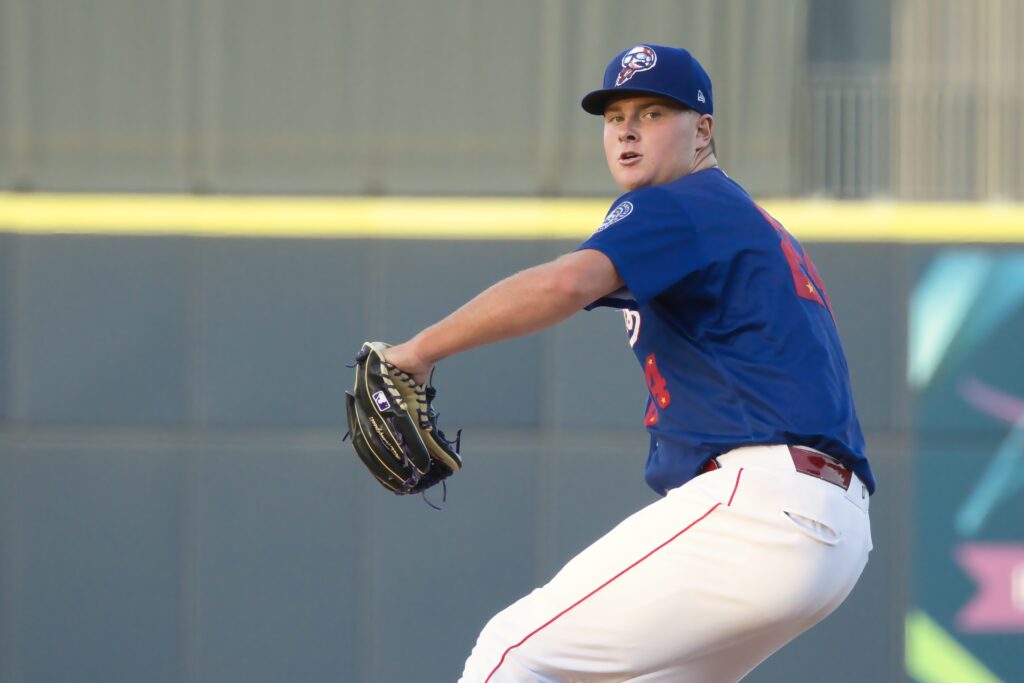 Tanner McDougal – Credit: Dan Victor/FutureSox
McDougal carried a fastball that sat in the high nineties and touched triple digits with late life in the zone. He paired it with a curveball in the upper seventies that fell off the table and a firmer slider that drew a high whiff rate. He also mixed a changeup that allowed him to handle left handed hitters which rounded out a four pitch mix that began to look like a starter’s foundation rather than a relief only path. The gains came from mechanical work he put in over the last winter which helped him hold his delivery and stay in the strike zone more often than he had in previous seasons. He’s one of the top prospects in the White Sox’s system.
Playoff Tanner McDougal took the mound for the #Barons in G1 of the Divisional Series with the Eye of the Tiger. He throws 3 innings of 1H ball striking out 5 on 33s/49p. Locked in and firing on all cylinders. He gets a ND in the 8-6 loss. pic.twitter.com/BVY2YqoDms
— FutureSox (@FutureSox) September 17, 2025
The season became a turning point in the eyes of the front office because he proved he could take the ball every start day and carry his stuff deep into outings. He showed the competitiveness the Sox liked when they drafted him out of Silverado High School, and he stacked enough quality starts to force his way into long-term plans. Team officials pointed to how he handled Double A hitters with a more controlled walk rate and a strikeout rate above thirty percent, which matched the internal reports that described his stuff as trending up.
Chicago’s decision to add him to the roster signals a belief that he can reach the majors in 2026. He will spend part of his offseason at Cressey Sports Performance in Palm Beach Gardens, Florida, to reinforce the delivery changes and build more strength, which the Sox believe can sharpen his command. That work should lead him into big league camp with a chance to stand out early. He will likely open in Double A or Triple A, yet his path to Chicago is open if the strike-throwing continues to move the right way.
40-Man Picture and Fraser Ellard’s Retirement
The choice to protect Davitt and McDougal also came with notable omissions. Shane Murphy, Peyton Pallette, and Mason Adams were left unprotected, which raised eyebrows given the thin state of the pitching staff. Each of them had a case to stick as a low-end starter or a multi-inning reliever. The Sox are betting that the group will either pass through the Rule 5 Draft or fail to hold a spot on another team’s active roster for a full year.
The club also had an unexpected opening created when Fraser Ellard stepped away from baseball. His 2024 debut showed promise, yet 2025 became a grind after a hamstring strain and a lat issue kept him on the injured list for long stretches. When he did pitch, he fought his delivery and his release, which led to a walk rate that climbed to uncomfortable levels.
Ellard told Chris Getz a few weeks before the deadline that he was ready to move on due to family priorities and outside business interests. The Sox spoke highly of him on the way out and made it known that the door would remain open if he ever needed help. His retirement cleared a spot that the club used on Murphy which eased the roster squeeze around Davitt and McDougal.
Roster churn: Derek Hill returns, three are non-tendered
A few days after rearranging the pitching staff and acquiring three players via trade, the Sox moved into their tender decisions while Derek Hill was tendered a contract. The most notable move was letting Mike Tauchman go which clarified how the front office views the current outfield mix. Tim Elko and Cam Booser were also non-tendered which brought the roster to thirty four.
Letting Tauchman go was harder from a production standpoint since he provided patient at-bats with steady corner defense when healthy. His recent lower body issues limited how often he could stay on the grass which created direct overlap with Andrew Benintendi. A smaller deal later in the offseason remains possible yet the need for flexibility pushed him off the roster for now.
Hill brings a different type of value. His bat remains light while injuries disrupted his 2025 season. Everything he does on contact or on the bases keeps him relevant. Statcast labeled him one of the more efficient center fielders in limited time last year. His speed shows up in the gaps or on the bases, which matters for a team that finished near the bottom of the league in defensive runs saved while losing thirty-five one-run games.
Hill returns on a split contract that pays $900K in the majors or $450K if he is in the minors. There is also familiarity from his time in Miami, while Derek Shomon worked on the staff, which gives the hitting group a clearer read on what they can adjust.
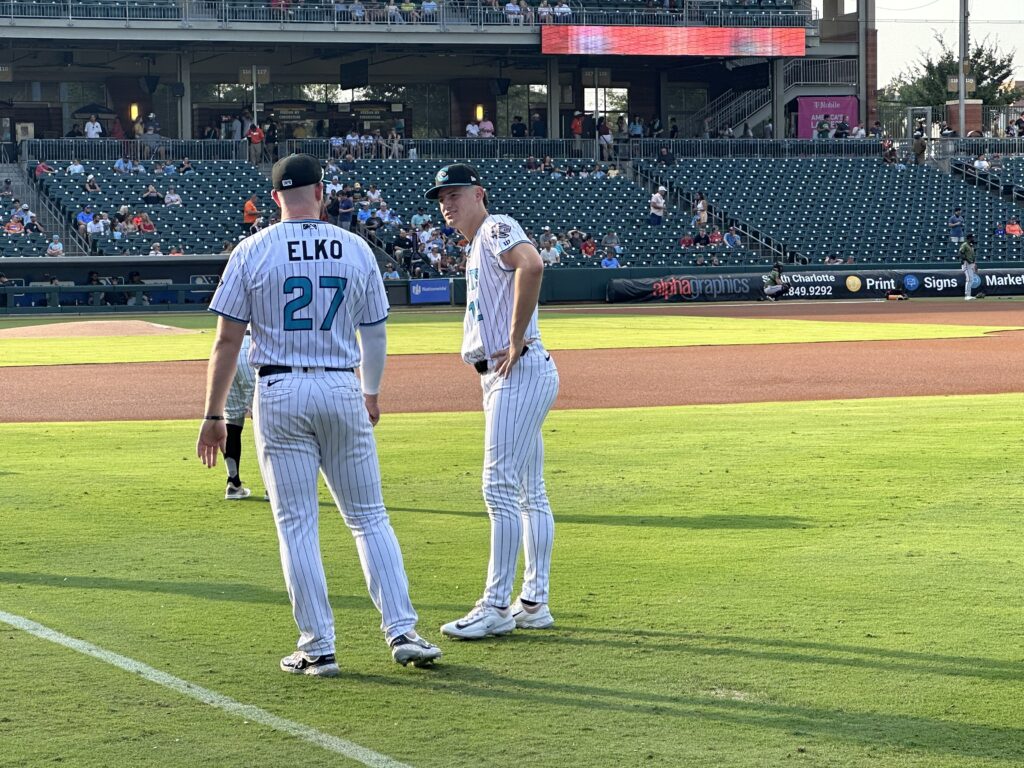 Photo: Ian Eskridge
Elko’s case was simpler. He broke through with a few moments in 2025 yet he struck out at a high rate. An October ACL tear will keep him out until next summer. The club could not hold an injured corner bat on the roster while trying to preserve healthy arms so a minor league deal later in the offseason makes sense.
Booser represents an early miss. The Sox hoped he would grow into a late blooming left handed reliever yet he posted an ERA above five with too many walks or home runs in Chicago or Charlotte. He is older than a typical project arm yet still years from arbitration which made the decision more about roster space than urgency. Cutting ties closes the book on that trade while adding pressure to land on the right bullpen profiles after moving Yhokier Fajardo to acquire him.
Big Picture for White Sox
Viewed on their own, none of these moves shifts the direction of the franchise. Chris Murphy gives the staff a flexible left handed arm who can steady the bullpen or fill bulk innings. Everson Pereira offers long overdue outfield upside for a club that has cycled through temporary answers for years. Tanner Murray brings a right handed bat with enough impact to help the bench or cover spots when injuries hit.
On the pitching side, Duncan Davitt and Tanner McDougal give the Sox two very different right handers with real chances to help in 2026. Davitt profiles as near term rotation depth with a complete mix and a history of throwing strikes. McDougal brings a higher ceiling with strikeout stuff that could play in multiple roles once the command tightens.
The critiques are fair. Leaving arms like Murphy, Pallette or Adams exposed creates risk for a club that cannot afford to lose controllable pitching. It also shows a willingness from the front office to make targeted bets on traits they believe can grow inside their system.
The tender decisions add another layer to that picture. Keeping Derek Hill on a split deal while moving on from Mike Tauchman, Tim Elko or Cam Booser matches the themes Chris Getz repeated through the week. The roster needs cleaner positional fits with more athleticism and a renewed push toward run prevention. Hill’s defense gives the team a real insurance option behind Luis Robert Jr. which Getz noted the roster has lacked. The non tenders open lanes for players with remaining upside or firmer roles, especially in an outfield mix that now features Pereira who Getz said will factor into the 2026 plans.
Taken with the 40-man choices and the trades, this week showed a front office leaning toward flexibility and controllability. The Sox cleared space for newcomers while protecting the arms they believe can help soon. They shaped the roster to support development rather than short-term patchwork. Murphy has a chance to push that plan forward if the command sharpens.
Pereira can help if he tightens his decisions and settles into a steadier offensive rhythm. Davitt or McDougal could also shift the picture if either earns a larger role next season. Any one of those steps would turn this stretch into an early turning point in the rebuild. For now, it reflects a club trying to create progress at the edges while trusting a development group they believe can turn promising pieces into real major league help.
Post Navigation