
As the Chicago Cubs firmly enter offseason mode, they’ll explore all avenues in an attempt to make the team better for 2026. One of those avenues is via trade, which can sometimes involve pieces at the minor-league level, and can sometimes involve players at the big-league level, like the recent Marcus Semien for Brandon Nimmo trade. In this article, we’ll take a look at the Cubs’ 10 most important players on the major-league roster and consider their overall likelihood of being traded this winter.
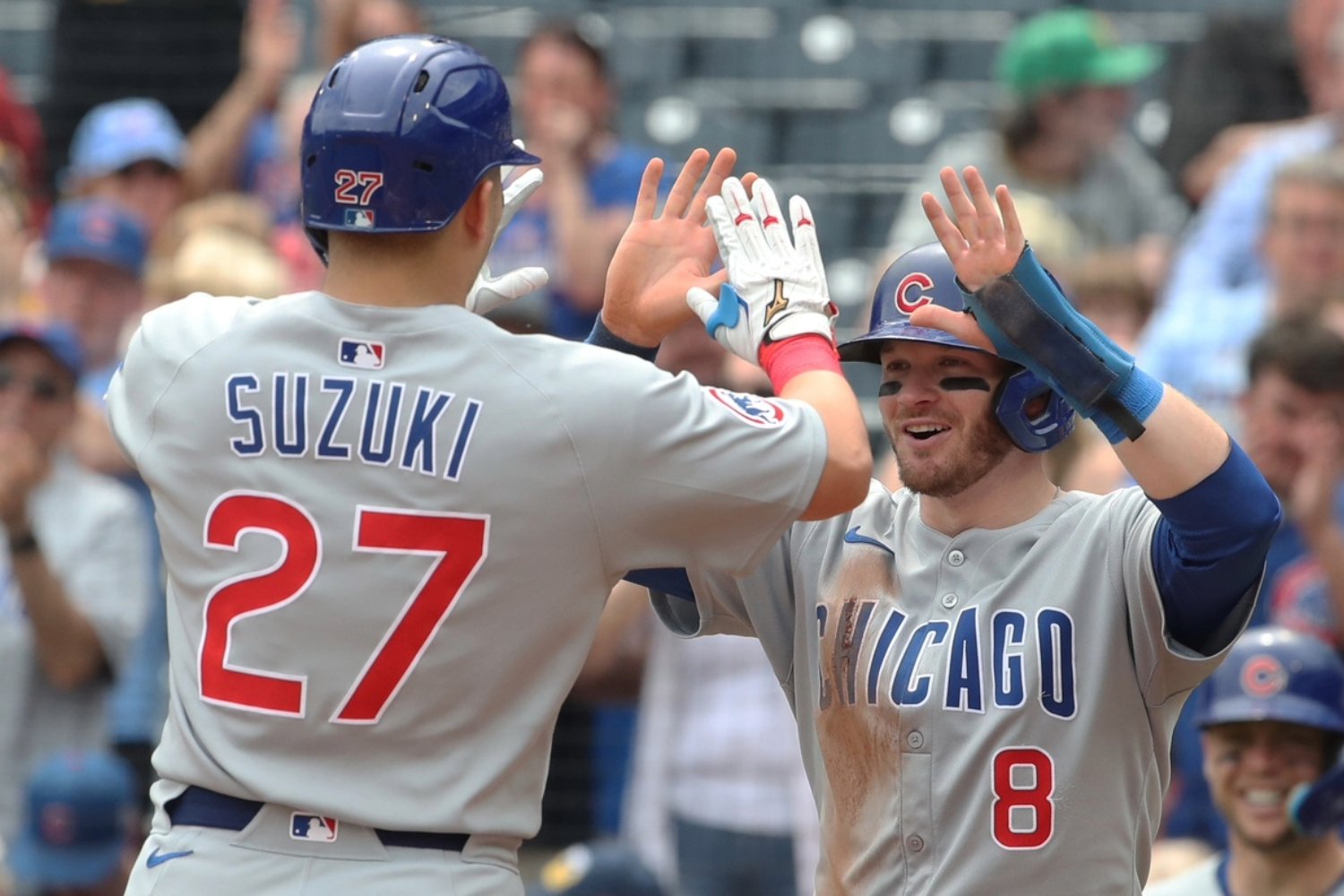
10 – Seiya Suzuki
Pros: Since his arrival in MLB, Suzuki has been one of the most productive offensive players around. Believe it or not, he has a 127 wRC+ since his MLB debut in 2022, which is 32nd in all of baseball. He’s ahead of players with much bigger names like Alex Bregman, William Contreras, Corbin Carroll, Austin Riley, and Fernando Tatis Jr.
Cons: The obvious difference between Suzuki and each of those players named above is that all of those other guys play premium defensive positions, or at the very least, play a less-premium position very well. In 2024, Suzuki was worth -3 runs in the field, according to Baseball Savant’s Fielding Run Value, and thus shifted to designated hitter full time in 2025, which also brings his value down considerably. That, plus an unproductive second half of this past season, might leave a bad taste in some people’s mouths.
Trade Likelihood: Low
The Cubs don’t figure to be bringing Kyle Tucker back, and will probably be investing whatever money they have in the budget into the pitching staff. They’ll need Suzuki to cover right field full time again in 2026 (or DH, if Owen Caissie’s glove is better suited for the field).
9 – Matt Shaw
Pros: Shaw showed some potential of being an above-average everyday player in 2025, posting a 130 wRC+ after the All-Star break, to go along with 11 home runs. His fly ball rate and pull percentage all increased significantly, and that is basically what it boils down to: When he can get out in front of the ball and get it in the air, he’ll be a productive player. He showed significant progress towards being a viable every day third baseman in the field as the season progressed as well.
Cons: When it was bad, it was really bad, and that came to fruition in the playoffs as Shaw went just 2-17 with seven strikeouts. He struggled against velocity all season, posting just a .281 wOBA and .195 batting average against pitches over 95mph, per Baseball Savant, which is a pretty standard offering from most pitchers in this day and age.
Trade likelihood: Low
It’s been reported that teams asked for Shaw at the trade deadline, and the Cubs balked at that request, so it would seem to me that they value Shaw a bit differently than the rest of the league. Value aside, the Cubs don’t really have anyone else in house to replace Shaw should they deal him, and as mentioned earlier, I’d expect most of their resources to be funneled towards pitching. I anticipate the former Maryland Terrapin to be at third base on Opening Day in 2026.
8 – Ian Happ
Pros: Happ is the longest tenured Cub, and while I am certain front offices don’t value that much, I do! He has also been as consistent as it gets, putting up a batting line between 16 and 22 percent above league average, according to wRC+, and a FanGraphs WAR between 2.8 and 3.7 in each of the past four seasons. The veteran certainly isn’t a top-level player in baseball, but he is still a guy who the Cubs should be happy to pencil into their lineup every day going forward. Not to mention, he has a relatively affordable salary of $19m in 2026.
Cons: It was already mentioned: Happ isn’t an elite hitter, and he doesn’t play a particularly valuable defensive position. He just is who he is at this point. At 31 years old, you probably wouldn’t expect him to improve a whole lot going forward.
Trade likelihood: Low
Point blank, Happ has a no-trade clause. Which is unfortunate, because if there is a position player that makes the most sense to deal, it’s probably the veteran left fielder. The Cubs have both Owen Caissie and Kevin Alcantara looking for big-league playing time, and Happ might be a desirable target for any team looking for reliable help in left field. I won’t complain about having to keep a guy like Happ around, but were it not for the no-trade clause, it might make sense from a team-building standpoint.
7 – Matthew Boyd
Pros: Boyd was hands down the Cubs’ best pitcher in 2025, putting up a 3.21 ERA, a 3.65 FIP, and 3.4 fWAR en route to his first All-Star appearance. He was a major player in getting the Cubs back to the postseason for the first time since 2020.
Cons: The veteran lefty, who eclipsed 100 innings for the first time since 2019, broke down a bit towards the end of the season. His ERA jumped from 2.34 in the first half to 4.63 in the second half, including an ugly 5.31 mark in September. A rough start in Game 1 of the NLDS likely sticks in a lot of people’s minds, though he did rebound for a good start to send the Cubs to Game 5 later in that series.
Trade likelihood: Medium
The Cubs already have the following starting pitchers on their 40-man roster: Boyd, Justin Steele, Jameson Taillon, Cade Horton, Shota Imanaga, Colin Rea, Javier Assad, Ben Brown, and Jordan Wicks. Jed Hoyer has been clear he would like to add starting pitching this winter, and if he manages to add a couple of names to that group, it’s entirely possible that the Cubs could look to deal Boyd while his value is high.
6 – Justin Steele
Pros: From 2022 to 2024, Steele had the 15th-best fWAR in baseball and ninth-best ERA. He was a reliable top-of-the-rotation starter for three seasons.
Cons: Even at his best, Steele has never been a big-time bat-misser, certainly not the level of some of the other top starters in baseball. That alone takes some shine off. Couple that with the fact that he is coming off of another elbow surgery, and we just have no idea what we can really expect from the southpaw in 2026.
Trade likelihood: Low… for now
The Cubs have had success working with Steele, and I’d imagine they’d want to try to bring his value back up in 2026 before looking to deal him. If things go well for him, but poorly for the Cubs, I wouldn’t be surprised if a deal is explored at the trade deadline in July, or at the very least, next offseason.