
What better way to start off Thanksgiving day than be looking at some baseball stuff, right? The Arizona Fall League has been over for nearly two weeks now and I’ve been looking through the data of the Cincinnati Reds prospect hitters for a bit and it felt like a good time to just get some of the information and thoughts out there on it.
Before we dive in I want to emphasize that all of this is in the small sample size territory and that while it does tell us something, it doesn’t tell us a bunch. Between the limited number of batted balls we’ve got for each player, the pitchers that they were facing, the playing environment itself – there’s a lot of stuff happening here. Still, it’s worth looking at and talking about some.
The Hawkeye DataAVG_EV: The average exit velocity on non-buntsEV50: The average exit velocity on the top 50% of their batted ballsEV90: The average exit velocity on the top 10% of their batted ballsAVG_LA: The average launch angle on non-buntsEV50_LA: The average launch angle on their EV50 batted ballsEV90: The average launch angle on their EV90 batted ballsAlfredo Duno
Until the playoffs started in the AFL, Duno’s time out in Arizona hadn’t really gone well. He wasn’t hitting for average and he didn’t hit a home run in his 15 regular season games. He was one of the youngest players in the entire league, and he was coming off of a full season of playing time as a catcher for the first time in his professional career. But then the playoffs started and he hit four home runs in three games and looked like the guy who ran away with the MVP in the Florida State League in 2025.
When looking at the data among the Reds prospects Alfredo Duno sticks out here. There’s a little bit to like from all of the guys, but Duno’s got the best overall exit velocity and the best EV50. Where he really sticks out though is the launch angle on his hardest hit baseballs. He had four batted balls over 105 MPH and all were in the air. He had 12 batted balls over 100 MPH and eight of them were in the air. Three of the batted balls were 445+ feet and two others were 375+ feet.
Cam Collier
Collier got out to a quick start in Arizona. After six games he was hitting .364/.533/.591 with four walks. But the rest of the way he hit .164/.292/.218 in 16 games with 10 walks.
Like Duno, Cam Collier hits the ball very hard. In face, his top exit velocity of 115.3 was the best among all of the Reds prospects in Arizona and the third hardest hit ball among all players in the AFL in 2025. The left-handed hitter also had the 11th and 31st hardest hit balls in the league (112.6 and 111.6 MPH). Also like Duno, Collier’s EV50 and EV90 are above-average. His average exit velocity, though, was the worst of the three Reds prospects and was essentially average overall.
When diving into the data things were interesting with Collier. Of his 18 hardest hit baseballs only one of them was defined as a fly ball. It went 438 feet. 10 of them were ground balls. The other seven were line drives. Nine of the 18 hardest hit balls didn’t go 40 feet before hitting the ground. Only three of the 16 balls he hit of 100 MPH or harder went 300 feet. He struggled to both lift the ball and hit it hard at the same time.
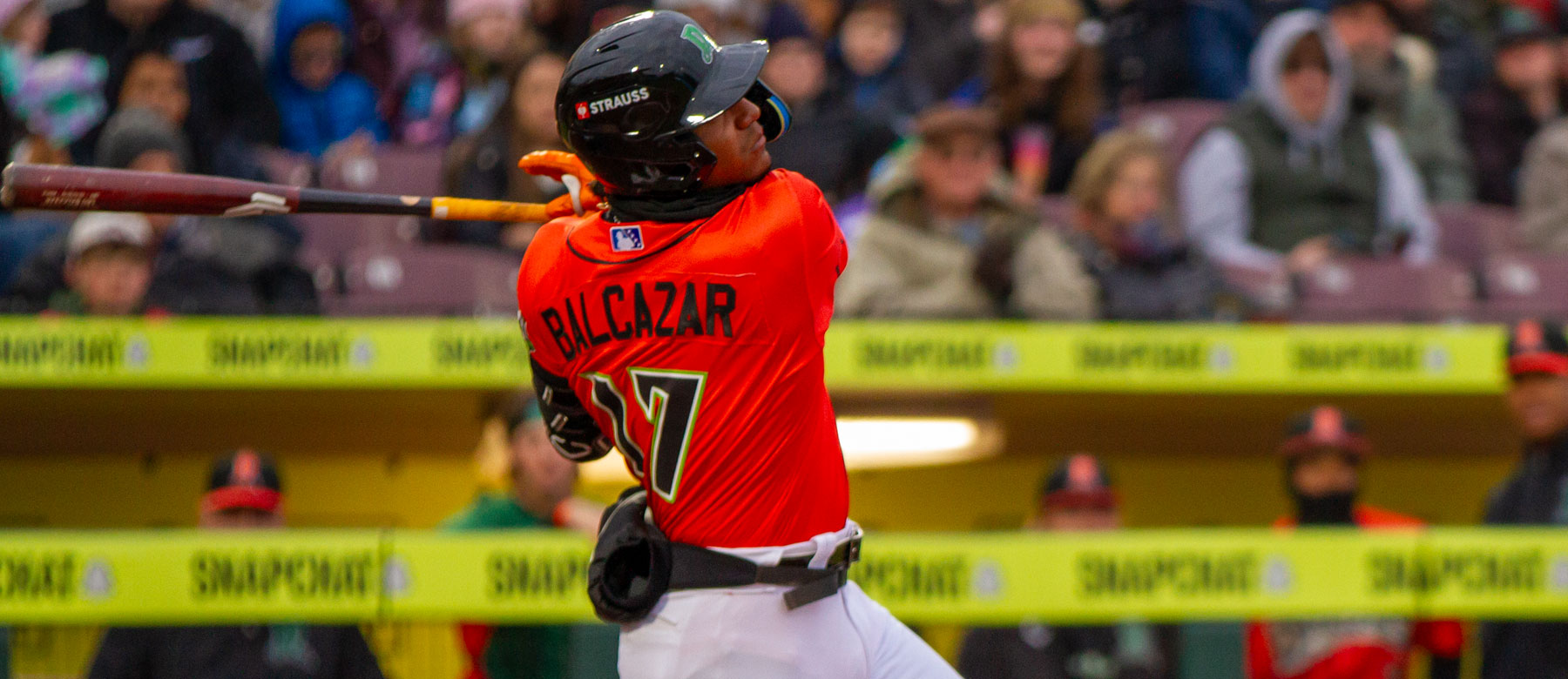
Leo Balcazar
Similarly to Collier, Balcazar had a good start out in Arizona. Through the first 18 games he played in he hit .361/.418/.444 and was leading the league in his. He then went 0-for the final six games of the regular season (though did got 4-11 with four walks in the three playoff games) for Peoria. Shortly after the AFL season ended he was added to the Reds 40-man roster.
Balcazar is a smaller guy than both Duno and Collier. He’s a shortstop, so his bat can be a bit lighter than most, but he was hitting the ball fairly hard out in Arizona after setting a career high with 12 home runs in the regular season between Dayton and Chattanooga in 2025. His average exit velocity in the AFL was slightly above-average and his EV50 was, too.
Like Collier, he didn’t lift the ball a ton when hitting the ball hard. Balcazar didn’t homer in the AFL, though he came real close a few times – hitting the ball 350+ feet five times. He had 20 batted balls of 100+ MPH. One of those was a fly ball that went 354 feet. Only one other from that group went over 300 feet – a 379 foot line drive double. 15 of his 20 100+ MPH batted balls were on the ground. He too was having troubles hitting the ball hard while also elevating it.